
Panduan lapangan hewan
Toadstool Leather Coral
Identifikasi, habitat, rarity, perilaku, simbolisme, fakta, dan pelajaran praktis dari alam.
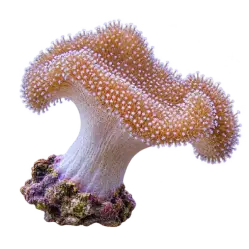
Kartu AnimalDex
Buka kartu hewan ini
Pindai atau tangkap hewan ini dengan AnimalDex untuk membuka kartu koleksi dan menambahkannya ke koleksi satwa liarmu.
Dapatkan AnimalDexPanduan lapangan hewan
Toadstool Leather Coral
Shed and Renew
Shed, then reopen.
Growth needs a clean surface as much as it needs new material.
No captures yet
Native range
Natural range, not this capture location
Native range keys: indian_ocean, south_pacific, coral_triangle, red_sea. Shallow, well-lit reef flats and lagoon edges with steady water movement suit Toadstool Leather Coral because Shed and Renew depends on current to carry the shed film away.
Search near meAnimalDex stats
Dominance
20
Speed
2
Size
22
Intelligence
6
Rarity
38%
Total
88
Size scale
Nama ilmiah
Sarcophyton glaucum
Kategori
Marine invertebrate
Habitat
Native range keys: indian_ocean, south_pacific, coral_triangle, red_sea. Shallow, well-lit reef flats and lagoon edges with steady water movement suit Toadstool Leather Coral because Shed and Renew depends on current to carry the shed film away.
Rarity
Relatively common · 38/100
Native range
Native range keys: indian_ocean, south_pacific, coral_triangle, red_sea. Shallow, well-lit reef flats and lagoon edges with steady water movement suit Toadstool Leather Coral because Shed and Renew depends on current to carry the shed film away.
Mengapa Shed and Renew?
Alasan di balik Prinsip Hewan ini dan biologi yang mendukungnya.
Toadstool Leather Coral teaches Shed and Renew through a cycle every reefkeeper recognises — the whole colony pulls in, goes dull for a day or two, then sloughs a film and opens brighter than before.
Cara mengidentifikasi Toadstool Leather Coral
- Mushroom shape: a thick stalk carrying a broad, folded cap
- Cap covered in soft, retractable polyps that give it a furry look when open
- Closes completely into a smooth, waxy dome before shedding
- Leathery tissue stiffened by tiny embedded sclerites rather than a stony skeleton
Kenapa Toadstool Leather Coral menarik
- It is a soft coral, so it has no stony skeleton — the shape is held by water pressure and microscopic sclerites in the tissue.
- Sheddings happen every few weeks and strip away settled algae, silt and film.
- Symbiotic zooxanthellae inside its tissue provide most of its food from sunlight.
- It releases terpenoid compounds into the water that discourage neighbouring corals from crowding it.
- A single colony can spread more than half a metre across the cap.
Habitat: Native range keys: indian_ocean, south_pacific, coral_triangle, red_sea. Shallow, well-lit reef flats and lagoon edges with steady water movement suit Toadstool Leather Coral because Shed and Renew depends on current to carry the shed film away.
Native range: Native range keys: indian_ocean, south_pacific, coral_triangle, red_sea. Shallow, well-lit reef flats and lagoon edges with steady water movement suit Toadstool Leather Coral because Shed and Renew depends on current to carry the shed film away.
nativeRangeCardTitle
nativeRangeCardDescription
nativeRangeMissingAssets
Native range keys: indian_ocean, south_pacific, coral_triangle, red_sea. Shallow, well-lit reef flats and lagoon edges with steady water movement suit Toadstool Leather Coral because Shed and Renew depends on current to carry the shed film away.
To find Toadstool Leather Coral in the wild, focus on the exact habitat patches that match its body design and daily behavior, not just the broad country where it exists. You usually do better by working one good piece of habitat inside native range keys: indian_ocean, south_pacific, coral_triangle, red_sea. Shallow, well-lit reef flats and lagoon edges with steady water movement suit Toadstool Leather Coral because Shed and Renew depends on current to carry the shed film away. than by covering too much ground.
- Quiet marsh edges, reedbeds, river bends, or shallow wetland margins
- Headlands, reef edges, island colonies, tidal channels, or productive coastal water
- Burrow systems, sandy banks, fallen logs, or ground with clear den entrances
- Start early, pick one strong patch of habitat, and stay long enough for movement to return after you arrive.
- Watch the transition line between open water and cover, because feeding and movement often happen on that edge.
- Choose a viewing point with clean light and water visibility, then watch for repeated surfacing, feeding, or current lines.
Mostly sugars from symbiotic zooxanthellae, supplemented by dissolved organic matter and fine plankton captured by the polyps. This diet supports Shed and Renew because a light-fed animal must keep its surface clear to keep eating.
Nudibranchs, some butterflyfish and grazing snails. Its answer is chemical rather than physical — unpalatable terpenoids in the tissue, plus a shedding cycle that removes anything settling on it.
Toadstool Leather Coral has no sleep in the animal sense, but polyps retract at night and during shedding, so the colony visibly cycles between open and closed.
Colonies persist for decades and keep expanding, so Shed and Renew is not a one-off event but a rhythm the animal repeats for its whole life.
Colonies broadcast eggs and sperm into the water on seasonal spawning nights, and can also grow new colonies from fragments of the cap. Offspring fit the principle because a shed or broken piece is itself a way of starting clean.
Colonies are usually of a single sex but look identical from the outside. Appearance carries no signal here because reproduction is chemical and seasonal, not visual.
- Mushroom shape: a thick stalk carrying a broad, folded cap
- Cap covered in soft, retractable polyps that give it a furry look when open
- Closes completely into a smooth, waxy dome before shedding
- Leathery tissue stiffened by tiny embedded sclerites rather than a stony skeleton
Toadstool Leather Coral most often symbolizes shed and renew in AnimalDex because its real survival behavior repeatedly shows this pattern.
Growth needs a clean surface as much as it needs new material.
Toadstool Leather Coral periodically closes its polyps, sheds a waxy surface film carrying algae and debris, and reopens onto clean tissue.
- Observe from a respectful distance and avoid changing the animal's behavior.
- Do not block feeding, shelter, nesting, or travel routes.
- Use a live camera capture without handling or staging wildlife.
Hewan terkait
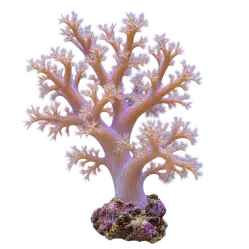
Kenya Tree Coral
Kenya Tree Coral teaches Branch and Multiply the most literal way an animal can. It…
Baca panduan spesies
Pagoda Cup Coral
Pagoda Cup Coral teaches Tiered Collection in stone. Its plates step outward as they…
Baca panduan spesies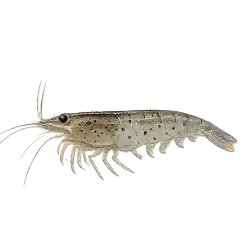
Amano Shrimp
The Tireless Algae-Grazer. The Tireless Algae-Grazer. Steady, consistent effort can…
Baca panduan spesiesLebih banyak hewan dengan kekuatan Renewal
Jelajahi semua hewan Renewal
American Robin
American Robin teaches Seasonal Signal because its real biology turns lawn-foraging…
Baca panduan spesies
Common Earthworm
Common Earthworm teaches Common Earthworm · Transformation through its real biology:…
Baca panduan spesies
Common Hydra
Hydra are tiny freshwater cnidarians with tentacles, stinging cells, and strong…
Baca panduan spesiesBawa ensiklopedia ke dunia nyata
AnimalDex membantumu memindai hewan nyata, mengidentifikasi spesies, mengoleksi kartu, dan belajar dari alam di mana pun kamu berada.