
Panduan lapangan hewan
Kenya Tree Coral
Identifikasi, habitat, rarity, perilaku, simbolisme, fakta, dan pelajaran praktis dari alam.
Kartu AnimalDex
Buka kartu hewan ini
Pindai atau tangkap hewan ini dengan AnimalDex untuk membuka kartu koleksi dan menambahkannya ke koleksi satwa liarmu.
Dapatkan AnimalDexPanduan lapangan hewan
Kenya Tree Coral
Branch and Multiply
Drop a branch, grow a tree.
Something released on purpose can become the next whole thing.
No captures yet
Native range
Natural range, not this capture location
Native range keys: indian_ocean, south_pacific, coral_triangle. Shallow reef slopes and rubble zones with moderate current suit Kenya Tree Coral because Branch and Multiply needs hard surfaces close enough for a dropped branch to reach.
Search near meAnimalDex stats
Dominance
14
Speed
3
Size
12
Intelligence
6
Rarity
44%
Total
79
Size scale
Nama ilmiah
Capnella imbricata
Kategori
Marine invertebrate
Habitat
Native range keys: indian_ocean, south_pacific, coral_triangle. Shallow reef slopes and rubble zones with moderate current suit Kenya Tree Coral because Branch and Multiply needs hard surfaces close enough for a dropped branch to reach.
Rarity
Relatively common · 44/100
Native range
Native range keys: indian_ocean, south_pacific, coral_triangle. Shallow reef slopes and rubble zones with moderate current suit Kenya Tree Coral because Branch and Multiply needs hard surfaces close enough for a dropped branch to reach.
Mengapa Branch and Multiply?
Alasan di balik Prinsip Hewan ini dan biologi yang mendukungnya.
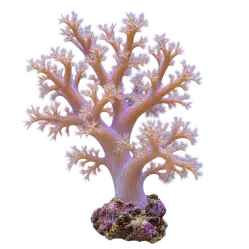
Kenya Tree Coral teaches Branch and Multiply the most literal way an animal can. It pinches off pieces of its own arms, and those pieces walk the colony across the reef one dropped branch at a time.
Cara mengidentifikasi Kenya Tree Coral
- Soft, tree-shaped colony with a thick trunk and drooping branches
- Polyps carried along the branches, giving a fuzzy outline when open
- Deflates to a fraction of its open size when disturbed
- Drops small branchlets that settle and root nearby
Kenapa Kenya Tree Coral menarik
- It reproduces asexually by shedding branchlets that grow into independent colonies.
- The name comes from the aquarium trade rather than from the coral being restricted to Kenya — it occurs across the Indo-Pacific.
- Open and closed, the same colony can look like two different animals; it can shrink to a fraction of its extended height.
- Symbiotic algae in the tissue supply most of its energy, with plankton taken as a supplement.
- It grows fast enough that a single colony can overtake nearby space on a reef.
Habitat: Native range keys: indian_ocean, south_pacific, coral_triangle. Shallow reef slopes and rubble zones with moderate current suit Kenya Tree Coral because Branch and Multiply needs hard surfaces close enough for a dropped branch to reach.
Native range: Native range keys: indian_ocean, south_pacific, coral_triangle. Shallow reef slopes and rubble zones with moderate current suit Kenya Tree Coral because Branch and Multiply needs hard surfaces close enough for a dropped branch to reach.
nativeRangeCardTitle
nativeRangeCardDescription
Native range keys: indian_ocean, south_pacific, coral_triangle. Shallow reef slopes and rubble zones with moderate current suit Kenya Tree Coral because Branch and Multiply needs hard surfaces close enough for a dropped branch to reach.
To find Kenya Tree Coral in the wild, focus on the exact habitat patches that match its body design and daily behavior, not just the broad country where it exists. You usually do better by working one good piece of habitat inside native range keys: indian_ocean, south_pacific, coral_triangle. Shallow reef slopes and rubble zones with moderate current suit Kenya Tree Coral because Branch and Multiply needs hard surfaces close enough for a dropped branch to reach. than by covering too much ground.
- Headlands, reef edges, island colonies, tidal channels, or productive coastal water
- Sunlit logs, exposed branches, warm rocks, or regular perch sites used for scanning
- Protected habitat blocks within native range keys: indian_ocean, south_pacific, coral_triangle. Shallow reef slopes and rubble zones with moderate current suit Kenya Tree Coral because Branch and Multiply needs hard surfaces close enough for a dropped branch to reach.
- Start early, pick one strong patch of habitat, and stay long enough for movement to return after you arrive.
- Time your search around tide, wind, and visibility, then focus on feeding lines, reef edges, and known haul-out or nesting spots.
- Choose a viewing point with clean light and water visibility, then watch for repeated surfacing, feeding, or current lines.
Mostly sugars from symbiotic zooxanthellae, plus fine plankton and dissolved organic matter taken by the polyps. This diet supports Branch and Multiply because light-fed growth is cheap enough to spend on pieces the colony gives away.
Nudibranchs and grazing snails. Its answer is deflation and unpalatable chemistry rather than structure — there is no skeleton to hide behind.
Kenya Tree Coral cycles between an inflated, polyp-out state and a deflated, closed one, often extending most in the hours around dusk and dawn.
A colony may persist for years, but the lineage outlives any one colony, because Branch and Multiply keeps replacing the whole with copies of itself.
It reproduces both sexually, by releasing gametes, and asexually by dropping branchlets. Offspring fit the principle exactly: most new colonies are pieces of the parent rather than the product of a spawning.
There is no visible difference between colonies of different sexes. Appearance carries no signal because the species leans on dropped branches more than on spawning.
- Soft, tree-shaped colony with a thick trunk and drooping branches
- Polyps carried along the branches, giving a fuzzy outline when open
- Deflates to a fraction of its open size when disturbed
- Drops small branchlets that settle and root nearby
Kenya Tree Coral most often symbolizes branch and multiply in AnimalDex because its real survival behavior repeatedly shows this pattern.
Something released on purpose can become the next whole thing.
Kenya Tree Coral drops branchlets from its own arms, and each dropped piece settles nearby and grows into a complete new colony.
- Observe from a respectful distance and avoid changing the animal's behavior.
- Do not block feeding, shelter, nesting, or travel routes.
- Use a live camera capture without handling or staging wildlife.
Hewan terkait

Christmas Tree Worm
Christmas Tree Worms live inside tubes embedded in coral or hard reef surfaces. Their…
Baca panduan spesies
Pagoda Cup Coral
Pagoda Cup Coral teaches Tiered Collection in stone. Its plates step outward as they…
Baca panduan spesies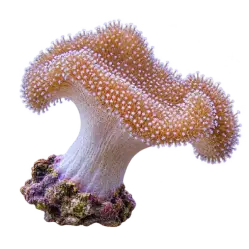
Toadstool Leather Coral
Toadstool Leather Coral teaches Shed and Renew through a cycle every reefkeeper…
Baca panduan spesiesLebih banyak hewan dengan kekuatan Growth
Jelajahi semua hewan Growth
American Lobster
American Lobster grows power slowly, using cold water, shelter competition, claws, and…
Baca panduan spesies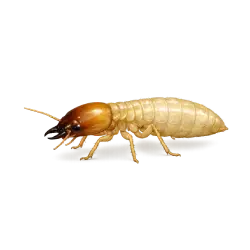
Asian subterranean termite
The Winged Architect. The Asian subterranean termite alate, Macrotermes gilvus, is a…
Baca panduan spesies
Axolotl
The axolotl is an aquatic salamander famous for retaining larval features into…
Baca panduan spesiesBawa ensiklopedia ke dunia nyata
AnimalDex membantumu memindai hewan nyata, mengidentifikasi spesies, mengoleksi kartu, dan belajar dari alam di mana pun kamu berada.