
Panduan lapangan hewan
True Oyster
Identifikasi, habitat, rarity, perilaku, simbolisme, fakta, dan pelajaran praktis dari alam.
reef cup filterer. True oysters are the classic edible cups of coasts and markets — Ostreidae that settle, filter, and build living reefs.
Nama ilmiah
Ostreidae
Kategori
Animal
Habitat
Intertidal to shallow subtidal reefs, rocks, estuaries, and oyster farms worldwide in temperate and subtropical seas.
Rarity
Relatively common · 28/100
Native range
Intertidal to shallow subtidal reefs, rocks, estuaries, and oyster farms worldwide in temperate and subtropical seas.
Steady Filter
Hold the reef.
Stay put and clean what passes.
Apa yang diajarkannya
Quiet consistency compounds when you hold the right ground.
Coba
In human life, this reminds us that resilience is often built one repeatable step at a time.
Bukti alam
True oysters cement or settle on reef and rack, filtering plankton for long stretches and building reefs that shelter other life.
Gunakan untuk
Tangkapan True Oyster berperingkat
1 tangkapan berperingkat dalam grup ini dari kolektor AnimalDex.
Mengapa Steady Filter?
Alasan di balik Prinsip Hewan ini dan biologi yang mendukungnya.
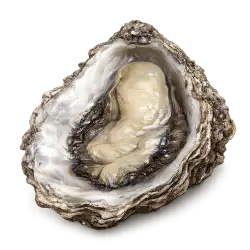
True oysters (Ostreidae) are the classic edible oysters. Shells are irregular and cupped or flat; many cement to hard substrate and filter plankton on coastal reefs and farms.
Cara mengidentifikasi True Oyster
- Irregular cupped or flat edible shells
- Coastal reef, rock, or aquaculture racks
- Filter-feeding lifestyle
- No long ornamental spines
Kenapa True Oyster menarik
- Pacific oysters (Magallana gigas) are among the most farmed oysters worldwide.
- European flat oysters (Ostrea edulis) are prized but slower-growing than cupped oysters.
- Olympia oysters are small native West Coast true oysters.
Habitat: Intertidal to shallow subtidal reefs, rocks, estuaries, and oyster farms worldwide in temperate and subtropical seas.
Native range: Intertidal to shallow subtidal reefs, rocks, estuaries, and oyster farms worldwide in temperate and subtropical seas.
To find True Oyster in the wild, focus on the exact habitat patches that match its body design and daily behavior, not just the broad country where it exists. You usually do better by working one good piece of habitat inside intertidal to shallow subtidal reefs, rocks, estuaries, and oyster farms worldwide in temperate and subtropical seas. than by covering too much ground.
- Headlands, reef edges, island colonies, tidal channels, or productive coastal water
- Protected habitat blocks within intertidal to shallow subtidal reefs, rocks, estuaries, and oyster farms worldwide in temperate and subtropical seas.
- Start early, pick one strong patch of habitat, and stay long enough for movement to return after you arrive.
- Time your search around tide, wind, and visibility, then focus on feeding lines, reef edges, and known haul-out or nesting spots.
- Move quietly, stop often, and give the habitat time to settle; many mammals and insects show themselves only after the first pause.
Phytoplankton and other suspended organic particles filtered from seawater.
Sessile adults remain attached; activity is filtering rather than travel.
Years in the wild; farmed oysters are often harvested younger.
Broadcast spawning releases eggs and sperm into the water; larvae settle after a planktonic stage.
Many oysters can change sex over life; shell form is a better field cue than sex.
- Irregular cupped or flat edible shells
- Coastal reef, rock, or aquaculture racks
- Filter-feeding lifestyle
- No long ornamental spines
True Oyster most often symbolizes steady filter in AnimalDex because its real survival behavior repeatedly shows this pattern.
Quiet consistency compounds when you hold the right ground.
True oysters cement or settle on reef and rack, filtering plankton for long stretches and building reefs that shelter other life.
- Observe from a respectful distance and avoid changing the animal's behavior.
- Do not block feeding, shelter, nesting, or travel routes.
- Use a live camera capture without handling or staging wildlife.
0/1 XP toward Level 2
statsTitle
statsDescription
statsSourceLabel: statsSourceSpeciesProfile
dominanceStat
6
speedStat
1
sizeStat
10
intelligenceStat
2
rarityStat
28%
Total
47
Size scale
Tiny
Uses the canonical size stat for consistent placement



US$34 – US$70
Perkiraan rentang nilai
Kepercayaan 69%
Perkiraan nilai AnimalDex dibuat dari stat spesies kanonik.
Not a marketplace listing.
Perkiraan nilai berdasarkan hewan yang teridentifikasi dan konteks harga yang tersedia. Bukan daftar marketplace.
Seberapa langka True Oyster?
Rarity: Relatively common (28/100)
AnimalDex canonical rarity score: 28/100, maintained by the live indexed species profile.
Public Animal Power
Explore this Animal Power
This is a public capture, so you can explore its Animal Power here. Personal Apex matches and challenges use your Wild Profile and animals you own.
Own an animal with this power to use it in Growth challenges.
Comparison hearts ready
3 of 3 hearts remaining. Each loss removes 1 heart.
✦ Available actions
Compare this public animal when your deck meets the current rules.
⚡CompareUnavailable›Hewan terkait

Lebih banyak hewan dengan kekuatan Patience
Jelajahi semua hewan Patience
Adelie Penguin
Adelie Penguin is a bird known for classic black-and-white body, ice-edge breeding…
Baca panduan spesies
African Bullfrog
African Bullfrog is a amphibian known for huge frog body, powerful bite, and burrowing…
Baca panduan spesies
African Civet
African Civet is a mammal known for bold black-and-white pattern, night-active…
Baca panduan spesiesBawa ensiklopedia ke dunia nyata
AnimalDex membantumu memindai hewan nyata, mengidentifikasi spesies, mengoleksi kartu, dan belajar dari alam di mana pun kamu berada.