
Panduan lapangan hewan
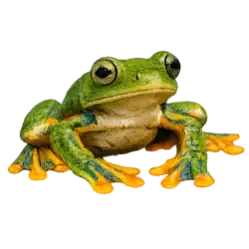
Wallace's Flying Frog
Identifikasi, habitat, rarity, perilaku, simbolisme, fakta, dan pelajaran praktis dari alam.
The Web-Foot Air Glider. The Wallace's Flying Frog spreads huge webbed feet to parachute from tree to tree through the rainforest. It teaches us that stretching what we already have can open new paths.
Kartu AnimalDex
Buka kartu hewan ini
Pindai atau tangkap hewan ini dengan AnimalDex untuk membuka kartu koleksi dan menambahkannya ke koleksi satwa liarmu.
Dapatkan AnimalDexNama ilmiah
Rhacophorus nigropalmatus
Kategori
Amphibian
Habitat
Lowland tropical rainforest and forest pools with overhanging breeding vegetation.
Rarity
Rare · 75/100
Native range
Borneo, Peninsular Malaysia, and nearby parts of Southeast Asia.
Parachute
Open the fall.
Web-Foot Canopy Gliding
Apa yang diajarkannya
The fall becomes a path when the body learns to open.
Coba
A bad fall becomes safer when a friend teaches how to land.
Bukti alam
Wallace’s Flying Frogs have large webbed feet and skin flaps that help them glide or parachute between trees in rainforest canopies.
Gunakan untuk
Tangkapan Wallace's Flying Frog berperingkat
Belum ada tangkapan komunitas berperingkat untuk spesies ini.
Mengapa Parachute?
Alasan di balik Prinsip Hewan ini dan biologi yang mendukungnya.
Wallace's flying frog is a Southeast Asian tree frog known for oversized webbing, arboreal breeding, and gliding-style leaps between forest branches.
Cara mengidentifikasi Wallace's Flying Frog
- Bright green body with very large orange and black webbed feet
- Long limbs and large toe pads for canopy life
- Expanded webbing visible during long leaps
Kenapa Wallace's Flying Frog menarik
- This frog is one of the clearest examples of gliding-adjacent design in amphibians.
- It is also a strong Southeast Asian forest flagship beyond the usual mammals.
Habitat: Lowland tropical rainforest and forest pools with overhanging breeding vegetation.
Native range: Borneo, Peninsular Malaysia, and nearby parts of Southeast Asia.
nativeRangeCardTitle
nativeRangeCardDescription
nativeRangeMissingAssets
Lowland tropical rainforest and forest pools with overhanging breeding vegetation.
To find Wallace's Flying Frog in the wild, focus on the exact habitat patches that match its body design and daily behavior, not just the broad country where it exists. You usually do better by working one good piece of habitat inside borneo, Peninsular Malaysia, and nearby parts of Southeast Asia. than by covering too much ground.
- Forest edge, canopy gaps, fruiting trees, or shaded trails where cover and food meet
- Sunlit logs, exposed branches, warm rocks, or regular perch sites used for scanning
- Protected habitat blocks within borneo, Peninsular Malaysia, and nearby parts of Southeast Asia.
- Start early, pick one strong patch of habitat, and stay long enough for movement to return after you arrive.
- Work edges, clearings, fruiting trees, and stream crossings rather than walking randomly through dense cover.
- Warm rocks, trail edges, fallen timber, and quiet water margins are usually better than heavily disturbed ground.
Wallace's Flying Frog feeds on insects and other small invertebrates. The diet fits the lesson because its food is not random; it is reached by the same tools and habits that define the animal’s principle.
Predators and threats include snakes, birds, mammals, and drying habitats threaten them. Those pressures matter because Parachute is not just a look; it is tested whenever the animal must avoid danger, protect young, or keep moving.
Wallace's Flying Frog is mostly nocturnal, resting on leaves by day. This rhythm matters because the animal’s lesson works on a schedule, repeating the same survival pattern until it becomes natural.
Wallace's Flying Frog may live several years in suitable habitat. Its lifespan gives the principle time to matter: small habits, strong design, and careful timing compound across seasons.
females lay foam nests above water so tadpoles drop below. This offspring pattern connects to the lesson because the next generation begins inside the same habitat pressures that shaped the adults.
females are usually larger than males. The difference matters only where it changes display, size, care, or competition; the core principle still belongs to the species as a whole.
- Leaps between branches using broad webbing to control descent
- Breeds in foam nests over temporary pools or water
- Uses high canopy cover and night humidity for activity
Wallace's Flying Frog most often symbolizes parachute in AnimalDex because its real survival behavior repeatedly shows this pattern.
The fall becomes a path when the body learns to open.
Wallace’s Flying Frogs have large webbed feet and skin flaps that help them glide or parachute between trees in rainforest canopies.
- Use low light and avoid disturbing breeding pools below nesting branches.
- Search canopy edges patiently rather than shaking vegetation.
- Other flying frog species
- Tree frog on broad leaves
- Large leaf with reflected eye shine
statsTitle
statsDescription
statsSourceLabel: statsSourceSpeciesProfile
dominanceStat
34
speedStat
48
sizeStat
18
intelligenceStat
39
rarityStat
75%
Total
214
Size scale
Small
Uses the canonical size stat for consistent placement

US$164 – US$340
Perkiraan rentang nilai
Kepercayaan 69%
Perkiraan nilai AnimalDex dibuat dari stat spesies kanonik.
Not a marketplace listing.
Perkiraan nilai berdasarkan hewan yang teridentifikasi dan konteks harga yang tersedia. Bukan daftar marketplace.
Seberapa langka Wallace's Flying Frog?
Rarity: Rare (75/100)
The species depends on humid forest canopy systems that are increasingly fragmented.
Systems Intelligence & Hidden Purpose
Sudut pandang systems biology untuk melihat bagaimana spesies ini dibangun, peran apa yang dijalankannya di ekosistem, dan pelajaran praktis apa yang bisa dipetik manusia.
System Role
The Canopy Glide Connector
Wallace's Flying Frog
Specialized Hardware
Extensive webbed feet, long limbs, and controlled gliding posture make this frog transitional hardware for moving between trees without needless descent.
Systems Script
It links vertical forest space by treating air as a transport layer rather than a void. That lets it reduce exposure on the ground while exploiting dispersed canopy resources.
Strategic Insight
When movement between nodes is risky, redesign the route instead of accepting the default path.
Public Animal Power
Explore this Animal Power
This is a public capture, so you can explore its Animal Power here. Personal Apex matches and challenges use your Wild Profile and animals you own.
Own an animal with this power to use it in Growth challenges.
Hewan terkait
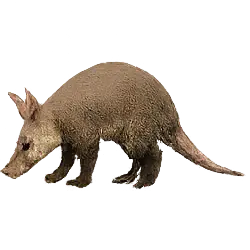
Aardvark
The aardvark is a nocturnal African mammal known for its long snout, strong digging…
Baca panduan spesies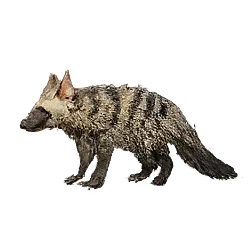
Aardwolf
The aardwolf is a small striped relative of hyenas that feeds mainly on termites rather…
Baca panduan spesies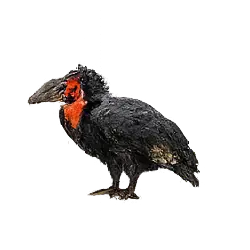
Abyssinian Ground Hornbill
Abyssinian Ground Hornbill is a bird known for bare red facial skin, huge…
Baca panduan spesiesLebih banyak hewan dengan kekuatan Canopy Movement
Jelajahi semua hewan Canopy Movement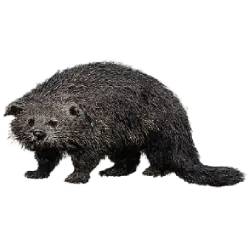
Binturong
The binturong is a shaggy Southeast Asian civet relative with a prehensile tail,…
Baca panduan spesies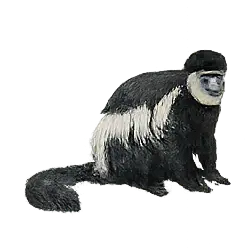
Mantled guereza
Black-and-white Colobus is a primate known for dramatic black-and-white coat, high…
Baca panduan spesies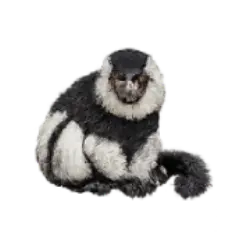
Black-and-white Ruffed Lemur
Black-and-white Ruffed Lemur is a mammal known for black-and-white shaggy coat, loud…
Baca panduan spesiesBawa ensiklopedia ke dunia nyata
AnimalDex membantumu memindai hewan nyata, mengidentifikasi spesies, mengoleksi kartu, dan belajar dari alam di mana pun kamu berada.