
Panduan lapangan hewan
White Seabream
Identifikasi, habitat, rarity, perilaku, simbolisme, fakta, dan pelajaran praktis dari alam.
Panduan lapangan hewan
White Seabream
Open Coast Opportunism
Work the rough edge.
Rough ground pays best to whoever is willing to work it.
You’re #1 of 1
Native range
Natural range, not this capture location
Native range keys: mediterranean, north_atlantic, europe. Rocky shores, surf-washed ledges and mixed rock-and-sand ground suit White Seabream because Open Coast Opportunism depends on water rough enough to keep uncovering food.
Wild reward hint
First-time wild species earn bonus rewards, including 1 free credit.
0/1 XP toward Level 2
AnimalDex stats
Dominance
9
Speed
24
Size
4
Intelligence
18
Rarity
9%
Total
64
Size scale
Zoo animal · comparisons disabled
Zoo animals stay in your collection, but they can't enter scenario comparisons or the Arena.
✦ Available actions
Compare this public animal when your deck meets the current rules.
Nama ilmiah
Diplodus sargus
Kategori
Animal
Habitat
Native range keys: mediterranean, north_atlantic, europe. Rocky shores, surf-washed ledges and mixed rock-and-sand ground suit White Seabream because Open Coast Opportunism depends on water rough enough to keep uncovering food.
Rarity
Relatively common · 28/100
Native range
Native range keys: mediterranean, north_atlantic, europe. Rocky shores, surf-washed ledges and mixed rock-and-sand ground suit White Seabream because Open Coast Opportunism depends on water rough enough to keep uncovering food.
Mengapa Open Coast Opportunism?
Alasan di balik Prinsip Hewan ini dan biologi yang mendukungnya.
White Seabream teaches Open Coast Opportunism in the noisiest water on the coast — the surf line over rock, where food is constantly turned over and almost nothing else stays to collect it.
Cara mengidentifikasi White Seabream
- Silver body crossed by narrow dark vertical bars
- A black saddle on the tail base, sharply defined
- Heavy incisor-like front teeth backed by flat crushing molars
- Moves in loose groups along rocky shores and surf-washed ledges
Kenapa White Seabream menarik
- Its front teeth bite prey free of the rock and its back teeth crush the shell.
- It feeds on sea urchins, which few coastal fish will attempt.
- It holds station in breaking surf where wave action keeps exposing new food.
- It is one of the most familiar shore fishes of the Mediterranean and eastern Atlantic.
- Juveniles use very shallow water, often in only a few centimetres over rock.
Habitat: Native range keys: mediterranean, north_atlantic, europe. Rocky shores, surf-washed ledges and mixed rock-and-sand ground suit White Seabream because Open Coast Opportunism depends on water rough enough to keep uncovering food.
Native range: Native range keys: mediterranean, north_atlantic, europe. Rocky shores, surf-washed ledges and mixed rock-and-sand ground suit White Seabream because Open Coast Opportunism depends on water rough enough to keep uncovering food.
nativeRangeCardTitle
nativeRangeCardDescription
nativeRangeMissingAssets
Native range keys: mediterranean, north_atlantic, europe. Rocky shores, surf-washed ledges and mixed rock-and-sand ground suit White Seabream because Open Coast Opportunism depends on water rough enough to keep uncovering food.
To find White Seabream in the wild, focus on the exact habitat patches that match its body design and daily behavior, not just the broad country where it exists. You usually do better by working one good piece of habitat inside native range keys: mediterranean, north_atlantic, europe. Rocky shores, surf-washed ledges and mixed rock-and-sand ground suit White Seabream because Open Coast Opportunism depends on water rough enough to keep uncovering food. than by covering too much ground.
- Headlands, reef edges, island colonies, tidal channels, or productive coastal water
- Protected habitat blocks within native range keys: mediterranean, north_atlantic, europe. Rocky shores, surf-washed ledges and mixed rock-and-sand ground suit White Seabream because Open Coast Opportunism depends on water rough enough to keep uncovering food.
- First light and late afternoon are often best, when animals come out to feed along the edge of water.
- Time your search around tide, wind, and visibility, then focus on feeding lines, reef edges, and known haul-out or nesting spots.
- Move quietly, stop often, and give the habitat time to settle; many mammals and insects show themselves only after the first pause.
Molluscs, crustaceans, sea urchins, worms and algae. This diet supports Open Coast Opportunism because it is a list rather than a specialism — whatever the surf exposes is what gets eaten.
Sea bass, larger groupers, cormorants and coastal dolphins. Its answer is broken ground: it feeds beside rock it can put between itself and a pursuer in a moment.
White Seabream feed by day and settle among rocks and crevices at night, dropping into the same broken ground they spend the day working.
They can live for a decade or more, so Open Coast Opportunism turns into local knowledge — which ledges hold urchins, and which gullies fill first on a rising tide.
They spawn in coastal water in late winter and spring, and juveniles settle into extremely shallow rocky shallows. Offspring fit the principle because the young start on the roughest, most exposed ground of all.
Males and females look alike, and the species is a protandrous hermaphrodite — some fish begin as males and later function as females. Appearance stays constant because nothing about the strategy depends on being recognised.
- Silver body crossed by narrow dark vertical bars
- A black saddle on the tail base, sharply defined
- Heavy incisor-like front teeth backed by flat crushing molars
- Moves in loose groups along rocky shores and surf-washed ledges
White Seabream most often symbolizes open coast opportunism in AnimalDex because its real survival behavior repeatedly shows this pattern.
Rough ground pays best to whoever is willing to work it.
White Seabream patrols the broken rock and surf zone that most fish avoid, crushing urchins, molluscs and crabs with heavy flattened teeth.
- Observe from a respectful distance and avoid changing the animal's behavior.
- Do not block feeding, shelter, nesting, or travel routes.
- Use a live camera capture without handling or staging wildlife.
Hewan terkait

American White Pelican
The Cooperative Fisher. The Cooperative Fisher. Working together can achieve what is…
Baca panduan spesies
Argentine Black and White Tegu
Argentine Black and White Tegu is a reptile known for large patterned lizard body,…
Baca panduan spesies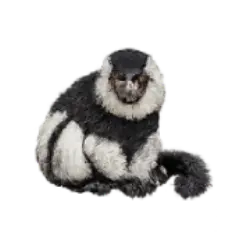
Black-and-white Ruffed Lemur
Black-and-white Ruffed Lemur is a mammal known for black-and-white shaggy coat, loud…
Baca panduan spesiesLebih banyak hewan dengan kekuatan Opportunity Sense
Jelajahi semua hewan Opportunity Sense
Bawa ensiklopedia ke dunia nyata
AnimalDex membantumu memindai hewan nyata, mengidentifikasi spesies, mengoleksi kartu, dan belajar dari alam di mana pun kamu berada.