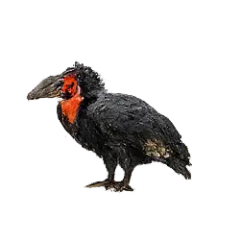
Abyssinian Ground Hornbill
Bucorvus abyssinicus
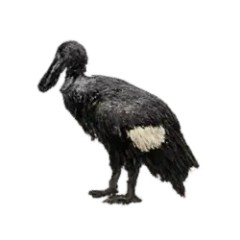
Abyssinian Ground Hornbill is a bird known for bare red facial skin, huge downward-curved bill, and long-striding ground hunt.
Baca panduan spesies →Temukan · koleksi · pelajari
Jelajahi koleksi panduan hewan yang terus berkembang, dari identifikasi dan habitat hingga perilaku, rarity, simbolisme, dan pelajaran dari alam.
Gunakan AnimalDex untuk memindai hewan di dunia nyata, membuka profil spesies, dan membangun koleksi satwa liarmu sendiri.
Mulai dari hewan dengan biologi dan perilaku yang menunjukkan cara unik untuk merasakan, bertahan hidup, dan hidup bersama.
Telusuri hewan seperti orang menemukannya—dari peliharaan dan burung hingga reptil, satwa laut, dan spesies terancam.
Filter ensiklopedia AnimalDex berdasarkan rarity, lokasi, atau alfabet.
Menampilkan 48 dari 472 spesies
Bucorvus abyssinicus
Abyssinian Ground Hornbill is a bird known for bare red facial skin, huge downward-curved bill, and long-striding ground hunt.
Baca panduan spesies →Scientific classification under review
Acorn Weevil turns Acorn Drill into something visible: Use the narrow tool that reaches the hidden future. Its real power is not a generic bird or animal lesson, but the way drilling into acorns makes 'Specialization creates provision when the target is precise.' practical in daily survival. Acorn Weevils use long snouts to drill into acorns and lay eggs where larvae can develop inside the nut. That is why this species belongs here: its body, food, shelter, risks, and rhythm all point back to the same power.
Baca panduan spesies →Pygoscelis adeliae
Adelie Penguin is a bird known for classic black-and-white body, ice-edge breeding life, and long-distance colony commuting.
Baca panduan spesies →Haliaeetus vocifer
African Fish Eagle is a bird of prey known for striking white head and chest, powerful fish-lifting talons, and far-carrying lake calls.
Baca panduan spesies →Psittacus erithacus
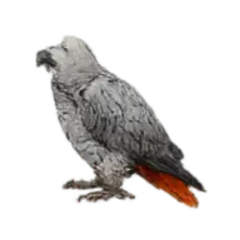
The African grey parrot is a highly intelligent parrot known for gray plumage, red tail, and advanced vocal learning.
Baca panduan spesies →Actophilornis africanus
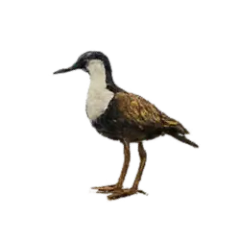
African Jacana is a bird known for extremely long spreading toes, chestnut and black wetland body, and lily-pad walking balance.
Baca panduan spesies →Anastomus lamelligerus
African Openbill is a bird known for gap between upper and lower mandibles, black-and-white stork body, and snail-specialist wetland feeding.
Baca panduan spesies →Spheniscus demersus
African Penguin is framed by Coastal Pairing: a bird whose body and habits make sense in southern African coasts, islands, burrows, beaches, and guano or sand nesting sites. Its daily pattern centers on colony breeding, turning a specific place into a working strategy rather than a backdrop. The field-guide reason is not just that it survives; it survives by matching food, shelter, risk, and movement into one recognizable principle.
Baca panduan spesies →Pyrrhocorax graculus
Alpine Chough turns High-Play Learning into something visible: Learn the mountain by making the air social. Its real power is not a generic bird or animal lesson, but the way social mountain flight makes 'Perspective becomes sharper when curiosity and group life stay active.' practical in daily survival. Alpine Choughs are social mountain corvids that fly around cliffs and human areas, using intelligence, play, and opportunistic feeding. That is why this species belongs here: its body, food, shelter, risks, and rhythm all point back to the same power.
Baca panduan spesies →Recurvirostra americana
American Avocet is a bird known for upcurved needle bill, long blue-gray legs, and side-sweeping shallows feeding.
Baca panduan spesies →Cinclus mexicanus
American Dipper is a bird known for stream-running songbird body, underwater walking ability, and bold cold-river foraging.
Baca panduan spesies →Cinclus mexicanus
Water Ouzel is framed by Cold-Current Song: a bird whose body and habits make sense in fast cold streams, rocky banks, cascades, and mountain river territories. Its daily pattern centers on stream diving, turning a specific place into a working strategy rather than a backdrop. The field-guide reason is not just that it survives; it survives by matching food, shelter, risk, and movement into one recognizable principle.
Baca panduan spesies →Rupicola peruvianus
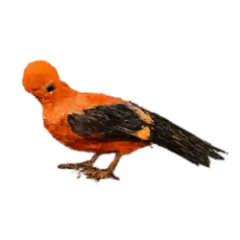
Andean Cock-of-the-rock is a bird known for brilliant orange fan crest, lek-court dancing display, and cloud-forest cliff nesting.
Baca panduan spesies →Vultur gryphus
Andean Condor is a bird known for enormous mountain wingspan, high-altitude soaring, and carrion-cleaning role.
Baca panduan spesies →Chloephaga melanoptera
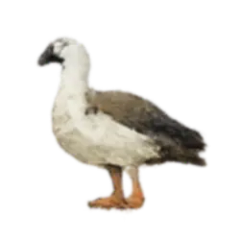
Andean Goose is a bird known for white body with black flight feathers, pink legs, and high-altitude grazing.
Baca panduan spesies →Vanellus resplendens
Andean Lapwing is a bird known for smoky gray body, pink legs, and sharp upland alarm calls.
Baca panduan spesies →Leopardus jacobita
Andean Mountain Cat expresses Thin-Air Solitude through real survival details, not a generic symbol. Its its long banded tail helps balance and signal in rocky terrain; because it lives in high Andean rocky slopes, puna grassland, cliffs, and sparse cold valleys and feeds on mountain viscachas, small rodents, birds, and high-altitude prey, the principle becomes practical: the animal survives by matching its body and choices to a very specific world.
Baca panduan spesies →Anhinga anhinga
Anhinga is a bird known for spear-straight bill, snake-like swimming neck, and wing-spreading drying posture.
Baca panduan spesies →Sterna paradisaea
Arctic Tern is a bird known for planet-spanning migration, slender pointed wings, and precise fish-catching flight.
Baca panduan spesies →Fratercula arctica
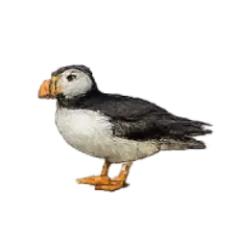
The Atlantic puffin is a small auk with a colorful bill, excellent underwater propulsion, and dense colony life on northern ocean cliffs and islands.
Baca panduan spesies →Thalassarche chlororhynchos
Atlantic Yellow-nosed Albatross is a bird known for long gliding ocean wings, yellow stripe along the bill, and remote island breeding life.
Baca panduan spesies →Alectura lathami
Australian Brush-turkey expresses Mound Heat Management through real survival details, not a generic symbol. Its decomposing leaves provide the heat that replaces brooding; because it lives in Australian rainforests, wet gullies, suburban gardens, and leaf-litter-rich forest edges and feeds on fallen fruit, seeds, insects, small animals, and food scratched from litter, the principle becomes practical: the animal survives by matching its body and choices to a very specific world.
Baca panduan spesies →Gymnorhina tibicen
Australian Magpie is framed by Warbling Territory: a bird whose body and habits make sense in Australian woodlands, parks, lawns, farms, and urban streets. Its daily pattern centers on song and social learning, turning a specific place into a working strategy rather than a backdrop. The field-guide reason is not just that it survives; it survives by matching food, shelter, risk, and movement into one recognizable principle.
Baca panduan spesies →Haliaeetus leucocephalus
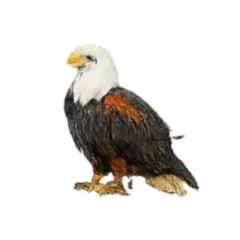
The bald eagle is a large North American raptor recognized by adult white head and tail plumage and strong association with large water bodies.
Baca panduan spesies →Leucopsar rothschildi
The Bali myna is a striking white starling with blue skin around the eye, a crest, and an extremely limited natural range on the island of Bali.
Baca panduan spesies →Toxotes jaculatrix
Archer Tetra turns Waterline Aim into something visible: Hit the target from below without leaving your element. Its real power is not a generic bird or animal lesson, but the way water shooting makes 'Precision improves when distance, angle, and restraint are all understood.' practical in daily survival. Archerfish shoot jets of water at insects above the surface, adjusting for refraction and range before knocking prey into the water. That is why this species belongs here: its body, food, shelter, risks, and rhythm all point back to the same power.
Baca panduan spesies →Riparia riparia
Bank Swallow turns Sandbank Colony into something visible: Dig small shelters together into the same wall. Its real power is not a generic bird or animal lesson, but the way colony burrows makes 'Group life becomes practical when many separate homes share one place.' practical in daily survival. Bank Swallows nest in colonies by excavating burrows in sandy banks, often returning to suitable vertical faces near water. That is why this species belongs here: its body, food, shelter, risks, and rhythm all point back to the same power.
Baca panduan spesies →Procnias nudicollis
Bare-throated Bellbird is a bird known for bare green throat skin, metal-loud ringing call, and fruit-carrying forest flight.
Baca panduan spesies →Tyto alba
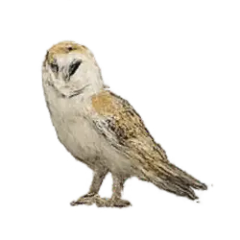
The barn owl is a pale, long-winged nocturnal raptor famous for heart-shaped facial structure, silent flight, and precise sound-based hunting.
Baca panduan spesies →Hirundo rustica
Barn swallows are agile aerial insectivores known for forked tails, high-speed turning, and close ties to open landscapes and human structures.
Baca panduan spesies →Branta leucopsis
Barnacle Goose teaches Migratory Fidelity because Barnacle Geese migrate in flocks and form strong pair bonds while relying on coordinated movement between breeding and wintering grounds. The creator-why is not just what it looks like; it is why its body, place, food, danger, timing, and reproduction all point toward the same usable lesson.
Baca panduan spesies →Bubo sumatranus
Barred Eagle-Owl teaches Canopy Vigilance because Barred Eagle-Owls are forest owls that perch, listen, and hunt from wooded cover, often active at night. The creator-why is not just what it looks like; it is why its body, place, food, danger, timing, and reproduction all point toward the same usable lesson.
Baca panduan spesies →Terathopius ecaudatus
Bateleur is a bird of prey known for very short tail, rocking aerial posture, and bright red face and legs.
Baca panduan spesies →Ploceus philippinus
Bower Finch turns Woven Attraction into something visible: Make the home itself part of the invitation. Its real power is not a generic bird or animal lesson, but the way display and nest craft makes 'Creativity becomes persuasive when structure and beauty serve one purpose.' practical in daily survival. Bower Finch is a display-focused bird concept here, drawing on bower-building behavior where arranged objects and structure influence mate attraction. That is why this species belongs here: its body, food, shelter, risks, and rhythm all point back to the same power.
Baca panduan spesies →Panurus biarmicus
Bearded Reedling is a bird known for mustache-like black facial streaks, long balancing tail, and reed-stem acrobatics.
Baca panduan spesies →Mellisuga helenae
Bee Hummingbird is a bird known for tiny jewel-like body, hovering flower feeding, and blazing wingbeat speed.
Baca panduan spesies →Megaceryle alcyon
Belted Kingfisher is a bird known for shaggy crest and heavy bill, loud rattling flight call, and plunge-diving fish capture.
Baca panduan spesies →Rynchops niger
Black Skimmer is a bird known for long lower bill blade, low surface-skimming flight, and sandbar colony nesting.
Baca panduan spesies →Rynchops niger
Skimmer Bird is framed by Waterline Cut: a bird whose body and habits make sense in coasts, rivers, sandbars, estuaries, and open water surfaces. Its daily pattern centers on skim feeding, turning a specific place into a working strategy rather than a backdrop. The field-guide reason is not just that it survives; it survives by matching food, shelter, risk, and movement into one recognizable principle.
Baca panduan spesies →Cygnus atratus
Black Swan is a bird known for black body with red bill, long curved neck, and calm wetland gliding.
Baca panduan spesies →Coragyps atratus
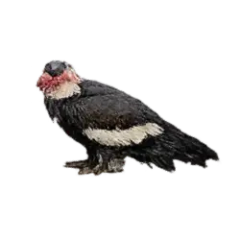
Black Vulture is a bird known for dark broad-winged soaring, bare black scavenger head, and social roosting and carcass-search behavior.
Baca panduan spesies →Thalassarche melanophris
Black-browed Albatross is a bird known for dark eyebrow line, long narrow gliding wings, and cliff-colony ocean soaring.
Baca panduan spesies →Nycticorax nycticorax
Black-crowned Night Heron is a bird known for stocky night-fishing body, black crown and back, and still twilight hunting posture.
Baca panduan spesies →Theristicus melanopis
Black-faced Ibis is a bird known for long downcurved probing bill, dark bare facial skin, and meadow and marsh walking.
Baca panduan spesies →Phoebastria nigripes
Black-footed Albatross is a bird known for immense ocean-going wings, wave-skimming flight, and remote island nesting.
Baca panduan spesies →Threskiornis melanocephalus
Black-headed Ibis is a bird known for bare black head, clean white body, and wetland probing feeding.
Baca panduan spesies →Rissa tridactyla
Kittiwake turns Cliff-Nest Endurance into something visible: Raise life on the narrow edge without losing the flock. Its real power is not a generic bird or animal lesson, but the way colony nesting makes 'Security can be built where space is scarce if cooperation holds.' practical in daily survival. Kittiwakes are cliff-nesting gulls that breed on ledges and forage over cold northern seas. That is why this species belongs here: its body, food, shelter, risks, and rhythm all point back to the same power.
Baca panduan spesies →Sterna sumatrana
Black-naped Tern is a bird known for clean white seabird body, thin black eye stripe, and knife-light plunge feeding.
Baca panduan spesies →Page 1 of 10
Telusuri koleksi khusus tanpa memenuhi navigasi utama AnimalDex.
AnimalDex membantumu memindai hewan nyata, mengidentifikasi spesies, mengoleksi kartu, dan belajar dari alam di mana pun kamu berada.