
Animal field guide
African Bush Elephant
Identification, habitat, rarity, behavior, symbolism, facts, and practical lessons from nature.
The Desert Memory Titan. The African Bush Elephant moves with memory, family, and landscape knowledge. It shows that strength becomes wiser when it remembers the path.
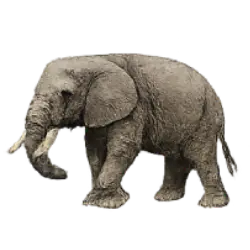
AnimalDex card
Unlock this animal card
Scan or capture this animal with AnimalDex to reveal its collectible card and add it to your wildlife collection.
Get AnimalDexScientific name
Loxodonta africana
Category
Mammal
Habitat
savannah, woodland, floodplain, and open dry country
Rarity
Uncommon · 65/100
Native range
Sub-Saharan Africa
Memory Path
Remember the route.
Carry experience like a map, not a weight.
What it teaches
The strongest route is often the one memory has tested before.
Try it
In human life, that means steady effort can outrun dramatic bursts that do not last.
Nature proof
African bush elephants use social memory, matriarch leadership, long movement routes, and powerful bodies to survive.
Use it for
Ranked African Bush Elephant captures
No ranked community captures for this species yet. Be the first in the app.
Why Memory Path?
The creator's reasoning behind this Animal Principle and the biology that supports it.
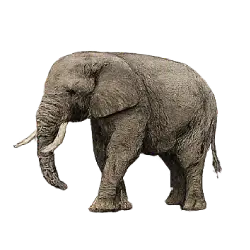
African Bush Elephant is a mammal known for huge fan-shaped ears, long open-country stride, and landscape-shaping feeding strength.
How to identify a African Bush Elephant
- huge fan-shaped ears
- long open-country stride
- landscape-shaping feeding strength
- Often associated with savannah, woodland, floodplain, and open dry country
Why African Bush Elephant are interesting
- African Bush Elephant is a useful example of how anatomy and habitat fit together as one survival system.
- Its shape, movement style, and food strategy make it easy to compare with related animals.
- This species turns one page into a lesson about adaptation, ecosystem role, and identification.
Habitat: savannah, woodland, floodplain, and open dry country
Native range: Sub-Saharan Africa
Native range
Natural range, not this specific capture location.
savannah, woodland, floodplain, and open dry country
To find African Bush Elephant in the wild, focus on the exact habitat patches that match its body design and daily behavior, not just the broad country where it exists. You usually do better by working one good piece of habitat inside sub-Saharan Africa than by covering too much ground.
- Quiet marsh edges, reedbeds, river bends, or shallow wetland margins
- Forest edge, canopy gaps, fruiting trees, or shaded trails where cover and food meet
- Open grassland edges, lightly wooded plains, or raised ground where you can scan long distances
- Start early, pick one strong patch of habitat, and stay long enough for movement to return after you arrive.
- Work edges, clearings, fruiting trees, and stream crossings rather than walking randomly through dense cover.
- Move quietly, stop often, and give the habitat time to settle; many mammals and insects show themselves only after the first pause.
Herbivorous, eating grasses, leaves, bark, fruit, roots, and branches.
Adults have few predators; calves may be threatened by lions, hyenas, or drought stress.
Sleeps in short periods, often resting less than many mammals because feeding demands are high.
Can live around 60-70 years in the wild under good conditions.
Females carry calves through a long pregnancy and raise them with help from the herd.
Males are larger and often leave natal herds, while females remain in family groups.
- African Bush Elephant adjusts movement and feeding to match light, temperature, and food access in its habitat.
- Body design, timing, and shelter choices all help this species stay effective in the wild.
- Patient observation usually reveals more behavior than close approach or fast movement.
African Bush Elephant most often symbolizes memory path in AnimalDex because its real survival behavior repeatedly shows this pattern.
The strongest route is often the one memory has tested before.
African bush elephants use social memory, matriarch leadership, long movement routes, and powerful bodies to survive.
- Keep distance and let the animal choose the space.
- Avoid blocking movement routes, nesting areas, or feeding behavior.
- Use optics, patience, and quiet observation instead of crowding for a closer view.
- Regional relatives may look similar at a distance.
- Juveniles, adults, and seasonal forms can differ in color or size.
- Light, angle, and habitat context can change how field marks appear.
African Bush Elephant stat profile
Canonical species stats are shown when available. Public analysis records are only used as fallback while species profiles are backfilled.
Stats source: Canonical species profile
Dominance
95
Speed
38
Size
92
Intelligence
90
Rarity
65%
Total
380
Size scale
Colossal
Uses the canonical size stat for consistent placement


$354 – $736
Estimated value range
Confidence 69%
Estimated AnimalDex value generated from canonical species stats.
Not a marketplace listing.
Estimated value based on the identified animal and available pricing context. Not a marketplace listing.
How rare are African Bush Elephant?
Rarity: Uncommon (65/100)
African Bush Elephant is never easy to find and becomes less secure when savannah, woodland, floodplain, and open dry country is reduced or broken apart.
Public Animal Power
Explore this Animal Power
This is a public capture, so you can explore its Animal Power here. Personal Apex matches and challenges use your Wild Profile and animals you own.
Own an animal with this power to use it in Growth challenges.
Related animals
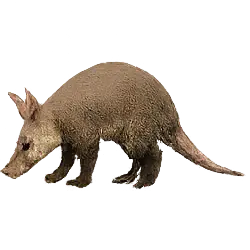
Aardvark
The aardvark is a nocturnal African mammal known for its long snout, strong digging…
Read species guide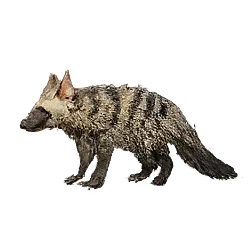
Aardwolf
The aardwolf is a small striped relative of hyenas that feeds mainly on termites rather…
Read species guide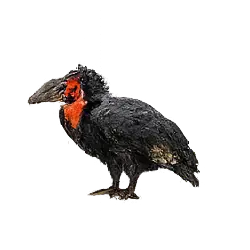
Abyssinian Ground Hornbill
Abyssinian Ground Hornbill is a bird known for bare red facial skin, huge…
Read species guideMore animals with Long-Term Endurance
Browse all Long-Term Endurance animals

Take the encyclopedia outside
AnimalDex helps you scan real animals, identify species, collect cards, and learn from nature wherever you are.
Related blog guides
Continue learning with practical articles connected to this species.
African Bush Elephant Symbolism: Matriarch Precision, Savanna Memory & Herd Navigation
Explore African bush elephant symbolism through matriarch leadership and savanna precision.
Read blog article