Firefly behaviorAnimal signalingInsect ecology
Why Fireflies Use Light So Well: Flash Codes Explained
How fireflies make light with luciferin and luciferase, why each species flashes its own code, and how Photuris females fake replies to eat rivals.
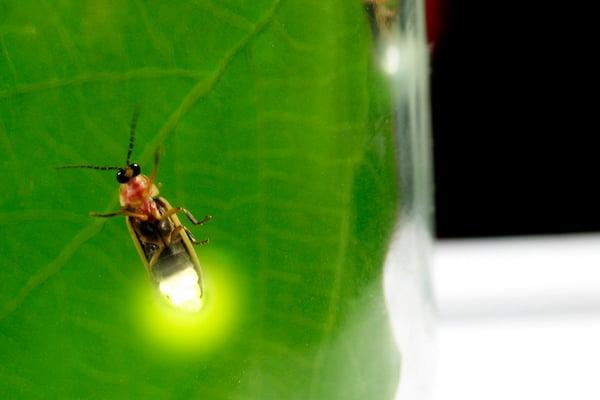
Why fireflies are a better systems story than a nostalgia story
Fireflies are beetles, not flies: around 2,000 species in the family Lampyridae, found on every continent except Antarctica. Most are 5 to 25 millimetres long with soft wing covers, and the adults of many species live only two to four weeks, long enough to find a mate. What they are famous for is a communication system that works in the dark at almost no energy cost and tells each species apart from the rest.
The light is not scenery. It is a species-specific code, timed to the second and shaped in flight, that males broadcast and females answer. Understanding the code explains the summer display and the predators that have learned to hack it.
What makes a firefly unique?
The light is made in a lantern on the underside of the last abdominal segments. Inside, cells called photocytes hold the molecule luciferin and the enzyme luciferase. When oxygen, ATP and magnesium reach the luciferin, luciferase drives a reaction that releases a photon of yellow-green light at around 560 nanometres and leaves oxyluciferin and carbon dioxide behind. A layer of uric acid crystals beneath the photocytes reflects the glow outward.
The reaction is cold light: nearly all the energy leaves as photons rather than heat, which is why a firefly can glow against your skin without warmth, while an incandescent bulb loses about 90 percent of its energy as heat. Classic measurements put the quantum yield near 90 percent, and a 2008 study revised it to about 41 percent, still remarkable for a chemical light source.
Flash control is the clever part. The firefly cannot switch the enzyme on and off quickly enough, so it gates the oxygen instead. Nerve signals release nitric oxide, which briefly stops the cell's mitochondria from consuming oxygen, letting oxygen flood the photocytes and trigger the flash. When the nitric oxide clears, the mitochondria soak up the oxygen again and the light goes out. The same chemistry now runs in laboratories worldwide: the luciferase gene is a standard reporter for tracking gene activity in living cells.
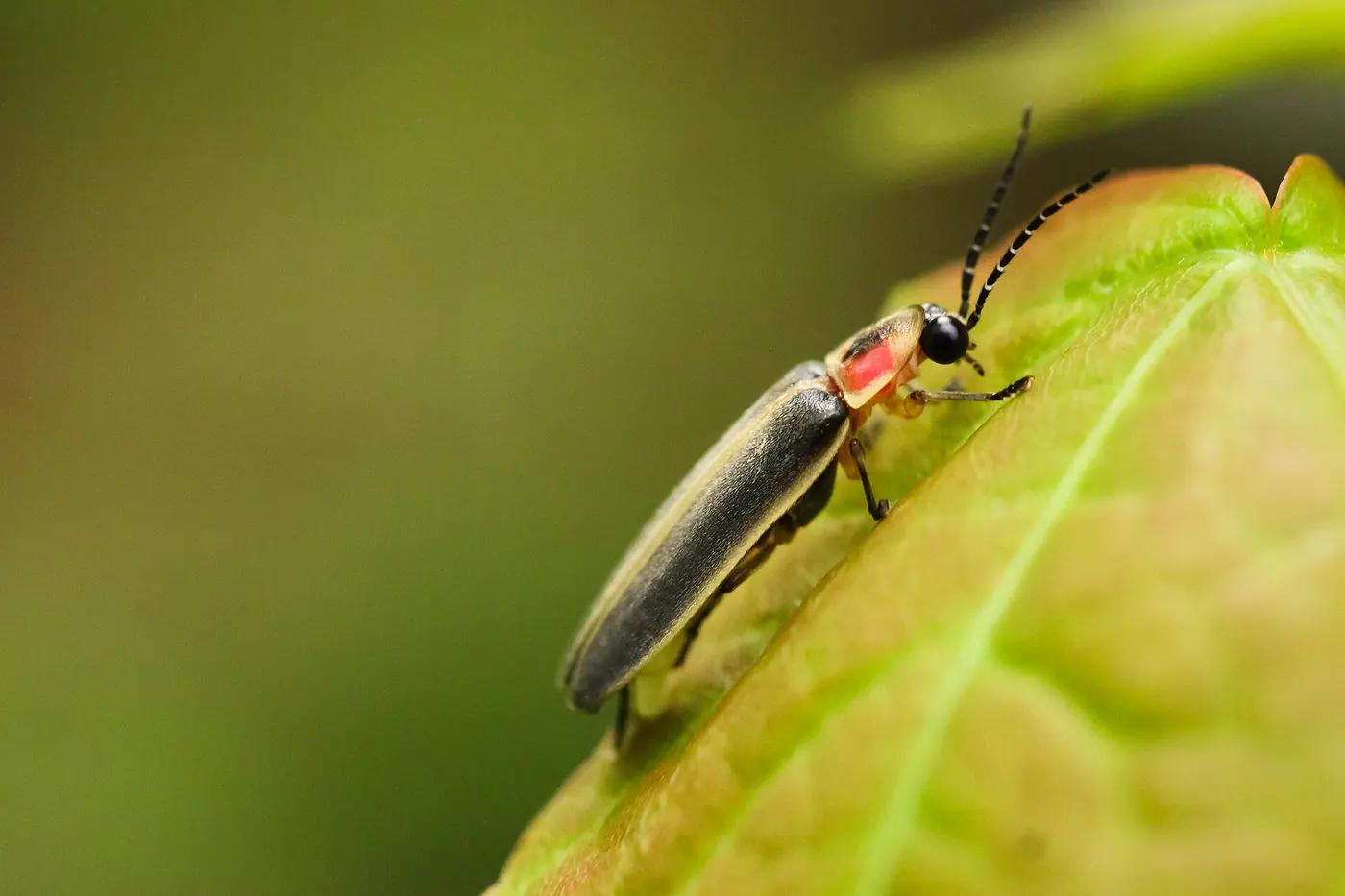
Firefly flash patterns compared
Each species flashes a distinct pattern of duration, interval, colour and flight path, and the female of the same species answers after a species-specific delay. Temperature matters: the same male flashes faster on a warm night than a cool one, and the female's reply delay shortens to match. The table lists some well-studied codes.
| Species | Male signal | Where and when |
|---|---|---|
| Photinus pyralis (Big Dipper firefly) | Single J-shaped flash of about half a second, repeated every ~6 s while flying upward; female answers ~2 s later from the grass | Eastern North America, dusk in early summer |
| Photinus carolinus (synchronous firefly) | Bursts of 5–8 flashes, then 6–8 s of darkness, synchronised across thousands of males | Great Smoky Mountains, late May to June |
| Photuris species | Fast, erratic flickers and multiple flashes; females also mimic Photinus female replies | North America, later in the night and higher up |
| Pteroptyx malaccae | Males gather in mangrove trees and flash in near-perfect unison, about once per second, all night | Southeast Asian estuaries |
| Lampyris noctiluca (common glow-worm) | Flightless female glows continuously; male flies in to find her | Europe, June to July |
How fireflies survive
Most of a firefly's life is spent as a larva. Larvae live one to two years in damp soil and leaf litter and are predators of snails, slugs and earthworms, which they paralyse with digestive enzymes injected through their jaws. Larvae of all species glow, and so do the eggs of some; the glow warns ground predators that the animal is distasteful. Adults of many species do not feed at all, living on reserves while they signal.
The chemical defence is a group of steroids called lucibufagins, which make Photinus fireflies toxic to birds, lizards and spiders. Photuris fireflies cannot make lucibufagins, and their females get them by predation: a Photuris female watches a male Photinus flash, imitates the reply of a Photinus female, and eats the male when he lands. Entomologist James Lloyd documented these femme fatale fireflies in 1965, and Thomas Eisner later showed the stolen steroids make the Photuris female and her eggs unpalatable in turn.
A strong signal does not have to be loud or expensive. It has to be legible, efficient and correctly timed, and even then someone will try to forge it.
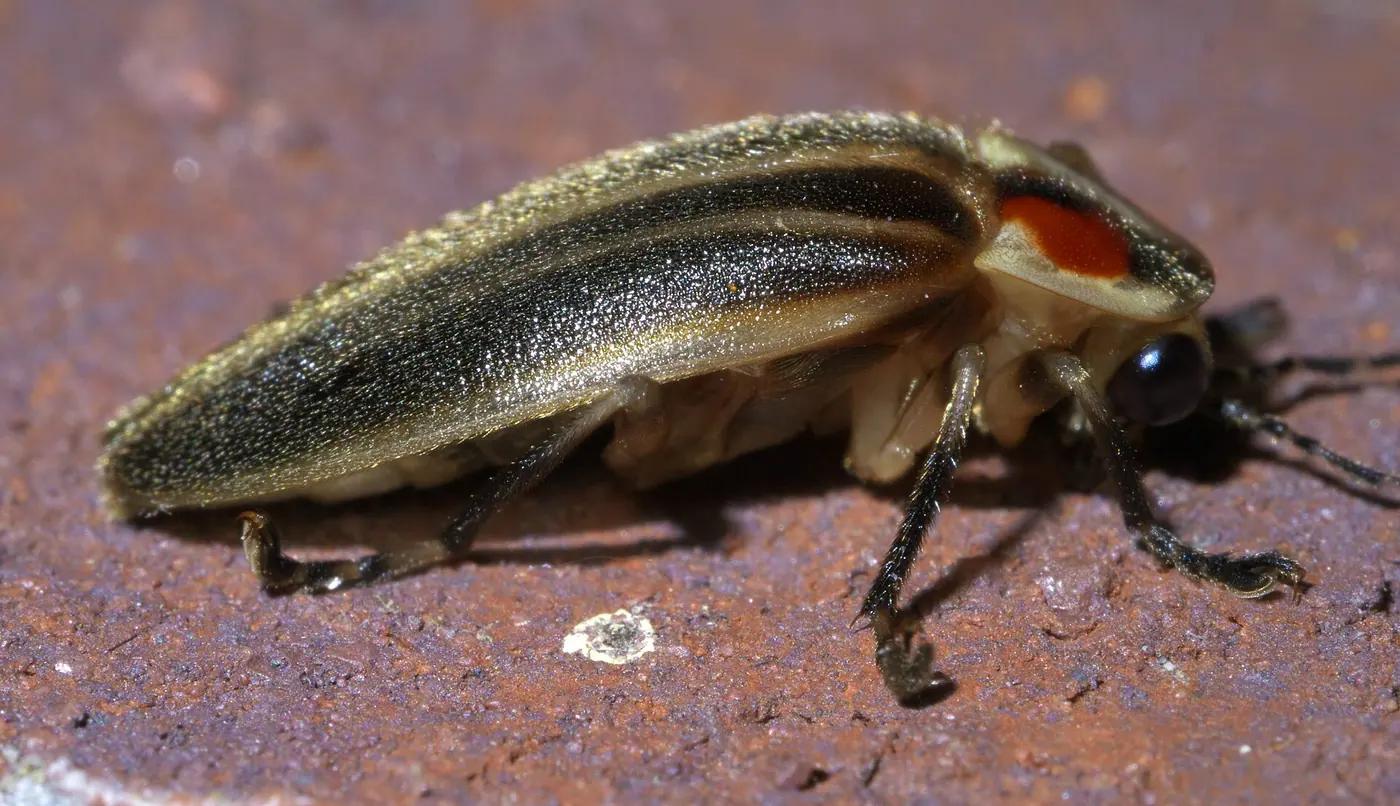
The ecosystem role of fireflies
Firefly larvae are among the main predators of snails and slugs in damp meadows, woodland floors and marsh edges, and the adults feed a few predators that can tolerate their chemistry, including some spiders and frogs. Because the larvae need moist soil for one to two years and the adults need dark nights to signal, fireflies disappear early when a landscape is drained, paved or lit.
That sensitivity makes them an indicator. The first IUCN assessment of North American fireflies, published in 2021, found about 14 percent of the 132 species evaluated are threatened with extinction, with habitat loss, light pollution and pesticides as the main causes. Artificial light at night is a direct attack on the signal: females cannot see male flashes against a bright background, and lit areas go quiet.
how honey bees keep ecosystems running
How to find and photograph fireflies
Fireflies are easy to see and hard to photograph. These cues cover both.
Go at dusk in early summer
Photinus pyralis starts flashing about 20 minutes after sunset in June and July. Warm, humid, windless evenings after rain are best.
Find damp edges
Look where long grass meets woodland or water: meadow margins, stream banks, marsh edges. Mown lawns and lit streets hold few.
Read the flash
A rising J-shaped flash every six seconds is Photinus pyralis; fast flickers higher in the trees later at night are usually Photuris. Count the interval to separate species.
Let your eyes adapt
Turn off every light, including your phone screen, and wait 10 minutes. For a photo, a tripod and a 15 to 30 second exposure records the flash tracks; a live in-app capture works best on a resting firefly on a leaf before full dark.
wildlife photography companion
What humans can learn from fireflies
Fireflies show that a good signal is defined by its receiver. The flash is cheap, it is unmistakable to the one audience that matters, and it is timed so the reply can be checked against a known delay.
They also show the cost of a legible code: anything that can be read can be forged. Photuris built a career on that. Any system that depends on a clear signal needs a way to verify who is sending it.
Systems Intelligence & Hidden Purpose
Lihat hewan-hewan ini sebagai sistem biologis yang dirancang dengan presisi: apa fungsinya, bagaimana ia bekerja di lingkungan, dan apa yang bisa kita pelajari dari desainnya.
Specialized Hardware
Luciferin-based light production, species-specific flash timing, and low-light visual sensitivity make fireflies highly efficient communication hardware for dark environments.
Systems Script
Fireflies turn mating, territory, and species recognition into precise light code. They show that even small organisms can coordinate behavior cleanly when signals are cheap, legible, and well-timed.
Strategic Insight
A strong signal is not necessarily a loud one. The best signals are energy-efficient, hard to confuse, and tuned to the right audience.
Pertanyaan singkat
Jawaban ringkas untuk pertanyaan yang paling sering muncul pada topik ini.
- How do fireflies make light?
- Fireflies make light in a lantern at the tip of the abdomen, where the enzyme luciferase combines the molecule luciferin with oxygen, ATP and magnesium. The reaction releases a photon of yellow-green light and leaves oxyluciferin and carbon dioxide. Almost no energy is lost as heat, which is why the glow is called cold light. The insect times each flash by controlling the oxygen supply with nitric oxide.
- Why do fireflies flash in different patterns?
- Each firefly species has its own flash code so males and females can find the right partner in the dark among other species. The code combines flash length, interval, colour and flight path, and the female answers after a species-specific delay. Photinus pyralis males give a single J-shaped flash every six seconds; Photinus carolinus males flash in synchronised bursts of five to eight.
- Are fireflies dangerous or poisonous?
- Fireflies are harmless to handle but poisonous to eat. Photinus fireflies contain steroids called lucibufagins that make them toxic to birds, lizards and spiders, and pet lizards have died after eating them. Larvae advertise the same defence by glowing. Predatory Photuris females steal these chemicals by eating Photinus males.
- Where is the best place to see fireflies?
- Damp meadow edges, stream banks and woodland margins on warm, humid June and July evenings are the best places across eastern North America, Europe and East Asia. Famous displays include the synchronous Photinus carolinus in Great Smoky Mountains National Park in late May and June, and the flashing mangrove trees of Pteroptyx fireflies in Malaysia and Thailand.
- Why are fireflies disappearing?
- Fireflies are declining because of habitat loss, light pollution and pesticides. Larvae need one to two years in moist soil, so drainage, paving and mowing remove them, while artificial light at night drowns out the flashes females use to find males. A 2021 IUCN assessment found about 14 percent of North American firefly species threatened with extinction.
Hewan yang disebut
Lompat dari artikel ini ke halaman spesies di balik contoh, catatan systems, dan referensi field guide.
Sources and further reading
Panduan jawaban terkait topik ini
Kalau kamu ingin perbandingan langsung dan rekomendasi yang jelas, lanjutkan ke halaman jawaban berikut.
Best Animal Identification Apps
Compare the best animal identification apps by features like photo/video identification, species coverage, collection capabilities, offline use, and more.
What Is Animal Collecting
Learn what animal collecting means in modern apps and how AnimalDex turns real-world sightings into cards, sets, rarity, and species learning.
Pokemon-Like Animal App
Looking for a Pokemon-like app with real animals? AnimalDex is something else: take any idea to a real animal for a genuinely different take, and every animal you meet in the wild joins your collection.
Panduan terkait
Honey bee
How Honey Bees Keep Ecosystems Running: Pollination Facts
How honey bees keep ecosystems running: the waggle dance, a 50,000-bee colony, foraging range, the share of crops that need pollinators, and the threats.
9 menit baca
Why Jumping Spiders Are So Precise: Vision and Jump Planning
Why jumping spiders are so precise: four pairs of eyes with set roles, principal eyes near a pigeon in acuity, depth from defocus, and hydraulic legs.
9 menit baca
How Barn Owls Hunt in the Dark: Hearing and Silent Flight
How barn owls hunt in the dark: asymmetric ears that place a mouse within two degrees, a facial disc that works as a dish, and wings that make no sound.
9 menit baca