AnimalDex
id
Kembali ke Kualitas

Kualitas Hewan

Adaptation

Keep the stripe.

Hewan di sini menunjukkan kualitas yang serupa melalui perilakunya di alam. Setiap spesies tetap punya prinsip, pelajaran, makna, dan halaman field guide sendiri.

44 spesies

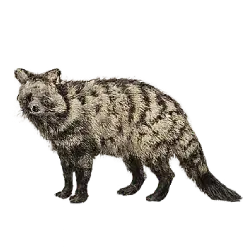
African Civet (Civettictis civetta) thumbnail image on AnimalDex

African Civet

Prinsip spesies: Scented Adaptation

Keep the stripe.

Adjust to the night without losing your pattern.

African Civets are nocturnal omnivores with striped coats, scent-marking glands, and flexible diets that let them forage across varied habitats.
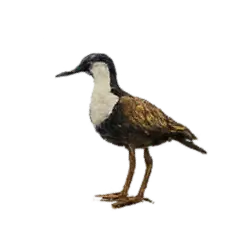
African Jacana (Actophilornis africanus) thumbnail image on AnimalDex

African Jacana

Prinsip spesies: Light Footing

Walk the leaves.

The impossible crossing becomes possible when pressure is spread with care.

African Jacanas have extremely long toes that spread their weight across floating vegetation, allowing them to walk over lily pads and other aquatic plants.

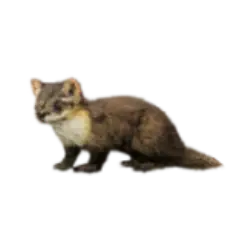
American Marten (Martes americana) thumbnail image on AnimalDex

American Marten

Prinsip spesies: Agility

Slip the hidden path.

Agility finds routes that force cannot enter.

American Martens have long flexible bodies, sharp claws, and arboreal ability that help them hunt and travel through snowy conifer forests.

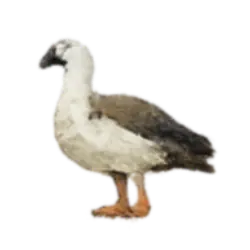
Andean Goose (Chloephaga melanoptera) thumbnail image on AnimalDex

Andean Goose

Prinsip spesies: Altitude Fit

Graze the thin air.

A hard place becomes home when the body accepts its altitude.

Andean Geese live in high-elevation wetlands and grasslands of the Andes, grazing in cold thin-air environments with strong bodies and pair bonds.

Argentine Black and White Tegu (Salvator merianae) thumbnail image on AnimalDex

Argentine Black and White Tegu

Prinsip spesies: Robust Adaptation

Roam and adjust.

Change becomes manageable when the body can dig, bask, roam, and feed widely.

Argentine Black and White Tegus are large omnivorous lizards that dig, bask, forage broadly, and use seasonal dormancy in cooler periods of their range.

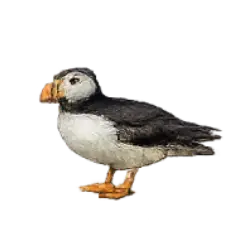
Atlantic Puffin (Fratercula arctica) thumbnail image on AnimalDex

Atlantic Puffin

Prinsip spesies: Three-World Fit

Belong in three worlds.

One body can belong to more than one world.

Atlantic Puffins nest on cliffs and burrows, fly over water, and swim underwater with their wings to catch fish.

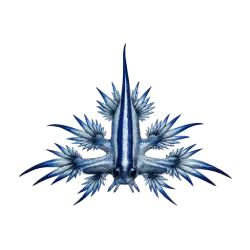
Blue Glaucus animal lesson image on AnimalDex

Blue Glaucus

Prinsip spesies: Alchemy

Turn threat into armor.

The right adaptation can turn danger into an advantage.

Blue glaucuses feed on stinging siphonophores and can store defensive stinging cells from that prey.

Brangus Cattle animal lesson image on AnimalDex

Brangus Cattle

Prinsip spesies: Hybrid Strength

Blend for strength.

Strength can come from blending different advantages into one working body.

Brangus Cattle combine Brahman and Angus ancestry, selected for hardiness, beef quality, and climate performance.

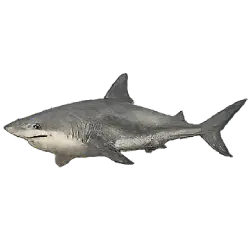
Bull Shark (Carcharhinus leucas) thumbnail image on AnimalDex

Bull Shark

Prinsip spesies: Osmotic Range

Cross the water line.

Real range comes from being able to change water without losing power.

Bull Sharks tolerate both salt and fresh water through osmoregulation and can move far into rivers as well as coastal marine habitats.

Celebes Crested Macaque animal lesson image on AnimalDex

Celebes Crested Macaque

Prinsip spesies: Bold Social Learning

Learn out loud.

Curiosity becomes power when it learns from social consequences.

Celebes Crested Macaques are social primates known for expressive group behavior, intelligence, and complex interactions.

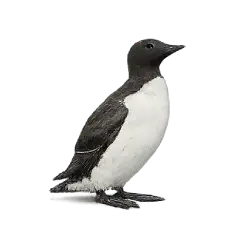
Common Murre (Uria aalge) thumbnail image on AnimalDex

Common Murre

Prinsip spesies: Two-World Discipline

Stand the cliff, swim the sea.

A life between cliff and sea demands discipline in both.

Common Murres breed in dense cliff colonies and dive underwater using wing-propelled swimming to pursue fish in cold seas.

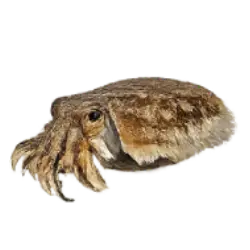
Cuttlefish (Sepiida) thumbnail image on AnimalDex

Cuttlefish

Prinsip spesies: Transformation

Change the skin.

Change your surface when the moment asks for another language.

Cuttlefish use chromatophores and other skin structures to rapidly change color, pattern, and texture for camouflage, communication, hunting, and defense.

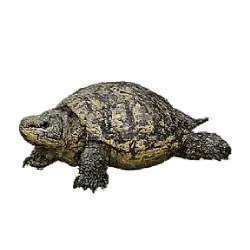
Diamondback Terrapin (Malaclemys terrapin) thumbnail image on AnimalDex

Diamondback Terrapin

Prinsip spesies: Brackish Strength

Hold the mixed water.

Mixed waters build creatures that can hold more than one world.

Diamondback Terrapins live in brackish coastal marshes, using patterned shells, strong swimming, and salt-tolerant habits to navigate tidal creeks and marsh habitats.

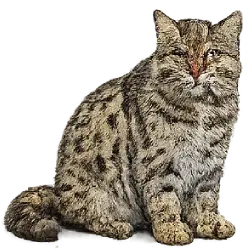
Fishing Cat (Prionailurus viverrinus) thumbnail image on AnimalDex

Fishing Cat

Prinsip spesies: Water Stalking

Stalk the water.

The best hunter learns the edge where land becomes water.

Fishing Cats hunt in wetlands, marshes, and riverbanks, using strong bodies, partially webbed feet, and skilled strikes to catch fish and aquatic prey.

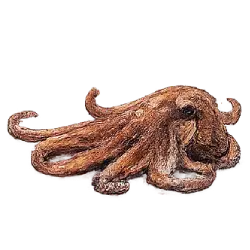
Giant Pacific Octopus (Enteroctopus dofleini) thumbnail image on AnimalDex

Giant Pacific Octopus

Prinsip spesies: Fluid Intelligence

Think in arms.

Flexibility turns tight places into open ones.

Giant Pacific Octopuses are intelligent cephalopods with flexible arms, suckers, camouflage, den use, and problem-solving ability.

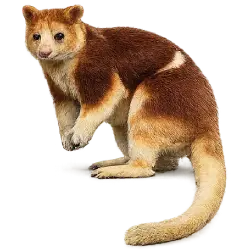
Goodfellow's Tree-kangaroo animal lesson image on AnimalDex

Goodfellow's Tree-kangaroo

Prinsip spesies: New Habitat

Take the old plan higher.

An old body plan can find a new home when it changes the way it moves.

Goodfellow's Tree-kangaroos are arboreal marsupials with strong forelimbs, gripping ability, and long tails adapted for tree life rather than open-ground hopping.

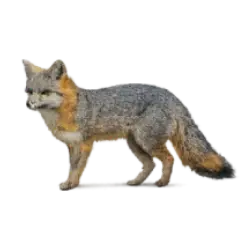
Gray Fox (Urocyon cinereoargenteus) thumbnail image on AnimalDex

Gray Fox

Prinsip spesies: Rule-Breaking

Climb the rule.

A new path appears when the usual category stops limiting the body.

Gray Foxes are unusual among canids for climbing trees using strong claws and rotating forearms, gaining access to fruit, refuge, and escape routes above ground.

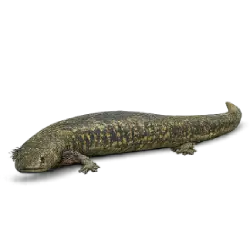
Greater Siren (Siren lacertina) thumbnail image on AnimalDex

Greater Siren

Prinsip spesies: Aquatic Simplicity

Keep the gills.

Thriving begins when the body stops pretending to need what it does not.

Greater Sirens are eel-like aquatic salamanders with external gills, small forelimbs, no hind limbs, and strong adaptation to muddy wetlands.

Jelajahi indeks terkait