

How Orangutans Think and Survive in the Canopy
Discover orangutan intelligence, canopy behavior, survival strategy, and ecosystem role through a systems view of one of the forest’s best problem solvers.
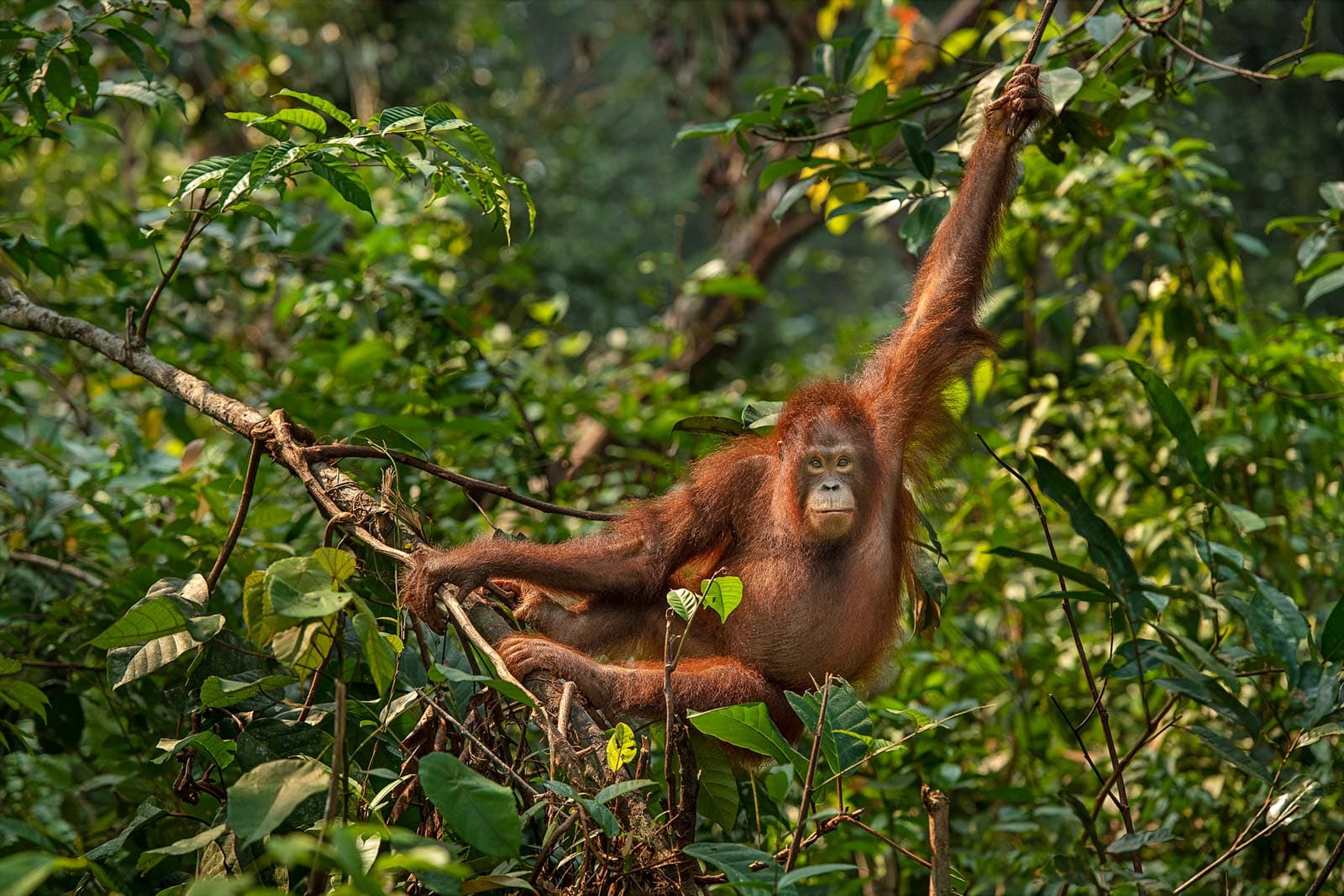
Why orangutans matter in conversations about animal intelligence
Orangutans matter because their intelligence is not theatrical. It is patient, spatial, and deeply tied to the realities of moving and feeding in a three-dimensional forest.
That makes them a stronger systems-biology story than the usual simplified narratives about being smart in a human-like way.
What makes an orangutan unique?
Long arms, strong hands and feet, slow development, and extensive learning time give orangutans a rare combination of mobility and cognitive refinement in the canopy.
They are not built for speed on the ground. They are built for solving arboreal problems in a habitat where one bad movement can be costly.
Types of orangutans
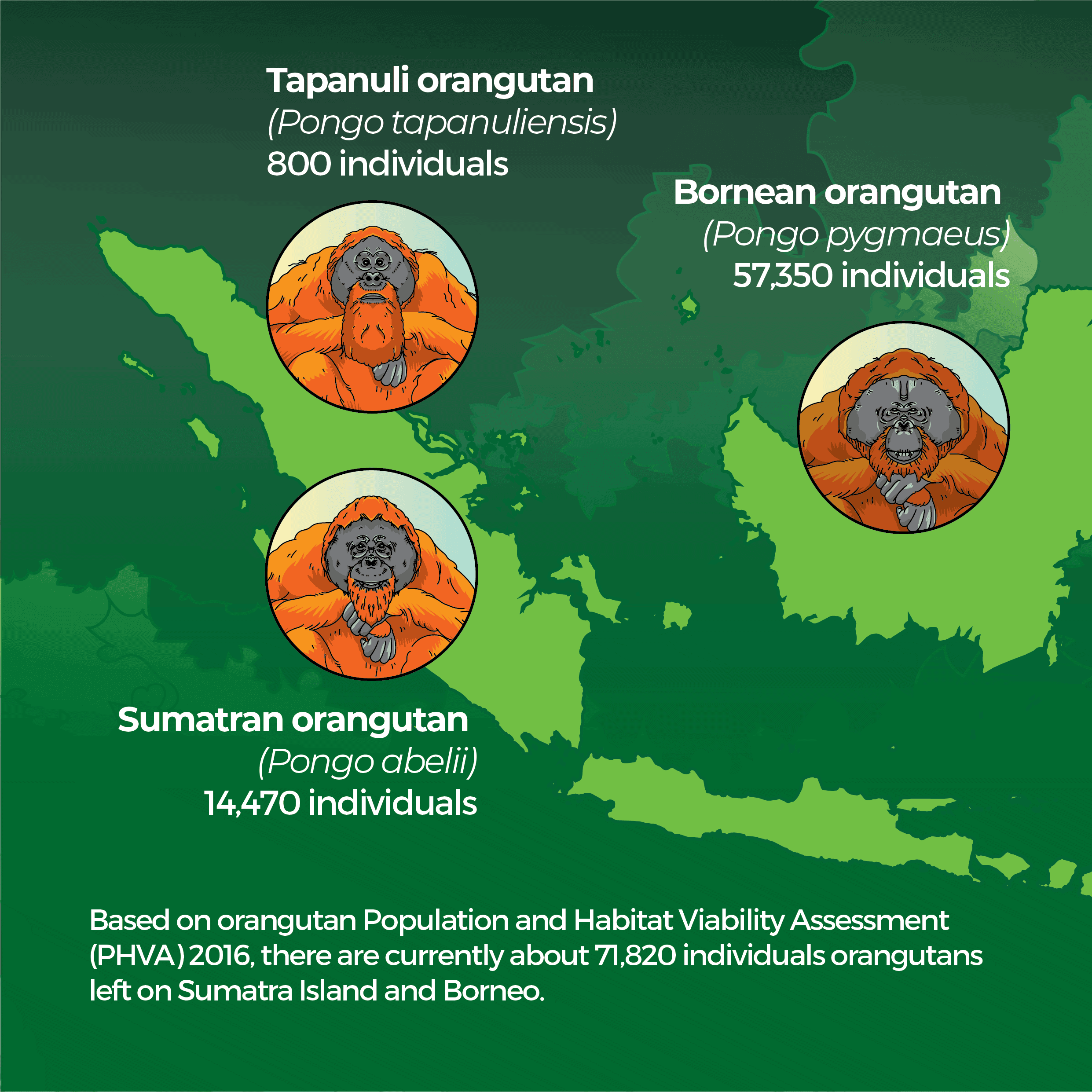
There are three living orangutan species, and the most useful comparison is Bornean orangutan vs Sumatran orangutan vs Tapanuli orangutan. Bornean orangutans are generally heavier-built and more robust, while Sumatran orangutans often look slimmer, paler, and more lightly built through the face and body.
Tapanuli orangutans are the rarest and most geographically restricted. They are closely related to the Sumatran form but are recognized as their own species, with differences in skull shape, hair texture, vocalization patterns, and isolated range in the Batang Toru ecosystem.
If you are trying to tell them apart in photos, geography is still one of the best clues. Borneo points to Bornean orangutan, northern Sumatra usually points to Sumatran orangutan, and the Batang Toru region points to Tapanuli orangutan.
How orangutans survive in a complex forest
Orangutans survive by remembering routes, timing fruit availability, and navigating branch architecture without wasting unnecessary energy. Their animal behavior rewards caution, planning, and habitat familiarity.
That is why forest degradation hits them hard. Break the canopy logic and you break part of the decision system they rely on.
The ecosystem role of orangutans
Orangutans disperse seeds and support forest regeneration through feeding and movement. Their ecosystem role is tied to long-range plant turnover, especially in dense forest systems where large-bodied dispersers matter.
They are not just residents of the canopy. They help keep the canopy’s future inventory moving.
What humans can learn from orangutans
Orangutans are a reminder that not every intelligent system should be optimized for speed. In dense, high-risk environments, patience and retained knowledge are often the premium traits.
That is the practical takeaway: if the environment is structurally complex, slow learning can be smarter than fast guessing.
Systems Intelligence & Hidden Purpose
See these animals as engineered biological systems: what they are built to do, how they fit the wider environment, and what their design can teach us.
System Role
The Arboreal Problem Solver
Orangutan
Specialized Hardware
Long, powerful arms, hook-like hands and feet, strong spatial memory, and an unusually long learning period make orangutans high-capacity canopy navigation and problem-solving hardware.
Systems Script
Orangutans disperse seeds, prune movement routes through the canopy, and help maintain forest regeneration over long timescales. Their niche rewards cognition, patience, and memory more than constant aggression.
Strategic Insight
Complex environments do not always reward speed first. Sometimes the edge comes from learning slowly enough that the model actually holds.
Animals mentioned
Jump from this article into the species pages behind the examples, systems notes, and field-guide references.
Related comparisons
Continue with structured animal-vs-animal comparison pages connected to the species in this guide.
Chimpanzee vs Orangutan: Which Ape Has the Better Edge?
Orangutan gets the stronger pure-strength verdict, while chimpanzee gets the faster, more aggressive, and more socially volatile profile.
Read comparisonDolphin vs Orangutan Intelligence: Which Animal Thinks Better?
Dolphin gets the broader intelligence edge through communication, social learning, and fluid group coordination. Orangutan remains exceptional in deliberate problem solving, memory, and tool-oriented planning, especially in structured tasks.
Read comparisonGorilla vs Orangutan: Which Ape Is Stronger?
Gorilla is the stronger overall answer because it brings much more total mass and collision power. Orangutan remains extraordinary in arm strength and climbing control, but it is built for the trees, not for overpowering a gorilla on the ground.
Read comparisonAnswer guides related to this topic
If you want direct comparisons and clear recommendations, continue with these answer-focused pages.
Best Animal Identification App
Looking for the best animal identification app? Learn how AnimalDex combines AI scanning, collecting, rarity tracking, and field-guide learning in one app.
Read answer guideWhat Is Animal Collecting
Learn what animal collecting means in modern apps and how AnimalDex turns real-world sightings into cards, sets, rarity, and species learning.
Read answer guidePokemon-Like Animal App
Looking for a Pokemon-like animal app with real species? AnimalDex combines creature-collection energy with AI scanning and wildlife learning.
Read answer guideTurn what you learn into a real animal collection
Keep going in AnimalDex with the species behind this guide, real-world sighting context, and a collection that grows beyond the article.
Related guides
What Makes Crows So Intelligent? Systems, Behavior, and Survival Strategy
Learn what makes crows so intelligent, from memory and tool use to adaptive behavior, survival strategy, and their ecosystem role in changing environments.
Read articleWhy Elephants Never Stop Reshaping Landscapes
Explore elephant behavior, memory, survival strategy, ecosystem role, and the systems biology behind how elephants reshape habitats over time.
Read articleHow Crocodiles Dominate the Water Edge: Ambush, Behavior, and Ecosystem Role
Understand crocodile behavior, ambush survival strategy, ecosystem role, and why riverbanks and estuaries become so dangerous when crocodiles control the chokepoints.
Read article