

Crow intelligenceAnimal behaviorTool use
What Makes Crows So Intelligent? Tool Use, Memory, Society
What makes crows so intelligent: hooked tools, faces remembered for years, primate-level neuron density, and a society that spreads what one bird learns.
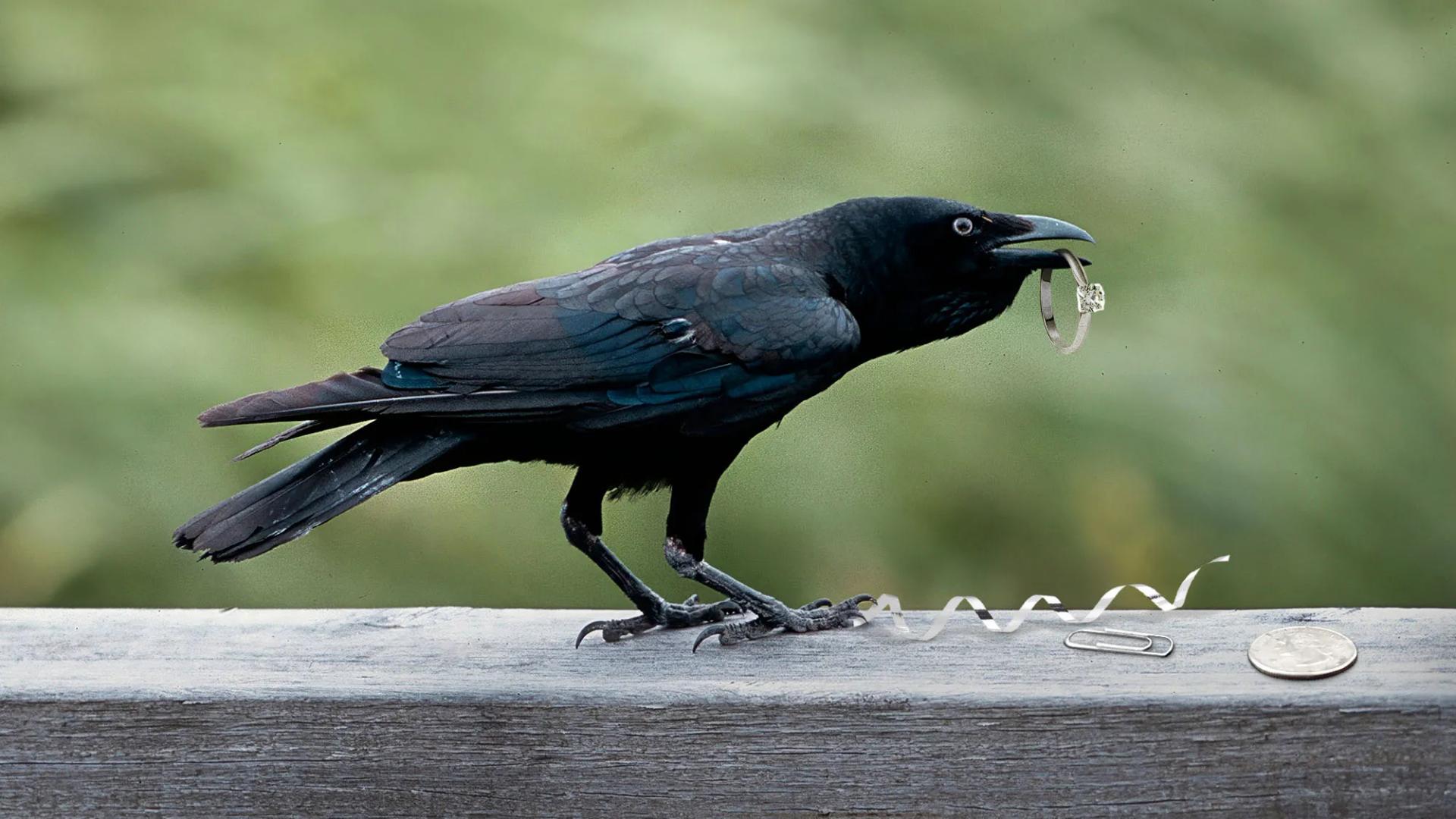
Why crows keep showing up in animal intelligence conversations
Crows are the roughly 45 species of the genus Corvus, a group that includes the American crow, the carrion crow of Europe, the house crow of South Asia, and the New Caledonian crow of the South Pacific. They keep showing up in intelligence research because they solve problems in public, in front of cameras, and in ways that can be tested.
The most cited result comes from the University of Washington. In 2006 John Marzluff's team trapped and banded American crows while wearing a rubber caveman mask. For years afterwards, crows on campus scolded and mobbed anyone wearing that mask while ignoring a neutral control mask. The reaction spread to birds that had never been trapped and persisted for well over five years, which means crows do not just remember a dangerous face; they teach other crows about it.
The other anchor is the New Caledonian crow. Gavin Hunt's 1996 paper in Nature showed wild birds manufacturing hooked tools from twigs and stepped tools cut from the barbed edges of Pandanus leaves. Outside of humans, hooks made deliberately to a design are vanishingly rare in nature.
Common raven species pageHow octopus intelligence works
What makes a crow unique?
A crow's brain is small in absolute terms, around 7 to 10 grams for an American crow, but it is dense. A 2016 study in PNAS led by Seweryn Olkowicz counted neurons in bird brains and found that corvids and parrots pack neurons into their forebrains at roughly twice the density of primates of similar brain mass. Relative to body size, a crow's brain is comparable to that of a chimpanzee, which is why Nathan Emery and Nicola Clayton called corvids feathered apes.
That hardware shows up in behaviour that used to be considered uniquely primate. New Caledonian crows pass the Aesop's fable test, dropping stones into a water-filled tube to raise a floating morsel, and choose sinking objects over floating ones at a level comparable to a five to seven year old child. Betty, an Oxford laboratory crow, famously bent a straight wire into a hook in 2002 to lift a bucket of food from a tube, a solution she had never been shown.
Crows also plan around other minds. Corvids that cache food re-hide it when they notice another bird watching, and American crows hold funerals of a sort: they gather and call around a dead crow, then avoid the spot and anyone seen near the body. Marzluff's lab has shown this is learning about danger, not grief in the human sense, but it still requires associating a place, an event, and an individual.
| Benchmark | What crows did | Species and study |
|---|---|---|
| Tool manufacture | Cut hooked tools from twigs and stepped tools from Pandanus leaves in the wild | New Caledonian crow; Hunt, Nature, 1996 |
| Novel tool design | Bent straight wire into a hook to lift a bucket of food | New Caledonian crow (Betty); Weir, Chappell and Kacelnik, Science, 2002 |
| Face recognition | Scolded a trapping mask for more than five years and taught untrapped birds to do the same | American crow; Marzluff et al., Animal Behaviour, 2010 |
| Causal reasoning | Dropped stones to raise water in a tube and preferred sinking objects, comparable to a 5 to 7 year old child | New Caledonian crow; Jelbert et al., PLOS ONE, 2014 |
| Neuron density | Corvid forebrains hold primate-like neuron counts in a brain of a few grams | Several corvids; Olkowicz et al., PNAS, 2016 |
How crows survive in changing environments
Crows are generalist omnivores, and that is the foundation of everything else. An American crow will eat earthworms, grasshoppers, grain, fruit, carrion, the eggs and nestlings of other birds, small rodents, and whatever a parking lot provides. The bird weighs 300 to 600 grams, spans 85 to 100 centimetres across the wings, and lives seven or eight years on average in the wild; the oldest known wild American crow reached at least 16.
Behavioural flexibility converts that diet into opportunity. Carrion crows in Sendai, Japan, learned to drop walnuts onto road crossings, wait for cars to crack them, and walk out to collect the meat when the light turned red. Crows across North America cache surplus food in dozens of scattered sites and return to them later, a memory task that the related Clark's nutcracker takes to tens of thousands of seed locations per winter.
Society does the rest. American crows are cooperative breeders: young from previous years, sometimes four or five of them, stay on the territory and help feed the new brood. In winter, family groups join communal roosts of tens of thousands of birds, with historical roosts of a million or more recorded in Oklahoma and the lower Midwest. A roost is a place where information about food and danger moves between birds that would never otherwise meet.
The ecosystem role of a crow
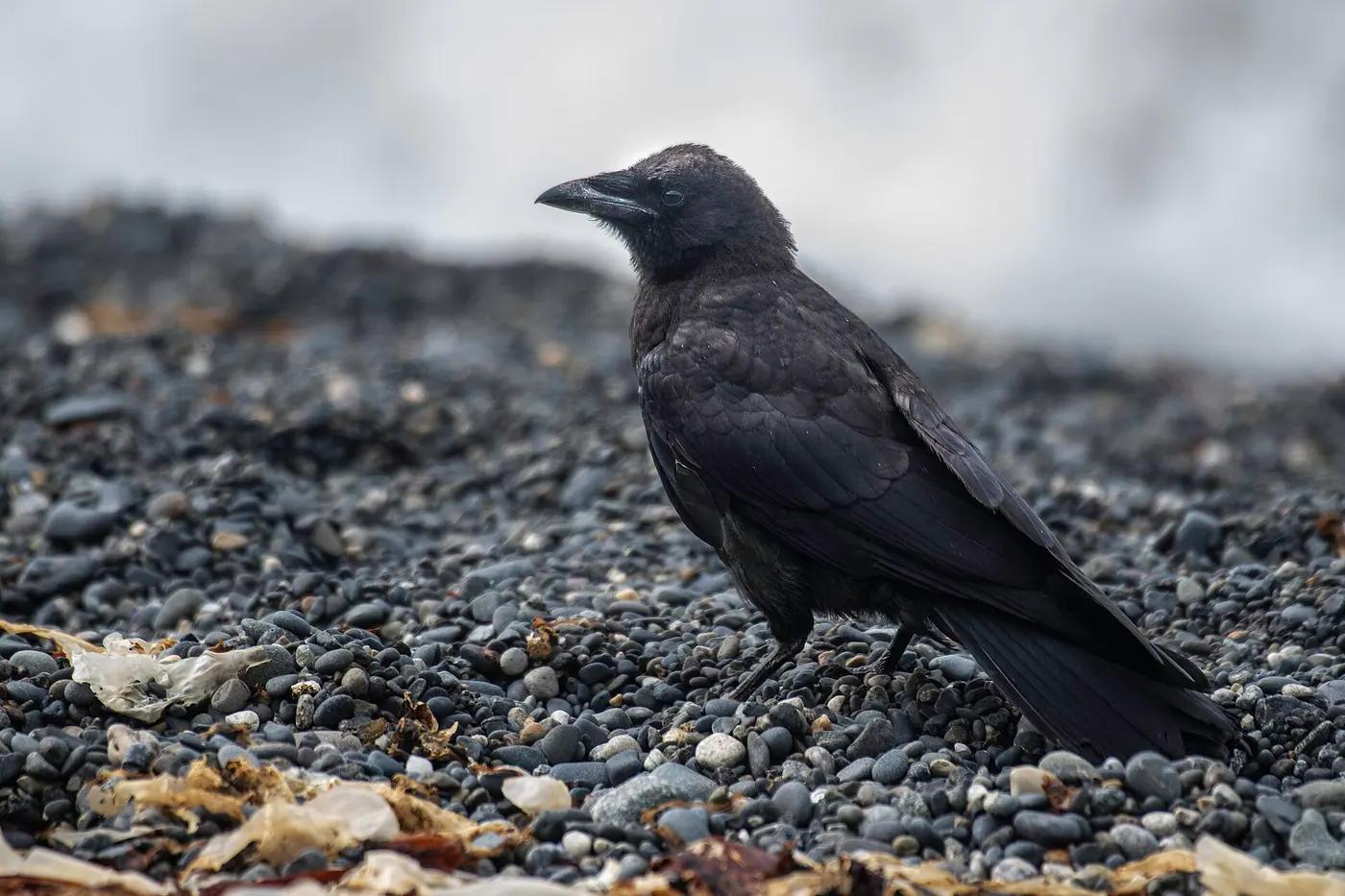
Crows are a mid-level cleanup and control service across farmland, suburbs, woodland, and coast. As scavengers they remove roadkill and carcasses before they become disease reservoirs; as predators they take large numbers of grasshoppers, cutworms, and other crop insects in summer; as nest predators they exert real pressure on songbird productivity, which is one reason their presence is not universally welcomed.
They also move seeds. Crows carry and cache acorns, walnuts, and fruit, and forgotten caches germinate. Public-health agencies use them as sentinels: because American crows die quickly from West Nile virus, which arrived in North America in 1999, clusters of dead crows were an early-warning signal for human outbreaks through the 2000s.
Their populations are a readout of human land use. American crow numbers are stable to increasing across most of the continent, and house crows have followed shipping routes to ports from East Africa to Singapore. A crow near you is not a sign of a wild landscape; it is a sign of a landscape that produces reliable waste and open ground.
A crow is not just clever. It is a species whose cleverness is pointed at the exact resources human landscapes generate most reliably.
What humans can learn from crows
The first lesson is that memory is social. One crow's bad experience with a trapper became a campus-wide policy because the birds that saw it scolded, and the birds that heard the scolding copied it. Information with a clear signal and a visible carrier spreads faster than information that stays private.
The second is that intelligence is cheap to run when it is dense. A crow's problem-solving runs on a brain of a few grams. The design lesson is less about raw capacity and more about packing the right capacity into the place it is needed.
If you want to watch this yourself, crows are among the easiest intelligent animals to observe. Capture one on a walk, log where and what it was doing, and you will start noticing the same individuals, the same routes, and the same tricks week after week.
Where to look
Open ground next to cover: sports fields, shorelines, farmland edges, and car parks at dawn. Winter roost flights at dusk, when thousands stream in one direction, are the most dramatic crow behaviour you can see without equipment.
Crow or raven?
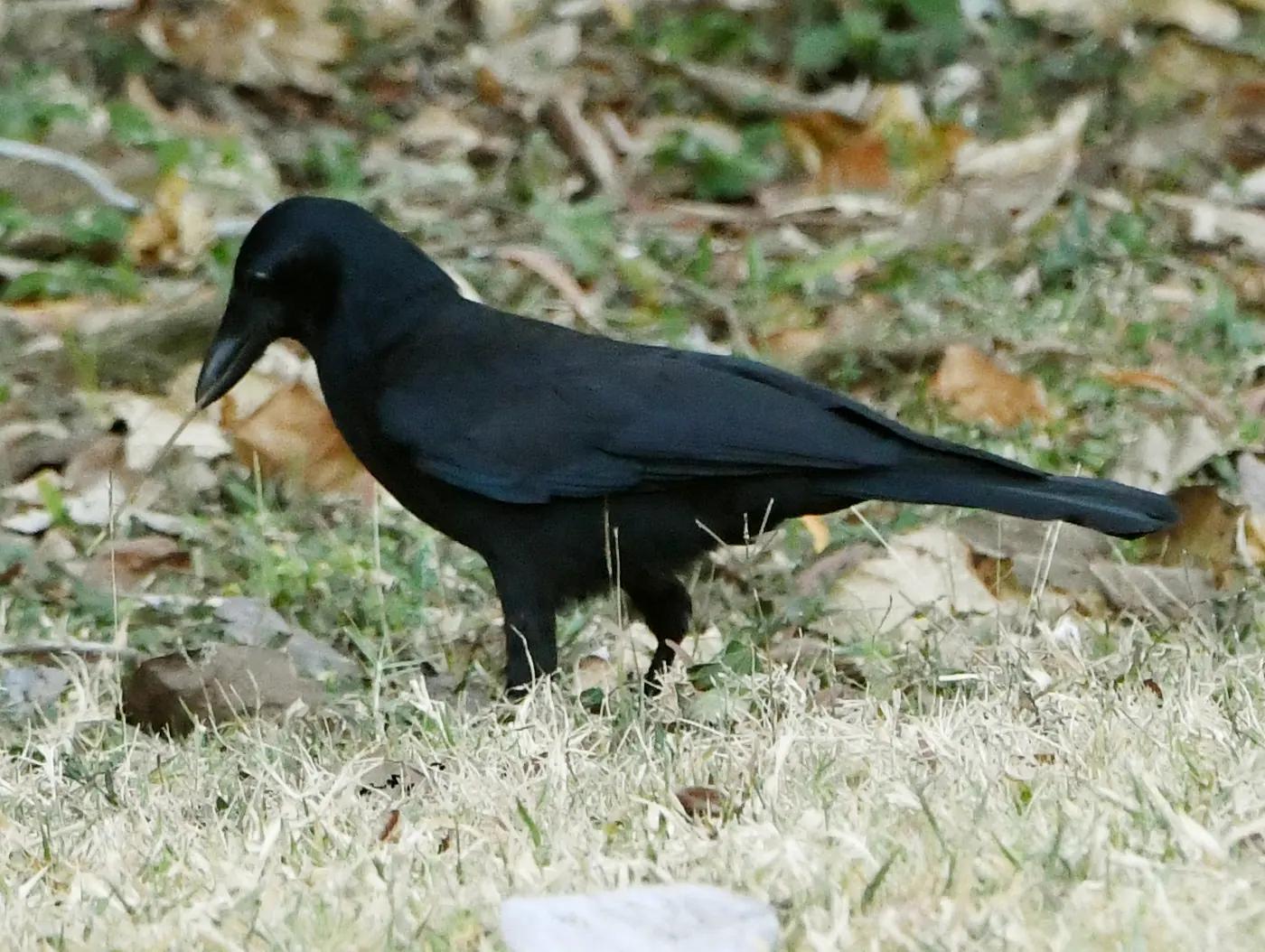
Crows are 40 to 50 cm long with a fan-shaped tail and a clean caw. Ravens are 55 to 67 cm, soar with a wedge-shaped tail, show shaggy throat feathers, and croak. A raven's bill is heavy enough to look out of proportion.
Behaviour worth recording
Caching (the bird looks around, then hides food under leaves or turf), nut dropping on hard surfaces, mobbing a hawk or owl in a group, and the loud gathering around a dead crow. Each is a documented behaviour, not an anecdote.
Don't
Don't feed crows at your home unless you are ready for a flock that remembers you. They will, and they will bring friends.
How barn owls hunt in the darkBuild a wildlife collection with animal cards
Systems Intelligence & Hidden Purpose
See these animals as engineered biological systems: what they are built to do, how they fit the wider environment, and what their design can teach us.
Specialized Hardware
A large relative brain, strong visual memory, versatile beak use, and social learning make crows excellent at pattern detection, tool use, and rapid behavioral updates.
Systems Script
Crows work the ecosystem's edge cases: scavenging waste, moving seeds, preying on smaller animals, and extracting signal from human-altered environments. They thrive where flexibility matters more than purity.
Strategic Insight
General intelligence scales when memory, experimentation, and information sharing stay connected. Learn fast, keep the useful parts, and drop the vanity.
Quick questions
Short answers to common questions readers ask on this topic.
- Do crows really remember human faces?
- Yes. In a University of Washington study, American crows trapped by a person in a distinctive mask scolded and mobbed that mask for more than five years afterwards, and crows that had never been trapped learned to do the same. The birds respond to the face, not the clothing, and they treat a neutral mask worn by the same people as harmless.
- Which crow is the smartest?
- The New Caledonian crow has the strongest evidence for tool use. Wild birds make hooked tools from twigs and cut stepped tools from Pandanus leaves, and captive birds have bent wire into hooks and passed water-displacement puzzles at the level of a young child. American crows, ravens, and rooks perform comparably on social and memory tasks.
- How big is a crow's brain compared to a human's?
- An American crow's brain weighs around 7 to 10 grams against roughly 1,300 to 1,400 grams for a human. Relative to body size, though, the crow's brain is about as large as a chimpanzee's, and a 2016 PNAS study found that corvid forebrains hold neurons at about twice the density of primate forebrains of similar mass.
- Can you tell a crow from a raven in the field?
- Yes, with three checks. Size: a raven is noticeably bigger, 55 to 67 cm against 40 to 50 cm. Tail: a raven's is wedge-shaped in flight, a crow's is fan-shaped. Voice: crows caw, ravens give a deep croak. Ravens also soar and tumble in flight and show shaggy throat feathers, which crows lack.
- Are crows good or bad for the environment?
- Mostly good, with trade-offs. Crows remove carrion, eat crop insects, and disperse seeds, and their quick deaths from West Nile virus made them a useful early-warning sentinel for human outbreaks. They also eat the eggs and nestlings of other birds, which can reduce songbird productivity locally where crow numbers are high.
Animals mentioned
Jump from this article into the species pages behind the examples, systems notes, and field-guide references.
Sources and further reading
- American Crow, Cornell Lab of Ornithology, All About Birds
- Marzluff et al., Lasting recognition of threatening people by wild American crows, Animal Behaviour (2010)
- Hunt, Manufacture and use of hook-tools by New Caledonian crows, Nature (1996)
- Olkowicz et al., Birds have primate-like numbers of neurons in the forebrain, PNAS (2016)
- Crow, Encyclopaedia Britannica
Answer guides related to this topic
If you want direct comparisons and clear recommendations, continue with these answer-focused pages.
Best Animal Identification Apps
Compare the best animal identification apps by features like photo/video identification, species coverage, collection capabilities, offline use, and more.
What Is Animal Collecting
Learn what animal collecting means in modern apps and how AnimalDex turns real-world sightings into cards, sets, rarity, and species learning.
Pokemon-Like Animal App
Looking for a Pokemon-like animal app with real species? AnimalDex combines creature-collection energy with AI scanning and wildlife learning.
Related comparisons
Continue with structured animal-vs-animal comparison pages connected to the species in this guide.
Related guides
Octopus intelligence
How Octopus Intelligence Works: Arms That Think
How octopus intelligence works: 500 million neurons, two thirds in the arms, suckers that taste, skin that changes in under a second, and fast learning.
8 min read
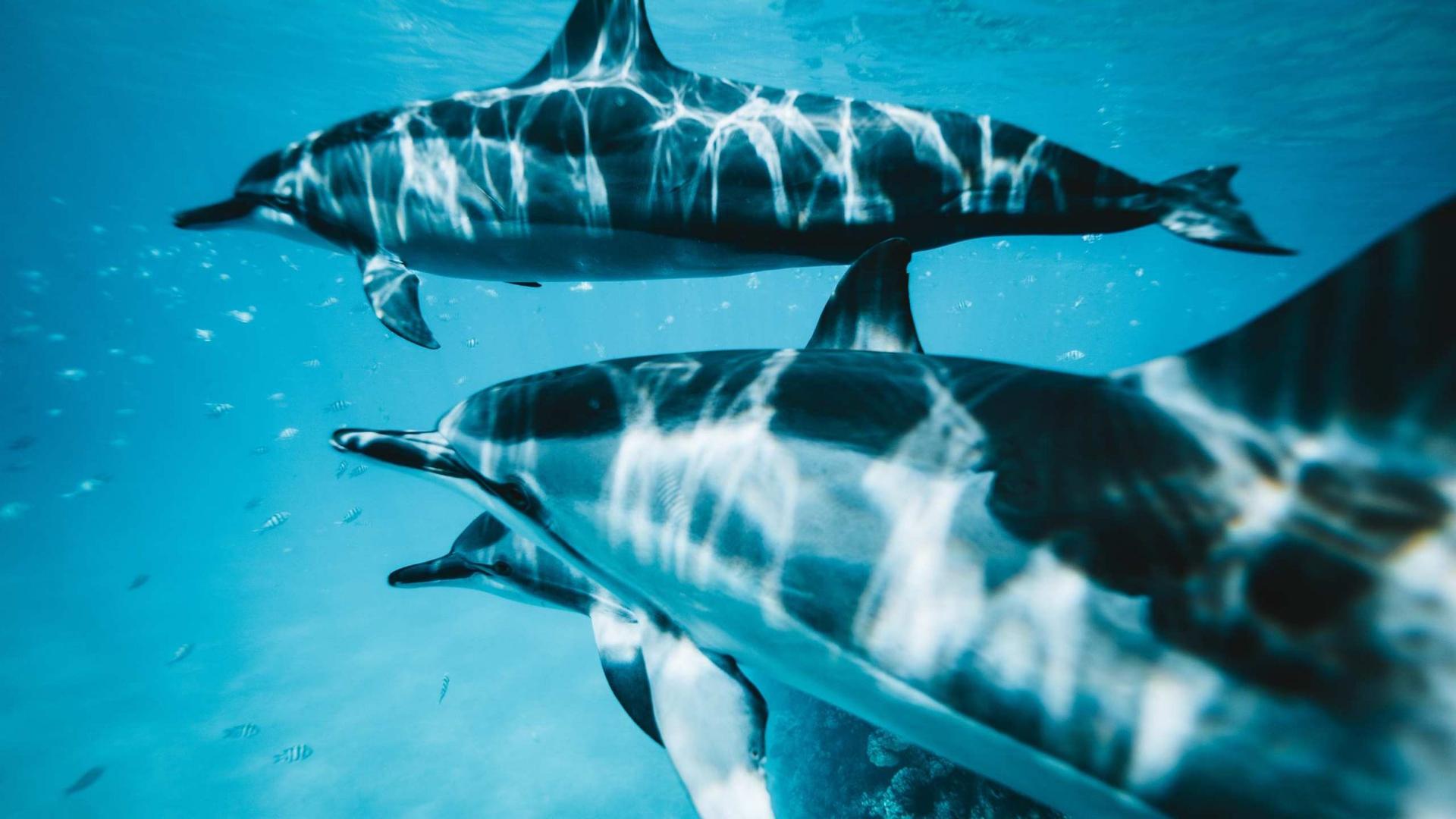
How Dolphin Intelligence Works in the Wild
How dolphin intelligence works: signature whistles, echolocation clicks, mirror self-recognition and cooperative hunts like mud-ring feeding.
7 min read
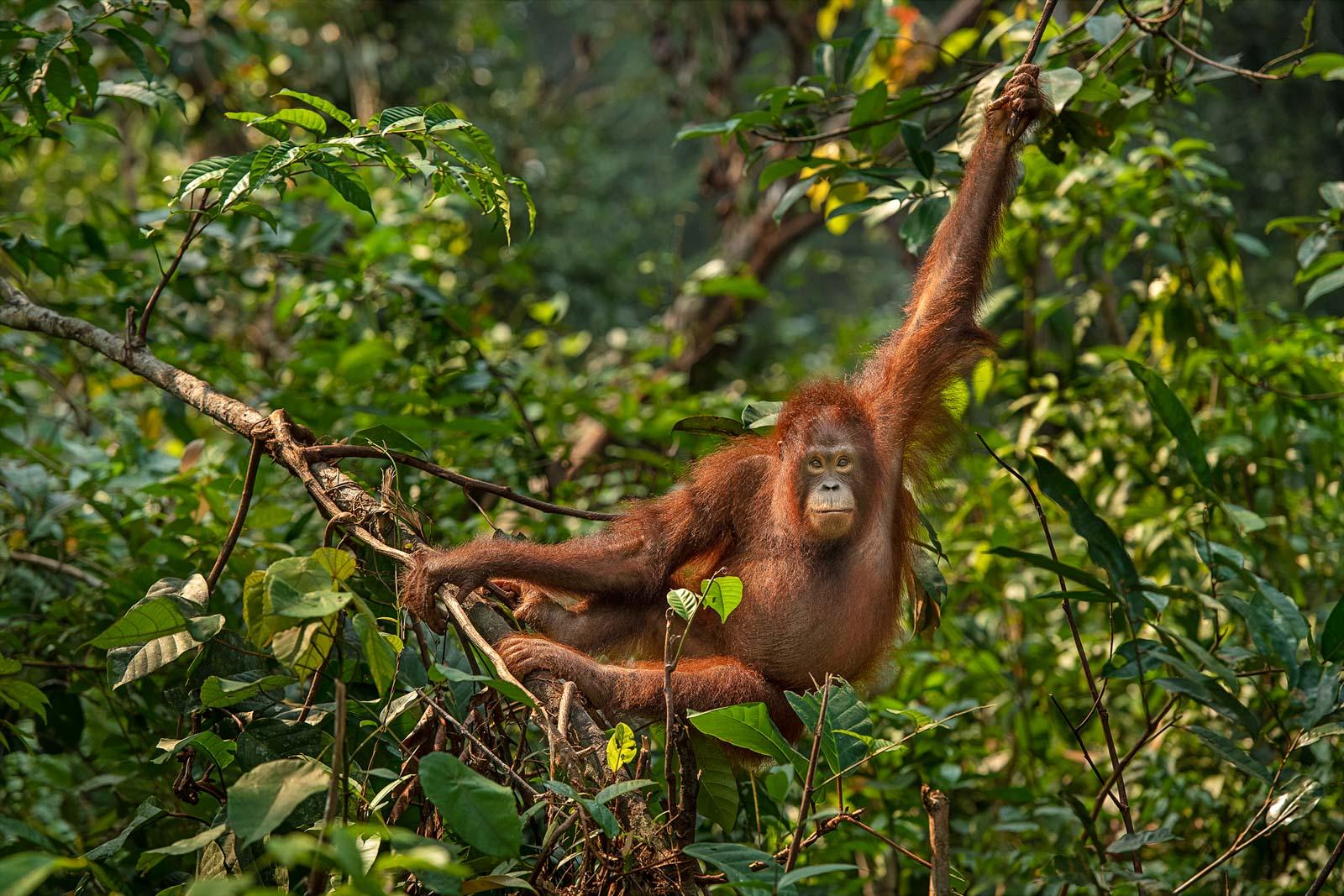
How Orangutans Think and Survive in the Canopy
How orangutans survive 30 metres up: nightly nest building, tool use, fruit tracking, flanged males, and Bornean vs Sumatran vs Tapanuli orangutans.
9 min read