

Elephant behaviorEcosystem roleAnimal intelligence
Why Elephants Never Stop Reshaping Landscapes
How elephants engineer savannas and forests: daily food and water intake, seed dispersal distances, keystone effects, and the three species compared.
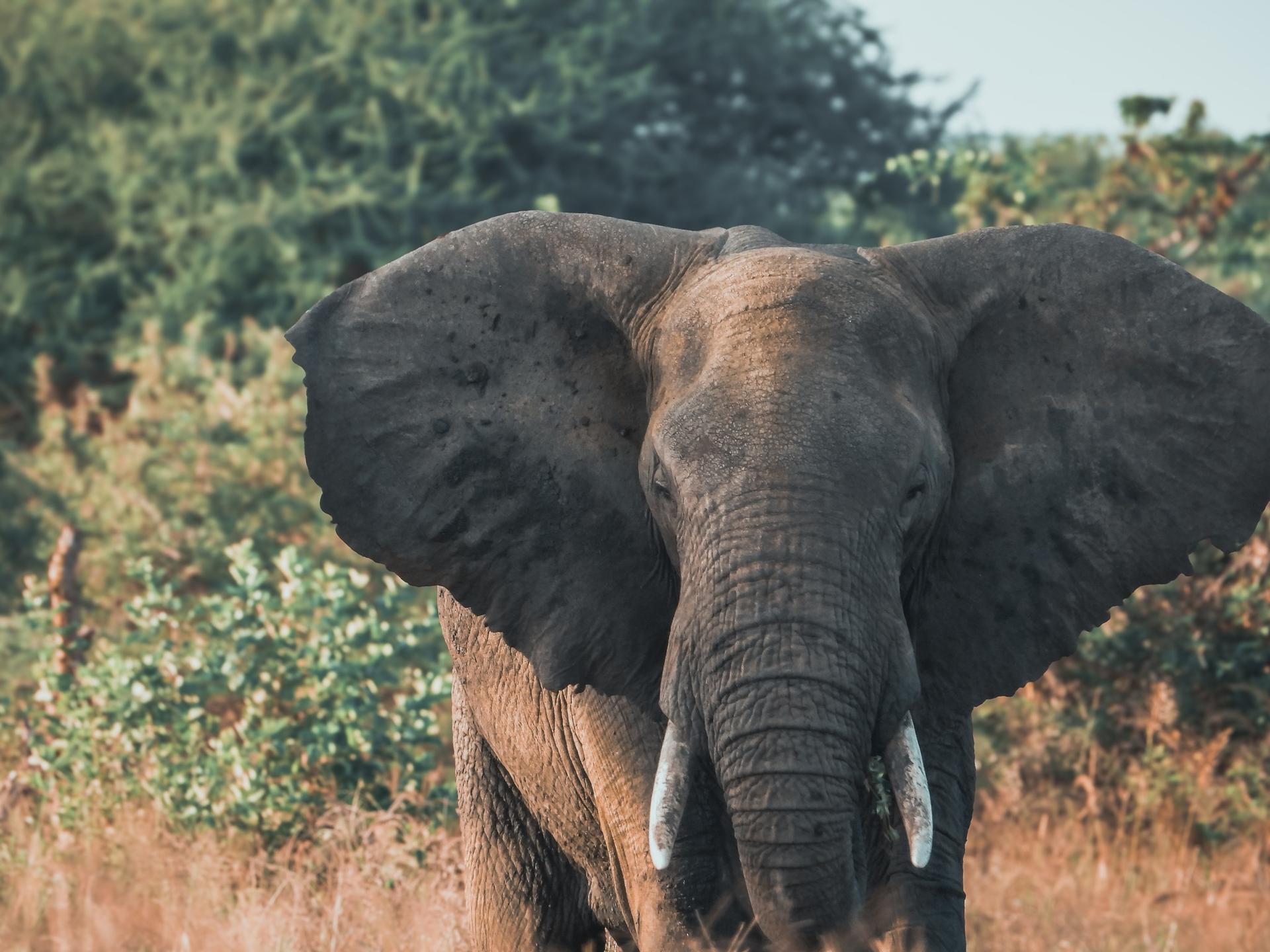
Why elephants matter at system scale
An adult African savanna elephant eats 150 to 300 kilograms of vegetation and drinks up to 200 litres of water on a typical day, feeding for 16 to 18 hours and walking around 25 kilometres to do it. Multiply that by a family group of 10 to 20 animals moving through the same woodland for decades and the habitat does not stay the same. Trees are pushed over, bark is stripped, paths are cut through thicket, and waterholes are dug, widened, and kept open.
That is why ecologists call elephants ecosystem engineers and a keystone species. In Kenya's Tsavo in the 1960s and 1970s, a dense elephant population converted large areas of Commiphora woodland into open grassland within two decades. In the Congo Basin, forest elephants do the opposite job: by thinning fast-growing saplings they favour slow-growing, dense-wooded trees that store more carbon per hectare.
Elephants are one of the clearest examples of animal behaviour becoming environmental infrastructure. Remove them and the landscape closes up, water points silt in, and the species that relied on elephant-made openings lose their access.
What makes an elephant unique?
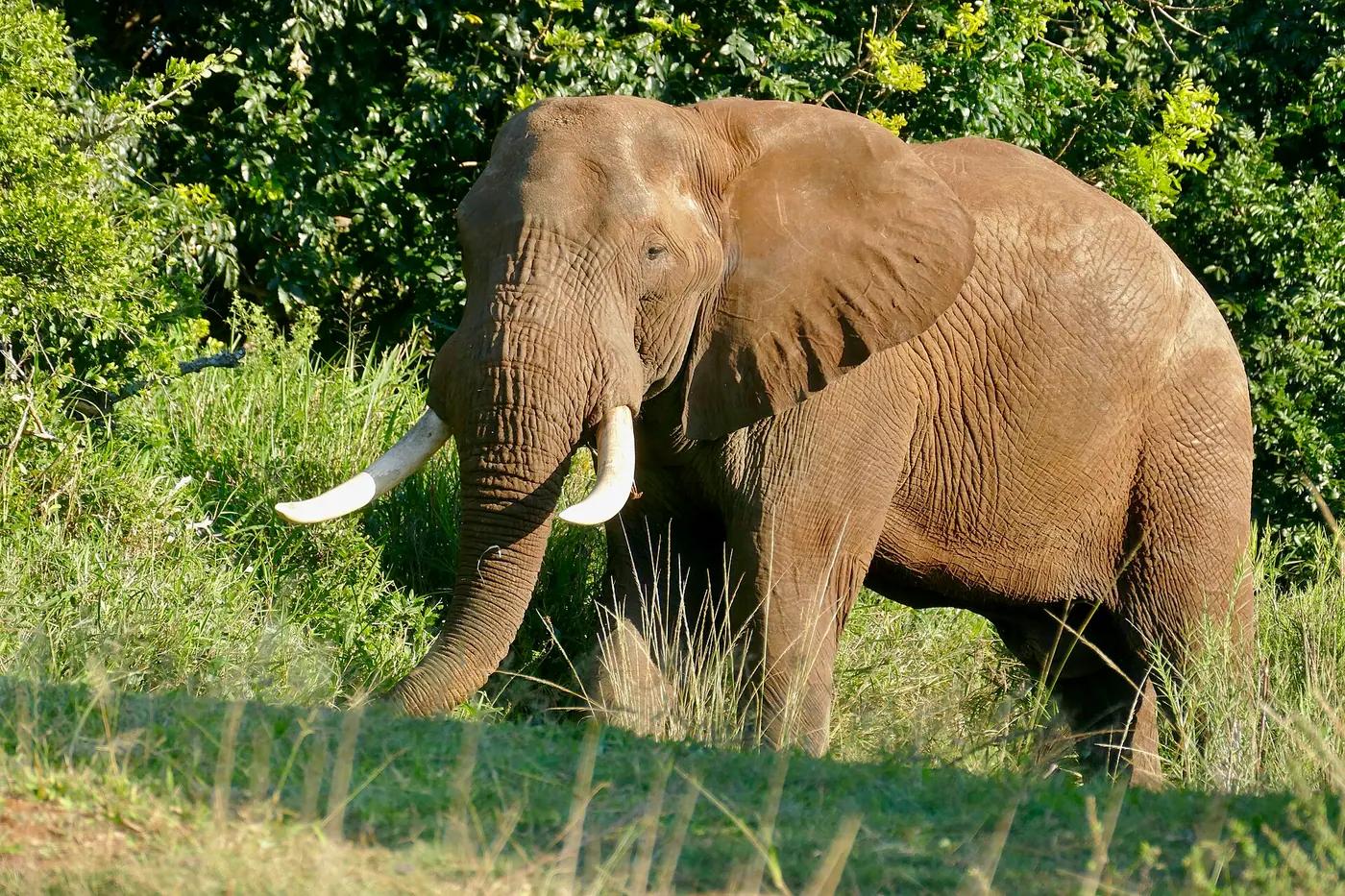
The trunk is a fusion of nose and upper lip with roughly 40,000 muscle units and no bones. It can lift a log, pick up a single seed with its fingertip-like tips, suck up around 8 litres of water in one draw, and read the air for scent. No other land animal carries a tool that flexible on its face.
Elephants also hear and speak below the range of human hearing. Infrasonic rumbles under 20 hertz carry several kilometres through air and, as ground vibration, can be picked up through the feet. Herds use these calls to coordinate movement, warn of danger, and locate relatives they cannot see.
Add a 22-month pregnancy, a lifespan of 60 to 70 years, six sets of grinding molars that move forward through the jaw like a conveyor belt, and a brain that weighs around 5 kilograms, and the result is an animal that pairs force with long-term information. Elephants do not just occupy space; they read and reuse it.
The three living elephants compared
There are three living species. The African savanna elephant is the largest land animal on Earth; the African forest elephant was only confirmed as a separate species in 2021 and is the most threatened; the Asian elephant is smaller, with a twin-domed head and much smaller ears. The quickest field clue is ear shape: African ears are shaped like the continent of Africa and reach over the shoulder, Asian ears are smaller and rounded.
| Species | Adult weight | Ears and tusks | Where it lives | IUCN status |
|---|---|---|---|---|
| African savanna elephant (Loxodonta africana) | Males 4,000–6,000 kg, up to 4 m at the shoulder | Largest ears; curved tusks in both sexes | Savanna, woodland and semi-desert across sub-Saharan Africa | Endangered |
| African forest elephant (Loxodonta cyclotis) | 2,000–4,000 kg, around 2.5 m at the shoulder | Rounder ears; straighter, downward-pointing tusks | Rainforests of the Congo Basin and West Africa | Critically Endangered |
| Asian elephant (Elephas maximus) | Males 3,500–5,500 kg, females smaller | Small ears; only some males carry tusks | Forest and grassland from India to Borneo | Endangered |
African forest elephantAsian elephant
ElephantAfrican Forest Elephant
How elephants survive across difficult terrain
Elephant survival is logistics. A family needs tens of thousands of kilograms of forage and tens of thousands of litres of water every year across ranges that can span hundreds to several thousand square kilometres, and those resources shift with the seasons. The herd makes it work because it remembers where the system still functions when conditions get thin.
That memory sits with the matriarch. During the 1993 drought in Tanzania's Tarangire, families led by older females who had lived through the 1958 to 1961 drought left the park for distant refuges and lost far fewer calves than families led by younger matriarchs who stayed. In Amboseli, the oldest matriarchs are the best at telling the roars of dangerous male lions from those of females, and their families bunch up faster.
In dry riverbeds, elephants dig wells with their feet and trunks down to the water table. Those wells keep the family alive and are then used by zebra, antelope, baboons, and birds for weeks afterwards. Route knowledge, in other words, is shared infrastructure.
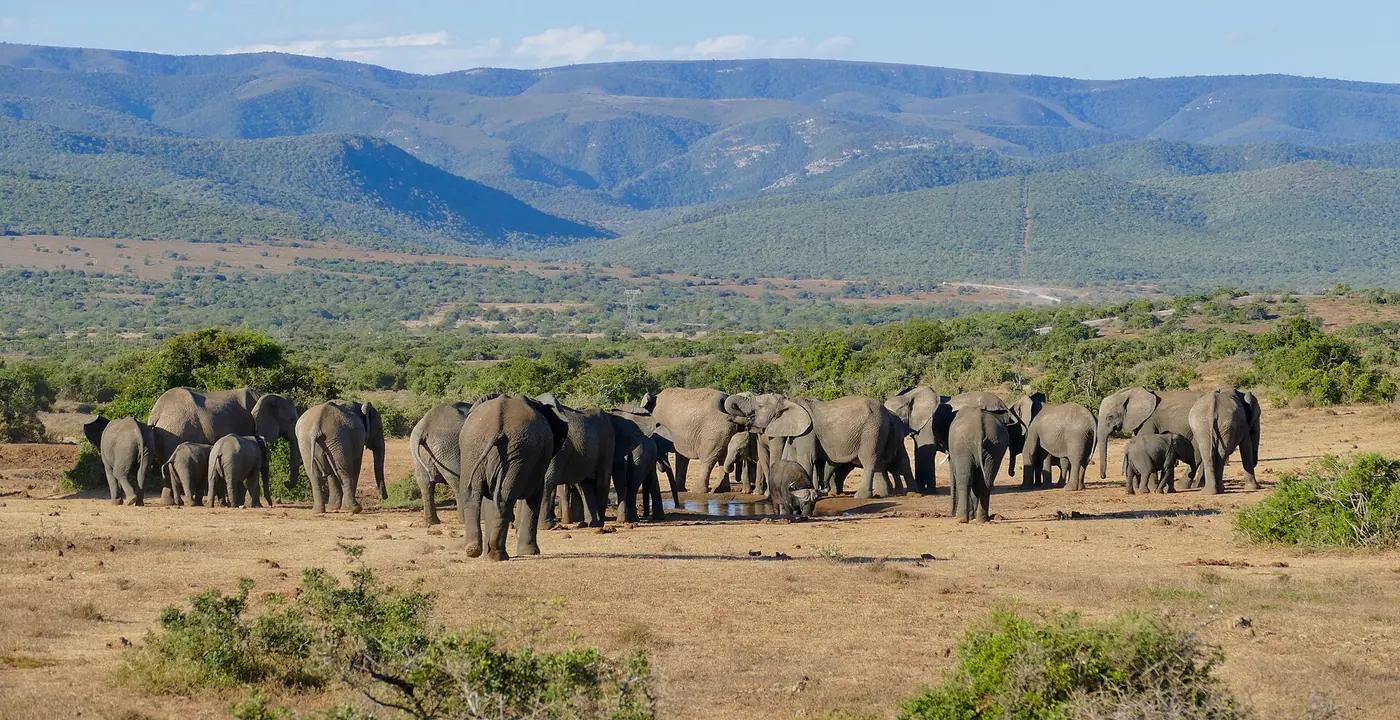
The ecosystem role of elephants
Elephants are the largest seed dispersers on land. A savanna elephant digests only around 40 percent of what it eats and drops roughly 100 kilograms of dung a day, much of it full of intact seeds. Tracking studies in Kruger and the Congo have recorded seeds carried more than 50 kilometres from the parent tree before being deposited in a ready-made pile of fertiliser. Some rainforest trees, including several large-fruited species in Central Africa, have almost no other disperser.
On savannas, elephants keep woodland open. Pushing over trees and stripping bark converts closed bush into a mosaic of grass and scattered trees, which suits grazers like zebra and wildebeest, and the fallen trunks become shelter for lizards, rodents, and ground-nesting birds. Elephant paths through thicket become the routes everyone else walks.
Their dung feeds dung beetles, which bury it and aerate the soil, and their footprints fill with rainwater and become breeding pools for frogs and insects. The ecosystem role of an elephant is therefore both biological and architectural: they determine which habitats stay closed, which open up, and which water remains reachable in a bad year.
A single elephant moves more plant material, water, and seed across a landscape in a year than any other land animal alive.
How to spot and photograph elephants
Elephants are easy to find in the right place and dangerous to approach badly. The cards below cover where the big populations are, what to look for before you see the animal, and how to tell species and individuals apart in a photo.
Where to go
Botswana holds the largest population (around 130,000 in Chobe and the Okavango). Amboseli and Tsavo in Kenya, Kruger and Addo in South Africa, and Hwange in Zimbabwe are reliable. For Asian elephants, Kaziranga and Nagarhole in India, Udawalawe and Minneriya in Sri Lanka (the dry-season gathering), and Khao Yai in Thailand.
Read the sign first
Fresh dung is round, fibrous, and about the size of a football; it stays warm for a few hours. Tracks are near-circular on the front feet, oval on the back, and up to 50 cm across. Freshly stripped bark and pushed-over trees with green leaves mean the herd passed within a day.
Best time of day
Early morning and the last two hours of light, when families walk to and from water. In the dry season, waterholes between 10 am and 3 pm are productive because herds drink daily and bathe to cool down.
Keep your distance
Stay in the vehicle and at least 50 metres away. Ears spread wide, head held high, and a trunk curled under are warning signs; a herd with young calves is the most likely to charge. Bulls in musth (temporal gland streaming, dribbling urine) should be given far more room.
What to photograph for an ID
Ears from the side: the notches and tears on the ear edges are unique to each individual, which is how long-term studies track families. Tusk shape, a broken tusk, and the head profile (single dome African, twin dome Asian) all help confirm species.
wildlife photography companion
What humans can learn from elephants
Elephants show that scale only becomes durable when it is paired with memory. The Tarangire families that survived the drought did not have more food or water; they had an older animal who remembered where the fallback route was. Big systems fail quickly when they forget where the bottlenecks and the alternatives are.
The practical lesson is to store route knowledge, not just abstract data. A good wildlife photography companion does something similar at a small scale: it records where and when you actually found an animal, so the next trip starts from what worked rather than from a blank map.
Systems Intelligence & Hidden Purpose
See these animals as engineered biological systems: what they are built to do, how they fit the wider environment, and what their design can teach us.
Specialized Hardware
A multipurpose trunk, low-frequency communication, seismic sensitivity through the feet, and long-term spatial memory make elephants large-scale environmental navigation hardware.
Systems Script
Elephants open paths, disperse seeds, modify vegetation, and uncover water access points that other species later use. They are not just large animals inside a habitat; they help write the habitat's infrastructure.
Strategic Insight
Scale is most useful when paired with memory. The bigger the system, the more it wins by remembering routes, resources, and failure points.
Quick questions
Short answers to common questions readers ask on this topic.
- How much does an elephant eat and drink in a day?
- An adult African savanna elephant eats roughly 150 to 300 kilograms of grass, leaves, bark, and fruit a day and drinks up to 200 litres of water, often in a single visit to a waterhole. It spends 16 to 18 hours a day feeding because it digests only around 40 percent of what it eats. Asian and forest elephants eat less in absolute terms but a similar share of their body weight.
- Why are elephants called a keystone species?
- Because removing them changes the whole habitat. Elephants open woodland by felling trees, keep paths and waterholes open, dig wells that other animals drink from, and disperse the seeds of trees that have few other dispersers. Those effects support grazers, small mammals, birds, insects, and plant communities that would decline or vanish without elephants present.
- How far do elephants carry seeds?
- Tens of kilometres. Studies of savanna elephants in Kruger and forest elephants in the Congo have recorded seeds deposited more than 50 kilometres from the parent tree, because seeds take one to three days to pass through the gut while the animal keeps walking. The dung pile they land in also acts as fertiliser, so germination rates are often higher than for seeds that simply fall.
- What is the difference between African and Asian elephants?
- African elephants are larger, have much bigger ears shaped like the African continent, a single-domed head, and tusks in both sexes. Asian elephants are smaller, have small rounded ears, a twin-domed forehead, and only some males carry tusks. Africa also has two species: the savanna elephant and the smaller, rounder-eared forest elephant of the Congo Basin.
- Can elephants really remember water sources for decades?
- Yes. Long-term studies in Amboseli and Tarangire show that older matriarchs remember distant water and refuge areas from droughts that happened 30 years earlier and lead their families there when conditions fail. Families with older matriarchs lose fewer calves in droughts and respond faster to real threats like lions, which is why matriarch age matters for herd survival.
Animals mentioned
Jump from this article into the species pages behind the examples, systems notes, and field-guide references.
Answer guides related to this topic
If you want direct comparisons and clear recommendations, continue with these answer-focused pages.
Best Animal Identification Apps
Compare the best animal identification apps by features like photo/video identification, species coverage, collection capabilities, offline use, and more.
What Is Animal Collecting
Learn what animal collecting means in modern apps and how AnimalDex turns real-world sightings into cards, sets, rarity, and species learning.
Pokemon-Like Animal App
Looking for a Pokemon-like animal app with real species? AnimalDex combines creature-collection energy with AI scanning and wildlife learning.
Related comparisons
Continue with structured animal-vs-animal comparison pages connected to the species in this guide.
Elephant vs Giraffe: Which Is Stronger?
Elephant is the stronger overall answer because it carries much more mass and pushing power. Giraffe stays dangerous through height, kicking, and awkward geometry rather than through direct bulk.
Elephant vs Hippopotamus: Who Would Win in a Fight?
Elephant is the stronger overall answer on land because it is larger, taller, and better at controlling space with bulk. Hippopotamus becomes far more dangerous in water-linked chaos where its bite and low heavy body matter more.
Elephant vs Polar Bear: Who Would Win in a Fight?
Elephant gets the overwhelming overall edge through enormous size, reach, and space control. Polar bear remains dangerous because it is an apex predator with serious bite and commitment, but it is still far too outscaled in a clean direct clash.
Elephant vs Rhino: Who Would Win in a Fight?
Elephant usually has the overall edge through greater size, reach, and control of space. A rhino still remains dangerous because its charge is compact, forceful, and built for brutal short-range disruption.
Related guides
Tiger behavior
How Tigers Survive as Solo Apex Hunters
How tigers hunt alone: home-range sizes, a 5–10 percent hunting success rate, prey and kill rate, subspecies compared, and how to read tiger sign.
9 min read
How Crocodiles Dominate the Water Edge
How crocodiles control the water edge: a 3,700 psi bite, ambush energetics, basking and gaping, nest guarding, and how to spot crocodiles safely.
10 min read
How Orangutans Think and Survive in the Canopy
How orangutans survive 30 metres up: nightly nest building, tool use, fruit tracking, flanged males, and Bornean vs Sumatran vs Tapanuli orangutans.
9 min read