

How Whale Sharks Feed at Ocean Scale
Understand whale shark behavior, filter-feeding survival strategy, ecosystem role, and how the largest fish on Earth thrives without acting like a classic predator.
Why the whale shark feels like a contradiction
The whale shark is the largest fish on Earth, yet it does not behave like a classic apex hunter. That contrast is what makes it so useful in systems thinking.
It proves that scale can come from processing flow efficiently rather than from dominating every interaction with force.
What makes a whale shark unique?
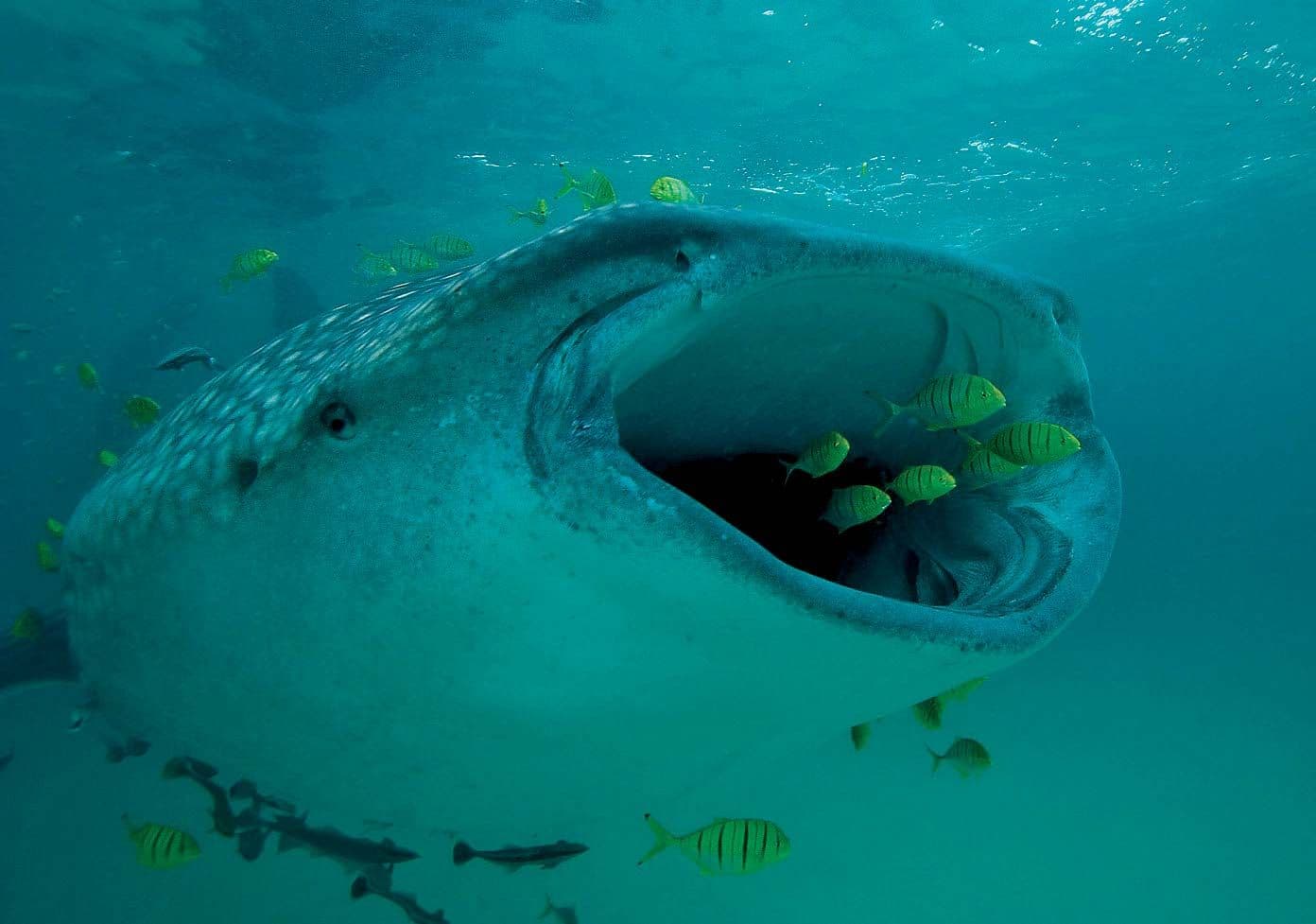
A huge mouth, filtering structures, and low-cost cruising mechanics allow the whale shark to convert plankton-rich water into usable energy without high-speed pursuit.
That is unusual because the animal’s size suggests aggression, while its real advantage is throughput.
How whale sharks survive
Whale shark survival depends on tracking productive water, arriving where plankton or small prey concentrations justify the movement cost, and filtering volume efficiently once the resource appears.
Their animal behavior is therefore route-aware and opportunity-driven. They do not need every part of the ocean to be good. They need to find the parts where the flow becomes worth processing.
The ecosystem role of a whale shark
Whale sharks help link surface productivity to larger marine food webs by turning dense small prey into mobile biomass. Their ecosystem role also highlights where ocean conditions become seasonally productive enough to support very large filter feeders.
They are useful indicators of marine abundance hotspots rather than simple symbols of ocean size.
What humans can learn from whale sharks
Whale sharks are a lesson in scale through process efficiency. You do not always grow by chasing more targets individually. Sometimes you grow by getting very good at handling the concentrated flow when it arrives.
That is the strategic insight: throughput can be a better growth engine than force.
Systems Intelligence & Hidden Purpose
See these animals as engineered biological systems: what they are built to do, how they fit the wider environment, and what their design can teach us.
System Role
The Pelagic Filter Cruiser
Whale Shark
Specialized Hardware
An enormous mouth, fine filtering structures, and low-cost cruising mechanics allow the whale shark to process huge volumes of plankton-rich water without high-speed pursuit.
Systems Script
Whale sharks connect surface productivity to larger marine food webs by converting diffuse plankton pulses into mobile biomass. Their movement patterns also mark productive ocean zones where energy concentrates seasonally.
Strategic Insight
Scale does not always come from chasing more targets. Sometimes it comes from building a system that can process volume efficiently once the flow arrives.
Animals mentioned
Jump from this article into the species pages behind the examples, systems notes, and field-guide references.
Answer guides related to this topic
If you want direct comparisons and clear recommendations, continue with these answer-focused pages.
Best Animal Identification App
Looking for the best animal identification app? Learn how AnimalDex combines AI scanning, collecting, rarity tracking, and field-guide learning in one app.
Read answer guideWhat Is Animal Collecting
Learn what animal collecting means in modern apps and how AnimalDex turns real-world sightings into cards, sets, rarity, and species learning.
Read answer guidePokemon-Like Animal App
Looking for a Pokemon-like animal app with real species? AnimalDex combines creature-collection energy with AI scanning and wildlife learning.
Read answer guideTurn what you learn into a real animal collection
Keep going in AnimalDex with the species behind this guide, real-world sighting context, and a collection that grows beyond the article.
Related guides
What Makes Crows So Intelligent? Systems, Behavior, and Survival Strategy
Learn what makes crows so intelligent, from memory and tool use to adaptive behavior, survival strategy, and their ecosystem role in changing environments.
Read articleHow Octopus Intelligence Works: Nature’s Most Advanced Problem Solver
Explore octopus intelligence through animal behavior, flexible nervous systems, camouflage, survival strategy, and the octopus ecosystem role.
Read articleWhy Elephants Never Stop Reshaping Landscapes
Explore elephant behavior, memory, survival strategy, ecosystem role, and the systems biology behind how elephants reshape habitats over time.
Read article