

Octopus intelligenceMarine biologyAnimal behavior
How Octopus Intelligence Works: Arms That Think
How octopus intelligence works: 500 million neurons, two thirds in the arms, suckers that taste, skin that changes in under a second, and fast learning.
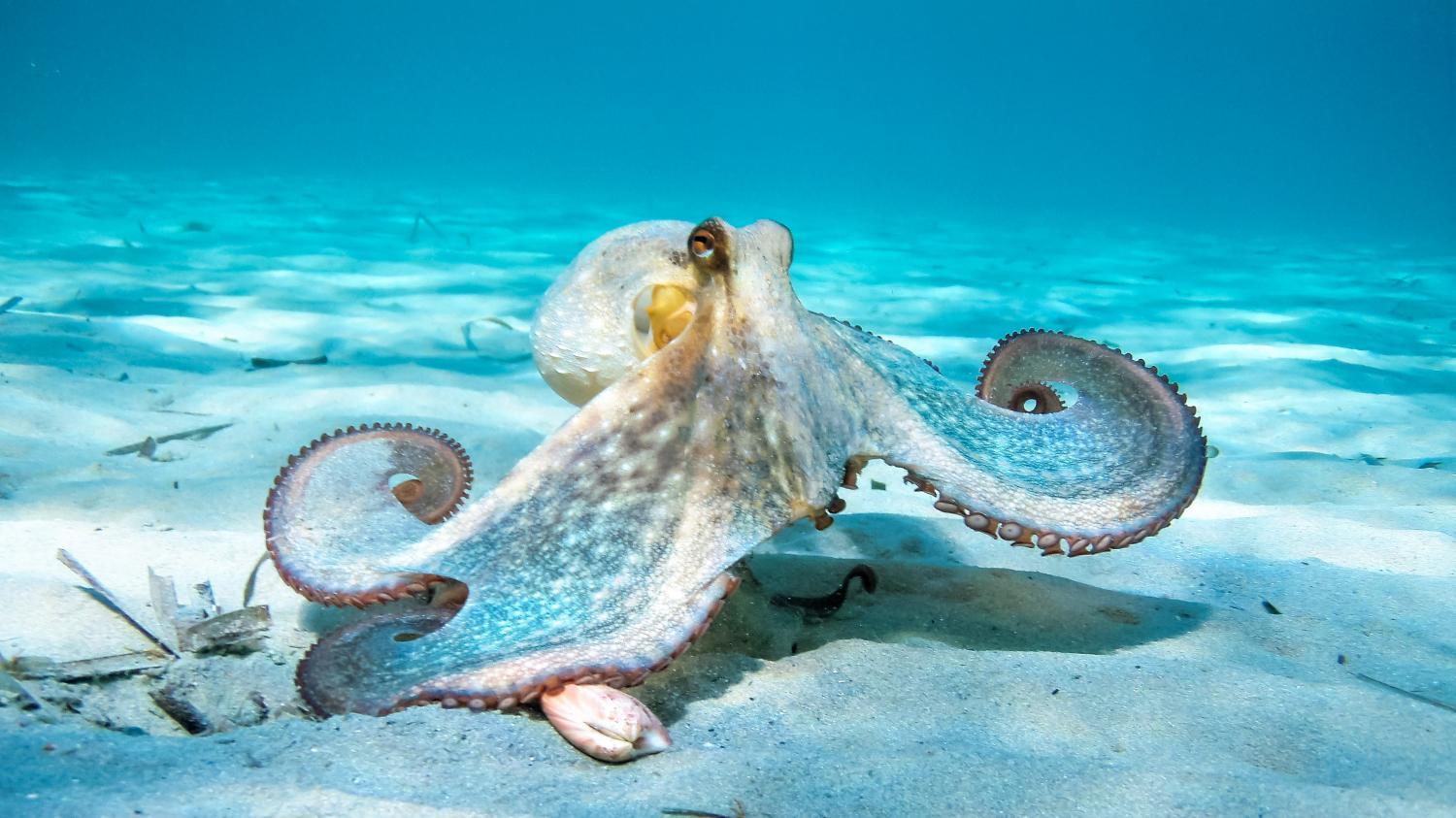
Why the octopus feels so different from most animals
Every other animal we call intelligent, from crows to dolphins to chimpanzees, is a vertebrate with a brain in its head and a spinal cord running the body. An octopus is a mollusc, a relative of snails and clams, and its last common ancestor with us lived more than 500 million years ago. Whatever intelligence it has was built from scratch on a different body plan.
The common octopus (Octopus vulgaris) carries about 500 million neurons, roughly the count of a dog, but only about a third sit in the central brain. The rest are distributed through the eight arms, each of which has its own nerve cord and local ganglia. A severed arm can still crawl, grasp, and recoil from pain for a time, because much of the processing never needed the brain.
Add three hearts, copper-based blue blood, no bones apart from a parrot-like beak, and a lifespan of one to two years for most species, and you have an animal that reaches crow-like problem solving on a schedule and a chassis that would make no sense for a vertebrate.
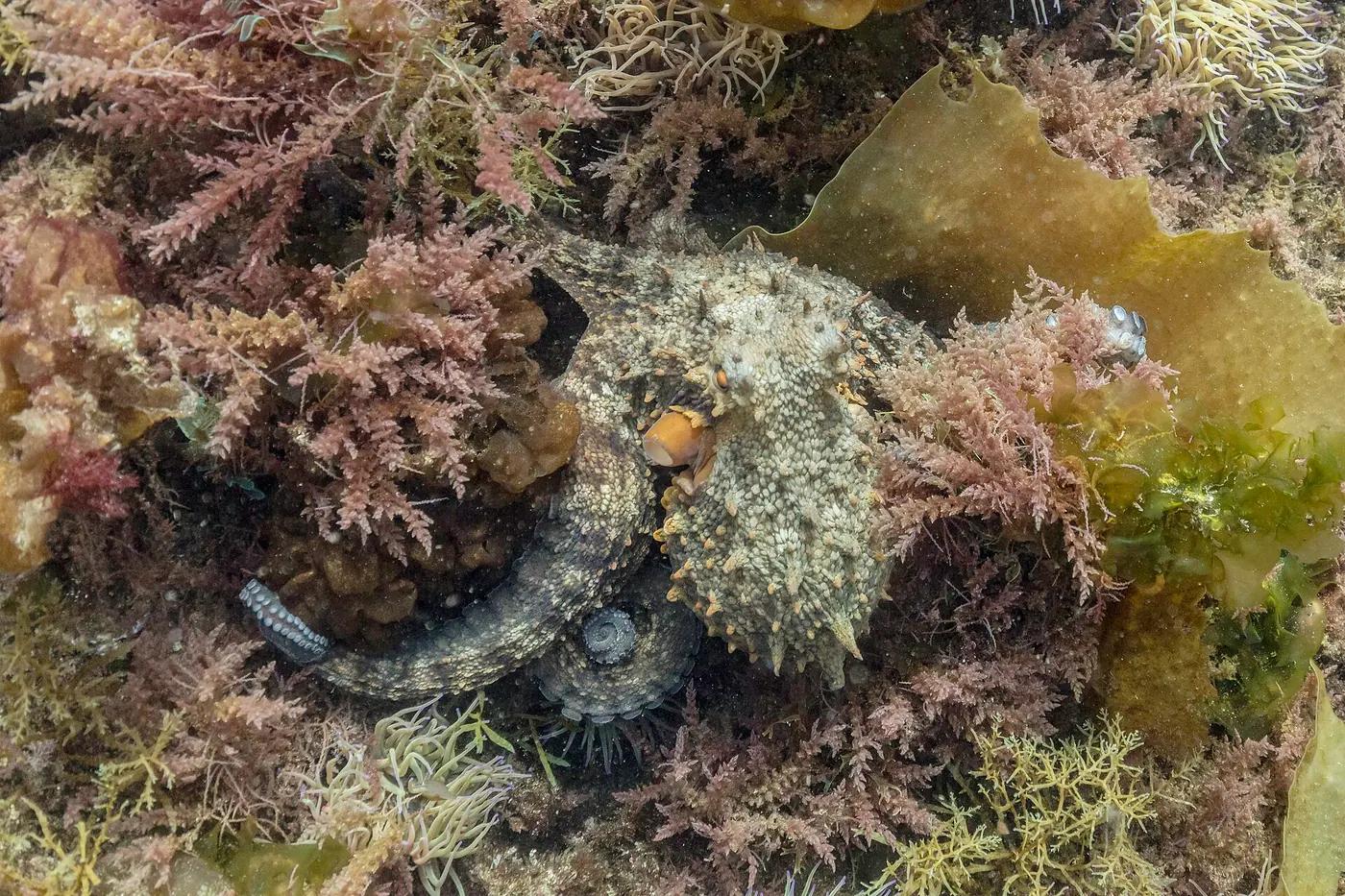
What makes crows so intelligentCuttlefish species page
What makes an octopus unique?
Start with the arms. Each arm of a common octopus carries around 200 to 280 suckers, and every sucker is lined with chemoreceptors and touch receptors. A 2020 study in Cell showed the receptors respond to molecules that only make sense on contact, so an octopus literally tastes what it touches. It can identify a crab inside a crevice without ever seeing it.
Then the skin. Beneath the surface are chromatophores, elastic sacs of yellow, red, brown, and black pigment, each pulled open by tiny muscles under direct control of motor neurons. Beneath those sit reflective iridophores and white leucophores, and the skin itself can be pushed up into papillae that mimic coral or weed. A full change of colour, pattern, and texture takes well under a second. The strange part is that the octopus eye has one visual pigment, so the animal matching a reef in full colour is, by the standard definition, colour-blind.
The learning is the part that earns the word intelligence. Octopuses in aquaria open screw-top jars, learn mazes, and solve puzzle boxes. Graziano Fiorito's 1992 experiment in Naples showed an untrained common octopus watching a trained one choose a coloured ball, then making the same choice itself, faster than the demonstrator had learned it. Veined octopuses in Indonesia carry halved coconut shells across open sand and assemble them into shelters, which a 2009 Current Biology paper described as the first tool use in an invertebrate.
| Feature | Octopus | A mammal predator (for example, a wolf) |
|---|---|---|
| Neurons | About 500 million, roughly two thirds in the arms | Billions, almost all in the brain and spinal cord |
| Control | Central brain sets goals, arms execute locally | Central brain controls almost every movement |
| Touch and taste | Combined in every sucker; tastes by contact | Separate senses; taste only in the mouth |
| Skeleton | None except the beak; fits through any gap the beak fits | Rigid bone; body size fixes the smallest gap |
| Camouflage | Colour, pattern, and texture change in under a second | Seasonal coat change at most |
| Lifespan | 1 to 2 years (common), 3 to 5 years (giant Pacific) | 6 to 8 years in the wild for a wolf |
| Learning passed on | None; parents die before young hatch or disperse | Years of parental and pack teaching |
How octopus survival strategy actually works
An octopus is soft, high in protein, and hunted by moray eels, groupers, sharks, seals, and dolphins. Its whole strategy is to keep several escape options live at once. The first line is camouflage and stillness. The second is the den: a crevice or a hole dug under a rock, often with a midden of crab and clam shells outside it that divers learn to read as a signpost. The third is motion, a burst of jet propulsion through the siphon followed by a cloud of melanin-rich ink that both hides the animal and dulls a predator's sense of smell.
Hunting runs the same way, in options rather than a single routine. An octopus will pounce on a crab with its web spread like a parachute, probe a crevice arm by arm, or drill through a clam's shell with its radula and inject toxic saliva to relax the muscle holding it shut. A giant Pacific octopus (Enteroctopus dofleini), which typically weighs 10 to 50 kilograms with an arm span around 4 metres, takes crabs, clams, scallops, fish, and occasionally small sharks.
The life history is the constraint that shapes everything. Most octopuses breed once. A female common octopus lays tens of thousands of eggs in her den, guards and aerates them for a month or more without eating, and dies as they hatch. A deep-sea octopus off California was observed brooding one clutch for four and a half years. There is no second generation to teach, which is why every octopus has to learn the reef from zero and why learning speed, not accumulated culture, is where its intelligence shows.
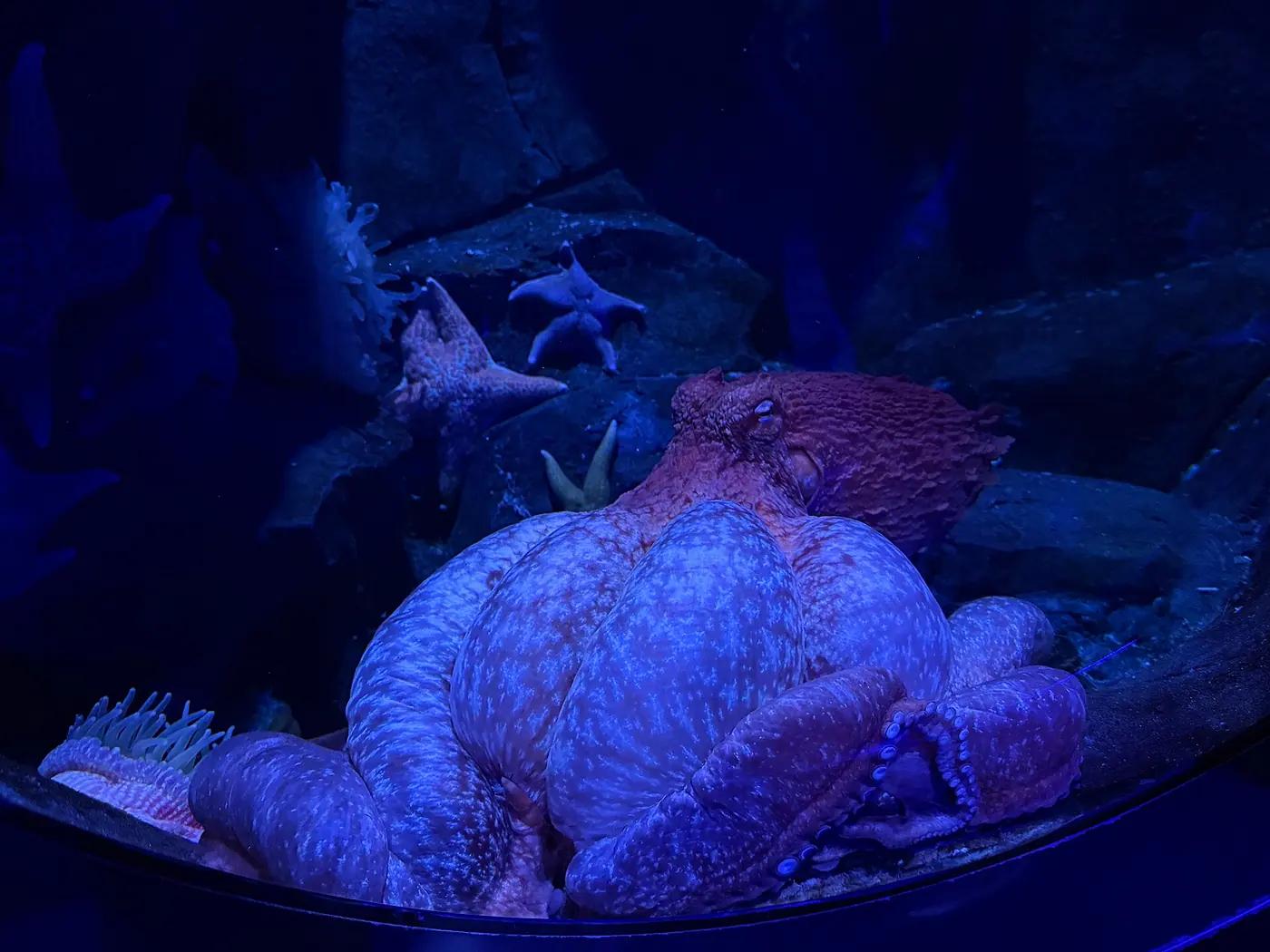
The ecosystem role of an octopus
Octopuses are mid-level predators of the seafloor. They regulate crabs, lobsters, shrimp, clams, snails, and small fish across rocky reefs, kelp forests, seagrass, and coral from the intertidal zone to below 2,000 metres. Because they can reach into crevices that fish cannot, they apply pressure to prey that would otherwise be sheltered, which keeps those populations from monopolising cover.
They are also a major food source. Octopus is a staple for moray eels and for many seals, and the midden piles outside dens recycle shell material and attract scavengers. Commercial fisheries take hundreds of thousands of tonnes a year worldwide, mostly common octopus from the Mediterranean, West Africa, and East Asia, which makes the species an economic as well as an ecological link.
Short generations make octopus populations responsive. They boom when prey is abundant and water is warm and crash when it is not, so abundance in trawl surveys is used as an indicator of how reef and seabed ecosystems are shifting under fishing pressure and warming seas.
The octopus is not a centralised machine with eight tools. It is a network of local processors that agree on a goal.
What humans can learn from octopus intelligence
The octopus is the standard example in soft robotics for a reason. Pushing sensing and decision-making out to the point of action, instead of routing everything back to a central controller, is how an arm with no bones can explore a crevice without the brain mapping every sucker. Engineers building grippers and surgical tools copy the suckers and the distributed control directly.
There is a second lesson about what intelligence is for. An octopus has no parents to learn from and only a year or two to use what it figures out, so it invests in fast, flexible learning rather than memory of a long past. Different constraints produce a different kind of mind, and judging it against a mammal's is the wrong test.
If you dive or snorkel, an octopus is one of the most rewarding animals to find and log. The spotting notes below are the practical field version of everything above.
Read the seabed
Look for a neat pile of clean crab and clam shells outside a hole under a rock. That midden is the den's front door. Rocky reefs and tide pools at low tide are the easiest places to start.
Look for the eye, not the body
A camouflaged octopus gives itself away by the horizontal, slit-shaped pupil and by one arm tip moving against a background that is otherwise still.
Don't touch, don't chase
Jetting away burns energy an octopus needs for hunting, and ink is a last resort. Hold position, let it settle, and it will often come out to inspect you.
Species you are likely to see
Common octopus on warm-temperate rocky coasts; giant Pacific octopus in cold water from California to Japan; day octopus (Octopus cyanea) on Indo-Pacific reefs in daylight. Night dives reveal the rest.
Mantis shrimp vision and strikeWildlife photography companion app
Systems Intelligence & Hidden Purpose
See these animals as engineered biological systems: what they are built to do, how they fit the wider environment, and what their design can teach us.
Specialized Hardware
A distributed nervous system, dexterous arms loaded with sensory receptors, chromatophore camouflage, and a body that can compress through tiny gaps make the octopus extraordinary adaptive hardware.
Systems Script
Octopuses regulate crustaceans, mollusks, and reef-floor prey while occupying crevices other predators cannot exploit. They show how flexible architecture can compete with armored design by turning shape itself into strategy.
Strategic Insight
Do not centralize every decision. Put sensing and action closer together and the whole system becomes faster under pressure.
Quick questions
Short answers to common questions readers ask on this topic.
- How smart is an octopus compared to a dog?
- They are roughly matched on neuron count, around 500 million each, but the comparison breaks down after that. An octopus learns mazes, opens jars, and copies other octopuses after a single demonstration, yet it lives only one to two years and never meets its parents. A dog has years of social learning an octopus never gets, so each is intelligent in the way its life allows.
- Do octopus arms really have their own brains?
- Not brains, but about two thirds of the animal's neurons sit in the arms as nerve cords and ganglia. Each arm can execute reaching, grasping, and withdrawal locally, and every sucker carries touch and chemical receptors, so the arm tastes what it touches. The central brain sets the goal and the arm works out the detail.
- How do octopuses change colour if they are colour-blind?
- The skin does it with chromatophores, pigment sacs opened by muscles under direct nerve control, layered over reflective cells that return ambient light. Pattern and texture matter more than exact hue, and the octopus may also read the brightness and polarisation of its surroundings. The single-pigment eye is a genuine puzzle that researchers are still working on.
- What is the biggest octopus?
- The giant Pacific octopus (Enteroctopus dofleini). Adults typically weigh 10 to 50 kilograms with an arm span around 4 metres, and the largest reliably recorded individuals approached 70 kilograms and 9 metres. It lives three to five years in the cold North Pacific from California to Alaska and Japan.
- Can you keep an octopus as a pet?
- Technically yes in many countries, but it is a poor idea for most people. Octopuses need large, escape-proof saltwater systems, live food, enrichment to prevent boredom, and they live only a year or two, often dying soon after purchase. Watching them in the wild or at a public aquarium is cheaper, kinder, and far more informative.
Animals mentioned
Jump from this article into the species pages behind the examples, systems notes, and field-guide references.
Answer guides related to this topic
If you want direct comparisons and clear recommendations, continue with these answer-focused pages.
Best Animal Identification Apps
Compare the best animal identification apps by features like photo/video identification, species coverage, collection capabilities, offline use, and more.
What Is Animal Collecting
Learn what animal collecting means in modern apps and how AnimalDex turns real-world sightings into cards, sets, rarity, and species learning.
Pokemon-Like Animal App
Looking for a Pokemon-like animal app with real species? AnimalDex combines creature-collection energy with AI scanning and wildlife learning.
Related comparisons
Continue with structured animal-vs-animal comparison pages connected to the species in this guide.
Cuttlefish vs Octopus: Which Is Smarter?
Octopus gets the edge in direct manipulation and puzzle-style problem solving. Cuttlefish gets the edge in visual signaling, camouflage control, and rapid display-based adaptation. The smartest answer depends on the task format.
Dolphin vs Octopus: Which Is Smarter?
Dolphin gets the edge in social intelligence, communication, and group learning. Octopus gets the edge in solitary problem solving, manipulation, and flexible immediate adaptation. The smartest answer still depends on the task.
Octopus vs Crab: Who Would Win in a Fight?
Octopus usually has the edge because intelligence, flexibility, and grip-based control are excellent answers to a crab's shell and claws. Crab still becomes dangerous in tight defensive terrain where armor and pinch range matter more.
Related guides
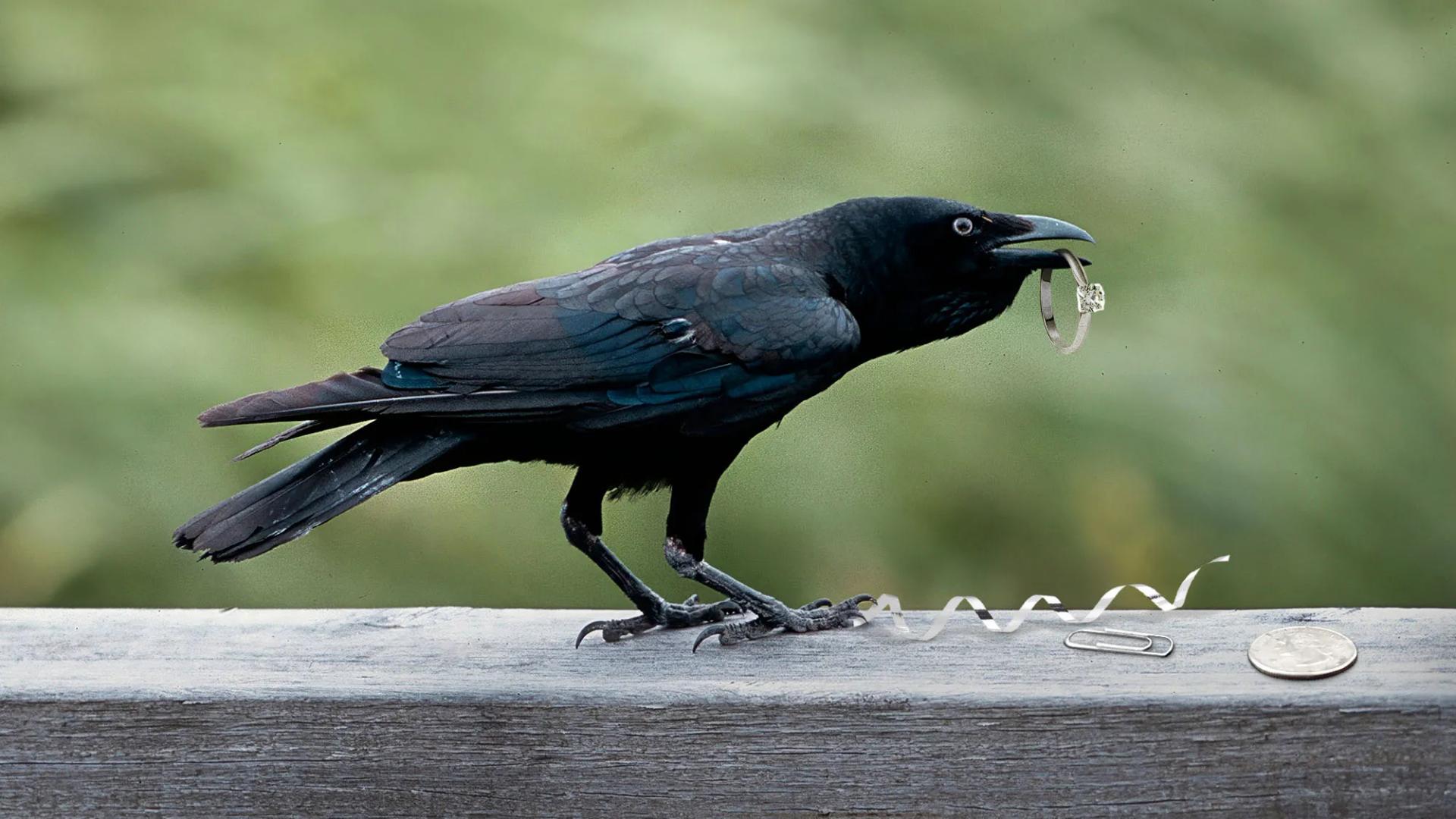
Crow intelligence
What Makes Crows So Intelligent? Tool Use, Memory, Society
What makes crows so intelligent: hooked tools, faces remembered for years, primate-level neuron density, and a society that spreads what one bird learns.
8 min read
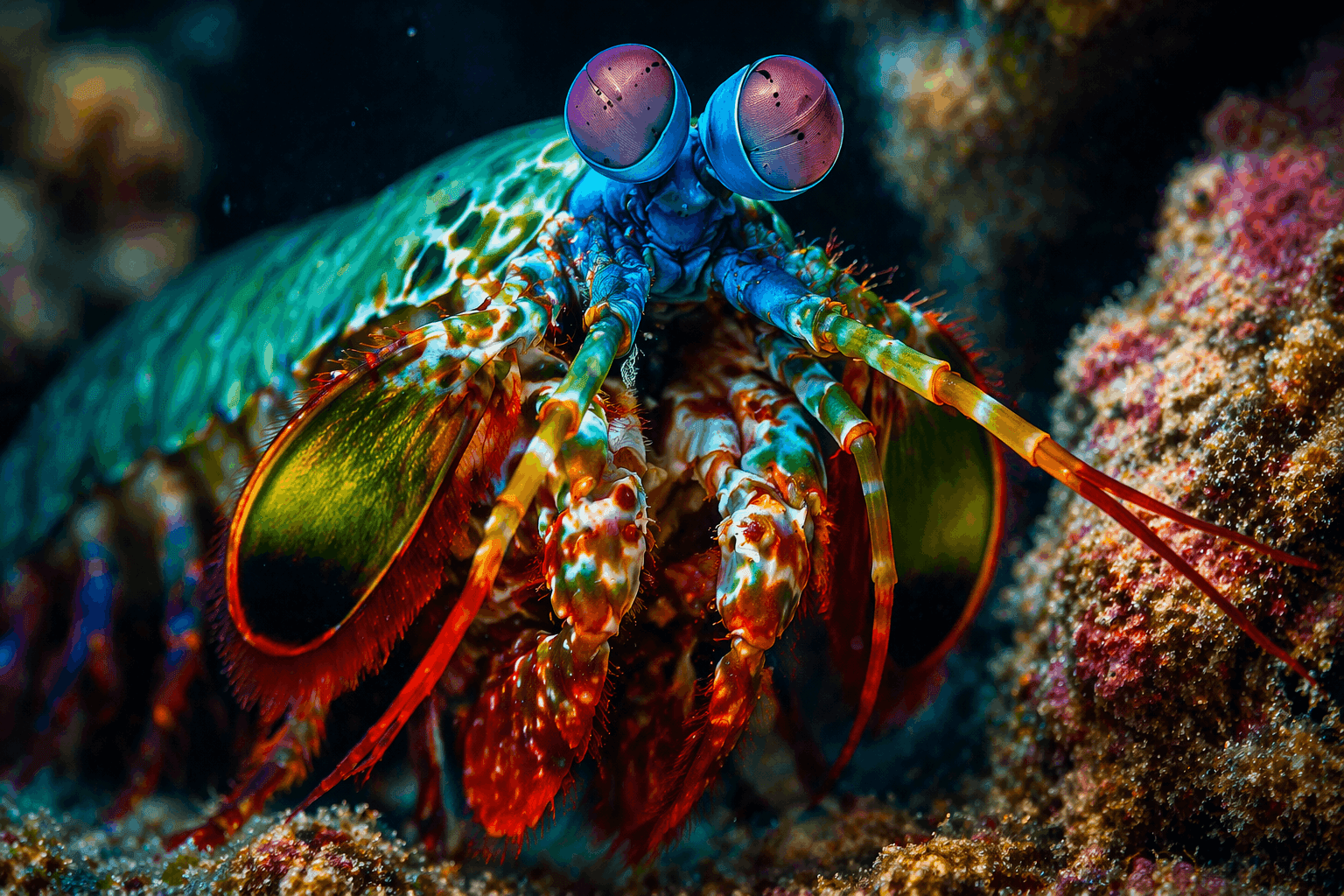
Mantis Shrimp Vision and Strike Power Explained
Mantis shrimp vision and strike explained: 12 to 16 photoreceptor types, polarised light, and a club that hits at 23 m/s and 10,000 g, then hits again.
8 min read
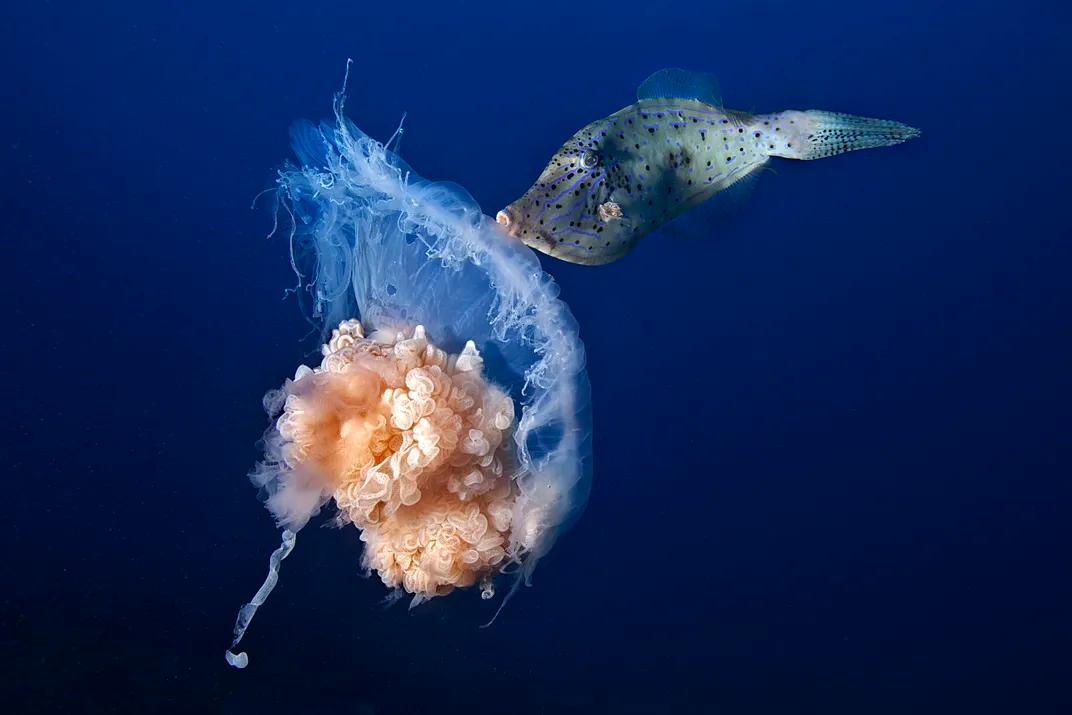
Why Jellyfish Thrive in Changing Oceans
Why jellyfish bloom as oceans warm and lose oxygen: the polyp life cycle, nematocysts, a body with no brain, Turritopsis, and how to spot jellies safely.
10 min read