

Why Elephants Never Stop Reshaping Landscapes
Explore elephant behavior, memory, survival strategy, ecosystem role, and the systems biology behind how elephants reshape habitats over time.
Why elephants matter at system scale
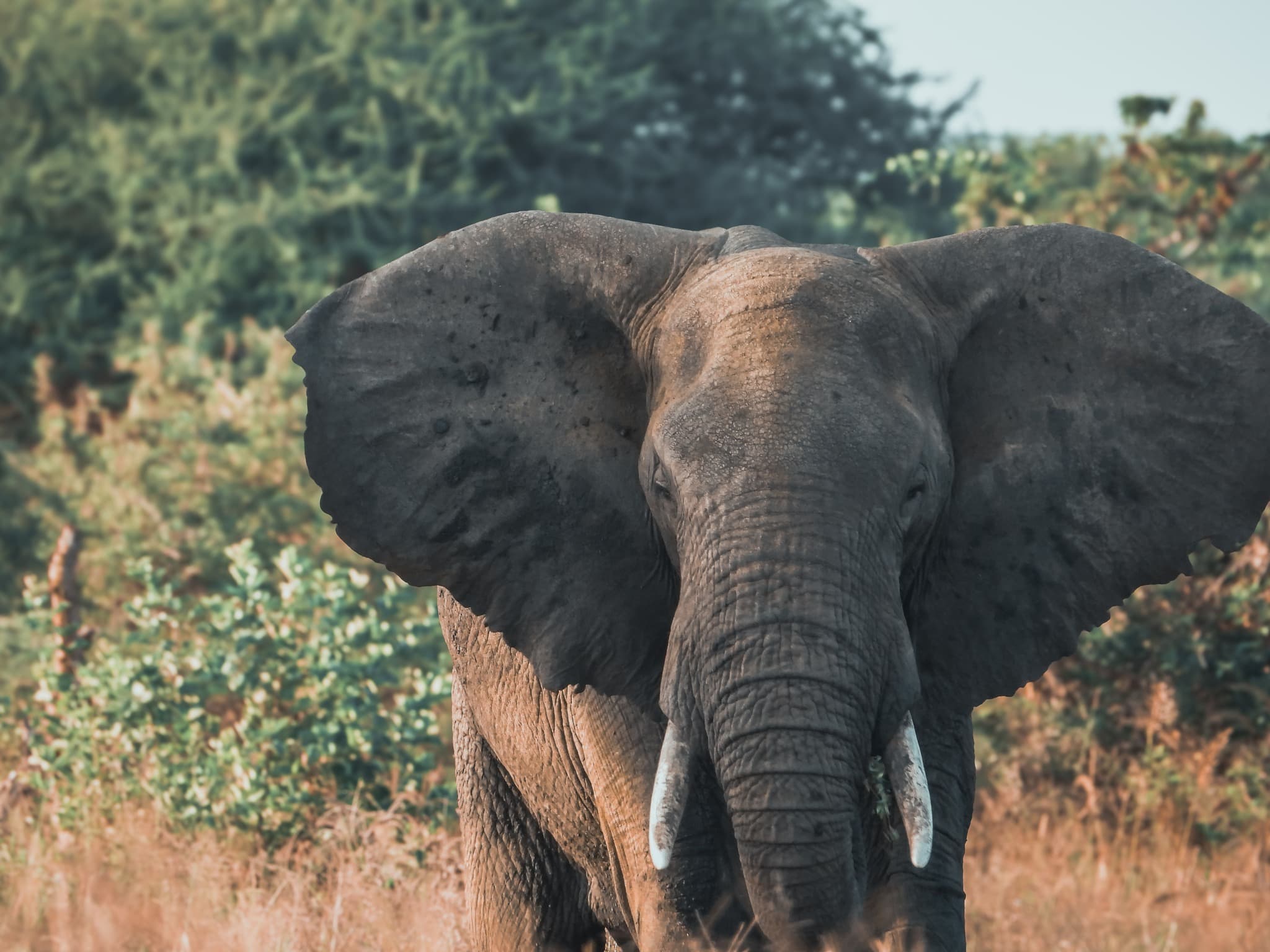
Elephants matter because they operate above the scale of a single feeding event or single trail. When an elephant moves, digs, strips bark, opens a path, or remembers a water route, the surrounding habitat changes with it.
That makes elephants one of the clearest examples of animal behavior translating into environmental infrastructure.
What makes an elephant unique?
The trunk alone is extraordinary hardware: tool, sensor, manipulator, drink tube, feeding arm, and social signal interface in one structure. Pair that with long-term memory and low-frequency communication, and the result is far more than raw size.
Elephants are powerful because they combine force with information. They do not just occupy space; they read and reuse it.
How elephants survive across difficult terrain
Elephant survival depends on route memory, group knowledge, and the ability to keep finding food and water across large, seasonally unstable ranges.
In that sense, their animal behavior is logistics-heavy. The herd survives because it remembers where the system still works when conditions get thin.
The ecosystem role of elephants
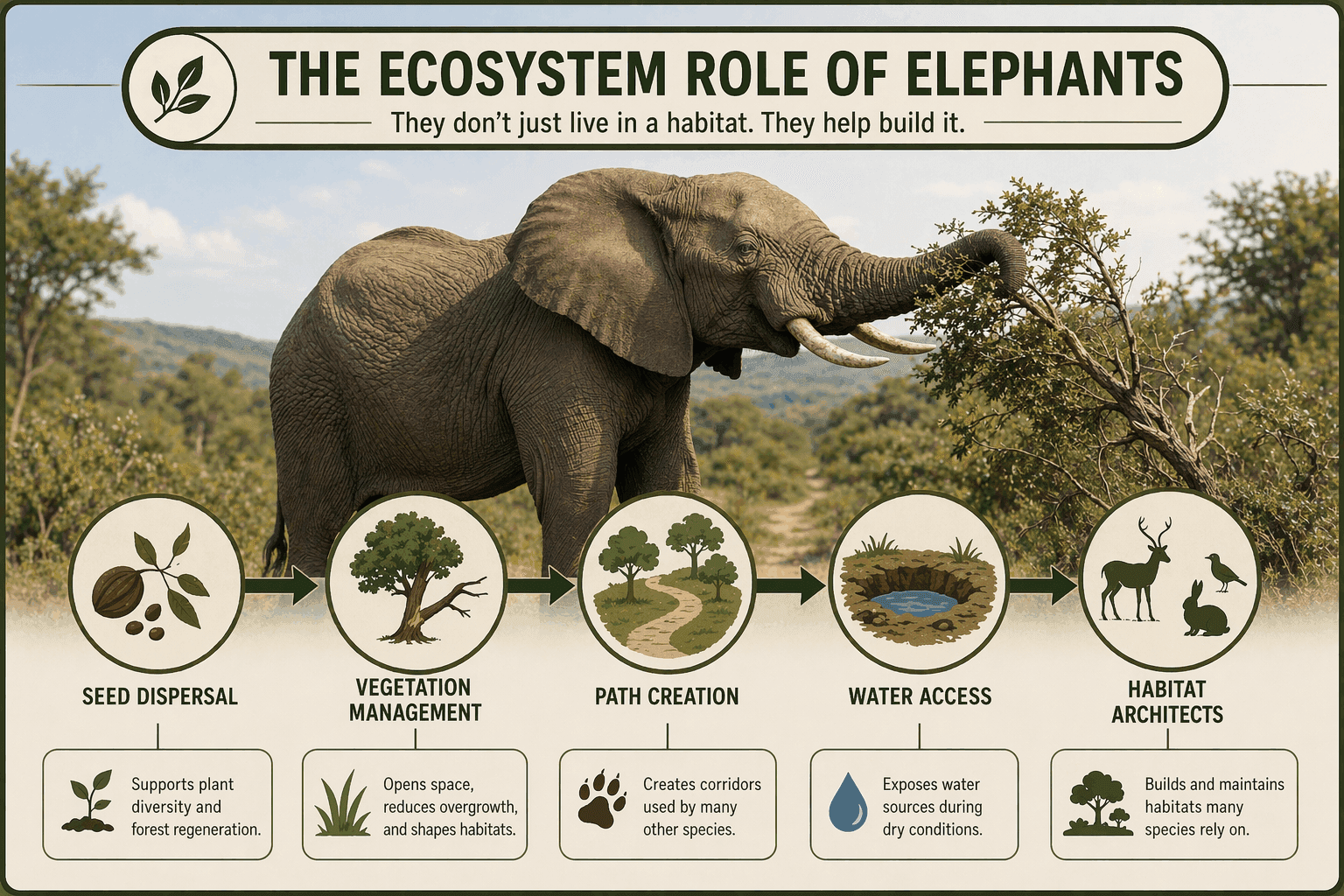
Elephants disperse seeds, open vegetation, create paths, modify woodland structure, and expose water sources that smaller species later use. Their ecosystem role is therefore both biological and architectural.
They do not just live in a habitat. They help determine which habitats stay closed, which become accessible, and which resources remain reachable under stress.
What humans can learn from elephants
Elephants show that scale only becomes durable when it is paired with memory. Big systems fail quickly when they forget where the bottlenecks and fallback routes are.
That is the practical lesson: store useful route knowledge, not just abstract data, because resilience often depends on remembering where survival still works.
Systems Intelligence & Hidden Purpose
See these animals as engineered biological systems: what they are built to do, how they fit the wider environment, and what their design can teach us.
System Role
The Landscape Memory Engine
Elephant
Specialized Hardware
A multipurpose trunk, low-frequency communication, seismic sensitivity through the feet, and long-term spatial memory make elephants large-scale environmental navigation hardware.
Systems Script
Elephants open paths, disperse seeds, modify vegetation, and uncover water access points that other species later use. They are not just large animals inside a habitat; they help write the habitat's infrastructure.
Strategic Insight
Scale is most useful when paired with memory. The bigger the system, the more it wins by remembering routes, resources, and failure points.
Animals mentioned
Jump from this article into the species pages behind the examples, systems notes, and field-guide references.
Related comparisons
Continue with structured animal-vs-animal comparison pages connected to the species in this guide.
Elephant vs Giraffe: Which Giant Has the Stronger Edge?
Elephant is the stronger overall answer because it carries much more mass and pushing power. Giraffe stays dangerous through height, kicking, and awkward geometry rather than through direct bulk.
Read comparisonElephant vs Hippopotamus: Who Wins the Real Matchup?
Elephant is the stronger overall answer on land because it is larger, taller, and better at controlling space with bulk. Hippopotamus becomes far more dangerous in water-linked chaos where its bite and low heavy body matter more.
Read comparisonElephant vs Polar Bear: Which Giant Has the Edge?
Elephant gets the overwhelming overall edge through enormous size, reach, and space control. Polar bear remains dangerous because it is an apex predator with serious bite and commitment, but it is still far too outscaled in a clean direct clash.
Read comparisonElephant vs Rhino: Who Has the Real Edge?
Elephant usually has the overall edge through greater size, reach, and control of space. A rhino still remains dangerous because its charge is compact, forceful, and built for brutal short-range disruption.
Read comparisonAnswer guides related to this topic
If you want direct comparisons and clear recommendations, continue with these answer-focused pages.
Best Animal Identification App
Looking for the best animal identification app? Learn how AnimalDex combines AI scanning, collecting, rarity tracking, and field-guide learning in one app.
Read answer guideWhat Is Animal Collecting
Learn what animal collecting means in modern apps and how AnimalDex turns real-world sightings into cards, sets, rarity, and species learning.
Read answer guidePokemon-Like Animal App
Looking for a Pokemon-like animal app with real species? AnimalDex combines creature-collection energy with AI scanning and wildlife learning.
Read answer guideTurn what you learn into a real animal collection
Keep going in AnimalDex with the species behind this guide, real-world sighting context, and a collection that grows beyond the article.
Related guides
Animal Experiments They Won’t Repeat — Ethics or Cover-Up?
Explore the forbidden animal files: CIA spy cats, bat bombs, planarian memory, Rupert Sheldrake, animal death instincts, Kirlian photography, medieval bestiaries, and ancient animal symbolism.
Read articleWhat Makes Crows So Intelligent? Systems, Behavior, and Survival Strategy
Learn what makes crows so intelligent, from memory and tool use to adaptive behavior, survival strategy, and their ecosystem role in changing environments.
Read articleHow Wolves Hunt, Survive, and Shape Ecosystems
A clear guide to wolf behavior, pack intelligence, survival strategy, and ecosystem role, with a systems view of how wolves reshape landscapes.
Read article