

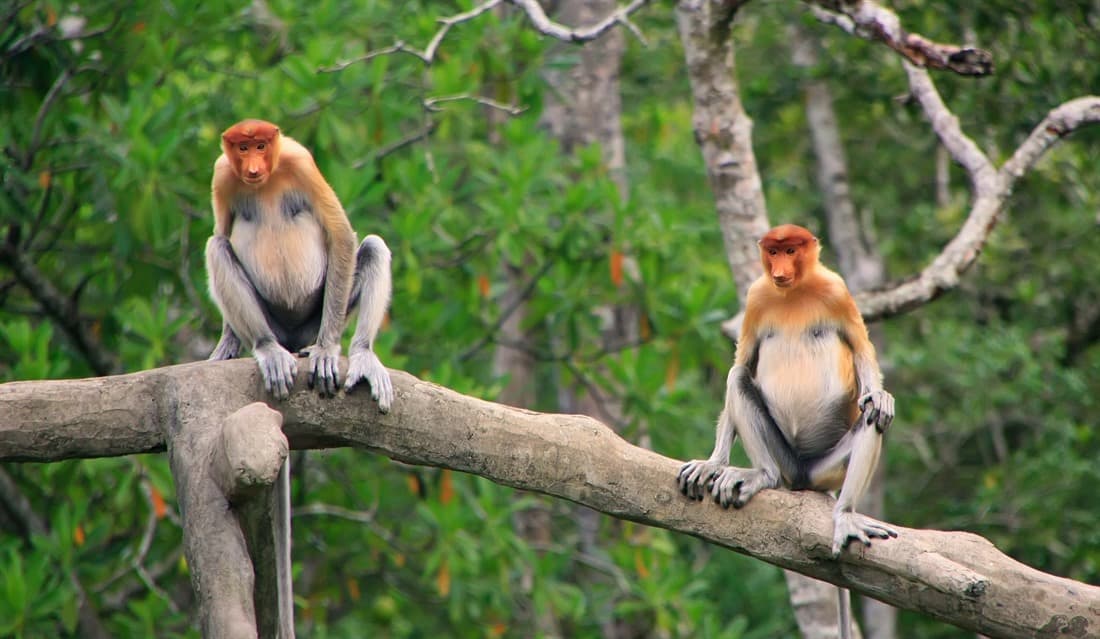
Animals in Borneo: What You Can Spot and Why the Region Matters
A structured Borneo wildlife guide focused on realistic rainforest, river, and sanctuary-linked spotting with strong links into species pages and broader AnimalDex discovery.
Quick answer
Start with the direct answer, then use the sections below to see why the location matters and which animals are actually realistic to spot there.
Borneo is one of the strongest rainforest wildlife destinations in the world, but it works best when you combine realistic river and canopy spotting with a few high-value target species. Orangutans, proboscis monkeys, hornbills, and other forest-linked animals make the region feel different from ordinary travel very quickly.
Borneo has the kind of reputation that can push people toward weak copy and unrealistic promises. The better version is still exciting, but it is grounded in how rainforest travel actually works.
You improve your chances here by respecting habitat, moving slowly, and recognizing that a productive day may include several supporting species around one major highlight.
Why this location matters
Good location pages explain why the place is worth your time, not just which names belong on a destination checklist.
Few regions combine rainforest atmosphere, primate interest, canopy birdlife, and conservation weight as strongly as Borneo.
It is also one of the best places to connect AnimalDex's species pages with real travel behavior because observation skill matters so much.
Animals to spot
These are intentionally practical species picks, balancing accessibility, excitement, and what travelers can realistically notice in the location.
Orangutan
The region's best-known wildlife draw and one of the most meaningful forest-linked species in the whole AnimalDex system.
Spotting note: High-value target best approached with patience and realistic route planning.
Read species guideProboscis Monkey
A strong river-and-riparian species that makes Borneo feel immediately distinctive for travelers.
Spotting note: Excellent payoff on habitat-led river sessions.
Read species guideRhinoceros Hornbill
One of the clearest canopy bird targets for people who want more than mammal-only rainforest travel.
Spotting note: Meaningful birding highlight rather than a casual roadside add.
Read species guideSun Bear
A strong secondary mammal target that adds excitement without pretending it is an easy everyday sighting.
Spotting note: Specialist-value encounter, not guaranteed.
Read species guideBinturong
A compelling oddball rainforest species for travelers who enjoy less obvious highlights.
Spotting note: More satisfying when you already accept that rainforest wins can be selective.
Read species guideCommon Kingfisher
Useful around calmer wet edges and a reminder that even high-drama destinations still reward simpler practical sightings.
Spotting note: Supporting species that keeps the trip log moving.
Read species guideMalayan Tapir
Malayan Tapir adds realistic depth to the Borneo animal list without forcing the page around one headline encounter.
Spotting note: Useful supporting species with the right habitat and timing.
Read species guideSunda Pangolin
Sunda Pangolin broadens the Borneo page beyond the obvious targets and makes habitat-led spotting feel more complete.
Spotting note: Better treated as a realistic secondary target than a guaranteed sighting.
Read species guideKing Cobra
King Cobra is a strong supporting species that helps Borneo feel richer than a one-animal destination.
Spotting note: Strong add when you pay attention to habitat instead of chasing one flagship animal.
Read species guideAtlas Moth
Atlas Moth gives the Borneo page more ecological range, not just more raw checklist count.
Spotting note: Meaningful supporting sighting rather than the only reason to choose the location.
Read species guideBest for
Use this section to decide whether the location fits your travel style, skill level, and AnimalDex goals.
- Travelers who want rainforest atmosphere with real species depth.
- Primate-focused wildlife lovers.
- Birders and photographers who appreciate canopy and river systems.
- Collectors who enjoy patient, habitat-led travel more than instant checklist tourism.
Spotting tips
These tips are meant to make the page useful in the field, not just readable on the page.
- Slow down. Borneo is stronger when you read canopy, riverbanks, and sound instead of only scanning for one giant animal.
- Use river sessions well. Some of the region's most memorable sightings are habitat-and-timing dependent rather than trail-luck driven.
- Treat orangutans as a major anchor, but let supporting wildlife define the quality of the trip too.
- A practical rainforest day usually includes fewer species than a zoo, but much higher ecological value.
Track the animals you find in Borneo
Build your collection while you travel through Borneo, from easy wins to the species worth planning around.
Related comparisons
Use these comparison pages to compare some of the animals connected to this location more directly.
Gorilla vs Tiger: Who Actually Has the Edge?
Tiger usually has the edge because it is a true apex ambush predator built for finishing violent encounters. Gorilla is enormously strong, but its body and behavior are not specialized for predator-style combat in the same way.
Read comparisonDolphin vs Octopus Intelligence: Which Animal Thinks Better?
Dolphin gets the edge in social intelligence, communication, and group learning. Octopus gets the edge in solitary problem solving, manipulation, and flexible immediate adaptation. The smartest answer still depends on the task.
Read comparisonRelated tier lists
These tier lists add broader context around the species that make this location interesting.
Smartest Animals in the World: Top 100 Tier List
A structured ranking of the smartest animals in the world, balancing social intelligence, problem solving, communication, and adaptive behavior.
Read tier listAnimals with the Best Camouflage: Top 100 Tier List
A structured ranking of animals with the best camouflage, focusing on concealment quality, background matching, adaptive color change, and how often camouflage changes outcomes.
Read tier listMost Adaptable Animals in the World: Top 100 Tier List
A structured ranking of the most adaptable animals in the world, focusing on habitat flexibility, behavioral adjustment, problem solving, and success in changing conditions.
Read tier listRelated blog guides
Go deeper with practical field, travel, and animal-learning articles linked to this location.
How Orangutans Think and Survive in the Canopy
Discover orangutan intelligence, canopy behavior, survival strategy, and ecosystem role through a systems view of one of the forest’s best problem solvers.
Read blog articleHow to identify animals in the wild (2026 guide)
A practical 2026 guide for identifying animals in the wild using body shape, behavior, habitat context, and respectful observation habits.
Read blog articleRelated locations
Keep exploring with nearby or similar destinations that support the same kind of AnimalDex discovery.
Animals in Indonesia: What You Can Spot, Learn, and Collect
A practical guide to animals in Indonesia, from accessible birds and coastal wildlife to headline species that make the country one of the world's strongest wildlife-travel destinations.
Read location guideAnimals at Singapore Zoo: Best Species to See, Scan, and Learn
A practical Singapore Zoo page for families, travelers, and collectors who want a reliable animal day with strong species variety and useful links into AnimalDex guides.
Read location guideAfrican Safari Animals: What You Can Spot and Why It Matters
A structured African safari guide built around practical safari species, real spotting expectations, and the animals that make open-country wildlife travel so iconic.
Read location guideLocation FAQ
Short direct answers to the questions travelers usually ask before choosing a wildlife destination or zoo day.
What animals are best to look for in Borneo?
Orangutans, proboscis monkeys, hornbills, and a wider layer of rainforest-supporting species are the strongest practical targets.
Is Borneo good for beginner wildlife travelers?
Yes, if you go with realistic expectations and accept that rainforest wildlife often rewards patience more than nonstop visual action.