
Panduan lapangan hewan
Mangrove Horseshoe Crab
Identifikasi, habitat, rarity, perilaku, simbolisme, fakta, dan pelajaran praktis dari alam.
Panduan lapangan hewan
Mangrove Horseshoe Crab
Tidal Persistence
Endure and Adapt.
The mangrove horseshoe crab has survived for millions of years by adapting to various environmental changes, showcasing the power of resilience and patience.
You’re #1 of 1
RECORD ID
1BF5C11A-BA4A-4C31-806E-03E618E1C392
Native range
Natural range, not this capture location
Native range keys: southeast_asia_coastal, south_asia, indian_ocean. Mangrove, estuary and soft intertidal mud suit Mangrove Horseshoe Crab because Tidal Persistence means living somewhere that changes completely twice a day.
Wild reward hint
First-time wild species earn bonus rewards, including 1 free credit.
0/1 XP toward Level 2
AnimalDex stats
Dominance
24
Speed
18
Size
9
Intelligence
10
Rarity
74%
Total
135
Size scale
Zoo animal · comparisons disabled
Zoo animals stay in your collection, but they can't enter scenario comparisons or the Arena.
✦ Available actions
Compare this public animal when your deck meets the current rules.
Nama ilmiah
Carcinoscorpius rotundicauda
Kategori
Marine invertebrate
Habitat
Native range keys: southeast_asia_coastal, south_asia, indian_ocean. Mangrove, estuary and soft intertidal mud suit Mangrove Horseshoe Crab because Tidal Persistence means living somewhere that changes completely twice a day.
Rarity
Rare · 74/100
Native range
Native range keys: southeast_asia_coastal, south_asia, indian_ocean. Mangrove, estuary and soft intertidal mud suit Mangrove Horseshoe Crab because Tidal Persistence means living somewhere that changes completely twice a day.
Mengapa Tidal Persistence?
Alasan di balik Prinsip Hewan ini dan biologi yang mendukungnya.
Mangrove Horseshoe Crab teaches Tidal Persistence in soft estuarine mud, a body plan hundreds of millions of years old still doing exactly what it was built to do.
Cara mengidentifikasi Mangrove Horseshoe Crab
- Domed horseshoe-shaped shell with a long rounded-section tail spine
- The smallest of the four living horseshoe crab species
- Ten legs and book gills beneath the shell
- Ploughs through soft mud rather than walking over it
Kenapa Mangrove Horseshoe Crab menarik
- It is the smallest living horseshoe crab, and the one most tied to mangrove and brackish water.
- Horseshoe crabs are more closely related to spiders and scorpions than to crabs.
- The tail spine is a lever for righting itself, not a weapon.
- It carries several pairs of eyes, including simple light sensors along the tail.
- Its flesh can carry tetrodotoxin, which makes it dangerous to eat.
Habitat: Native range keys: southeast_asia_coastal, south_asia, indian_ocean. Mangrove, estuary and soft intertidal mud suit Mangrove Horseshoe Crab because Tidal Persistence means living somewhere that changes completely twice a day.
Native range: Native range keys: southeast_asia_coastal, south_asia, indian_ocean. Mangrove, estuary and soft intertidal mud suit Mangrove Horseshoe Crab because Tidal Persistence means living somewhere that changes completely twice a day.
nativeRangeCardTitle
nativeRangeCardDescription
Native range keys: southeast_asia_coastal, south_asia, indian_ocean. Mangrove, estuary and soft intertidal mud suit Mangrove Horseshoe Crab because Tidal Persistence means living somewhere that changes completely twice a day.
To find Mangrove Horseshoe Crab in the wild, focus on the exact habitat patches that match its body design and daily behavior, not just the broad country where it exists. You usually do better by working one good piece of habitat inside native range keys: southeast_asia_coastal, south_asia, indian_ocean. Mangrove, estuary and soft intertidal mud suit Mangrove Horseshoe Crab because Tidal Persistence means living somewhere that changes completely twice a day. than by covering too much ground.
- Quiet marsh edges, reedbeds, river bends, or shallow wetland margins
- Headlands, reef edges, island colonies, tidal channels, or productive coastal water
- Protected habitat blocks within native range keys: southeast_asia_coastal, south_asia, indian_ocean. Mangrove, estuary and soft intertidal mud suit Mangrove Horseshoe Crab because Tidal Persistence means living somewhere that changes completely twice a day.
- First light and late afternoon are often best, when animals come out to feed along the edge of water.
- Watch the transition line between open water and cover, because feeding and movement often happen on that edge.
- Choose a viewing point with clean light and water visibility, then watch for repeated surfacing, feeding, or current lines.
Worms, small molluscs and organic matter taken from soft sediment. This diet supports Tidal Persistence because sediment is renewed by every tide, so the same ground keeps producing.
Shorebirds, rays and coastal fish, mostly taking juveniles. Its answer is armour, burial in mud, and a shell shape a bird's bill cannot get purchase on.
Mangrove Horseshoe Crabs move with the tide rather than the clock, ploughing across flats on the flood and burying on the ebb.
They can live for decades and take years to mature, so Tidal Persistence is a strategy measured in tides, seasons and generations at once.
Females lay eggs in sediment on the upper shore, often with a male attached, and the young pass through many moults. Offspring fit the principle because the eggs are entrusted to the same tidal ground the adults work.
Females are larger, and males have modified front claws for gripping a female's shell during spawning. The difference is functional, built for holding on through moving water.
- Domed horseshoe-shaped shell with a long rounded-section tail spine
- The smallest of the four living horseshoe crab species
- Ten legs and book gills beneath the shell
- Ploughs through soft mud rather than walking over it
Mangrove Horseshoe Crab most often symbolizes tidal persistence in AnimalDex because its real survival behavior repeatedly shows this pattern.
The mangrove horseshoe crab has survived for millions of years by adapting to various environmental changes, showcasing the power of resilience and patience.
Mangrove horseshoe crabs have existed for over 450 million years, adapting to different climates and habitats, including the challenging mangrove ecosystems.
- Observe from a respectful distance and avoid changing the animal's behavior.
- Do not block feeding, shelter, nesting, or travel routes.
- Use a live camera capture without handling or staging wildlife.
Hewan terkait

Indo-Pacific Horseshoe Crab
Indo-Pacific Horseshoe Crab teaches Unchanged Design. Its body plan has worked for…
Baca panduan spesies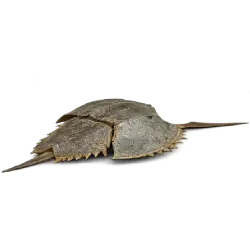
Horseshoe Crab
The horseshoe crab is an ancient marine arthropod known for its helmet-like shell, long…
Baca panduan spesies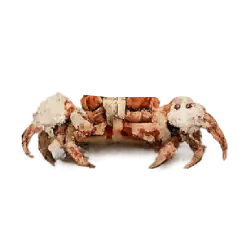
Boxer Crab
Boxer crabs are small reef crabs famous for carrying tiny sea anemones in their claws,…
Baca panduan spesiesLebih banyak hewan dengan kekuatan Resilience
Jelajahi semua hewan Resilience

Bawa ensiklopedia ke dunia nyata
AnimalDex membantumu memindai hewan nyata, mengidentifikasi spesies, mengoleksi kartu, dan belajar dari alam di mana pun kamu berada.