
Panduan lapangan hewan
Elephant
Identifikasi, habitat, rarity, perilaku, simbolisme, fakta, dan pelajaran praktis dari alam.
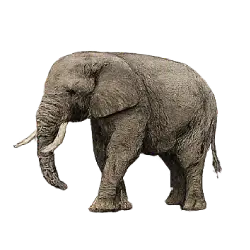
The heavy ancestral memory keeper animal. The Elephant is a giant animal with a long trunk, huge feet, and a very good memory. It remembers safe paths, water places, and family voices, almost like it carries an old map inside its head. Its lesson for us is clear: the right allies can multiply what one person can do alone.

Kartu AnimalDex
Buka kartu hewan ini
Pindai atau tangkap hewan ini dengan AnimalDex untuk membuka kartu koleksi dan menambahkannya ke koleksi satwa liarmu.
Dapatkan AnimalDexNama ilmiah
Elephantidae
Kategori
Mammal
Habitat
Savannah, woodland, dry forest, floodplain, and tropical forest with access to food, shade, and water.
Rarity
Rare · 77/100
Native range
Africa and parts of South and Southeast Asia depending on species.
Living Archive
Remember what matters.
Remember what matters. Move with wisdom.
Apa yang diajarkannya
Memory becomes wisdom when it protects the future.
Bukti alam
Elephants remember migration routes, water sources, social bonds, threats, and lost companions across long periods, turning experience into survival guidance for the herd.
Gunakan untuk
Tangkapan Elephant berperingkat
Belum ada tangkapan komunitas berperingkat untuk spesies ini.
Mengapa Living Archive?
Alasan di balik Prinsip Hewan ini dan biologi yang mendukungnya.
Elephants are large social herbivores with remarkable memory, trunk dexterity, and major influence on habitat structure wherever they still roam freely.
Cara mengidentifikasi Elephant
- Massive body with pillar-like legs and swinging trunk
- Large ears and curved tusks in many adults
- Slow but purposeful group movement across open ground or forest tracks
Kenapa Elephant menarik
- Elephants are ecosystem-scale animals whose movement changes opportunities for other species.
- Their behavior links memory, family structure, and landscape engineering in one visible package.
Habitat: Savannah, woodland, dry forest, floodplain, and tropical forest with access to food, shade, and water.
Native range: Africa and parts of South and Southeast Asia depending on species.
nativeRangeCardTitle
nativeRangeCardDescription
Savannah, woodland, dry forest, floodplain, and tropical forest with access to food, shade, and water.
To find Elephant in the wild, focus on the exact habitat patches that match its body design and daily behavior, not just the broad country where it exists. You usually do better by working one good piece of habitat inside africa and parts of South and Southeast Asia depending on species. than by covering too much ground.
- Quiet marsh edges, reedbeds, river bends, or shallow wetland margins
- Forest edge, canopy gaps, fruiting trees, or shaded trails where cover and food meet
- Open grassland edges, lightly wooded plains, or raised ground where you can scan long distances
- Start early, pick one strong patch of habitat, and stay long enough for movement to return after you arrive.
- Work edges, clearings, fruiting trees, and stream crossings rather than walking randomly through dense cover.
- Move quietly, stop often, and give the habitat time to settle; many mammals and insects show themselves only after the first pause.
Elephant has a mammal diet shaped by anatomy, habitat, and competition. The exact food mix depends on whether the species is built more for hunting, grazing, browsing, or omnivory.
- Plant material, prey, or both depending on species design
- Seasonally abundant foods in the local habitat
- Higher-value foods that match energy demands
The food available in savannah, woodland, dry forest, floodplain, and tropical forest with access to food, shade, and water. often matters as much as the species' ideal diet.
- Uses trunk touch, low rumbles, and posture in social coordination
- Remembers water routes and seasonal food areas across long distances
- Modifies vegetation by pushing, stripping, and digging
Elephant most often symbolizes living archive in AnimalDex because its real survival behavior repeatedly shows this pattern.
Memory becomes wisdom when it protects the future.
Elephants remember migration routes, water sources, social bonds, threats, and lost companions across long periods, turning experience into survival guidance for the herd.
- Keep vehicles predictable and give herds clear room to move.
- Never block access between mothers, calves, and water.
statsTitle
statsDescription
statsSourceLabel: statsSourceGenerated
dominanceStat
69
speedStat
30
sizeStat
80
intelligenceStat
63
rarityStat
77%
Total
319
Size scale
Huge
Uses the canonical size stat for consistent placement

US$323 – US$671
Perkiraan rentang nilai
Kepercayaan 60%
Perkiraan nilai AnimalDex dibuat dari stat spesies kanonik.
Not a marketplace listing.
Perkiraan nilai berdasarkan hewan yang teridentifikasi dan konteks harga yang tersedia. Bukan daftar marketplace.
Seberapa langka Elephant?
Rarity: Rare (77/100)
Elephants need large connected landscapes, and many populations remain under pressure from habitat fragmentation, conflict, and illegal killing.
Systems Intelligence & Hidden Purpose
Sudut pandang systems biology untuk melihat bagaimana spesies ini dibangun, peran apa yang dijalankannya di ekosistem, dan pelajaran praktis apa yang bisa dipetik manusia.
System Role
The Landscape Memory Engine
Elephant
Specialized Hardware
A multipurpose trunk, low-frequency communication, seismic sensitivity through the feet, and long-term spatial memory make elephants large-scale environmental navigation hardware.
Systems Script
Elephants open paths, disperse seeds, modify vegetation, and uncover water access points that other species later use. They are not just large animals inside a habitat; they help write the habitat's infrastructure.
Strategic Insight
Scale is most useful when paired with memory. The bigger the system, the more it wins by remembering routes, resources, and failure points.
Public Animal Power
Explore this Animal Power
This is a public capture, so you can explore its Animal Power here. Personal Apex matches and challenges use your Wild Profile and animals you own.
Own an animal with this power to use it in Growth challenges.
Hewan terkait
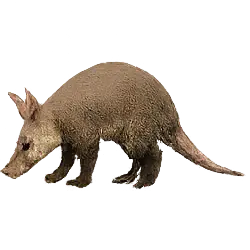
Aardvark
The aardvark is a nocturnal African mammal known for its long snout, strong digging…
Baca panduan spesies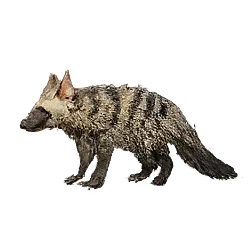
Aardwolf
The aardwolf is a small striped relative of hyenas that feeds mainly on termites rather…
Baca panduan spesies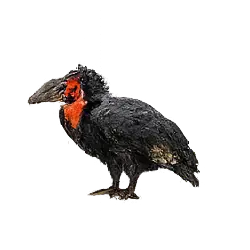
Abyssinian Ground Hornbill
Abyssinian Ground Hornbill is a bird known for bare red facial skin, huge…
Baca panduan spesiesLebih banyak hewan dengan kekuatan Long-Term Thinking
Jelajahi semua hewan Long-Term Thinking
AlUla Sand Elephant
AlUla Sand Elephant teaches Memory Path through matriarchal groups, long-range…
Baca panduan spesies
Desert Camel Sentinel
Desert Camel Sentinel teaches Reserve March through fat-storing humps, tough feet,…
Baca panduan spesies
Fairy-Tomb Elephant
Fairy-Tomb Elephant teaches Gentle Weight through family bonds, quiet strength, trunk…
Baca panduan spesiesBawa ensiklopedia ke dunia nyata
AnimalDex membantumu memindai hewan nyata, mengidentifikasi spesies, mengoleksi kartu, dan belajar dari alam di mana pun kamu berada.
Panduan blog terkait
Lanjutkan belajar lewat artikel praktis yang terhubung dengan spesies ini.
Capture Animals App: Identify, Collect, and Learn About Real Animals
Looking for a capture animals app? AnimalDex lets you scan real animals, identify species, collect discoveries, and build your own real-world animal collection.
Baca artikel blogBiomimicry in Animals: 35 Examples of Nature-Inspired Design
Discover 35 examples of biomimicry in animals, from shark skin and gecko feet to owl wings, elephant trunks, whale fins, spider silk, dolphins, ants, bees, and more.
Baca artikel blogWhat If Every Animal Is a Lesson?
Biomimicry, animal intelligence, symbolism, reincarnation, conservation, and why AnimalDex treats every animal as a living lesson.
Baca artikel blogComparisons terkait
Lihat bagaimana spesies ini tampil di halaman perbandingan AnimalDex yang terstruktur.
Elephant vs Giraffe: Which Giant Has the Stronger Edge?
Elephant is the stronger overall answer because it carries much more mass and pushing power. Giraffe stays dangerous through height, kicking, and awkward geometry rather than through direct bulk.
Baca halaman comparisonElephant vs Hippopotamus: Who Wins the Real Matchup?
Elephant is the stronger overall answer on land because it is larger, taller, and better at controlling space with bulk. Hippopotamus becomes far more dangerous in water-linked chaos where its bite and low heavy body matter more.
Baca halaman comparisonElephant vs Polar Bear: Which Giant Has the Edge?
Elephant gets the overwhelming overall edge through enormous size, reach, and space control. Polar bear remains dangerous because it is an apex predator with serious bite and commitment, but it is still far too outscaled in a clean direct clash.
Baca halaman comparisonElephant vs Rhino: Who Has the Real Edge?
Elephant usually has the overall edge through greater size, reach, and control of space. A rhino still remains dangerous because its charge is compact, forceful, and built for brutal short-range disruption.
Baca halaman comparisonMuncul di tier list
Lihat posisi spesies ini di halaman tier list AnimalDex yang dibangun dengan perbandingan terstruktur dan metodologi yang jelas.
#1 · Culture
Most Sacred Animals in History: Top 100 Tier List
Elephant leads because it carries one of the strongest long-running sacred profiles in human civilization, especially across South and Southeast Asia.
Baca tier list#2 · Size
Biggest Animals in the World: Top 250 Tier List
Elephant is the strongest land-based size answer because its mass and height dominate terrestrial comparisons.
Baca tier list#2 · Strength
Strongest Animals in the World: Top 100 Tier List
Elephant is the clearest land-strength answer because it combines immense bulk, pushing power, and space control.
Baca tier list