

El NiñoGalápagosmarine iguana
Galápagos Lizards Shrink Their Bones as El Niño 2026 Hits
As a possibly record El Niño starves the Galápagos, marine iguanas are shrinking their own skeletons. What it means for penguins, sea lions and more.
Dalam panduan ini
- Why are scientists alarmed about El Niño 2026 in the Galápagos?
- Is the 2026 El Niño the strongest on record?
- Why did Peru cancel anchovy fishing in 2026?
- How does El Niño starve Galápagos animals?
- Will Galápagos penguins survive another super El Niño?
- What happened to sea lions in past super El Niños?
- Why do marine iguanas shrink during El Niño?
- How are Galápagos marine iguanas being smuggled?
- How can you see Galápagos wildlife and follow what happens next?
The short answer
Quick answer
NOAA puts the odds above 83% that the 2026–27 El Niño becomes the strongest on its official RONI index, where it provisionally ranks second to 1997. Warm water makes plankton and small fish “practically disappear”. Marine iguanas are already shrinking. Past super El Niños cut penguins 65–77%, and in monitored colonies every sea lion pup born in 1982 died.
The warning
Why are scientists alarmed about El Niño 2026 in the Galápagos?
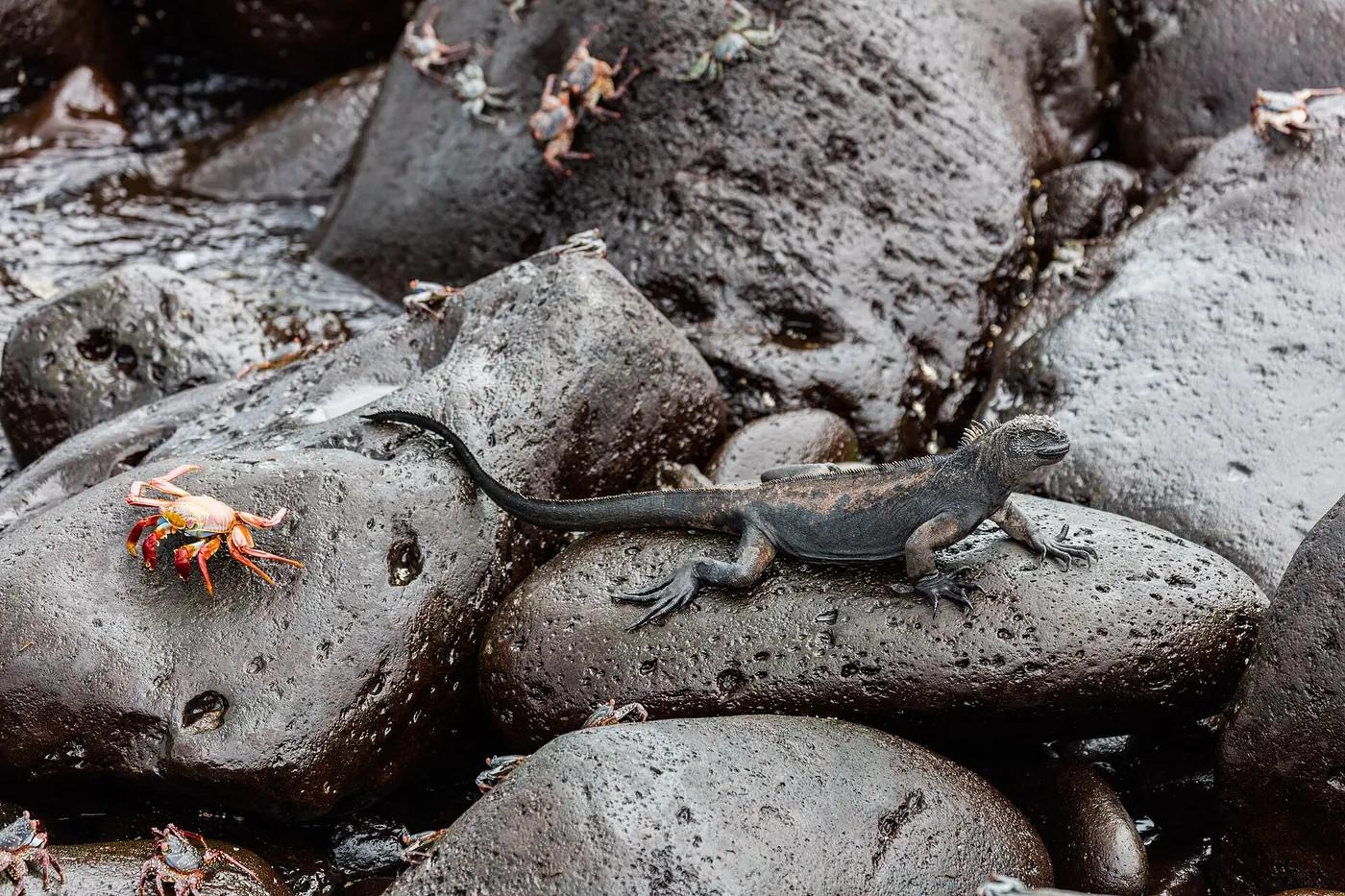
Right now, scientists say, the marine iguanas of the Galápagos are getting smaller. Not thinner. Shorter. In famine years these lizards reabsorb parts of their own skeletons, a trick so unlikely that the biologist who documented it said it took him 12 years to accept his own data.
They are going to need it. NOAA puts the odds above 83% that the 2026–27 El Niño becomes the strongest on its official index, and the islands know what super El Niños do. In the colonies scientists were watching, every sea lion pup born in 1982 died.
In September the Associated Press reported that the forecasts had “alarmed the Ecuadorian scientific community”. Gustavo Jiménez of the Charles Darwin Foundation (CDF) warns that the islands’ vertebrate population could fall by at least 20% this year. Franklin Ormaza of ESPOL, the Escuela Superior Politécnica del Litoral, put it plainly: “the impact will be significant.”
The Galápagos Islands number more than 230, four of them inhabited, roughly 1,000 km off Ecuador. The animals most at risk live nowhere else, so they cannot pack up and leave. To understand how a few degrees of warm water can empty a sea lion colony and shrink a lizard, start at the bottom of the food chain, with a fish that stopped turning up in nets.
The islands’ vertebrate population could fall by at least 20% this year, warns the Charles Darwin Foundation’s Gustavo Jiménez.
The fight
Is the 2026 El Niño the strongest on record?
That depends on which yardstick you trust, and the two give different answers. On the old Niño 3.4 index, which tracks sea temperature in a patch of the central Pacific, 2026 is already the warmest El Niño ever recorded.
Since February 2026, though, NOAA’s official measure has been a newer index called RONI, which subtracts the overall warming of the tropical oceans. On RONI, using data through August, 1997 still ranks first and 2026 ranks second. NOAA’s Nat Johnson of the Geophysical Fluid Dynamics Laboratory presented that ranking on 20 October and called it provisional.
The difference comes down to background heat. The whole tropical ocean now runs warmer, so part of what the old index picks up is that warmer background. RONI strips it out to measure the El Niño itself, rather than the warmer bathtub it sits in.
Even on the stricter index, the odds keep climbing. NOAA’s chance of a record event rose from nearly 70% on 13 August to more than 83% on 8 October. AccuWeather notes that NOAA’s RONI forecast mean of 2.66 would beat the previous highest three-month value of 2.40, set from November 1982 to February 1983.
NOAA adds one caveat of its own: record strength does not guarantee record damage everywhere. For the Galápagos, the warning signs had already shown up months earlier.
On one index, 2026 is already the warmest El Niño ever recorded. On NOAA’s official one, it is still second to 1997.
First domino
Why did Peru cancel anchovy fishing in 2026?
The first warning for the Galápagos did not come from the islands at all. It came from fishing nets off Peru, where the warm water showed up months before scientists sounded the alarm about penguins and sea lions.
In early June, Peru suspended anchoveta fishing on its north-central coast because the sea was too warm and more than half the fish in the nets were juveniles. On 21 August the Production Ministry, PRODUCE, closed the season, citing “an anomalous warm scenario off the Peruvian coast during 2026”. Around 19 October it refused to open a second season at all, citing exceptionally low biomass.
You may have read that anchovies have fled South America. That is overstated: in warm water, anchoveta “either relocate or move to deeper waters”, which is not a mass exodus. The accurate version is still startling. The fish vanished from the nets of one of the world’s biggest sources of fish oil, and the same warming was about to hit the bottom of the Galápagos food chain.
The first warning for Darwin’s islands was not a starving penguin. It was a Peruvian fishing net where more than half the anchovies were juveniles.
Food chain
How does El Niño starve Galápagos animals?
In a normal year, cold, productive water around the western islands feeds an explosion of microscopic life. El Niño replaces it with warm water. “With warmer water, primary productivity declines,” says María José Barragán, science director at the CDF.
Washington Tapia of Biodiversa Ecuador describes what follows. Plankton, algae and smaller fish species, “which are food for larger marine animals, practically disappear.” Barragán adds that the effects can arrive weeks or months later, so the damage you can count today is not all the damage that is coming.
From there the shortage travels upwards. Without food, says Jiménez, “animal colonies stop reproducing”, and animals scatter in search of a meal and starve along the way. The CDF expects abandoned nests, halted mating and fewer young, while heavy rain can shift where seabirds nest.
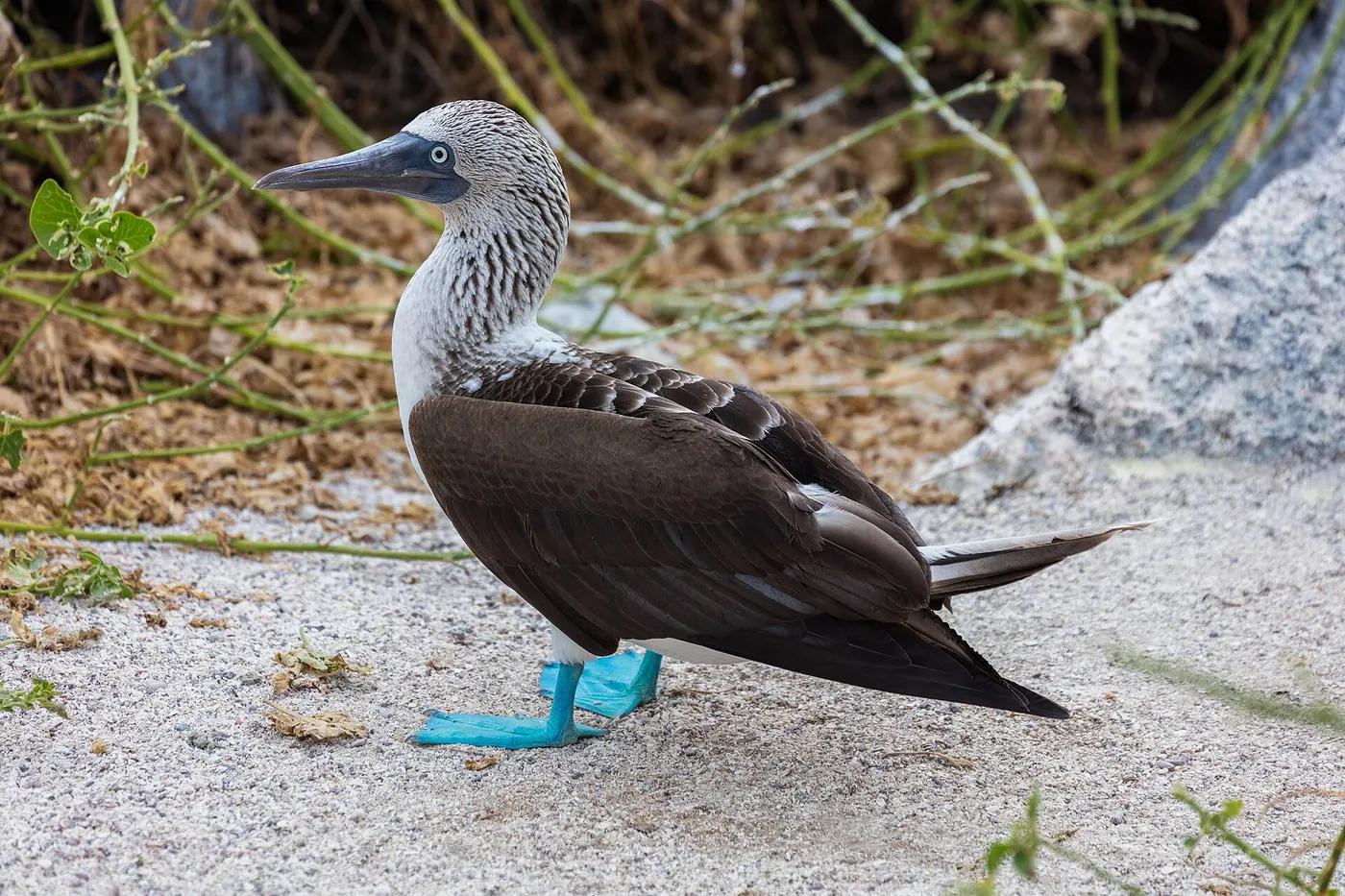
Ormaza’s list of the species most at risk reads like the islands’ greatest hits: Galápagos penguins, blue-footed boobies, petrels, flightless cormorants, albatrosses and sea lions, plus coral colonies and tuna fishing. The land is exposed too. One scientist quoted by AP warned that the last three remaining Scalesia forests could disappear if El Niño hits as hard as expected.
Early reports are coming in. One diving operator says recent trips to Fernandina and Isabela, normally the coldest and most productive waters in the archipelago, found less marine iguana activity and not a single mola mola. That is one company’s observation rather than a survey, but it fits the pattern.
When the water warms, plankton, algae and smaller fish “practically disappear”. Everything above them goes hungry.
Endangered
Will Galápagos penguins survive another super El Niño?
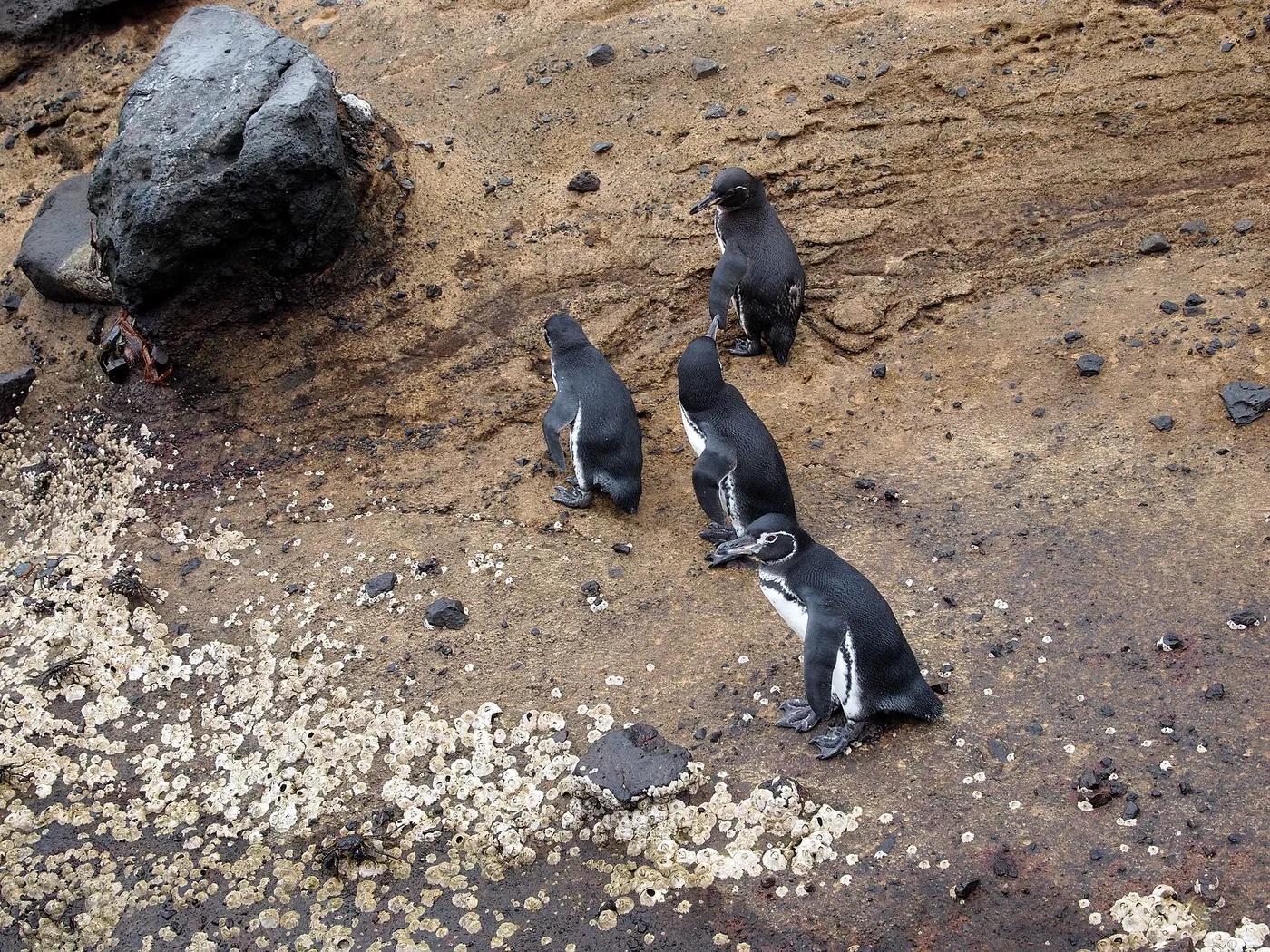
The Galápagos penguin lives on a thin margin. A peer-reviewed study by Vargas and colleagues found its population crashed by 77% in the 1982–83 El Niño and by 65% in 1997–98.
Charles Darwin Foundation counts cited by AP tell the second crash in raw numbers: about 1,300 penguins before the 1998 event, just 400 after. That works out to roughly 69%, a little steeper than the study’s 65%, because the two figures come from different counts. Either way, about two in every three birds were gone.
Vargas and colleagues looked at nine El Niños between 1965 and 2004, two strong and seven weak. Only the strong ones caused crashes. The frequent weak ones did something quieter: they stopped the population recovering between the big hits, and by 2004 the penguins numbered less than half their pre-1982 level.
Their model predicts population crashes when sea temperatures run more than 2°C above baseline. NOAA’s projection for 2026, as cited by AP, is about 2.2°C above normal.
Then there is the question of who dies. El Niño kills a disproportionate number of females, so every crash also removes the birds that would rebuild the colony. The IUCN has listed the species as Endangered since 2000, a recent estimate puts it at about 1,200 mature individuals, and no one is formally predicting extinction. The history simply shows how little buffer is left.
El Niño kills a disproportionate number of female penguins, the very birds a colony needs to rebuild.
History
What happened to sea lions in past super El Niños?
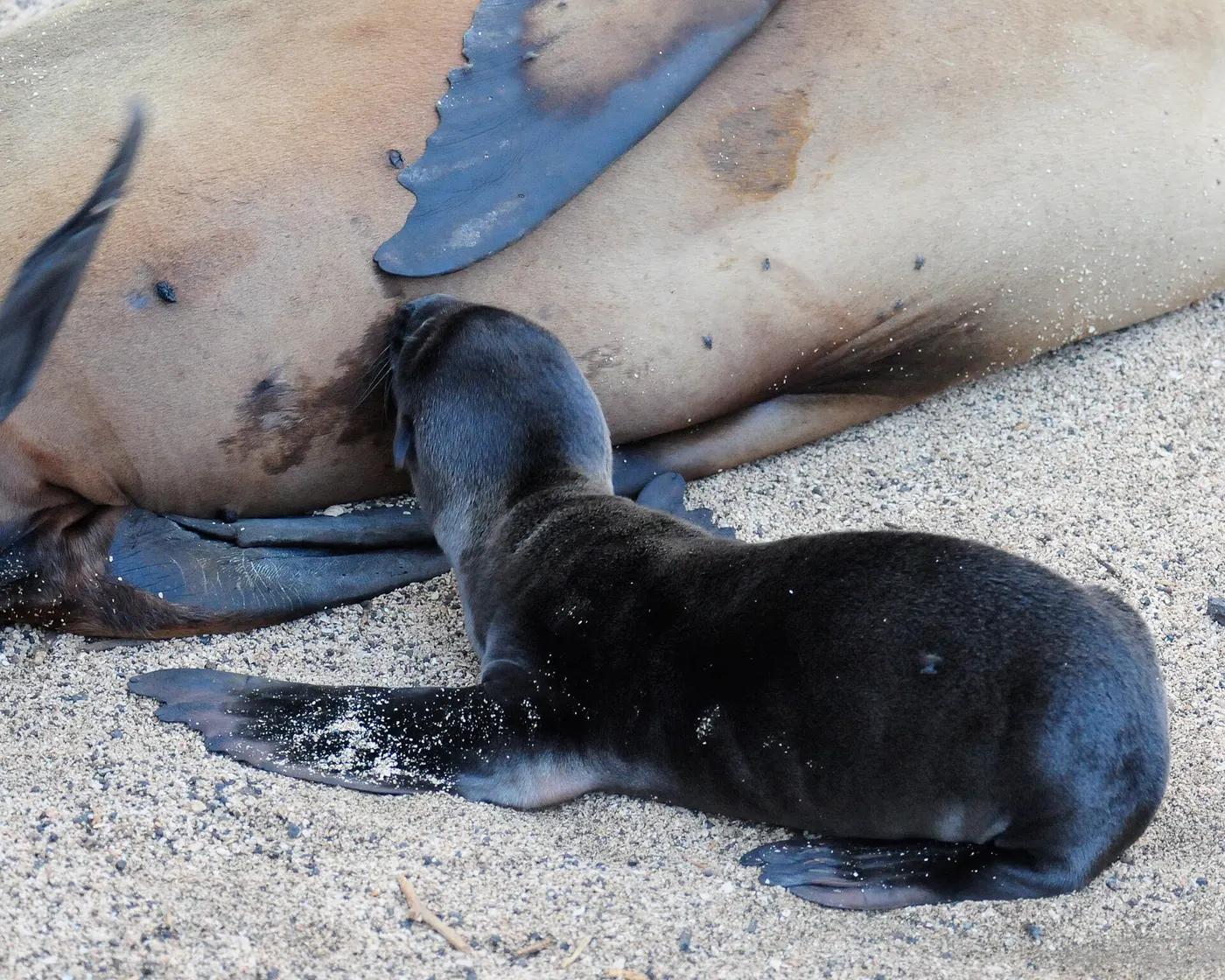
Go back to those 1982 pups. In an undisturbed Galápagos sea lion colony in a normal year, about 5% of pups die. In El Niño years that figure can reach 100%, and in the colonies scientists were watching in 1982, it did. The following year, only a third of the normal number of pups were born at all.
The 1997–98 event was nearly as brutal. The population fell 48% through deaths and migration. Pups born between June 1997 and December 1998 suffered 90% mortality, and dominant breeding males, the biggest animals on the beach, died at a rate of 67%.
Some survivors changed tactics. With sardines gone, starving sea lions switched to lanternfish and started hunting at night. It was a clever shift, and it still could not save most of that generation of pups.
Both the Galápagos sea lion and the Galápagos fur seal are now listed as Endangered. Researchers ran a census from 2014 to 2018 to track how El Niño affects pup numbers, so this time the losses can be measured against recent counts.
In a normal year about 5% of sea lion pups die. In the colonies scientists were watching in 1982, every single one did.
Superpower
Why do marine iguanas shrink during El Niño?
The marine iguana, the world’s only marine lizard, has the strangest answer to famine on the islands: it gets smaller. Not thinner, shorter. Adults reabsorb soft tissue, cartilage and bone, shrinking by up to 20%, about 6.8 cm, and grow back when food returns.
The famine starts with seaweed. In El Niño years the red and green algae the iguanas normally graze die off, and the brown algae that replace them give the iguanas indigestion. So they stop eating, for weeks or even months.
Mark Wikelski and his co-author Thom published the finding in Nature in January 2000, after Wikelski surveyed 600 iguanas through the 1992–93 El Niño. Being just 1 cm shorter raised an iguana’s chance of survival by about 10%. Wikelski called it “pretty crazy” and admitted: “It took me 12 years to accept my own data.”
He was not the only sceptic. Galápagos iguana experts had dismissed the shrinking for nearly two decades, assuming it was a measurement error. A later study suggests the iguanas may also lower their heart rate and metabolism in El Niño years, though that part is still a hypothesis.
It is a trick worthy of any list of the most resilient animals or the most adaptable animals, but shrinking buys time, not food. “Marine iguanas are already shrinking in size and facing mass mortality, either by starvation or by trying to swim longer distances in search of food,” says Juan José Alava of Simon Fraser University. The CDF treats the lizards as an early-warning system: as Barragán puts it, “the presence or absence of iguanas can tell us that something is happening in the ocean.”
Being just 1 cm shorter raised a marine iguana’s chance of surviving El Niño by about 10%.
most resilient animalsmost adaptable animals
Trafficking
How are Galápagos marine iguanas being smuggled?
As if starvation were not enough, people are packing marine iguanas into luggage. In May 2026, four were found in a home near Guayaquil. About a dozen more turned up at Guayaquil’s José Joaquín de Olmedo airport, “stuffed in handbags with their limbs bound”.
On 28 August, 32 more were found in plastic containers inside a Russian national’s suitcase at Quito airport. Roughly two weeks later, the El Niño reached “super” status. More than 48 iguanas have been seized since May, at least one confiscated animal was found dead, and several more have died since.
How does a protected species get sold abroad? According to a letter in Science by Alava and colleagues, published on 3 September, smugglers obtain CITES export permits by falsely labelling wild-caught iguanas as “captive bred” in Uganda, Switzerland, Mali and Japan. None of those countries has an authorised breeding facility, and the authors want CITES to close the loophole.
What next
How can you see Galápagos wildlife and follow what happens next?
The real verdict on this El Niño will not come from a forecast. It will come from the CDF’s long-term monitoring of the same colonies of iguanas, penguins, cormorants and sea lions, because without counts taken before the event, nobody can measure the damage after it.
Timing matters. Forecasters expect the event to peak between November and January, and Barragán warns the effects can surface weeks or months after the water warms. The counts that follow will show whether the penguins lost their breeding females, whether the sea lion pups made it, and whether the shrinking lizards shrank enough.
If you visit the Galápagos Islands, keep a respectful distance and never feed, touch or follow wildlife: hungry animals do not need extra stress. If you meet a Galápagos penguin or a marine iguana there, AnimalDex lets you capture it live with your phone camera and add it to your collection.
From home, you can see how a marine iguana stacks up against a rhinoceros iguana, then test yourself with the quiz below. The species has come through super El Niños before; the coming months will show what this one costs.
Galápagos IslandsGalápagos penguinrhinoceros iguana
Pertanyaan singkat
Jawaban ringkas untuk pertanyaan yang paling sering muncul pada topik ini.
- Is the 2026 El Niño the strongest on record?
- Not officially yet. It is the warmest ever on the old Niño 3.4 index, but on NOAA’s official RONI index it ranks second to 1997 using data through August, a ranking NOAA calls provisional. NOAA puts the odds above 83% that it becomes the strongest on record.
- How does El Niño affect Galápagos animals?
- Warm water cuts primary productivity, so plankton, algae and small fish “practically disappear”. Animals higher up the food chain then stop breeding, abandon nests or scatter and starve. The effects can appear weeks or months after the water warms.
- Will Galápagos penguins go extinct?
- No one is formally predicting it, but the species is Endangered, with about 1,200 mature individuals. Past super El Niños cut the population by 77% and 65%, and a model predicts crashes when seas run more than 2°C above baseline. The 2026 forecast is about 2.2°C above normal.
- Why do marine iguanas shrink?
- In El Niño years the algae they eat are replaced by brown algae that give them indigestion, so they stop eating for weeks or months. Adults reabsorb tissue, cartilage and bone to shrink by up to 20%, and being 1 cm shorter raised survival odds by about 10% in one study. They grow back when food returns.
- Why did Peru cancel anchovy fishing in 2026?
- Unusually warm water led anchoveta to relocate or move deeper, and more than half the catch was juvenile fish. Peru closed the first season on 21 August, citing an anomalous warm scenario. Around 19 October it cancelled the second season, citing exceptionally low biomass.
- Why are Galápagos iguanas being smuggled?
- Reporting so far explains how the trade works rather than who buys the animals. Smugglers obtain CITES export permits by falsely labelling wild-caught iguanas as “captive bred” in countries with no authorised breeding facility. More than 48 iguanas have been seized since May 2026, and several have died.
Hewan yang disebut
Lompat dari artikel ini ke halaman spesies di balik contoh, catatan systems, dan referensi field guide.
Sources and further reading
- NBC News (AP): A stronger-than-normal El Niño alarms scientists over Galápagos wildlife
- Charles Darwin Foundation: El Niño 2026 in Galápagos
- Phys.org: Scientists alarmed by super El Niño and iguana trafficking
- Nature: Marine iguanas shrink to survive El Niño
- UPI: Iguanas shrink bones to survive famine
- ResearchGate: Biological effects of El Niño on the Galápagos penguin
- Ecoticias: NOAA says the 2026 El Niño is already the second strongest on record
- SeafoodSource: Peru ends north-central anchovy season after lengthy pause
- NutraIngredients: Peru cancels second anchovy fishing season amidst unprecedented El Niño event
Panduan jawaban terkait topik ini
Kalau kamu ingin perbandingan langsung dan rekomendasi yang jelas, lanjutkan ke halaman jawaban berikut.
Best Animal Identification Apps
Compare the best animal identification apps by features like photo/video identification, species coverage, collection capabilities, offline use, and more.
What Is Animal Collecting
Learn what animal collecting means in modern apps and how AnimalDex turns real-world sightings into cards, sets, rarity, and species learning.
Pokemon-Like Animal App
Looking for a Pokemon-like animal app with real species? AnimalDex combines creature-collection energy with AI scanning and wildlife learning.