

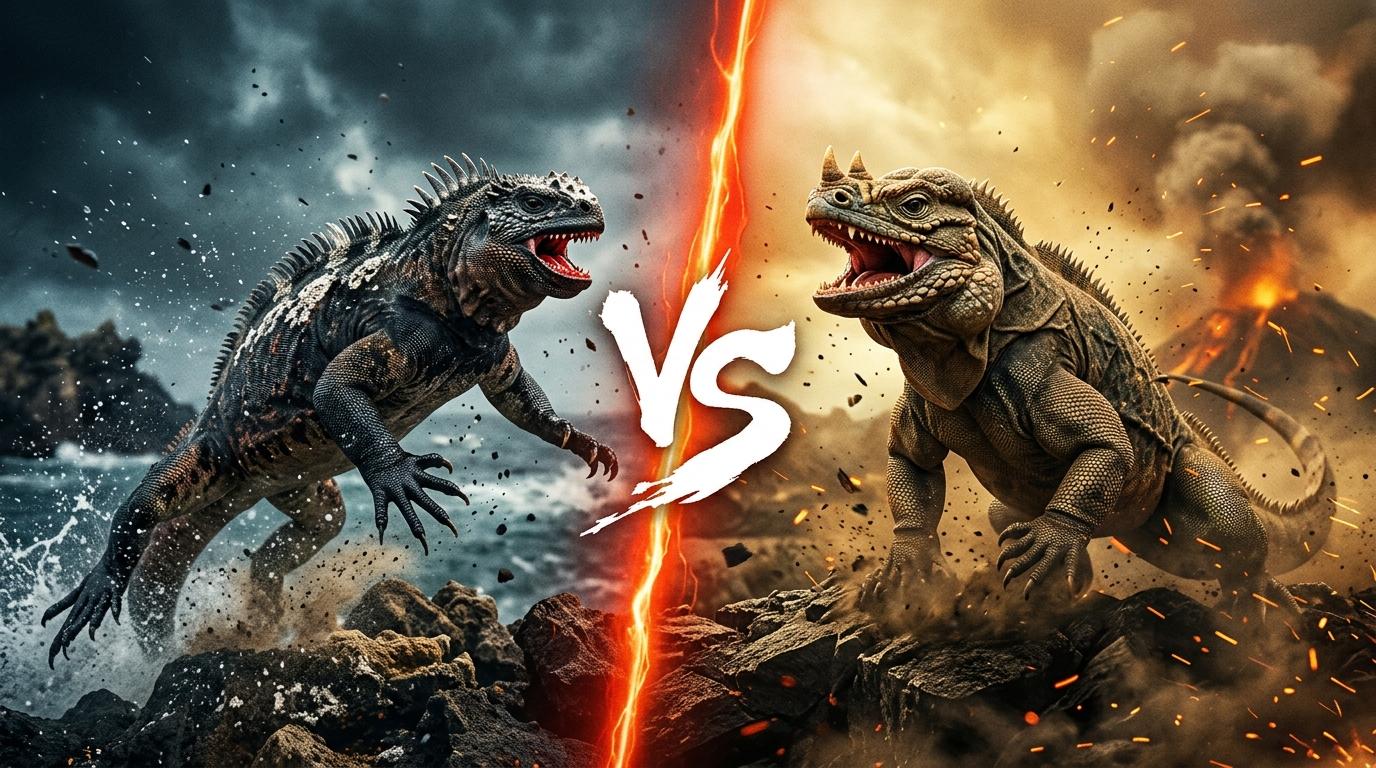
Marine Iguana vs Rhinoceros Iguana: Who Actually Wins?
Marine iguana vs rhinoceros iguana: a biology-first breakdown of size, armor, bite, and temperament. See who wins on land, on rocks, and in the surf.
Marine Iguana vs Rhinoceros Iguana
Matchup winner
Rhinoceros Iguana
Quick verdict
Start with the direct answer, then use the structured comparison below to see what changes the outcome.
The rhinoceros iguana wins this matchup in most realistic settings. Cyclura cornuta is a heavy-bodied terrestrial iguana from Hispaniola. Large males can reach about 1.3 m and close to 9–10 kg. They carry thick-boned skulls with bony horn-like scales, fat jowls, and powerful jaws built for crushing tough vegetation. Their whole social life revolves around head-bobbing, shoving, and biting contests over territory. The marine iguana is a remarkable Galápagos specialist. It dives to graze algae, sneezes out excess salt, and endures cold Pacific water. But its body is tuned for efficient foraging and heat conservation, not prolonged combat. Most adults are smaller and lighter, and they cool quickly after swimming. Marine iguana males do fight, mostly ritualized head-butting over lek-like territories. Against a heavier, warm, horned, territorial land brawler, the rhino iguana's mass, bite, and combat-ready temperament decide it. The marine iguana's only real edge comes in surf or wet rock, where it stays in control and the rhino iguana is out of place.
Read the full explanation
Rhinoceros iguana wins most encounters through greater bulk, a stronger bite, and a horned, reinforced head.
Marine iguanas are tough and well clawed, but their bodies are optimized for diving and grazing algae, not grappling.
On land, especially in warm conditions, the rhino iguana's territorial aggression is decisive.
In surf or on slick lava shoreline, the marine iguana can escape or hold its ground, but it rarely 'wins' outright.
Reader vote
Who do you think wins?
Pick a side — no account needed. Results update live.
No votes yet — be the first to call it.
Editorial note
Why people disagree
Marine iguanas look prehistoric and fierce, so people overrate their fighting ability. Their spines and dark color are mostly display and heat management.
Body mass & frame
In lizard shoving matches, the heavier animal usually controls the clinch and dictates the outcome.
Crushing bite
A rhino iguana bite can tear skin and lock on, which turns a standoff into real damage.
Head armor
The reinforced head is built to absorb and deliver butts in territorial contests.
Read the full explanation +
Both species fight their own kind with head-butting rituals. Ritual sparring is not the same as an all-out defense, and the rhino iguana's version is backed by more mass.
Habitat flips the picture. Put the meeting in the intertidal zone and the marine iguana's claws, grip, and water confidence suddenly matter a lot.
Comparison FAQ
Short, direct answers to the next questions readers usually ask after the headline verdict.
Would a marine iguana beat a rhinoceros iguana?+
Usually not. The rhinoceros iguana is heavier, has a stronger bite and a reinforced horned head, and is more territorially aggressive. It wins most land encounters.
Which is stronger, a marine iguana or a rhinoceros iguana?+
The rhinoceros iguana is stronger in practical fighting terms. Its stocky frame and crushing jaws give it more pushing power and biting force than the typical marine iguana.
Why is the marine iguana still dangerous?+
Its long, sharp claws can scratch deeply, and it can bite defensively. On wet rock it can grip and resist being dislodged. It also knows how to escape into water, where the rhino iguana cannot follow.
Do these two iguanas ever meet in the wild?+
No. Marine iguanas live only in the Galápagos, and rhinoceros iguanas are native to Hispaniola in the Caribbean. This is a hypothetical comparison based on their anatomy and behavior.
Are either of these iguanas dangerous to humans?+
Both are mainly herbivores and avoid people. A cornered rhinoceros iguana can deliver a painful bite and tail lash, though. Both species are protected and should not be handled.
Head-to-head species stats
These are the same core AnimalDex stat dimensions used on the dedicated animal pages, pulled side by side so the matchup is faster to scan.
Marine Iguana
Tier CRhinoceros Iguana
Tier CTrait-by-trait comparison
Only the categories that matter to this matchup are included. The goal is not filler stats, but the real design differences that change the result.
Typically 1–1.5 kg; big Fernandina males up to ~12 kg but rare
Body mass & frame
Rhinoceros Iguana
Stocky, often 4–9 kg in big males
Body mass & frame
Rhinoceros Iguana
Short blunt snout for scraping algae
Crushing bite
Rhinoceros Iguana
Deep jaws, heavy jowls, serrated teeth
Crushing bite
Rhinoceros Iguana
Knobby scales, rounded crown
Head armor
Rhinoceros Iguana
Bony horn-like scales on the snout, thick skull
Head armor
Rhinoceros Iguana
Long, sharp claws made for clinging to wave-washed lava
Rock grip
Marine Iguana
Strong claws for digging and scrambling
Rock grip
Marine Iguana
Loses heat fast after dives; often sluggish when cool
Thermal fight-readiness
Rhinoceros Iguana
Basks in hot dry scrub; stays warm and active
Thermal fight-readiness
Rhinoceros Iguana
Ritual head-butts, often tolerant in crowded colonies
Territorial aggression
Rhinoceros Iguana
Pronounced territorial aggression; displays escalate to bites
Territorial aggression
Rhinoceros Iguana
How the verdict forms
Verdict timeline
01 · Body mass & frame
Rhinoceros Iguana
02 · Crushing bite
Rhinoceros Iguana
03 · Head armor
Rhinoceros Iguana
04 · Rock grip
Marine Iguana
05 · Thermal fight-readiness
Rhinoceros Iguana
06 · Territorial aggression
Rhinoceros Iguana
Change the conditions
Scenario breakdown
This is where shallow battle content usually fails. Terrain, spacing, timing, and engagement style can change the answer.
Scenario lean
Rhinoceros Iguana
Verdict confidence
82%
Rhino iguana dominates.
On warm, flat ground the rhino iguana is in its element. Its heavier body wins shoving, and its head armor absorbs butts. Its bite can grip and twist the marine iguana's limbs or flank. The marine iguana has no water to retreat to and may be cooler and slower. It is likely to concede quickly.
AnimalDex field profiles
Explore these animals
Marine Iguana
Amblyrhynchus cristatus
Rocky intertidal shore, lava coast, and nearby dry island scrub.
Rhinoceros Iguana
Cyclura cornuta
dry forest, rocky scrub, and coastal island habitat
Systems Intelligence & Hidden Purpose
See the animals behind this comparison as engineered biological systems: what each one is built to do, where it gains leverage, and why the matchup changes by scenario.
Specialized Hardware
Salt-expelling nasal glands, laterally compressed tail, and dark heat-absorbing skin make marine iguanas shoreline hardware built for cold surf grazing.
Systems Script
Marine iguanas convert intertidal algae into reptile biomass in a niche most lizards cannot touch. They prove that evolutionary design can turn a rocky hazard zone into a dependable feeding lane.
Strategic Insight
If a resource looks unusable to everyone else, specialized handling can turn it into your home field.
Specialized Hardware
horn-like snout scales, heavy basking body, and rocky-island territorial movement give the Rhinoceros Iguana a body plan tuned for its niche.
Systems Script
Rhinoceros Iguanas operate through dry forest, rocky scrub, and coastal island habitat. Their design links movement, feeding, shelter, and timing into one workable survival system.
Strategic Insight
Harsh places reward efficiency, timing, and bodies that waste very little.
Final take
The rhinoceros iguana is the clear overall winner. This isn't about the marine iguana being weak. The rhino iguana is simply built and behaviorally primed for the kind of contest a fight actually is: heavy, warm, armored at the head, and quick to escalate from display to biting.
Read the full explanation
The marine iguana is one of evolution's great specialists. It is the only lizard that forages in the sea, and its toughness shows in surviving cold water and El Niño famines. That toughness is endurance, not combat. Given a shoreline, it survives. Given open ground and a warm, territorial rhino iguana, it loses.
Collect both animals in AnimalDex
Track the species behind this matchup, compare their real traits, and build the rivalry into your AnimalDex collection.
Related comparisons
Continue with nearby matchups to compare more real-world animal traits without dropping into junky who-wins filler.
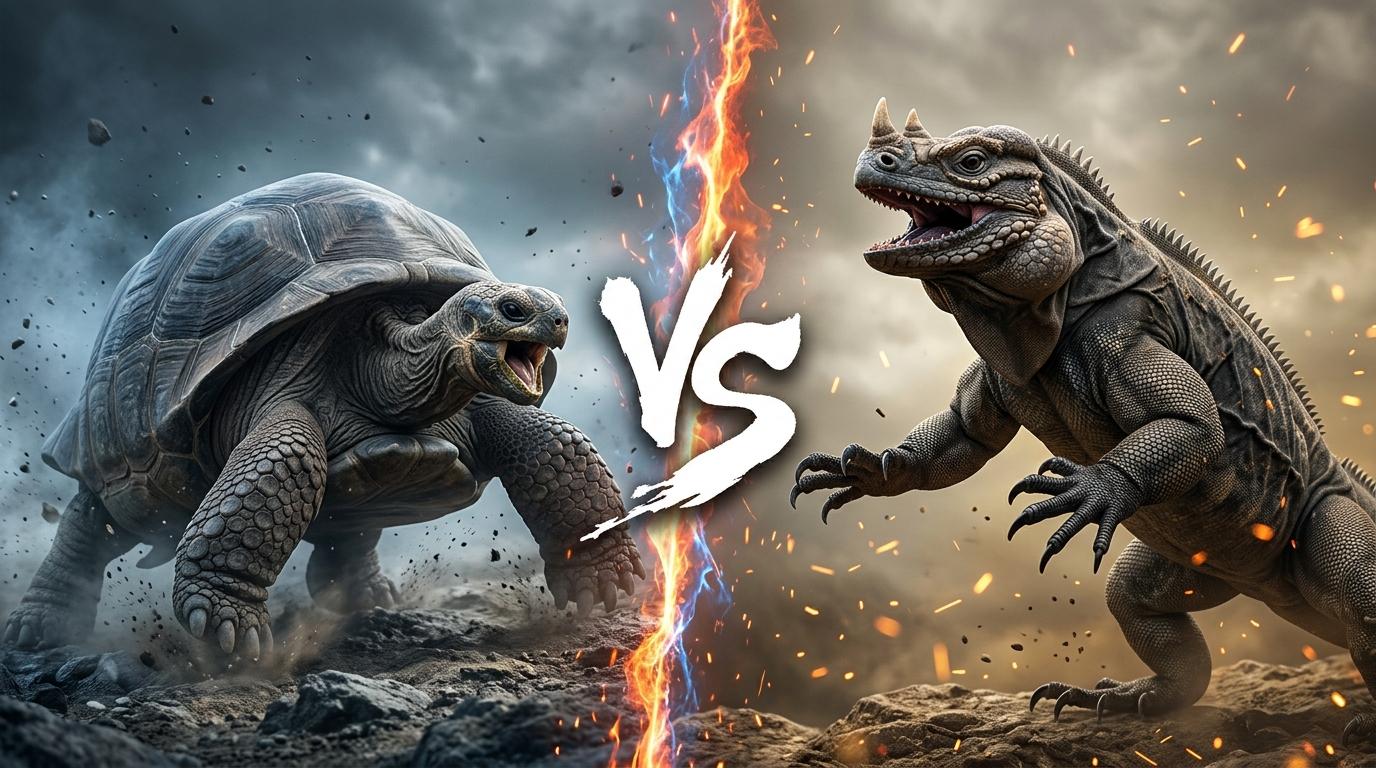
Aldabra Giant Tortoise vs Rhinoceros Iguana: Who Actually Wins?
The Aldabra Giant Tortoise wins. This is a contest between a living fortress and a fast, aggressive brawler. A big male Aldabra can top 250 kg with a carapace the iguana's jaws cannot meaningfully damage. The rhinoceros iguana is quicker and far more combative, with serrated teeth, a whipping tail, and real territorial aggression, but it weighs roughly 5–10 kg. It has no way to injure a tortoise that can pull its head and limbs behind armor. The tortoise doesn't need to hurt the iguana to win. It only needs to be unbeatable, and sheer mass lets it shove, pin, or simply outlast its rival. The iguana wins the first few seconds of tempo. The tortoise wins the outcome.
Read comparison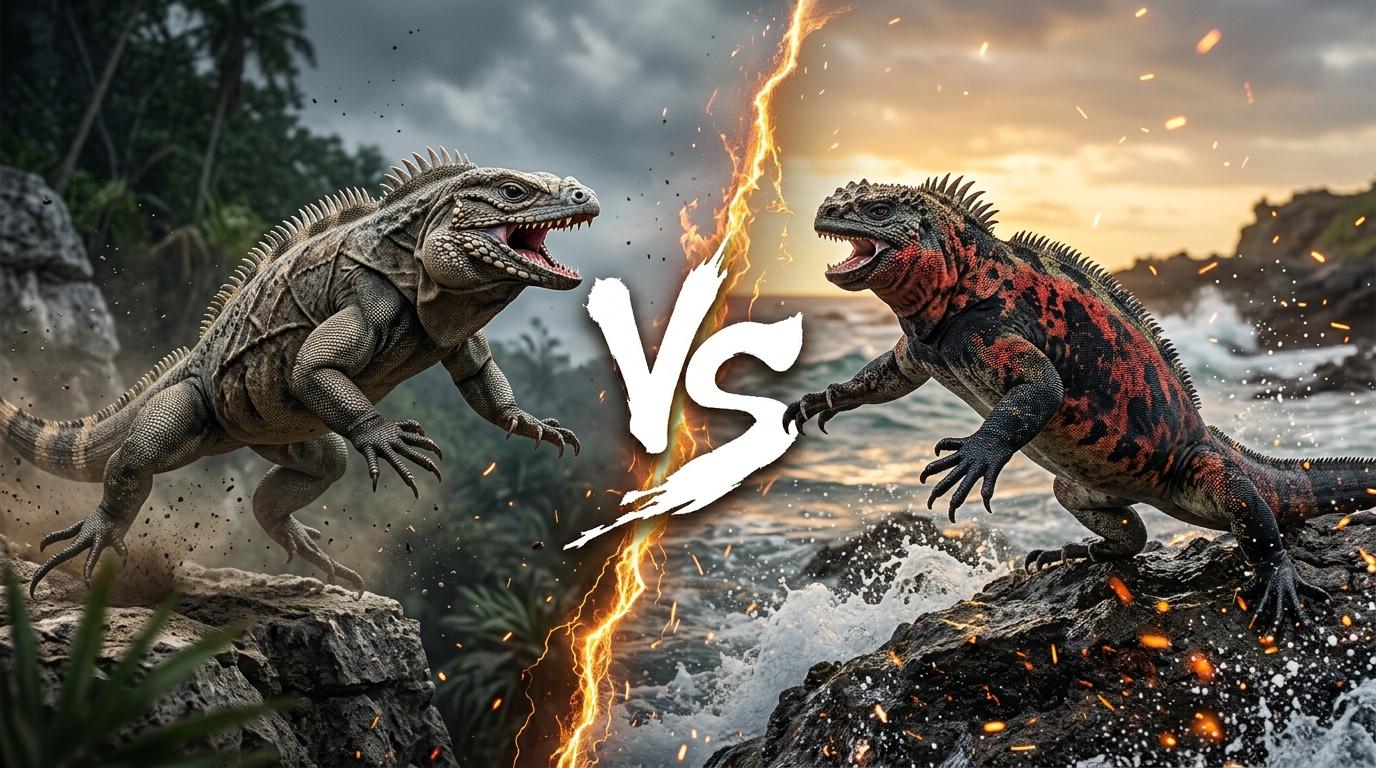
Cuban Rock Iguana vs Marine Iguana: Who Actually Wins?
The Cuban rock iguana wins this matchup in most realistic frames. It is the bulkier lizard, with large males reaching roughly 1.5 m in total length and several kilograms of mass. It has a heavier head and stronger jaws, and it lives in a territorial land system where males routinely settle disputes with head-bobbing, lateral displays, shoving and biting. The marine iguana is a remarkable specialist. It dives for algae and tolerates cold Pacific water, and it handles salt with nasal glands that sneeze out brine. But its blunt snout and small, tricuspid teeth are built to scrape algae off rock, not to win land grappling contests. Male marine iguanas do head-butt rivals over lekking territories, and they are tough, but their pushing contests are ritualized and lower on damage. Away from the surf, the rock iguana's mass, grip and bite carry the fight.
Read comparison
Discussion
What do you think?
Share your reasoning with other readers. Be civil and stick to the animals.
Sign in to join the discussion.
Sign inNo comments yet. Start the conversation.