

Mantis Shrimp Vision and Strike Power: How This Animal Sees and Hits So Fast
See how mantis shrimp combine extreme animal vision, explosive strike mechanics, reef survival strategy, and a powerful ecosystem role.
Listen to this story
Hear the full article read aloud.
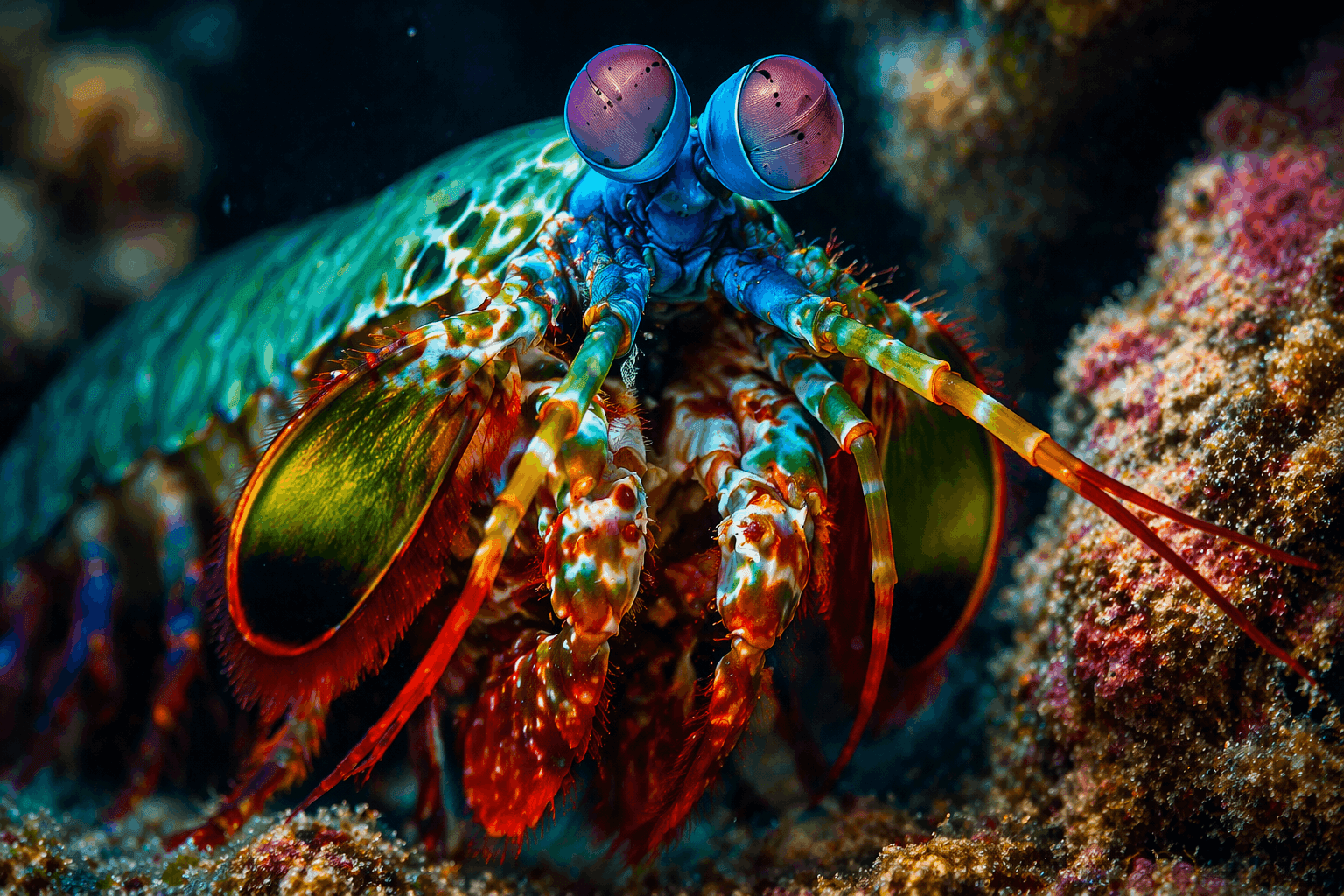
Why mantis shrimp keep breaking people’s mental models
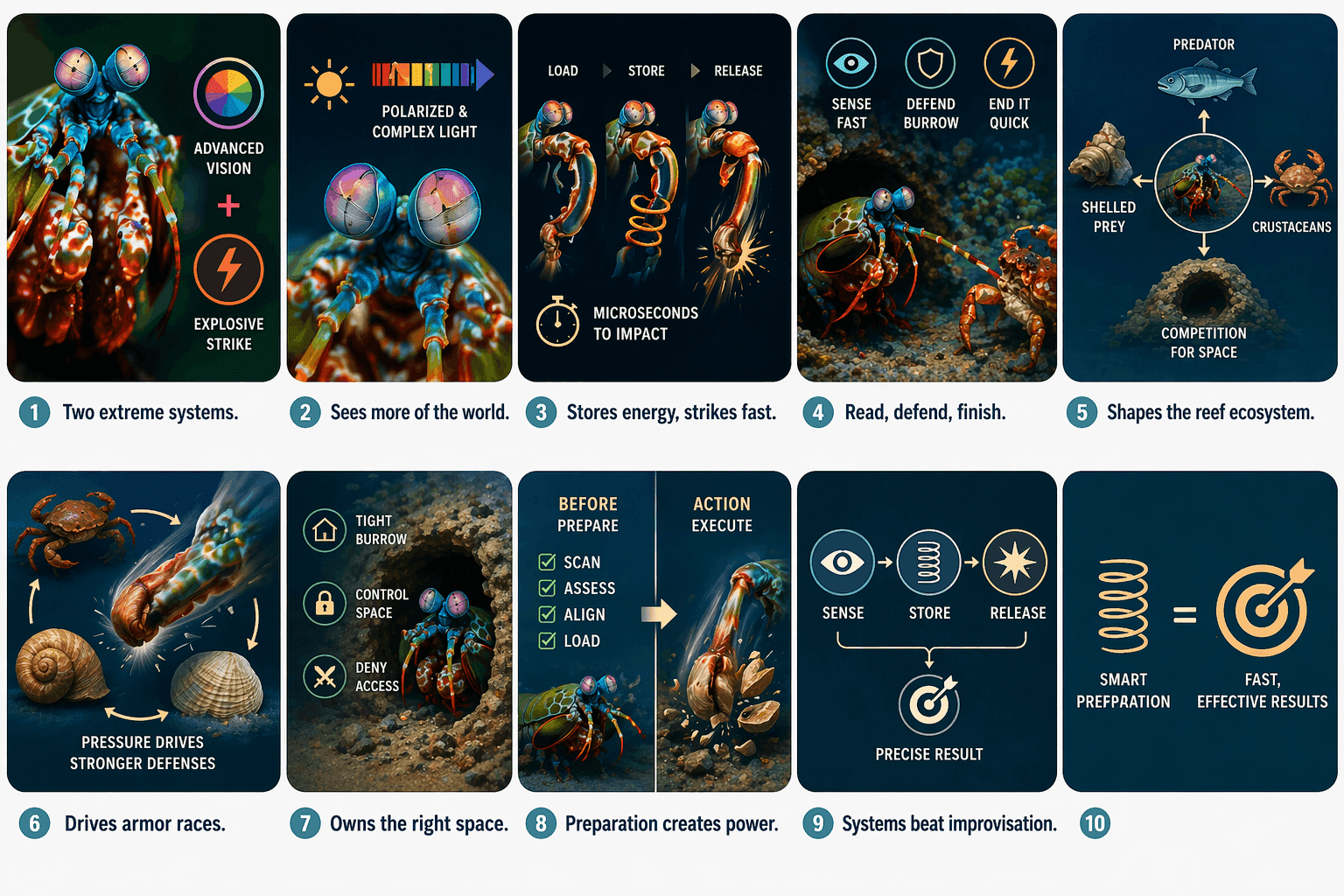
Mantis shrimp are compelling because the same animal carries two extreme systems at once: unusually advanced visual processing and a strike mechanism built for brutal speed.
That pairing makes them more than a fun marine biology fact. They are a serious example of how sensing and force production can be co-designed for one job.
What makes a mantis shrimp unique?
The eyes are famous for good reason. Mantis shrimp detect polarized and complex light in ways most animals do not, which gives them a different read on their environment and on each other.
Then there is the strike hardware: spring-loaded appendages that store energy before releasing it almost instantly. They do not just hit hard. They hit through smart mechanical staging.
How mantis shrimp survive on a crowded reef
Reef survival punishes hesitation. A mantis shrimp survives by sensing fast, defending a tight burrow, and ending certain interactions before they turn into prolonged contests.
That is why its animal behavior feels so compact and decisive. It is not built to drift through the reef casually. It is built to read the signal and convert it into a short, violent answer.
The ecosystem role of a mantis shrimp
Mantis shrimp pressure shelled prey, crustaceans, and small reef organisms while also contributing to reef competition around burrows and hiding space.
Their ecosystem role matters because they force local armor races. Shells, defenses, and hiding strategies are not abstract traits; they are responses to real mechanical pressure.
What humans can learn from mantis shrimp design
The mantis shrimp shows that output quality often depends on what happens before the visible action. Load the spring, align the signal, and let structure do the hard work.
That is a useful systems lesson. Fast results usually come from smart preparation, not frantic improvisation.
Systems Intelligence & Hidden Purpose
Lihat hewan-hewan ini sebagai sistem biologis yang dirancang dengan presisi: apa fungsinya, bagaimana ia bekerja di lingkungan, dan apa yang bisa kita pelajari dari desainnya.
Specialized Hardware
Hyper-specialized eyes that detect polarized and complex light, plus spring-loaded raptorial appendages that release extreme acceleration, make mantis shrimp elite sensing-and-strike hardware.
Systems Script
Mantis shrimp pressure reef prey with a combination of signal processing and mechanical violence. They help drive local armor races in shells and exoskeletons while occupying tight, defensible burrow systems.
Strategic Insight
Speed is often designed before it is expressed. Preload the mechanism, then let structure deliver the force.
Hewan yang disebut
Lompat dari artikel ini ke halaman spesies di balik contoh, catatan systems, dan referensi field guide.
Comparisons terkait
Lanjutkan ke halaman comparison animal-vs-animal terstruktur yang terhubung dengan spesies di panduan ini.
Mantis Shrimp vs Boxer Crab: Which Reef Fighter Has the Better Design?
Mantis shrimp usually has the edge because its strike power and sensory advantage are extreme. Boxer crab stays interesting because its anemone-based defense can still punish careless close contact.
Baca comparisonPanduan jawaban terkait topik ini
Kalau kamu ingin perbandingan langsung dan rekomendasi yang jelas, lanjutkan ke halaman jawaban berikut.
Best Animal Identification Apps
Compare the best animal identification apps by features like photo/video identification, species coverage, collection capabilities, offline use, and more.
Baca answer guideWhat Is Animal Collecting
Learn what animal collecting means in modern apps and how AnimalDex turns real-world sightings into cards, sets, rarity, and species learning.
Baca answer guidePokemon-Like Animal App
Looking for a Pokemon-like animal app with real species? AnimalDex combines creature-collection energy with AI scanning and wildlife learning.
Baca answer guideUbah apa yang kamu pelajari jadi koleksi hewan nyata
Lanjutkan di AnimalDex dengan spesies di balik panduan ini, konteks spotting dunia nyata, dan koleksi yang terus tumbuh setelah artikel selesai dibaca.
Panduan terkait
How Eagles Use Height, Vision, and Timing to Survive
Learn how eagle behavior, animal vision, hunting strategy, and ecosystem role turn altitude and timing into survival advantages.
Baca artikelHow Chameleons See and Strike: Vision, Behavior, and Survival Strategy
Learn how chameleon vision, camouflage, tongue mechanics, animal behavior, and ecosystem role make this reptile an elite patient hunter.
Baca artikelBiomimicry in Animals: 35 Examples of Nature-Inspired Design
Discover 35 examples of biomimicry in animals, from shark skin and gecko feet to owl wings, elephant trunks, whale fins, spider silk, dolphins, ants, bees, and more.
Baca artikel