

wildlife-guides
What Makes a Great Ethical Wildlife Guide?
An ethical wildlife guide sells orientation, not a guaranteed animal. Distance rules, no baiting or handling, honest pitches, safety and permits.
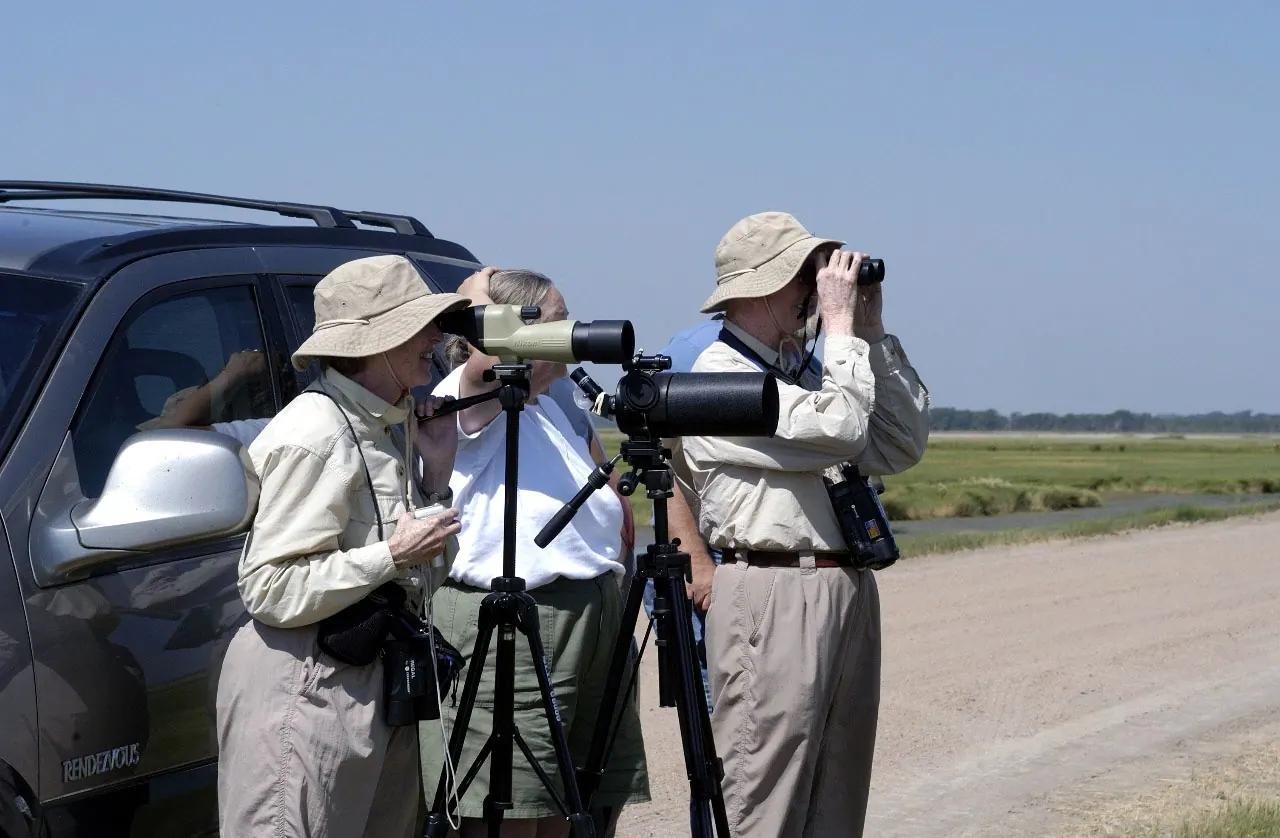
The animal does not owe the guest a photo
A great guide briefs distance, noise and the moment to walk away before anyone lifts binoculars. A poor guide manufactures the moment: a bait pile, a recording on loop, a snake lifted off the path. The difference is not subtle to the animal, and increasingly it is not subtle to guests either. The rule fits in one line: no baiting, luring, calling in, cornering or handling, and nests, dens and protected habitats stay alone.
What you sell instead is orientation. Where to stand, which way the light falls, what that call was, why the heron is standing like that, when to stop and let the animal finish what it is doing. Guests remember the explanation long after they forget the photo they did not get.
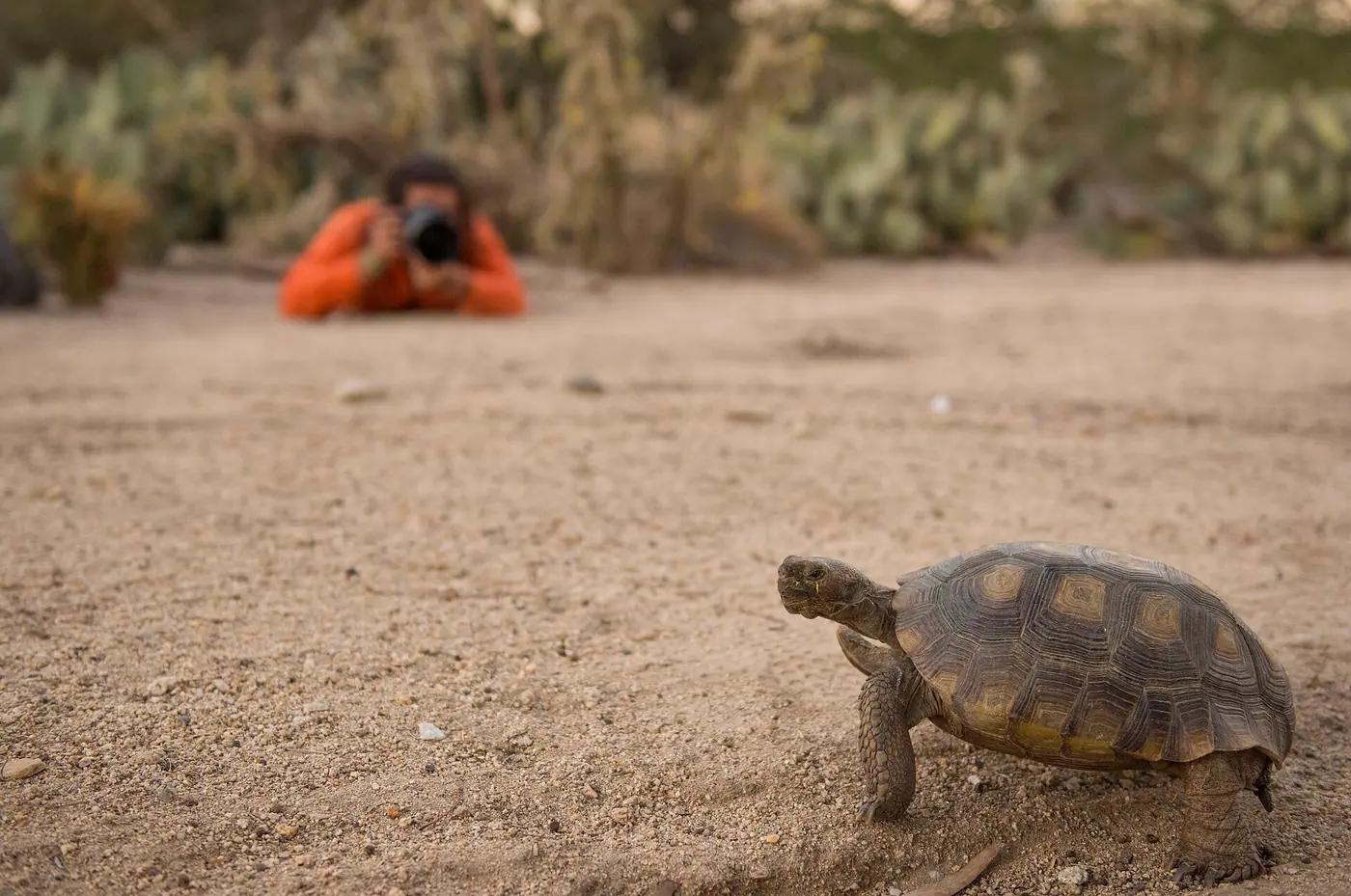
Distance, noise and when to walk away
The working rule is that the animal sets the distance. If it stops feeding, raises its head, changes direction, calls in alarm or moves away, the group is too close, whatever the number on the sign says. Park services publish minimums for a reason, and they are minimums: the U.S. National Park Service, for example, asks visitors to keep at least 25 yards (23 m) from most wildlife and 100 yards (91 m) from bears and wolves. Nesting birds and animals with young need more, and a heron colony or an owl roost can be abandoned by repeated close approach.
Noise is the second lever. A group of six talking at normal volume at a reedbed edge will hear nothing and see less. Brief it once at the start and model it yourself.
| Situation | What a good guide does |
|---|---|
| Animal stops what it was doing and looks at the group | Stops, waits, and backs off if the animal does not settle within a minute |
| Nest, den, roost or colony found | Notes it for the walk's commentary from a distance; never marks it on a map, a post or a pin |
| Animal with young | Doubles the usual distance; leaves if the adult shows alarm |
| Guest wants to get closer for a photo | Puts the bird on a scope or explains the lens choice; the answer is still no |
| Animal on the path | The group waits for it to finish crossing |
| Rare species reported nearby | Does not run the group to it; a stakeout crowd is the thing that drives rarities off |
No baiting, luring, calling in, cornering or handling
Each word in the terms covers a specific bad habit. Baiting is food put out so an animal appears on cue, which habituates it and often ends with it hit on a road or shot as a nuisance. Luring covers mimicked calls, squeaking and decoys. Calling in means playback of a recorded song to pull a territorial bird into view; it costs the bird energy and time during the season it can least afford it. Cornering is positioning a group so an animal has no exit, which is how most defensive bites and most abandoned nests happen. Handling is picking anything up.
Some of these are legal in some places and common on some tours. A careful guide skips them regardless, because guests cannot tell a careful user of playback from a careless one, and neither can the next guide who copies you.
Honesty in the pitch
The public area, the duration, the group size and the price should match the day. Wildlife sightings cannot be promised, so the pitch describes what you do rather than what will appear. A pitch that says you will spend two hours on a known loop, put birds on a scope and explain calls is honest on a day when the reedbed is quiet. A pitch that names a bird is not.
If your route needs a licence, a commercial-use permit or a landowner's permission, you hold it. Nobody else can hold it for you. If you write a virtual guide on AnimalDex, the same honesty applies: say what you found and when, never promise an animal, and give no spot or timing for threatened species.
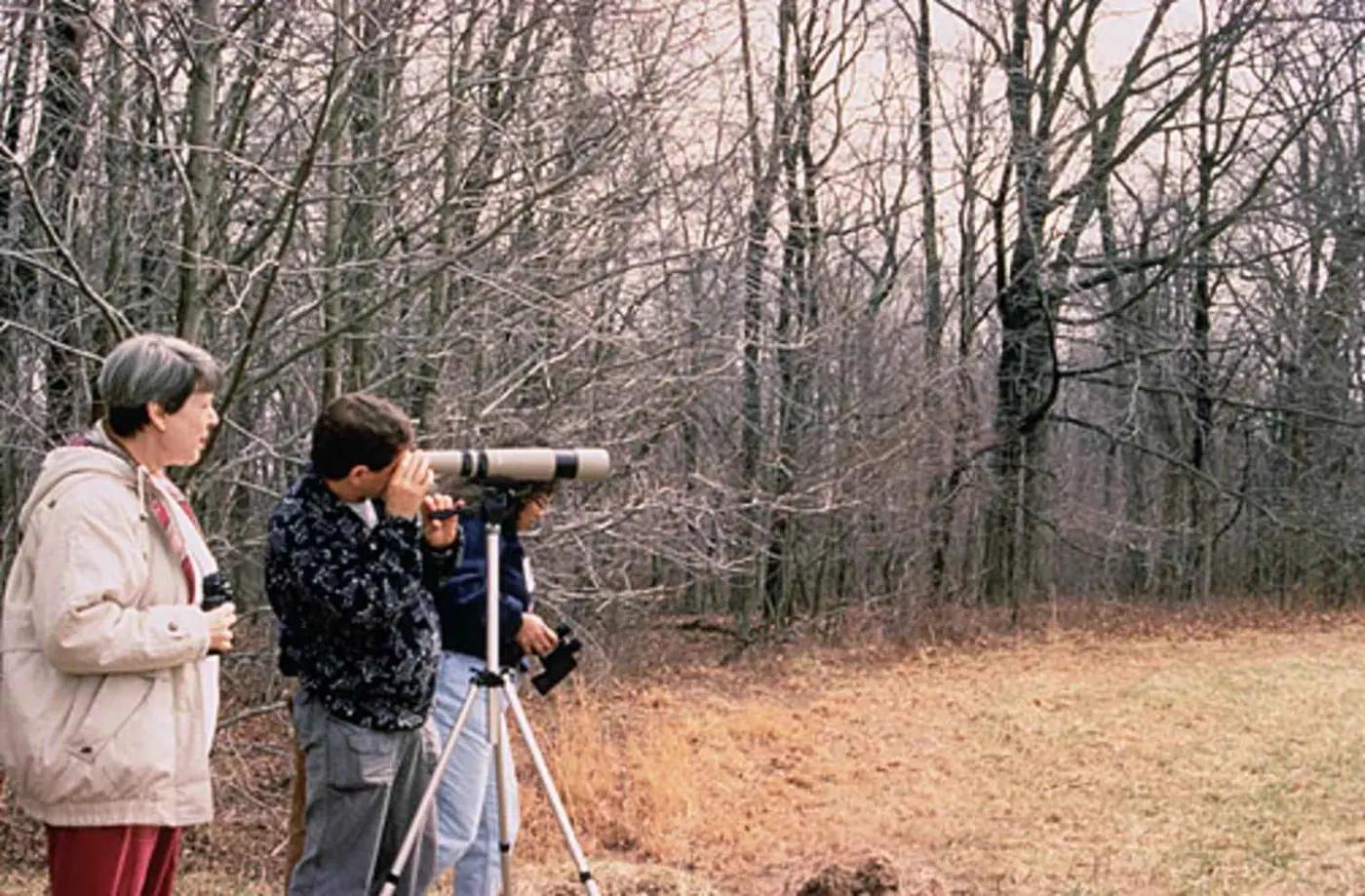
How virtual Wildlife Guides work
Safety is yours
You are meeting people from the internet outdoors, sometimes before dawn or after dark. Assess the route in advance for terrain, water, traffic and weather exposure. Brief guests on footwear, the pace and what happens if the weather turns. Carry a first-aid kit and a charged phone, tell someone where you will be, and keep the group together on narrow or wet sections. Stop the walk if conditions fail; a shortened outing is a better story than an injury.
The same duty runs the other way. Treat guests with respect, and never put a guest or an animal at risk for a sighting.
Permits, land access and insurance
Leading a paid group is a commercial activity on any land. National parks and many reserves require a commercial-use permit even on public trails, some countries license nature guides, and private land needs the owner's permission regardless of money. Public liability insurance is normal practice and sometimes a permit condition. These are general patterns; the specifics belong to your site, and the land manager will tell you in one email.
A short ethics checklist
Before you advertise a walk, read it against these three cards.
Before the walk
Route scouted in daylight. Permits and permission in hand. The pitch describes the attention guests get, not a guaranteed animal. Cancellation rule written down. Meeting point shared only with confirmed guests.
During the walk
Distance set by the animal, not the guest. No food, playback, calls, decoys or handling. Nests, dens and roosts left alone and unmarked. Group briefed on noise once and reminded quietly.
After the walk
Sensitive locations kept out of captures, captions and messages. Anything that went wrong noted and fixed in the pitch before the next walk.
Pertanyaan singkat
Jawaban ringkas untuk pertanyaan yang paling sering muncul pada topik ini.
- How close is too close to wild animals on a guided walk?
- Too close is any distance at which the animal changes its behaviour: stops feeding, raises its head, calls in alarm or moves off. Published minimums are a floor, not a target; the U.S. National Park Service asks for at least 25 yards from most wildlife and 100 yards from bears and wolves. Nesting birds and animals with young need more.
- Is using bird call playback on a tour unethical?
- Many birding codes discourage it and some reserves ban it, because playback pulls territorial birds off nests and feeding and costs them energy in the breeding season. An ethical guide leaves it out under the no calling in rule, along with baiting, luring, cornering and handling, whatever the local law allows.
- What does an ethical wildlife guide actually sell?
- Orientation: where to stand, when to arrive, what the call was, why the animal is behaving that way, and when to walk away. A good guide gets guests close views through a scope or a long lens without the animal knowing, and explains what they are seeing. The animal itself is never part of the deal.
- Does AnimalDex check a guide's permits or insurance?
- No. AnimalDex does not list, book or vet in-person guides. Its Wildlife Guides are virtual: advice from someone who has been to a place, not a tour. Any local guide or operator a guide's author introduces is independent of AnimalDex, so check their permits, landowner permission and insurance yourself, and agree terms with them directly.
Hewan yang disebut
Lompat dari artikel ini ke halaman spesies di balik contoh, catatan systems, dan referensi field guide.
Panduan jawaban terkait topik ini
Kalau kamu ingin perbandingan langsung dan rekomendasi yang jelas, lanjutkan ke halaman jawaban berikut.
Best Animal Identification Apps
Compare the best animal identification apps by features like photo/video identification, species coverage, collection capabilities, offline use, and more.
What Is Animal Collecting
Learn what animal collecting means in modern apps and how AnimalDex turns real-world sightings into cards, sets, rarity, and species learning.
Pokemon-Like Animal App
Looking for a Pokemon-like animal app with real species? AnimalDex combines creature-collection energy with AI scanning and wildlife learning.
Comparisons terkait
Lanjutkan ke halaman comparison animal-vs-animal terstruktur yang terhubung dengan spesies di panduan ini.
Panduan terkait
wildlife-experiences
How to Choose a Local Wildlife Guide
How to choose a local wildlife guide: the facts a listing should show, questions to ask, group size, honesty about sightings, and where AnimalDex fits.
7 menit baca
How Herpers Can Turn Local Knowledge Into Guided Walks
Night herping walks can be offered if you stay legal, skip handling and never promise a snake. Scouting, lights, chytrid hygiene, group size and pricing.
8 menit baca
How Wildlife Photography Guides Can Find New Clients
Photo clients pay for field time and identification context, not a baited perch. How to shape an ethical session, price it and reach new clients.
6 menit baca