
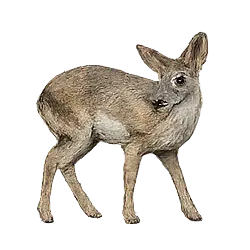
Beira
Species principle: Rock Mastery
Master the hard ground.
Small climbers master hard ground by placing each step with care.
Beira are small antelope adapted to dry rocky hills, using nimble movement, alertness, and sure footing in arid terrain.
Animal Qualities
Master the hard ground.
Animals grouped here express a similar quality through their behavior in nature. Each species still has its own principle, lesson, meaning, and field-guide page.
6 species
Species principle: Rock Mastery
Master the hard ground.
Small climbers master hard ground by placing each step with care.
Beira are small antelope adapted to dry rocky hills, using nimble movement, alertness, and sure footing in arid terrain.

Species principle: Delicacy
Walk lightly.
You do not need mass to move carefully through a vast world.
Common Harvestmen have small bodies and very long legs used to move through vegetation, leaf litter, gardens, and meadows. They are nocturnal or crepuscular scavengers and predators of small organisms.

Species principle: Branch Balance
Cross the canopy.
Balance opens worlds above the ground.
Olingos are nocturnal arboreal mammals that forage in trees using agile climbing and careful balance.
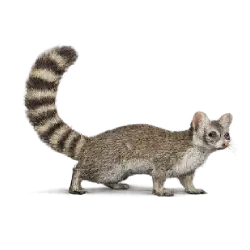
Species principle: Balance
Trust the tail.
Careful steps can cross places that strength alone cannot.
Ringtails are nocturnal, agile mammals with long tails for balance and excellent climbing ability, often moving through rocky cliffs, trees, and narrow ledges.
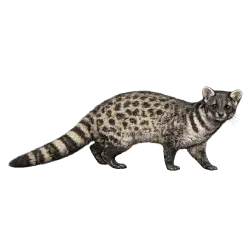
Species principle: Edge Scent
Scent the edge.
The next move becomes clearer when the night is read by nose.
Small Indian Civets are nocturnal omnivores that forage along forest edges, fields, and human-adjacent habitats using scent, careful movement, and flexible diet.
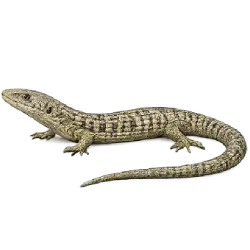
Species principle: Flexible Passage
Slip through leaves.
A bendable body finds routes that rigid force cannot enter.
Southern Alligator Lizards have long flexible bodies and move through leaf litter, logs, shrubs, and garden cover while hunting small animals.