
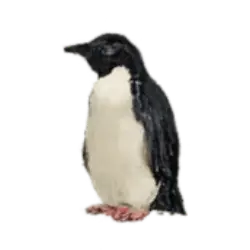
Adelie Penguin
Species principle: Hardiness
March the ice.
Cheerful motion can still be built for brutal places.
Adelie Penguins breed in Antarctica, walk across ice, and dive into freezing waters using strong flippers and dense waterproof plumage.
Animal Qualities
March the ice.
Animals grouped here express a similar quality through their behavior in nature. Each species still has its own principle, lesson, meaning, and field-guide page.
13 species
Species principle: Hardiness
March the ice.
Cheerful motion can still be built for brutal places.
Adelie Penguins breed in Antarctica, walk across ice, and dive into freezing waters using strong flippers and dense waterproof plumage.
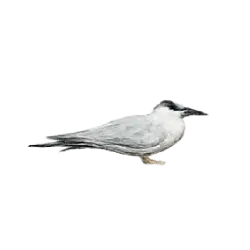
Species principle: Clean Plunge
Trust the angle.
A light body can do sharp work when it trusts the angle.
Black-naped Terns forage over tropical reef and coastal waters, using agile flight and plunge-diving to catch small fish.
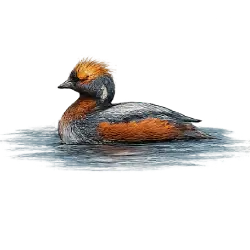
Species principle: Diving Fit
Fit the dive.
Effort flows when the body is placed exactly for the work.
Horned Grebes are diving birds with compact bodies and legs set far back, an arrangement that helps underwater propulsion while making land movement awkward.
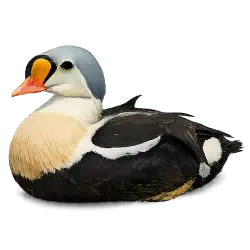
Species principle: Arctic Style
Dive with a crown.
Toughness does not have to arrive plainly dressed.
King Eiders breed in Arctic regions and dive in cold marine waters for mollusks and other prey. Males are known for colorful head plumage and a distinctive frontal shield.
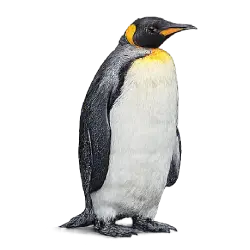
Species principle: Underwater Focus
Focus below.
True grace may look quiet because all the power is below the surface.
King Penguins are strong pursuit divers that swim efficiently underwater for fish and squid, while enduring dense colonies and cold subantarctic conditions.
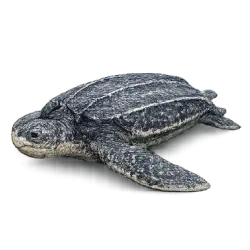
Species principle: Soft Might
Dive in leather.
A flexible body can cross depths that rigid armor never reaches.
Leatherback Sea Turtles have flexible leathery shells, large flippers, and adaptations for deep, long-distance ocean travel while feeding largely on jellyfish.
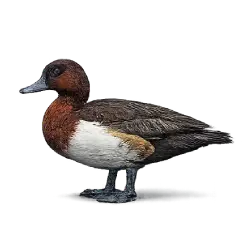
Species principle: Tiny Refuge
Guard the hidden lake.
A whole future can depend on one small place staying safe.
Madagascar Pochards are critically rare diving ducks now associated with a very small number of lake habitats, using diving behavior to feed underwater.
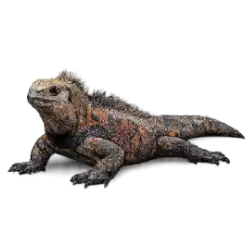
Species principle: Sea Adaptation
Learn the sea.
Even a creature of stone can learn the sea when survival asks it to.
Marine Iguanas are the only marine lizards. They swim and dive to graze algae and use nasal salt glands to expel excess salt after feeding in the ocean.
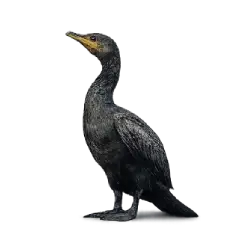
Species principle: Wing-Dry Reset
Dry after diving.
After deep work, return to the air before diving again.
Neotropic Cormorants dive underwater for fish using strong feet and hooked bills, then often perch with wings spread to dry and recover after fishing.
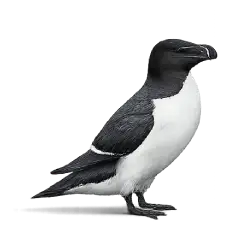
Species principle: Dual Mastery
Dive from the cliff.
Living between two worlds becomes strength when each world trains a different skill.
Razorbills nest on sea cliffs and use their wings underwater to pursue fish, moving between crowded breeding ledges and cold marine feeding grounds.
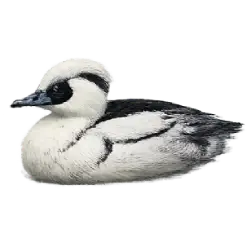
Species principle: Narrow Precision
Dive clean.
A narrow tool makes sharp work possible.
Smews are small diving ducks with slim serrated bills suited to catching small fish underwater.

Species principle: Deep Signal
Click into depth.
Go deep enough that sound becomes sight.
Sperm whales dive to extreme depths and use powerful echolocation clicks to hunt squid in dark ocean zones.
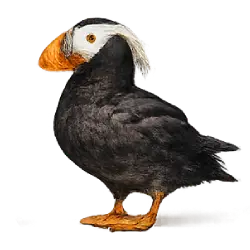
Species principle: Coastal Toughness
Dive the cliff.
Playful looks can still belong to a hard life.
Tufted puffins nest on coastal cliffs, dive for fish, and survive harsh northern marine conditions despite their bright ornamental appearance.