
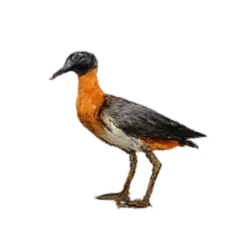
American Avocet
Species principle: Elegant Sifting
Sweep in arcs.
The right shape turns repeated work into grace.
American Avocets use long upcurved bills to sweep side to side through shallow water, filtering and catching small aquatic prey.
Animal Qualities
Sweep in arcs.
Animals grouped here express a similar quality through their behavior in nature. Each species still has its own principle, lesson, meaning, and field-guide page.
15 species
Species principle: Elegant Sifting
Sweep in arcs.
The right shape turns repeated work into grace.
American Avocets use long upcurved bills to sweep side to side through shallow water, filtering and catching small aquatic prey.

Species principle: Collected Discipline
Collect the power.
Grace comes from strength organized by training.
Andalusian Horses are known for collected movement, athleticism, and long use in riding, dressage, and classical training.
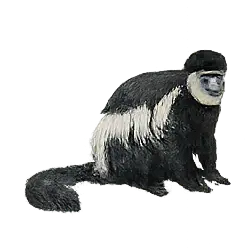
Species principle: Arboreal Style
Leap with the cape.
Style has weight when it moves with skill.
Black-and-white Colobus monkeys use long limbs, reduced thumbs, and flowing tails to leap through forest canopies while feeding largely on leaves.
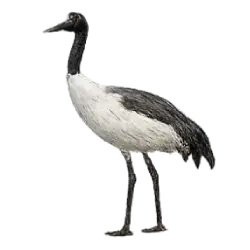
Species principle: Cold Grace
Dance in thin air.
Grace becomes stronger when it survives thin air and cold water.
Black-necked Cranes breed and forage in high-altitude wetlands and are known for pair dances, calls, and long-legged movement across cold open habitats.

Species principle: Sideways Grace
Dance sideways.
Unusual movement becomes perfect when it matches the body that makes it.
Coquerel’s Sifakas leap vertically between trees and move across the ground with distinctive sideways hopping, using powerful hind limbs.
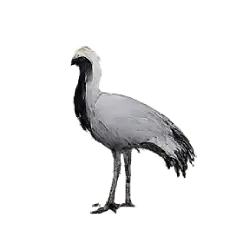
Species principle: Light Strength
Step lightly.
Lightness is not weakness when each step is exact.
Demoiselle Cranes are elegant cranes with long migrations, graceful movements, and precise walking and courtship behavior in open habitats.

Species principle: Vertical Grace
Glide upright.
Elegance is balance under constraint.
Freshwater Angelfish have tall laterally compressed bodies and move through planted freshwater environments with controlled motion.
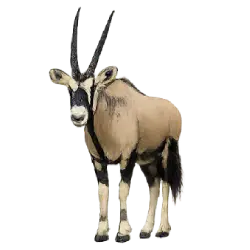
Species principle: Desert Poise
Stay graceful in heat.
Protection lets grace survive pressure.
Gemsbok have long straight horns, heat tolerance, and water-conserving adaptations that help them survive arid desert and savanna habitats.
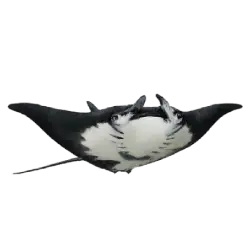
Species principle: Open Grace
Glide wide.
Great width can move gently when it trusts the water.
Manta Rays are large filter-feeding rays that glide through ocean water with wing-like pectoral fins and use cephalic lobes to help guide plankton-rich water into the mouth.

Species principle: Reef Icon
Carry the banner.
Presence can become unmistakable when form and movement carry the same signature.
Moorish Idols are reef fish with bold striping and a long trailing dorsal filament, using agile movement through coral reef structures while foraging.

Species principle: Silent Grace
Grace guards.
Elegance can hold a boundary quietly but firmly.
Mute Swans are large graceful waterbirds known for pair bonds, territorial defense, and mostly quiet presence.
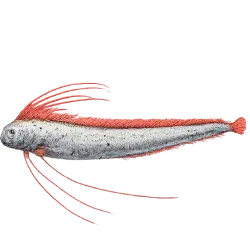
Species principle: Ribbon Grace
Drift like silver ribbon.
A strange length can still move like a soft line through darkness.
Oarfish have extremely long ribbon-like bodies and are thought to move through deep water with undulating fin motion, rarely seen at the surface.
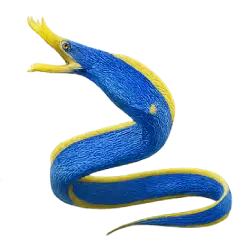
Species principle: Dramatic Grace
Wave from the reef.
A strange shape can move beautifully without becoming ordinary.
Ribbon Eels have long ribbon-like bodies, bright coloration, and often occupy reef holes, extending their heads to catch small fish or crustaceans.
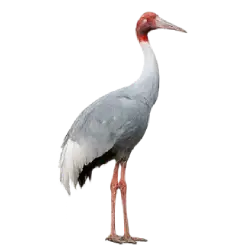
Species principle: Pair Grace
Dance in pairs.
Grace deepens when two bodies keep the same rhythm.
Sarus Cranes are known for strong pair bonds and elaborate dancing displays involving bowing, calling, jumping, and synchronized movement in wetlands and fields.
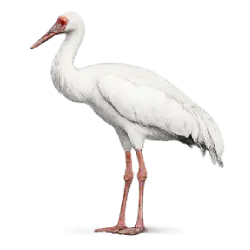
Species principle: Luminous Migration
Carry white across marshes.
Grace becomes luminous when it keeps returning across impossible distances.
Siberian Cranes are long-distance migratory cranes that depend on wetland breeding and wintering areas, using long wings and calls during migration.