

Common Hippopotamus
Species principle: River Territory
Guard the river.
Power becomes boundary when it protects a necessary place.
Common Hippopotamuses are large semi-aquatic mammals that defend river territories and spend much time in water.
Animal Qualities
Guard the river.
Animals grouped here express a similar quality through their behavior in nature. Each species still has its own principle, lesson, meaning, and field-guide page.
6 species
Species principle: River Territory
Guard the river.
Power becomes boundary when it protects a necessary place.
Common Hippopotamuses are large semi-aquatic mammals that defend river territories and spend much time in water.

Species principle: Basking Authority
Claim the sun rock.
A tough body can rest openly when it belongs to the stone.
Cuban Rock Iguanas are large rock-dwelling iguanas that bask, climb, defend territories, and feed heavily on plant material in rocky island habitats.
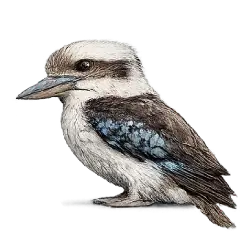
Species principle: Chorus
Laugh at dawn.
A voice can bind the group and mark the day before the sun has fully arrived.
Laughing Kookaburras are known for loud, laughter-like calls often given in family groups around dawn and dusk. These calls help maintain territory and group contact.

Species principle: Small Stronghold
Hold the small river.
A small stronghold can matter deeply when few safe waters remain.
Philippine Crocodiles are critically endangered freshwater crocodiles that inhabit rivers, marshes, and ponds in limited remaining habitats.

Species principle: Pocket Territory
Guard the pocket.
A compact boundary can be powerful when it is clear and consistently held.
Red Devil Crabs are small terrestrial or semi-terrestrial crabs often associated with narrow humid territories and shelter spaces.
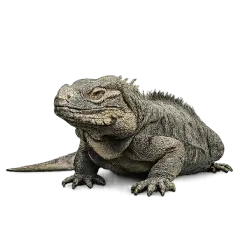
Species principle: Rugged Assertion
Own the rock.
Armor becomes attitude when it belongs fully to the stone.
Rhinoceros Iguanas have robust bodies, horn-like snout scales, and strong territorial behavior in rocky Caribbean habitats.