
Animal field guide
Pony
Identification, habitat, rarity, behavior, symbolism, facts, and practical lessons from nature.
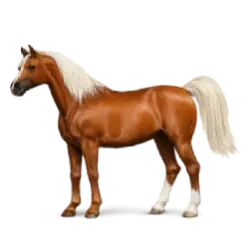
The Miniature Mount. Ponies, the compact cousins of horses, are masters of adaptability and resilience. Unlike their larger relatives, ponies have evolved to thrive in rugged terrains and harsh climates, often found in the windswept moors of Scotland or the icy landscapes of Iceland. Their stout bodies and thick coats are perfect for conserving heat, while their strong legs and sure-footedness allow them to navigate rocky paths with ease. In many cultures, ponies have been symbols of strength and endurance, often used by farmers and travelers to carry heavy loads across challenging landscapes. Their strategy is to use their smaller size and strength to access areas larger animals can't, making them invaluable in difficult terrains.
Scientific name
Equus ferus caballus
Category
Animal
Habitat
Pony habitat data is maintained in the live AnimalDex field guide.
Rarity
Relatively common · 5/100
Native range
Pony habitat data is maintained in the live AnimalDex field guide.
Sure-footedness
Navigate with Confidence.
Embrace your ability to navigate challenging paths with confidence.
What it teaches
Ponies excel at traversing rugged terrains thanks to their strong legs and sure-footedness, teaching us to confidently tackle difficult situations.
Try it
For us, the message is simple: consistency can carry us through places where motivation alone cannot.
Nature proof
Ponies have evolved to thrive in harsh climates and rugged terrains, with strong legs and a compact build that aids in stability and balance.
Use it for
Ranked Pony captures
10 ranked captures in this group from AnimalDex collectors.
Miel.brkn
@mielFarm · Rosa Homes the Red - Cozy 2 Bedrooms Genoa Historic Center, Aquarium · Ponente, Genoa, Genova, Liguria, Italy
Score 0
Jonny Mathews
@jonnymatFarm · Barnes Family Farm · Prattville, Autauga County, AL, United States
Score 0
Miel.brkn
@mielFarm · Rosa Homes the Red - Cozy 2 Bedrooms Genoa Historic Center, Aquarium · Ponente, Genoa, Genova, Liguria, Italy
Score 0
Why Sure-footedness?
The creator's reasoning behind this Animal Principle and the biology that supports it.
The Miniature Mount. Ponies, the compact cousins of horses, are masters of adaptability and resilience. Unlike their larger relatives, ponies have evolved to thrive in rugged terrains and harsh climates, often found in the windswept moors of Scotland or the icy landscapes of Iceland. Their stout bodies and thick coats are perfect for conserving heat, while their strong legs and sure-footedness allow them to navigate rocky paths with ease. In many cultures, ponies have been symbols of strength and endurance, often used by farmers and travelers to carry heavy loads across challenging landscapes. Their strategy is to use their smaller size and strength to access areas larger animals can't, making them invaluable in difficult terrains.
How to identify a Pony
- Recognized in AnimalDex as Pony
- Indexed profile #1171
Habitat: Pony habitat data is maintained in the live AnimalDex field guide.
Native range: Pony habitat data is maintained in the live AnimalDex field guide.
To find Pony in the wild, focus on the exact habitat patches that match its body design and daily behavior, not just the broad country where it exists. You usually do better by working one good piece of habitat inside pony habitat data is maintained in the live AnimalDex field guide. than by covering too much ground.
- Pony habitat data is maintained in the live AnimalDex field guide.
- Protected habitat blocks within pony habitat data is maintained in the live AnimalDex field guide.
- Start early, pick one strong patch of habitat, and stay long enough for movement to return after you arrive.
- Look for food, cover, and movement routes in the same place, because the best sightings usually happen where those overlap.
- Move quietly, stop often, and give the habitat time to settle; many mammals and insects show themselves only after the first pause.
Pony eats the foods its body design and habitat make easiest to access. Diet can shift across seasons, life stages, and local competition.
- The most accessible prey or plant foods in its habitat
- Energy-rich foods that match its size and behavior
- Seasonal resources available in the local environment
A practical answer for Pony always depends on what food is actually available in pony habitat data is maintained in the live animaldex field guide..
- Embrace your ability to navigate challenging paths with confidence.
Pony most often symbolizes sure-footedness in AnimalDex because its real survival behavior repeatedly shows this pattern.
Ponies excel at traversing rugged terrains thanks to their strong legs and sure-footedness, teaching us to confidently tackle difficult situations.
Ponies have evolved to thrive in harsh climates and rugged terrains, with strong legs and a compact build that aids in stability and balance.
- Observe from a respectful distance and avoid changing the animal's behavior.
- Do not block feeding, shelter, nesting, or travel routes.
- Use a live camera capture without handling or staging wildlife.
0/1 XP toward Level 2
Pony stat profile
Canonical species stats are shown when available. Public analysis records are only used as fallback while species profiles are backfilled.
Stats source: Canonical species profile
Dominance
45
Speed
60
Size
50
Intelligence
40
Rarity
5%
Total
200
Size scale
Large
Uses the canonical size stat for consistent placement


$113 – $235
Estimated value range
Confidence 69%
Estimated AnimalDex value generated from canonical species stats.
Not a marketplace listing.
Estimated value based on the identified animal and available pricing context. Not a marketplace listing.
How rare are Pony?
Rarity: Relatively common (5/100)
AnimalDex canonical rarity score: 5/100, maintained by the live indexed species profile.
Public Animal Power
Explore this Animal Power
This is a public capture, so you can explore its Animal Power here. Personal Apex matches and challenges use your Wild Profile and animals you own.
Own an animal with this power to use it in Growth challenges.
Comparison hearts ready
3 of 3 hearts remaining. Each loss removes 1 heart.
✦ Available actions
Compare this public animal when your deck meets the current rules.
⚡CompareUnavailable›Related animals

Donkey
Donkey teaches Reliability through its real biology: Donkeys are sure-footed, cautious,…
Read species guide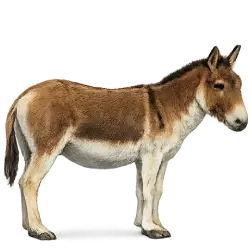
Kiang
Kiang is a mammal known for tall chestnut wild ass frame, white underbody, and plateau…
Read species guide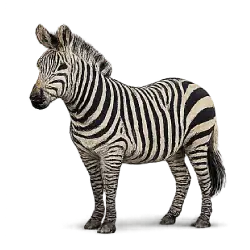
Mountain Zebra
Mountain Zebra is a mammal known for black-and-white striping, gridiron rump pattern,…
Read species guideTake the encyclopedia outside
AnimalDex helps you scan real animals, identify species, collect cards, and learn from nature wherever you are.