

How Octopus Intelligence Works: Nature’s Most Advanced Problem Solver
Explore octopus intelligence through animal behavior, flexible nervous systems, camouflage, survival strategy, and the octopus ecosystem role.
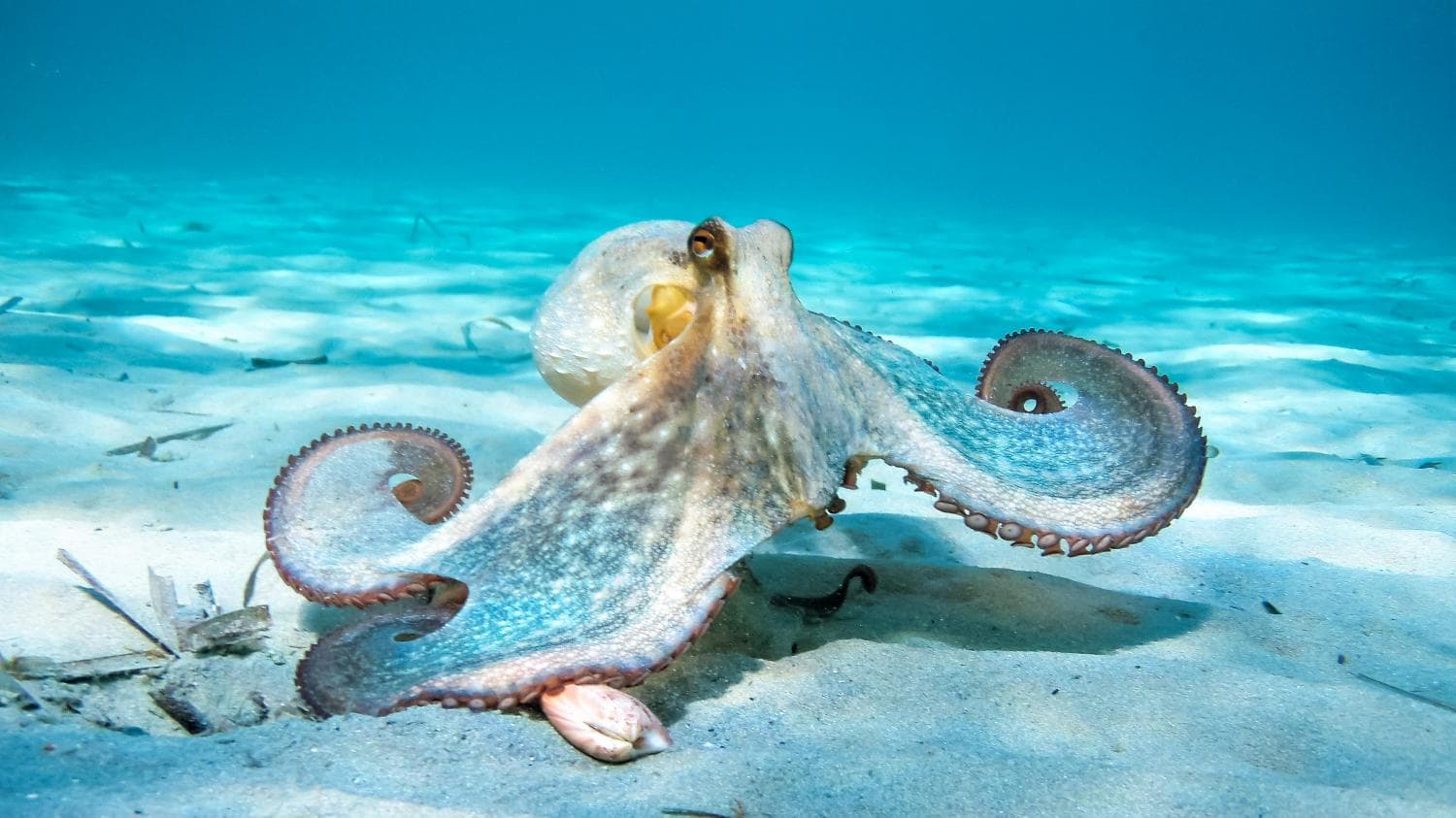
Why the octopus feels so different from most animals
The octopus stands out because it does not look or behave like a standard vertebrate success story. It solves problems with a soft body, decentralized sensing, and rapid physical adaptation instead of armor, speed, or social backup.
That makes it one of the cleanest examples of how animal intelligence can emerge from an entirely different hardware stack.
What makes an octopus unique?
An octopus combines a distributed nervous system, arms that sense while they move, and camouflage that can rewrite its visible identity in seconds. It is less like a single rigid machine and more like a networked set of local processors.
That design gives the animal unusual freedom. It can inspect, manipulate, hide, and escape without funneling every problem through one slow central pipeline.
How octopus survival strategy actually works
Octopus survival is built around option density. If one tactic fails, it can switch shape, texture, coloration, route, or shelter almost immediately.
In animal behavior terms, that makes it hard to predict and hard to trap. The octopus does not depend on one dominant response. It survives by keeping several viable responses live at once.
The ecosystem role of an octopus
Octopuses regulate crustaceans, mollusks, and other benthic prey while also serving as prey for larger marine hunters. Their ecosystem role sits inside the reef and seafloor control layer, where pressure on one level quickly affects the next.
Because they exploit crevices and tight spaces other predators cannot use efficiently, they also help define which niches stay crowded and which stay open.
What humans can learn from octopus intelligence
The octopus is a reminder that smart systems do not always look centralized or symmetrical. Sometimes performance comes from placing sensing and decision-making closer to the point of action.
That is why the octopus keeps showing up in biomimicry and systems design conversations. Flexibility is not a luxury feature. In unstable environments, it is the survival engine.
.png&w=3840&q=75)
Systems Intelligence & Hidden Purpose
See these animals as engineered biological systems: what they are built to do, how they fit the wider environment, and what their design can teach us.
System Role
The Soft-Bodied Escape Engineer
Octopus
Specialized Hardware
A distributed nervous system, dexterous arms loaded with sensory receptors, chromatophore camouflage, and a body that can compress through tiny gaps make the octopus extraordinary adaptive hardware.
Systems Script
Octopuses regulate crustaceans, mollusks, and reef-floor prey while occupying crevices other predators cannot exploit. They show how flexible architecture can compete with armored design by turning shape itself into strategy.
Strategic Insight
Do not centralize every decision. Put sensing and action closer together and the whole system becomes faster under pressure.
Animals mentioned
Jump from this article into the species pages behind the examples, systems notes, and field-guide references.
Related comparisons
Continue with structured animal-vs-animal comparison pages connected to the species in this guide.
Cuttlefish vs Octopus Intelligence: Which Cephalopod Thinks Better?
Octopus gets the edge in direct manipulation and puzzle-style problem solving. Cuttlefish gets the edge in visual signaling, camouflage control, and rapid display-based adaptation. The smartest answer depends on the task format.
Read comparisonDolphin vs Octopus Intelligence: Which Animal Thinks Better?
Dolphin gets the edge in social intelligence, communication, and group learning. Octopus gets the edge in solitary problem solving, manipulation, and flexible immediate adaptation. The smartest answer still depends on the task.
Read comparisonOctopus vs Crab: Which Sea Fighter Has the Better Edge?
Octopus usually has the edge because intelligence, flexibility, and grip-based control are excellent answers to a crab's shell and claws. Crab still becomes dangerous in tight defensive terrain where armor and pinch range matter more.
Read comparisonAnswer guides related to this topic
If you want direct comparisons and clear recommendations, continue with these answer-focused pages.
Best Animal Identification App
Looking for the best animal identification app? Learn how AnimalDex combines AI scanning, collecting, rarity tracking, and field-guide learning in one app.
Read answer guideWhat Is Animal Collecting
Learn what animal collecting means in modern apps and how AnimalDex turns real-world sightings into cards, sets, rarity, and species learning.
Read answer guidePokemon-Like Animal App
Looking for a Pokemon-like animal app with real species? AnimalDex combines creature-collection energy with AI scanning and wildlife learning.
Read answer guideTurn what you learn into a real animal collection
Keep going in AnimalDex with the species behind this guide, real-world sighting context, and a collection that grows beyond the article.
Related guides
Octopus Symbolism: Decentralized Intelligence, Camouflage, and Hidden Adaptation
Explore octopus symbolism through distributed intelligence, camouflage, regeneration, nervous system symbolism, ancient sea monster mythology, and the archetype of hidden adaptation.
Read articleWhat Makes Crows So Intelligent? Systems, Behavior, and Survival Strategy
Learn what makes crows so intelligent, from memory and tool use to adaptive behavior, survival strategy, and their ecosystem role in changing environments.
Read articleHow Honey Bees Keep Ecosystems Running: Pollination, Behavior, and Survival Strategy
Understand honey bee behavior, pollination logistics, colony intelligence, ecosystem role, and how honey bees survive as one of nature’s most important networks.
Read article