

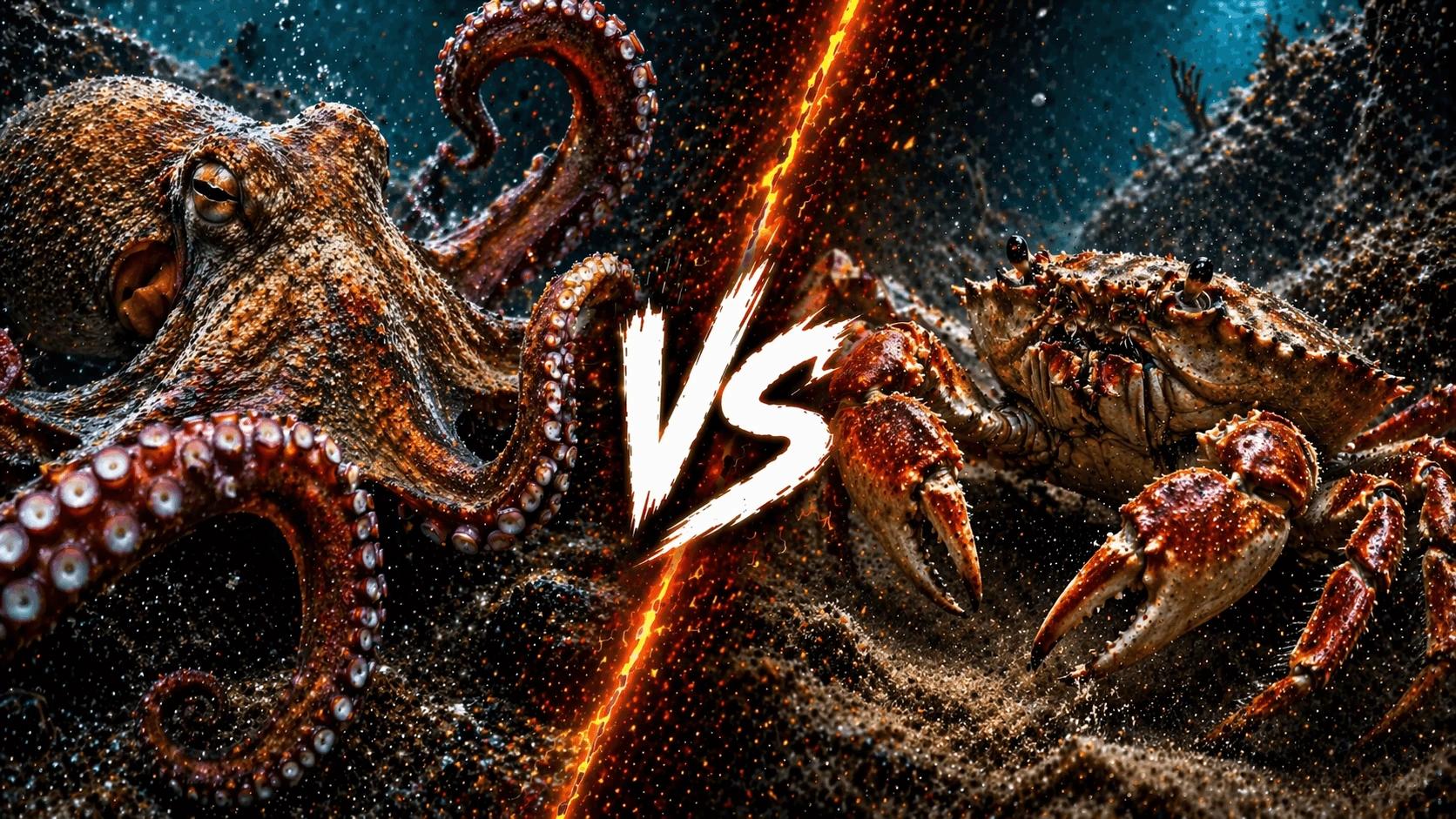
Octopus vs Crab: Which Sea Fighter Has the Better Edge?
A real-biology octopus vs crab comparison covering intelligence, shell armor, grip control, ambush angle, and why the answer shifts with space and shelter.
Octopus vs Crab
Matchup winner
Octopus
Quick verdict
Start with the direct answer, then use the structured comparison below to see what changes the outcome.
Octopus usually has the edge because intelligence, flexibility, and grip-based control are excellent answers to a crab's shell and claws. Crab still becomes dangerous in tight defensive terrain where armor and pinch range matter more.
Read the full explanation
This matchup is useful because it pits soft adaptable intelligence against hard external armor. Octopuses solve problems by changing shape, angle, and grip. Crabs solve problems by staying difficult to crack and punishing bad contact with claws.
That means the safer overall verdict is octopus, especially in a hunting context. The crab improves when it can force a frontal fight from inside cover or narrow structure where the octopus has less room to work around the shell.
Reader vote
Who do you think wins?
Pick a side — no account needed. Results update live.
No votes yet — be the first to call it.
Editorial note
Why people disagree
Octopus versus crab is biologically rich because it is not just force against force. It is problem solving against armor, and that creates a much smarter page than generic underwater battle hype.
Problem-solving ability
The octopus is usually better at finding the angle that makes the crab's shell less useful.
Armor and direct defense
The crab's whole plan is to make the octopus work much harder for a clean finish.
Close control
If the octopus gets around the shell geometry, the fight tilts quickly.
Read the full explanation +
It also maps well to reader intent: who wins, why, and what conditions let the crab avoid becoming a puzzle the octopus can solve.
Comparison FAQ
Short, direct answers to the next questions readers usually ask after the headline verdict.
Who wins, octopus or crab?+
Octopus usually gets the edge because it is better at solving around the shell and gaining control from better angles.
Can a crab beat an octopus?+
Yes, especially if the crab forces a tight defensive angle where claws and armor stay effective.
Why are octopuses so good against shelled animals?+
Because they do not need to attack the shell head-on. They use grip, intelligence, and flexible movement to find weaker points.
Head-to-head species stats
These are the same core AnimalDex stat dimensions used on the dedicated animal pages, pulled side by side so the matchup is faster to scan.
Octopus
Tier ACrab
Tier DTrait-by-trait comparison
Only the categories that matter to this matchup are included. The goal is not filler stats, but the real design differences that change the result.
Flexible arms, grip control, and strong tactical adaptation
Problem-solving ability
Octopus
Good defensive responses, but less overall flexibility once pinned
Problem-solving ability
Octopus
Soft body that avoids damage through movement and control
Armor and direct defense
Crab
Hard shell and claws designed to make close access painful
Armor and direct defense
Crab
Multiple arms create superior wrap, pull, and positioning options
Close control
Octopus
Claw-based control is dangerous but more limited once the angle is lost
Close control
Octopus
Best with room to maneuver around the crab
Terrain fit
Depends on context
Best in cracks, holes, and defensive shelter
Terrain fit
Depends on context
How the verdict forms
Verdict timeline
01 · Problem-solving ability
Octopus
02 · Armor and direct defense
Crab
03 · Close control
Octopus
04 · Terrain fit
Depends on context
Change the conditions
Scenario breakdown
This is where shallow battle content usually fails. Terrain, spacing, timing, and engagement style can change the answer.
Scenario lean
Octopus
Verdict confidence
82%
Octopus edge
More room usually means more angles, and the octopus is the better angle-finding animal.
AnimalDex field profiles
Explore these animals
Octopus
Octopoda
Rocky reefs, coral rubble, seagrass beds, tidal pools, and seafloor dens from shallow water to depth.
Crab
Brachyura
reef, shore, estuary, mangrove, riverbank, and seabed
Systems Intelligence & Hidden Purpose
See the animals behind this comparison as engineered biological systems: what each one is built to do, where it gains leverage, and why the matchup changes by scenario.
Specialized Hardware
A distributed nervous system, dexterous arms loaded with sensory receptors, chromatophore camouflage, and a body that can compress through tiny gaps make the octopus extraordinary adaptive hardware.
Systems Script
Octopuses regulate crustaceans, mollusks, and reef-floor prey while occupying crevices other predators cannot exploit. They show how flexible architecture can compete with armored design by turning shape itself into strategy.
Strategic Insight
Do not centralize every decision. Put sensing and action closer together and the whole system becomes faster under pressure.
Specialized Hardware
Hard carapace, jointed sideways gait, and claw-based feeding and signaling make crabs versatile hardware for cluttered tidal and shoreline environments.
Systems Script
Crabs turn reef cracks, mudflats, mangroves, and rocky edges into active feeding and recycling zones. They process waste, prey on smaller animals, and convert hard surfaces into inhabited economic space.
Strategic Insight
You do not always need elegant forward speed. In messy environments, armor, leverage, and the ability to move through narrow edges can be the real advantage.
Final take
Octopus is the stronger overall answer because it combines intelligence, flexibility, and superior control once contact becomes tactical rather than frontal.
Read the full explanation
Crab remains dangerous in tight defensive structure. The grounded answer is octopus overall, crab when armor and shelter can force a simpler fight.
Collect both animals in AnimalDex
Track the species behind this matchup, compare their real traits, and build the rivalry into your AnimalDex collection.
Related comparisons
Continue with nearby matchups to compare more real-world animal traits without dropping into junky who-wins filler.
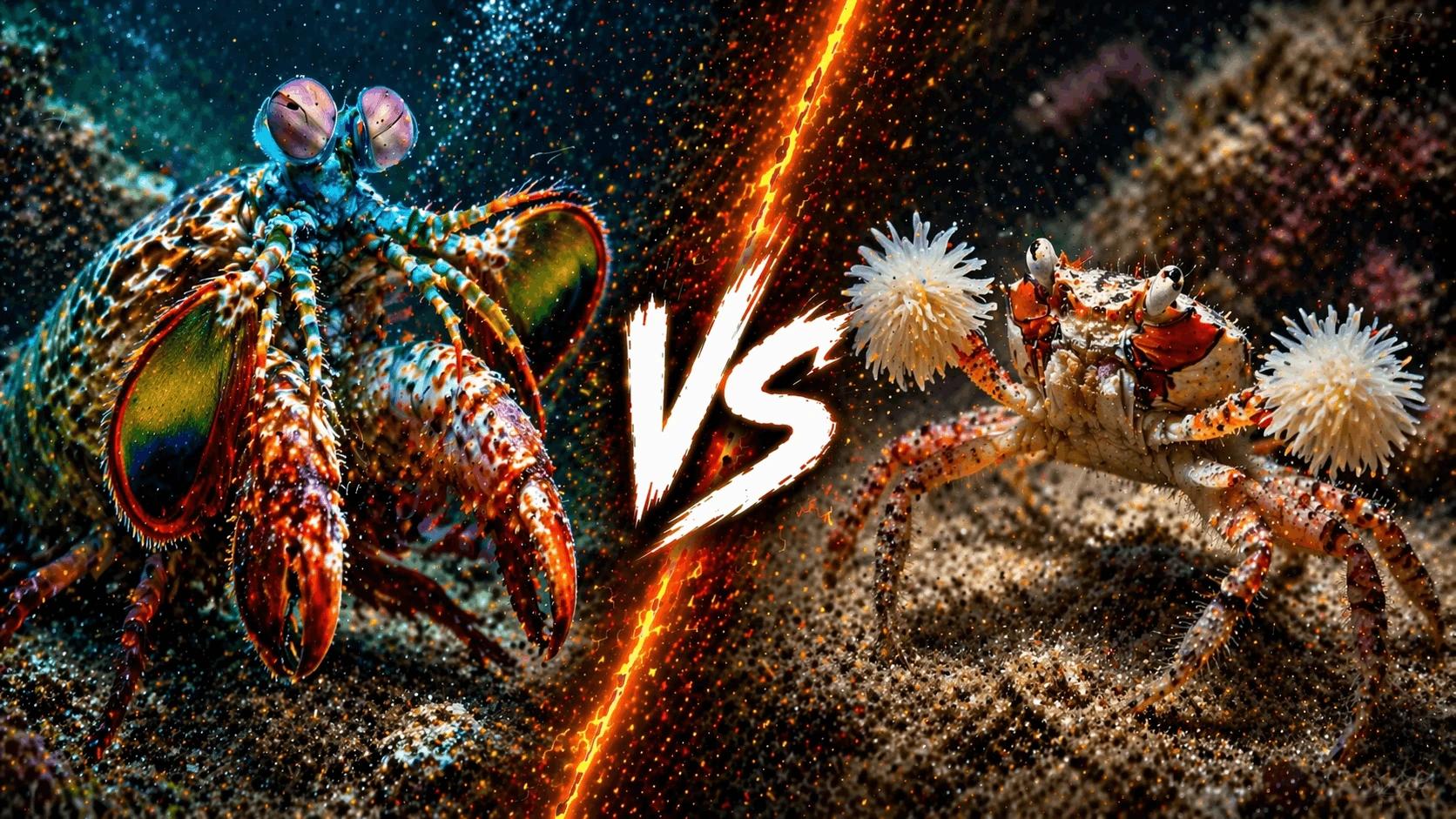
Mantis Shrimp vs Boxer Crab: Which Reef Fighter Has the Better Design?
Mantis shrimp usually has the edge because its strike power and sensory advantage are extreme. Boxer crab stays interesting because its anemone-based defense can still punish careless close contact.
Read comparison
Crocodile vs Shark: Who Wins Where Water Meets Shore?
Great white shark has the edge in open ocean. Crocodile becomes more dangerous the closer the matchup gets to shallow water, shoreline bottlenecks, and ambush-heavy edge habitat.
Read comparison
Discussion
What do you think?
Share your reasoning with other readers. Be civil and stick to the animals.
Sign in to join the discussion.
Sign inNo comments yet. Start the conversation.