

How to estimate animal breed prices without guessing
A practical guide to animal breed pricing, local average cost, grading signals, and why responsible valuation needs more than a single photo.
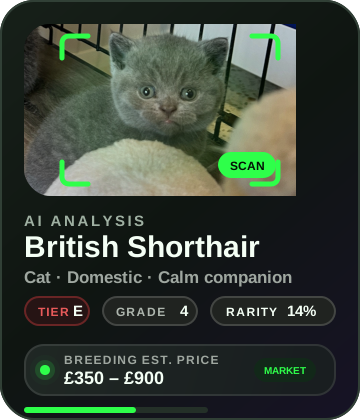
Breed price is a range, not a magic number
The same breed can have very different prices depending on area, age, documentation, health, temperament, training, and demand. That is why a responsible estimate should start as a range.
AnimalDex should position breed pricing around structured context: likely breed signals, grading notes, profile completeness, and local comparison logic.
The signals that matter most
Breed evidence
Likely breed, lookalike notes, image quality, and confidence level should be recorded before any price conversation.
Market context
Average breed cost by area depends on local demand, reputable seller supply, and what comparable animals include.
Grading context
Health documentation, pedigree, age, training, and profile completeness can change how buyers interpret value.
Buyer protection
Clear notes reduce vague claims and help buyers ask better questions before committing.
Why breeders need evidence-backed pricing
Breeders often need to explain value clearly. A structured profile can show the difference between a casual listing and a well-documented animal.
That does not mean every animal needs a formal appraisal. It means the pricing conversation should be based on visible traits, documented facts, and comparable local expectations.
Where AnimalDex fits
AnimalDex can give this search audience a useful bridge between breed identification and valuation. The app can help users collect the clues that make pricing less arbitrary.
The careful framing is important: AnimalDex should support breed pricing and grading context, not promise exact market prices from one image.
Quick questions
Short answers to common questions readers ask on this topic.
Can a breed price estimator be exact?
No. A responsible estimate should use a range and explain the factors behind it, including breed evidence, documentation, health, age, and local demand.
What is animal breed grading?
Breed grading is the process of recording quality and confidence signals such as trait match, documentation, condition, rarity, and profile completeness.
Animals mentioned
Jump from this article into the species pages behind the examples, systems notes, and field-guide references.
Related comparisons
Continue with structured animal-vs-animal comparison pages connected to the species in this guide.
African Wild Dog vs Hyena: Which Hunter Has the Edge?
Spotted hyena gets the edge in direct physical conflict because it is tougher and more built for brutal contact. African wild dog stays exceptional in pure pack-hunt coordination and endurance pursuit.
Read comparisonBald Eagle vs Crowned Eagle: Which Eagle Has the Better Edge?
Bald eagle gets the broader size and open-space verdict, while crowned eagle becomes far more dangerous in forested ambush contexts where explosive attack on agile prey matters more.
Read comparisonBald Eagle vs Peregrine Falcon: Power or Speed?
Peregrine falcon wins the speed question clearly. Bald eagle usually gets the overall edge in a direct clash because size, talon grip, and durability matter more once contact happens.
Read comparisonWolf vs African Wild Dog: Which Pack Hunter Has the Better Edge?
Wolf gets the slight overall edge in direct physical confrontation because it is heavier and more robust. African wild dog remains exceptional in coordinated pursuit and group hunting efficiency.
Read comparisonAnswer guides related to this topic
If you want direct comparisons and clear recommendations, continue with these answer-focused pages.
Breed Price Estimator
Learn how AnimalDex can support animal breed pricing with breed clues, grading notes, local market context, and structured valuation records.
Read answer guideBreed Grading App
AnimalDex can support animal breed grading by tracking breed clues, confidence, profile completeness, condition, rarity, and documentation context.
Read answer guideTurn what you learn into a real animal collection
Keep going in AnimalDex with the species behind this guide, real-world sighting context, and a collection that grows beyond the article.
Related guides
Animal Experiments They Won’t Repeat — Ethics or Cover-Up?
Explore the forbidden animal files: CIA spy cats, bat bombs, planarian memory, Rupert Sheldrake, animal death instincts, Kirlian photography, medieval bestiaries, and ancient animal symbolism.
Read articleHow to create custom animal card decks people want to collect
Learn how to design custom animal cards and decks for pets, wildlife trips, classrooms, photography projects, gifts, and creator sales.
Read articleWhat animals can teach us about self-improvement
Animals can teach focus, patience, resilience, teamwork, boundaries, and adaptability. Here is how AnimalDex can turn species learning into personal growth prompts.
Read article