

Zoo vs wild animals: what’s the difference?
A practical guide to understanding how zoo and wild contexts differ for behavior, spotting expectations, learning, and respectful observation.
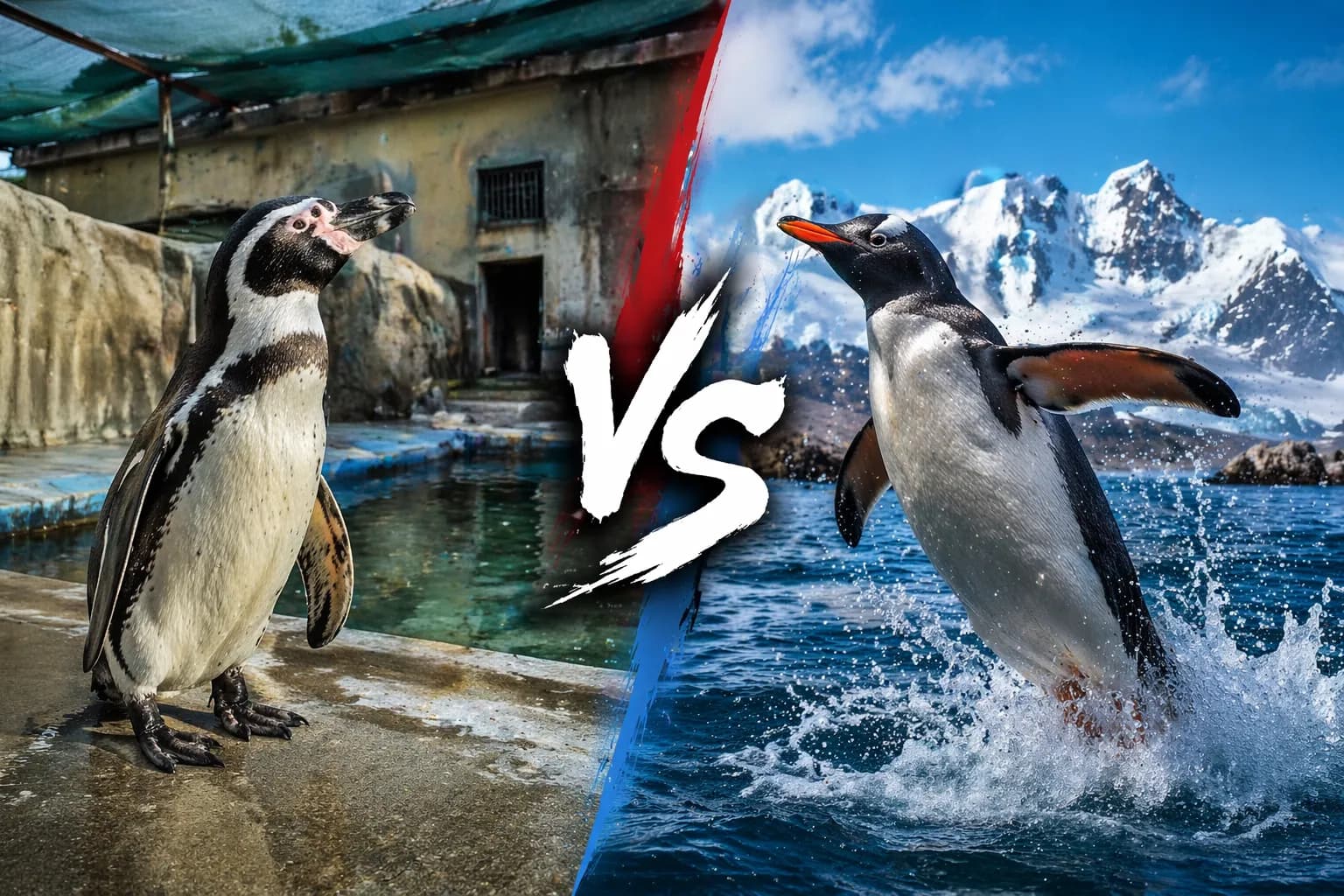
Observation conditions are fundamentally different
Zoo settings offer higher visibility and controlled proximity, while wild settings demand patience, distance, and uncertainty tolerance.
Neither is automatically better. They are different learning environments with different strengths.
Behavior interpretation needs context
In managed environments, behavior may reflect enclosure design, enrichment cycles, and human presence. In the wild, behavior is shaped more directly by ecological pressures.
Understanding that context makes your notes and IDs more accurate.
Use both contexts to build better animal literacy
Zoo encounters can help beginners learn visual traits; wild encounters test recognition under real conditions.
When you log both in one collection system, your field awareness improves faster.
Systems Intelligence & Hidden Purpose
See these animals as engineered biological systems: what they are built to do, how they fit the wider environment, and what their design can teach us.
System Role
The Watershed Signal Pilot
Bald Eagle
Specialized Hardware
Long-range vision, broad soaring wings, and a hooked bill optimized for fish capture make the bald eagle a precision hunter built for scanning large water systems with minimal wasted energy.
Systems Script
Bald eagles sit near the top of aquatic food chains, linking fish-rich waterways to wider nutrient and predator dynamics. Where they persist, they often reflect habitat quality, prey stability, and protected nesting space.
Strategic Insight
Altitude is a strategy. Step back, widen the field, and let pattern recognition do work before you commit energy to the dive.
System Role
The Distributed Pursuit Engine
African Wild Dog
Specialized Hardware
Oversized ears, endurance-focused limbs, and a social communication stack built on posture, vocal cues, and pack coordination turn the African wild dog into elite pursuit hardware.
Systems Script
African wild dogs pressure prey populations through coordinated movement rather than isolated brute force. They help shape herbivore behavior, redistribute risk across landscapes, and reward connected ecosystems over fragmented ones.
Strategic Insight
High-performance teams do not need constant hierarchy chatter. Shared rules, clean signals, and role clarity create speed that solo talent cannot match.
Quick questions
Short answers to common questions readers ask on this topic.
Do zoo observations still count for learning?
Yes. Zoo contexts can help beginners learn visual traits and baseline behavior cues before applying them in wild settings.
How can families use both zoo and wild experiences well?
Use a shared checklist: one clear ID clue, one behavior note, and one habitat note per sighting across both contexts.
Animals mentioned
Jump from this article into the species pages behind the examples, systems notes, and field-guide references.
Related comparisons
Continue with structured animal-vs-animal comparison pages connected to the species in this guide.
African Wild Dog vs Hyena: Which Hunter Has the Edge?
Spotted hyena gets the edge in direct physical conflict because it is tougher and more built for brutal contact. African wild dog stays exceptional in pure pack-hunt coordination and endurance pursuit.
Read comparisonBald Eagle vs Crowned Eagle: Which Eagle Has the Better Edge?
Bald eagle gets the broader size and open-space verdict, while crowned eagle becomes far more dangerous in forested ambush contexts where explosive attack on agile prey matters more.
Read comparisonBald Eagle vs Peregrine Falcon: Power or Speed?
Peregrine falcon wins the speed question clearly. Bald eagle usually gets the overall edge in a direct clash because size, talon grip, and durability matter more once contact happens.
Read comparisonCrocodile Monitor vs Komodo Dragon: Which Giant Monitor Lizard Has the Edge?
Komodo dragon gets the overall edge because it is heavier and more brutally grounded in close combat. Crocodile monitor stays impressive through climbing, length, and speed in vertical forest structure.
Read comparisonAnswer guides related to this topic
If you want direct comparisons and clear recommendations, continue with these answer-focused pages.
Best Animal Identification App
Looking for the best animal identification app? Learn how AnimalDex combines AI scanning, collecting, rarity tracking, and field-guide learning in one app.
Read answer guideWhat Is Animal Collecting
Learn what animal collecting means in modern apps and how AnimalDex turns real-world sightings into cards, sets, rarity, and species learning.
Read answer guidePokemon-Like Animal App
Looking for a Pokemon-like animal app with real species? AnimalDex combines creature-collection energy with AI scanning and wildlife learning.
Read answer guideTurn what you learn into a real animal collection
Keep going in AnimalDex with the species behind this guide, real-world sighting context, and a collection that grows beyond the article.
Related guides
What animals can teach us about self-improvement
Animals can teach focus, patience, resilience, teamwork, boundaries, and adaptability. Here is how AnimalDex can turn species learning into personal growth prompts.
Read articleHow to estimate animal breed prices without guessing
A practical guide to animal breed pricing, local average cost, grading signals, and why responsible valuation needs more than a single photo.
Read articleHow to create custom animal card decks people want to collect
Learn how to design custom animal cards and decks for pets, wildlife trips, classrooms, photography projects, gifts, and creator sales.
Read article