
Panduan lapangan hewan
Laughing Kookaburra
Identifikasi, habitat, rarity, perilaku, simbolisme, fakta, dan pelajaran praktis dari alam.
Precision Plunger. The Laughing Kookaburra is known for its remarkable ability to catch prey with precision. It has a strong, sharp beak that it uses to snatch fish, insects, and small reptiles from the ground or water. The kookaburra's keen eyesight allows it to spot its prey from a distance, and its quick reflexes ensure a successful catch. In nature, this skill helps the kookaburra secure food efficiently. When faced with a problem, think like a kookaburra: focus on your target, use your strengths to your advantage, and act swiftly to achieve your goal. Whether it's catching a ball or solving a puzzle, precision and timing can lead to success.
Nama ilmiah
Dacelo novaeguineae
Kategori
Bird
Habitat
Open woodland, forest edge, parks, gardens, and farmland with perches and prey-rich ground.
Rarity
Relatively common · 26/100
Native range
Eastern Australia, with introduced populations in some other regions.
Chorus
Laugh at dawn.
Dawn Laugh Call
Apa yang diajarkannya
A voice can bind the group and mark the day before the sun has fully arrived.
Coba
You start each morning meeting with a shared win so the team remembers it belongs together.
Bukti alam
Laughing Kookaburras are known for loud, laughter-like calls often given in family groups around dawn and dusk. These calls help maintain territory and group contact.
Gunakan untuk
Tangkapan Laughing Kookaburra berperingkat
1 tangkapan berperingkat dalam grup ini dari kolektor AnimalDex.
Lenny
@lendawgZoo · Play Sanctuary Daycare · Near Sudirman Central Business District, South Jakarta, Indonesia
Skor 0
Mengapa Chorus?
Alasan di balik Prinsip Hewan ini dan biologi yang mendukungnya.
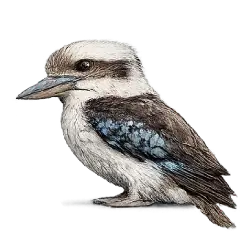
The laughing kookaburra is a large kingfisher famous for loud cackling calls, sit-and-wait hunting, and comfort in both woodland and suburban habitats.
Cara mengidentifikasi Laughing Kookaburra
- Stocky bird with large head and heavy bill
- Brown and cream plumage with pale underparts
- Usually perched conspicuously while scanning below
Kenapa Laughing Kookaburra menarik
- Kookaburras are excellent examples of a kingfisher lineage shifted away from fish-heavy feeding.
- Their calls make them one of the most recognizable birds in Australia.
Habitat: Open woodland, forest edge, parks, gardens, and farmland with perches and prey-rich ground.
Native range: Eastern Australia, with introduced populations in some other regions.
nativeRangeCardTitle
nativeRangeCardDescription
Open woodland, forest edge, parks, gardens, and farmland with perches and prey-rich ground.
To find Laughing Kookaburra in the wild, focus on the exact habitat patches that match its body design and daily behavior, not just the broad country where it exists. You usually do better by working one good piece of habitat inside eastern Australia, with introduced populations in some other regions. than by covering too much ground.
- Forest edge, canopy gaps, fruiting trees, or shaded trails where cover and food meet
- Sunlit logs, exposed branches, warm rocks, or regular perch sites used for scanning
- Protected habitat blocks within eastern Australia, with introduced populations in some other regions.
- Early sun and calm weather usually give the best chance of seeing normal basking, perched, or soaring behavior.
- Work edges, clearings, fruiting trees, and stream crossings rather than walking randomly through dense cover.
- Use sound, flight lines, and perch trees as clues; birds often reveal themselves before they sit in the open.
Laughing Kookaburras are diurnal and especially vocal around dawn and dusk. Their sleep-wake rhythm makes the lesson exact: begin and end the day by reaffirming the group.
They can live for many years, especially in stable territories. A long life lets chorus become tradition, with familiar calls repeated across seasons.
Females lay eggs in tree hollows or termite mounds, and family helpers may assist in raising young. Reproduction supports Chorus because family is not only genetic; it is cooperative sound and care.
Males and females are broadly similar, though females may be slightly larger. The Chorus lesson is shared: the group voice matters more than individual ornament.
- Drops from perches to seize reptiles, insects, and small vertebrates
- Uses loud chorus calls to advertise territory
- Often tolerates suburban environments surprisingly well
Laughing Kookaburra most often symbolizes chorus in AnimalDex because its real survival behavior repeatedly shows this pattern.
A voice can bind the group and mark the day before the sun has fully arrived.
Laughing Kookaburras are known for loud, laughter-like calls often given in family groups around dawn and dusk. These calls help maintain territory and group contact.
- Do not feed meat scraps or human food around homes or campsites.
- Watch from beneath shared perches without crowding nesting hollows.
- Blue-winged kookaburra
- Large kingfisher species
- Small raptor perched at distance
2/3 XP toward Level 3
statsTitle
statsDescription
statsSourceLabel: statsSourceSpeciesProfile
dominanceStat
41
speedStat
51
sizeStat
28
intelligenceStat
44
rarityStat
26%
Total
190
Size scale
Medium
Uses the canonical size stat for consistent placement



US$113 – US$235
Perkiraan rentang nilai
Kepercayaan 69%
Perkiraan nilai AnimalDex dibuat dari stat spesies kanonik.
Not a marketplace listing.
Perkiraan nilai berdasarkan hewan yang teridentifikasi dan konteks harga yang tersedia. Bukan daftar marketplace.
Seberapa langka Laughing Kookaburra?
Rarity: Relatively common (26/100)
Kookaburras remain common where tree perches and mixed feeding habitat persist.
Systems Intelligence & Hidden Purpose
Sudut pandang systems biology untuk melihat bagaimana spesies ini dibangun, peran apa yang dijalankannya di ekosistem, dan pelajaran praktis apa yang bisa dipetik manusia.
System Role
The Perch-and-Drop Controller
Laughing Kookaburra
Specialized Hardware
A heavy bill, broad perch vision, and short decisive strike pattern make kookaburras ambush hardware for mixed prey below branch height.
Systems Script
They convert elevated waiting points into predatory control over reptiles, insects, and small mammals. Their territory calls also make acoustic space part of the operating system.
Strategic Insight
You do not need constant motion when you already own the perch.
Public Animal Power
Explore this Animal Power
This is a public capture, so you can explore its Animal Power here. Personal Apex matches and challenges use your Wild Profile and animals you own.
Own an animal with this power to use it in Growth challenges.
Comparison hearts ready
2 of 3 hearts remaining. Each loss removes 1 heart.
✦ Available actions
Compare this public animal when your deck meets the current rules.
⚡CompareUnavailable›Hewan terkait
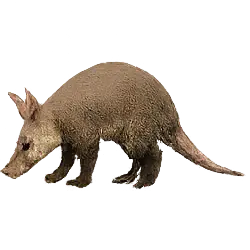
Aardvark
The aardvark is a nocturnal African mammal known for its long snout, strong digging…
Baca panduan spesies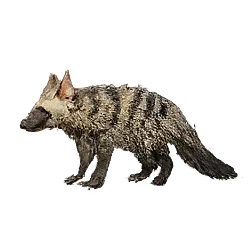
Aardwolf
The aardwolf is a small striped relative of hyenas that feeds mainly on termites rather…
Baca panduan spesies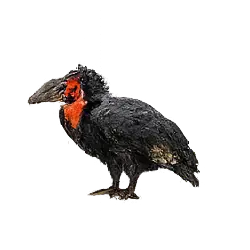
Abyssinian Ground Hornbill
Abyssinian Ground Hornbill is a bird known for bare red facial skin, huge…
Baca panduan spesiesLebih banyak hewan dengan kekuatan Energy
Jelajahi semua hewan Energy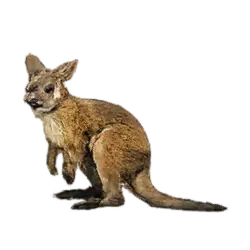
Agile Wallaby
Agile Wallaby is a mammal known for slender long-legged hopper build, pale cheek…
Baca panduan spesies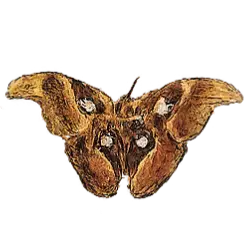
Atlas Moth
The atlas moth is one of the world’s largest moths, known for enormous patterned wings…
Baca panduan spesies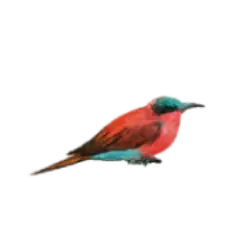
Carmine Bee-eater
Carmine Bee-eater is a bird known for bright carmine body, slender black bill, and…
Baca panduan spesiesBawa ensiklopedia ke dunia nyata
AnimalDex membantumu memindai hewan nyata, mengidentifikasi spesies, mengoleksi kartu, dan belajar dari alam di mana pun kamu berada.
Comparisons terkait
Lihat bagaimana spesies ini tampil di halaman perbandingan AnimalDex yang terstruktur.
Alligator Snapping Turtle vs Laughing Kookaburra: Who Reigns Supreme?
In a battle of grit and patience, the alligator snapping turtle emerges victorious over the laughing kookaburra. Its formidable jaws and protective shell make it an apex ambush predator, while the kookaburra's agility and intelligence are outmatched in close quarters.
Baca halaman comparisonLaughing Kookaburra vs Common Kingfisher: Which Perch Hunter Has the Better Edge?
Laughing kookaburra usually has the edge because it is much larger, more forceful, and built to handle bigger prey. Common kingfisher is the finer precision specialist around small fish and tight-water strikes.
Baca halaman comparison