

snakebitevenomous snakesglobal health
How Many People Die From Snake Bites? Up to 513,000 a Year
A new model says snakebites kill 274,000–513,000 people a year, four to eight times the most-cited figure. Here's why so many deaths go uncounted.
Dalam panduan ini
- How many people die from snake bites each year?
- Why are snakebite deaths underreported?
- How was the 513,000 snakebite estimate calculated?
- Which country has the most snakebite deaths?
- Which snake kills the most people?
- How many snakebite survivors lose limbs or end up disabled?
- Why don't snakebite victims get antivenom?
- Are snakebite deaths increasing or decreasing?
- Where can you see venomous snakes safely?
The short answer
Quick answer
Official figures may be missing as many as 430,000 snakebite deaths a year, because many victims die at home and are never recorded. WHO cites 81,000–138,000 deaths a year and the Global Burden of Disease 2019 model 63,400. A 2026 PLOS Medicine study estimates 274,000–513,000, though it is a model, not a body count.
The new count
How many people die from snake bites each year?
More than half of the countries where venomous snakes are a threat do not record how many people are bitten or envenomed. So when anyone tells you how many people snakes kill, the honest answer is that the world has been guessing.
A study published in PLOS Medicine on 25 August 2026 tried to fill in the blanks, and it is now drawing wide attention. Its answer is that between 274,000 and 513,000 people die from snakebite every year. Between 2.1 million and 7 million are envenomed, which means venom actually gets into the body.
Compare that with the numbers you usually see. The World Health Organization cites 81,000 to 138,000 deaths a year. The most-cited modelled figure, from the Global Burden of Disease (GBD) 2019 analysis, is 63,400. The new range is four to eight times the GBD figure, and its ceiling is more than six times WHO's lowest estimate, a gap of about 430,000 deaths a year.
Keep one caveat in mind: this is a model, not a body count. The 274,000 is the study's floor and the 513,000 its ceiling, and the authors say plainly that data are scarce in many countries. Even so, the floor sits well above the top of GBD's own uncertainty range, which stops at 78,600.
Two bigger twists sit inside those numbers. The model moves the centre of the crisis away from South Asia, where the most-cited estimate placed 86% of deaths, to sub-Saharan Africa. And one of the prime suspects is a viper that can be as short as a school ruler.
Snakebite may kill up to 513,000 people a year, and more than half the countries with dangerous snakes don't even keep count.
Invisible deaths
Why are snakebite deaths underreported?
Most snakebite figures are built from hospital records, and many victims never reach a hospital. In rural sub-Saharan Africa and South Asia, people may live hours from the nearest clinic or have no transport, and some choose a traditional healer instead. If they die, it happens at home, and the death never reaches national statistics.
India shows how big that gap can be. The Million Death Study did not use hospital files at all. Researchers recorded 611,483 verbal-autopsy interviews in households, asking families how their relatives had died. The result, published in eLife in 2020 by Suraweera and colleagues, was about 1.2 million snakebite deaths in India between 2000 and 2019, an average of 58,000 a year.
More than 77% of those deaths happened outside any health facility. Half came in the four rainy months, and about 70% in just eight states. Most victims were farm workers, and more than a quarter were children under 15.
Africa looks similar. An earlier review estimated 314,000 envenomings and 7,300 deaths a year in sub-Saharan Africa, but household surveys suggested the true figures were three to five times higher.
Careful counting in one place does not scale up either. Bite rates change from district to district and season to season, even inside a country as small as Sri Lanka, so you cannot multiply a single village survey to get a national total.
The method
How was the 513,000 snakebite estimate calculated?
Start with 3,992. That is how many unique papers the team found when it searched for snakebite studies in any language published between 2007 and March 2025. The researchers read 615 in full. Only 84 were judged robust enough to use.
Those 84 papers, plus reports from health ministries and poison centres, covered 79 countries. To fill the rest of the map, the team built a geostatistical model that predicts snakebite from climate, the number of snake species in an area and socioeconomic indicators. It then compared hospital figures with community surveys to estimate how many cases slip through, which gave each country a floor and a ceiling.
The joint first authors are Dileepa Ediriweera, of the Liverpool School of Tropical Medicine and the University of Kelaniya in Sri Lanka, and Anuradhani Kasturiratne of Kelaniya. The same group made the first global estimate, a 2007 review published in 2008, which put deaths at 20,000 to 94,000 a year. Seventeen years later, their new ceiling is 5.5 times the old one.
The paper is open about its ties and its weak spots. Senior author David Lalloo sits on WHO snakebite committees and the Global Snakebite Taskforce, and the paper declares it. The work was funded by the UK Medical Research Council, the code is public on GitHub for anyone to rerun, and the authors warn that countries with little data carry more uncertainty.
The fight
Which country has the most snakebite deaths?
Here is the first twist. GBD 2019 put 86% of the world's snakebite deaths in South Asia: 54,600 of 63,400, with India alone at 51,100. By that count, Nigeria lost just 1,460 people.
The new model redraws the map. It gives sub-Saharan Africa 45% of all envenomings and deaths worldwide, with an incidence nearly three times South Asia's. It names Nigeria, the Democratic Republic of Congo and Ethiopia as high-burden countries, where dense rural populations work in fields that snakes share.
India still has the best evidence of any country: a nationwide household study counting about 58,000 deaths a year. The new paper's headline claim is regional, not a country league table. We found no published reaction from independent experts yet, so treat it as one team's model set against other published models.
Both maps can be partly right. Africa has far less household-level data than India, which is exactly how its deaths could have stayed hidden, and exactly why any estimate there carries more uncertainty.
| Measure | GBD 2019 (published 2022) | New study (PLOS Medicine, 2026) |
|---|---|---|
| Global deaths per year | 63,400 (range 38,900–78,600) | 274,000–513,000 |
| Where the burden sits | South Asia: 86% of deaths | Sub-Saharan Africa: 45% of envenomings and deaths |
| Nigeria | 1,460 deaths | Named as a high-burden country |
| Approach | Global Burden of Disease modelling | Literature review plus geostatistical model, adjusted for unreported cases |
GBD said Nigeria lost 1,460 people to snakebite. The new model says sub-Saharan Africa carries 45% of the global burden.
The culprits
Which snake kills the most people?
Now the second twist. The study does not break deaths down by species, so nobody can honestly hand you a ranked list from it. But when Ediriweera named the medically important snakes in Africa, he listed saw-scaled vipers, the puff adder, African cobras and mambas.
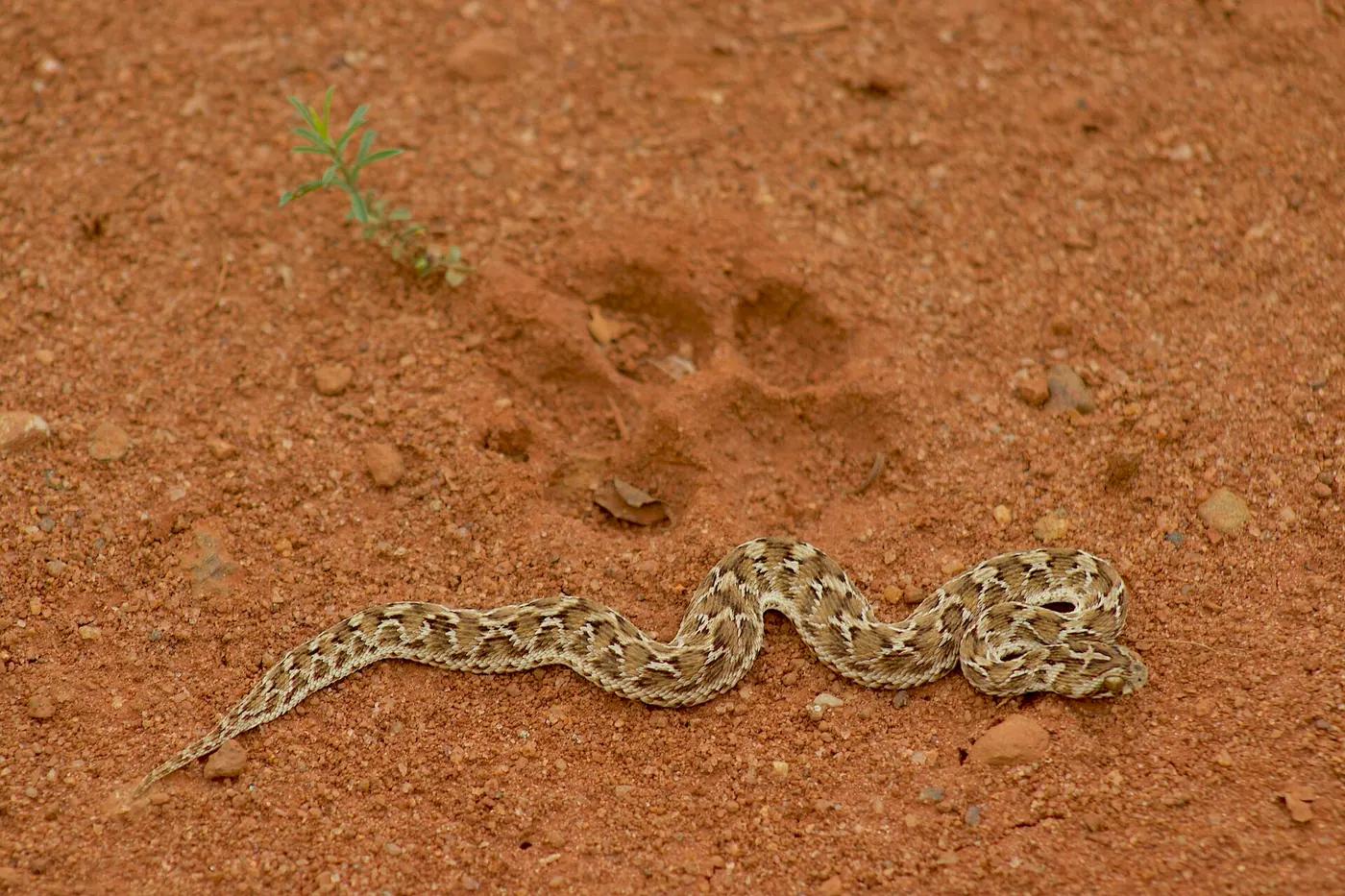
Saw-scaled vipers grow to between 0.3 and 0.9 metres, so the smallest are about the length of a 30-centimetre school ruler. When threatened, they rub rows of serrated scales together to make a hissing rasp, and they travel by sidewinding. The eight species in the genus Echis live in dry country and savanna north of the Equator, from Africa through Arabia to India and Sri Lanka, and hunt scorpions and centipedes at night.
That size is part of the danger. A patterned snake under a metre long, lying still on dry ground at night, is easy to miss and easy to step on. And these vipers share their range with farmland, where the study's authors point to high exposure in the fields as a driver of Africa's toll.
How often an untreated bite kills varies between studies. One estimate, in a research preprint posted on bioRxiv, puts the figure at about one in five for the West African saw-scaled viper (Echis ocellatus), and says the species may cause most snakebite deaths in sub-Saharan Africa. Preprints have not been peer-reviewed, so treat that as a strong hint rather than a verdict.
Fame is a poor guide. The black mamba and green mamba get the documentaries, and the Egyptian cobra is one of the African cobras on the list. But the snakes that headline lists of the most dangerous animals are not always the ones doing most of the harm.
Saw-scaled vipers (Echis)
0.3–0.9 m long. They rasp a warning with serrated scales and hunt at night. One preprint puts untreated West African bites at about 20% fatal.
Puff adder (Bitis arietans)
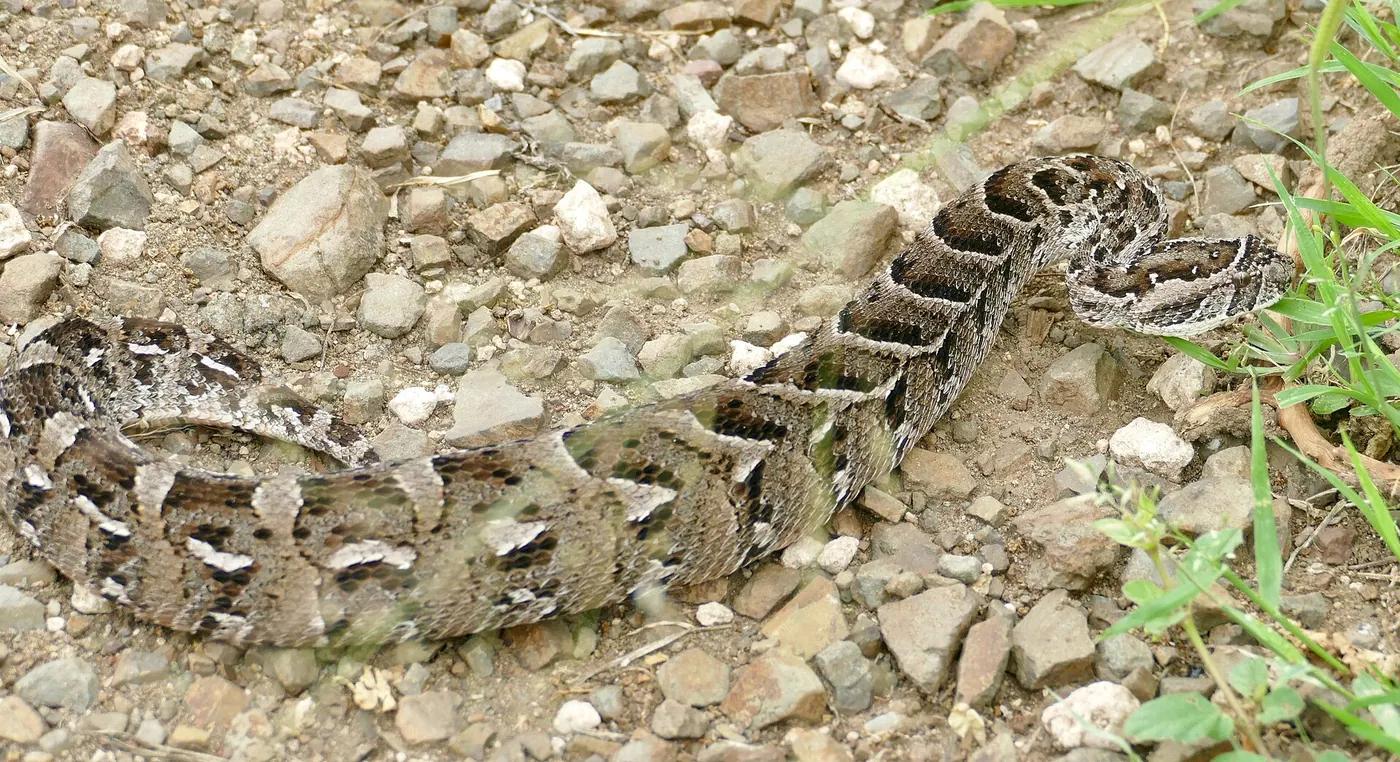
One of the two main vipers behind long-term injury in Africa, with venom that kills tissue around the bite.
African cobras (Naja)
Named as medically important by the study's lead author. The Egyptian cobra is one of them.
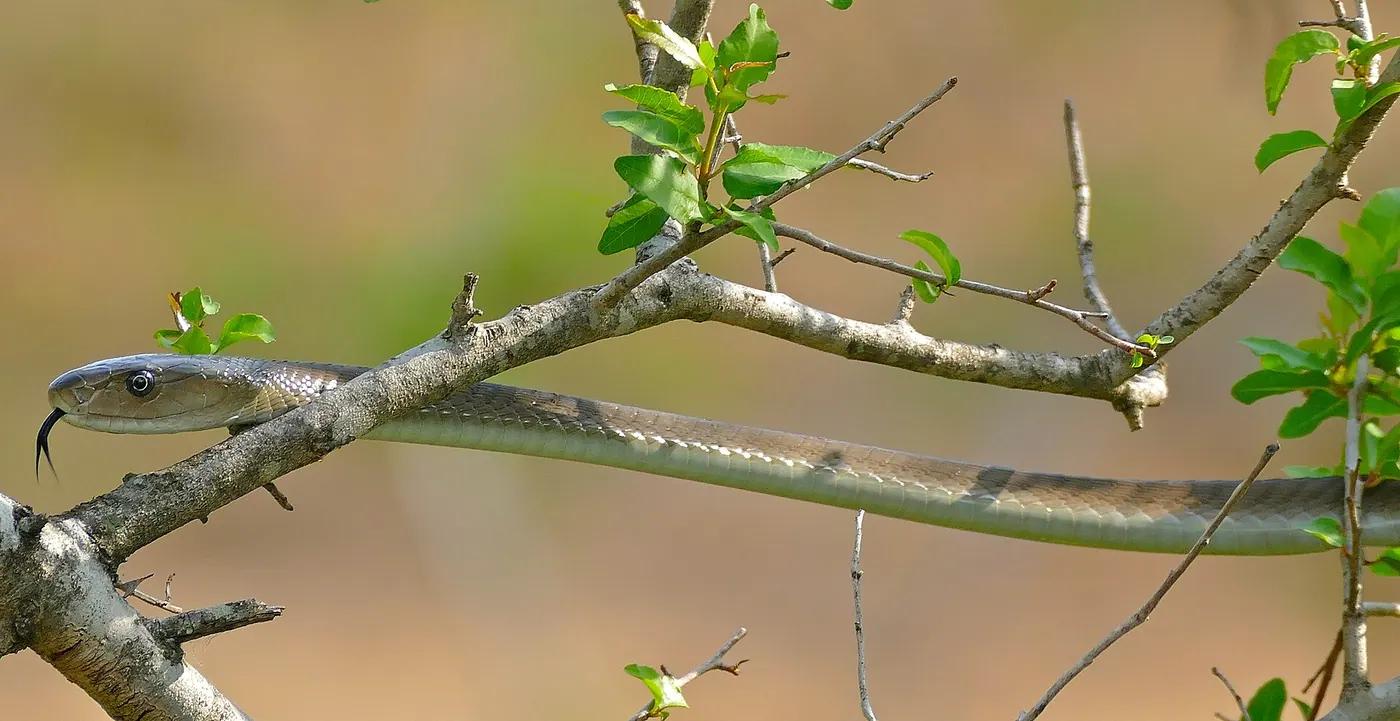
Mambas (Dendroaspis)
The famous ones, listed alongside far less celebrated vipers.
A snake that can be as short as a school ruler may be killing more Africans than any mamba.
The survivors
How many snakebite survivors lose limbs or end up disabled?
Death is only part of the toll. The new study estimates that more than 800,000 survivors a year are left with long-term disabilities, including amputations. The figure usually quoted is about 400,000, so this roughly doubles it.
Much of that damage comes from vipers. Puff adder and saw-scaled viper venoms cause dermonecrosis, the death of skin and tissue around the bite. It is driven largely by enzymes called snake venom metalloproteinases, or SVMPs, which make up between 27.4% and 75.7% of saw-scaled viper venom.
For a farming family, losing a hand or a leg can mean losing the harvest, and the authors say these injuries push households deeper into poverty. The burden falls hardest on poor rural communities, where women, children and farm workers are among those most affected. Health Action International's 2018 snakebite fact sheet adds that children under five who are bitten have a higher chance of dying.
The cure gap
Why don't snakebite victims get antivenom?
Antivenom is the only WHO-listed essential medicine for snakebite, and getting it to patients is hard. In a survey in Nigeria, 98% of healthcare workers reported problems giving it. The Strike Out Snakebite report, released in February 2026, found that half of the facilities surveyed in high-burden countries lacked full capacity to treat snakebite.
Quality is another problem. In February 2025, the Bureau of Investigative Journalism tested antivenoms sold in sub-Saharan Africa. It reported wide variation in quality and vials that do not state how much active ingredient they contain, and quoted an Indian manufacturer saying products unsuited to Africa were being imported anyway. It ran the story under the headline “The new snake oil: antivenoms that are as useless as water”.
Funding is thin as well. Just two funders supply about 65% of global snakebite research money.
Not every shortage is a crisis. South Africa ran short in 2025 when its only manufacturer paused production for upgrades. Yet in November the African Snakebite Institute's Johan Marais said there was “no antivenom crisis”. Fewer than 100 patients a year there receive antivenom, and only about 1 in 10 hospitalised bite victims needs it.
98% of Nigerian healthcare workers reported problems giving antivenom.
The trend
Are snakebite deaths increasing or decreasing?
It depends what you measure. GBD 2019 found that the age-standardised death rate fell 36% between 1990 and 2019, to 0.8 per 100,000 people. That is a rate adjusted for population and age, not a total.
The new study measures something different: the total number of deaths, once you correct for the ones that never make it into the records. It argues that earlier estimates could substantially underestimate the problem. Both can be true at once. Rates may be falling while the real total was always far higher than anyone wrote down, which means any ranking of the deadliest animals to humans in the wild built on the old figures may be undercounting snakes several times over.
WHO added snake envenoming to its list of Neglected Tropical Diseases in 2017 and wants deaths and disabilities halved by 2030. To get there, the authors want their hotspot maps used to stockpile antivenom where it is needed, train primary health workers in high-burden rural areas and speed up transport to treatment.
Now run the arithmetic. The figure WHO cites is 81,000 to 138,000 deaths a year, and the new ceiling is more than six times the bottom of that range. Halve the new low estimate and about 137,000 people would still die every year, almost exactly the top of WHO's current range. Halve the high estimate and 256,500 remain, more than three times WHO's lowest figure.
deadliest animals to humans in the wild
Your move
Where can you see venomous snakes safely?
Most people who meet a dangerous snake meet it by accident, often a farm worker in a field during the rainy season. The best thing a visitor can do is learn what lives where they are going and give every snake plenty of room.
Before you travel, our guides to animals in India, Sri Lanka, South Africa and on an African safari show which species you might encounter. If you do spot a snake, stay well back and read what to record when you find a snake: watch, photograph from a distance and never handle it.
Your phone's zoom does the work. With AnimalDex, a live photo taken with your phone camera identifies the species and adds it to your collection, so the mamba stays in its tree and the card goes in your pocket.
If someone is bitten, get them to a health facility quickly. The deaths in this story are the ones that never got there.
IndiaSri LankaSouth AfricaAfrican safariwhat to record when you find a snake
Pertanyaan singkat
Jawaban ringkas untuk pertanyaan yang paling sering muncul pada topik ini.
- How many people die from snake bites each year?
- A 2026 PLOS Medicine study estimates 274,000 to 513,000 deaths a year. WHO cites 81,000 to 138,000, and the Global Burden of Disease 2019 model gives 63,400. The new figure is a model estimate that adjusts for deaths that never reach official records.
- Why are snakebite deaths underreported?
- Most counts come from hospital records, but many victims live hours from a clinic, have no transport or go to traditional healers. In India, more than 77% of snakebite deaths happened outside health facilities. More than half the countries with dangerous snakes don't record bites at all.
- Which country has the most snakebite deaths?
- India has the best data: the Million Death Study counted about 1.2 million snakebite deaths from 2000 to 2019, an average of 58,000 a year. The new 2026 model argues that sub-Saharan Africa carries 45% of the global burden and names Nigeria, the Democratic Republic of Congo and Ethiopia as high-burden countries, but this is contested.
- Which snake kills the most people?
- The new study does not rank species. A research preprint on bioRxiv suggests the West African saw-scaled viper, a snake only 0.3 to 0.9 metres long, may cause most snakebite deaths in sub-Saharan Africa, and puts untreated bites at about 20% fatal. It has not been peer-reviewed.
- Is snakebite a neglected tropical disease?
- Yes. WHO added snake envenoming to its list of Neglected Tropical Diseases in 2017. Its target is to halve snakebite deaths and disabilities by 2030.
- How many snakebite survivors are left disabled?
- The 2026 study estimates that more than 800,000 survivors a year are left with long-term disabilities, including amputations. That roughly doubles the commonly cited figure of about 400,000.
Hewan yang disebut
Lompat dari artikel ini ke halaman spesies di balik contoh, catatan systems, dan referensi field guide.
Sources and further reading
- PLOS Medicine: Estimates of global burden of snakebite: A literature review and geostatistical modelling study (25 Aug 2026)
- ScienceDaily / The Conversation: Scientists reveal a hidden snakebite crisis killing up to 513,000 people a year (lead author Dileepa Ediriweera's article, republished 30 Oct 2026)
- WHO: Seventy-first World Health Assembly A71/17
- Nature Communications: Global mortality of snakebite envenoming between 1990 and 2019
- Yale Environment Review: More than 1.2 million people have died from snakebites in India since 2000
- bioRxiv: Preclinical validation of a repurposed metal chelator as a community-based therapeutic for hemotoxic snakebite (preprint)
- Health Action International: Snakebite envenoming fact sheet (Nov 2018)
- The Guardian Nigeria: Antivenom shortages hit hospitals amid snakebite surge
- The Bureau of Investigative Journalism: The new snake oil: antivenoms that are as useless as water
Panduan jawaban terkait topik ini
Kalau kamu ingin perbandingan langsung dan rekomendasi yang jelas, lanjutkan ke halaman jawaban berikut.
Best Animal Identification Apps
Compare the best animal identification apps by features like photo/video identification, species coverage, collection capabilities, offline use, and more.
What Is Animal Collecting
Learn what animal collecting means in modern apps and how AnimalDex turns real-world sightings into cards, sets, rarity, and species learning.
Pokemon-Like Animal App
Looking for a Pokemon-like animal app with real species? AnimalDex combines creature-collection energy with AI scanning and wildlife learning.