

100 Most Dangerous Animals in the World
Dangerous animals list ranking 100 species by lethal capability, aggression, and encounter risk — not a jump-scare trivia page and not a disease-vector list.
Danger is not the same as strength, and it is not the same as intelligence. Some animals are dangerous because they are huge and intolerant of close approach. Others because venom or a predator attack finishes the encounter quickly.
This dangerous animals list stays on large-animal and apex-animal threat. The editorial top is pinned, then the rest of the top 100 is filled from AnimalDex dominance, size, and speed profiles with predator and venom signals from species guides.
What are the most dangerous animals?
Crocodile ranks #1 in this AnimalDex list. Crocodiles combine stealth, crushing force, and water-edge surprise into one of the harshest large-animal danger profiles.
In this ranking, dangerous means the chance of a wild encounter turning lethal or severely injuring: crocodile, hippopotamus, elephant, king cobra, black mamba, great white shark, lion, and tiger all sit in the top tier. Disease-vector lists are a different question and are not what this page ranks.
Ambush lethality
Extreme close-range danger
Lethal venom and control
Tier-list table
This tier-list table includes 100 ranked species, animal icons, tier labels, and links back into species pages.
Showing 100 of 100
| Rank | Animal | Tier | Primary metric | Why it ranks | Read species guide |
|---|---|---|---|---|---|
| #1 | C | Ambush lethality | Crocodiles combine stealth, crushing force, and water-edge surprise into one of the harshest large-animal danger profiles. | Read species guide | |
| #2 | E | Extreme close-range danger | Hippos are not predators, but they remain one of the most dangerous large animals because of aggression and brute short-range violence. | Read species guide | |
| #4 | S | Lethal venom and control | King cobra belongs near the top because one clean venom-delivery event can decide everything. | Read species guide | |
| #5 | S | Fast venomous strike | Black mamba stays iconic for exactly the reason you would expect: speed plus extremely dangerous venom. | Read species guide | |
| #6 | A | Apex marine attack danger | Great white is not the most likely animal to encounter, but the danger profile is still severe once the attack occurs. | Read species guide | |
| #7 | D | Predatory finishing danger | Lion remains one of the clearest examples of a large predator that can turn opportunity into fatal force quickly. | Read species guide | |
| #8 | A | Heavy ambush danger | Tiger is one of the most dangerous solitary predators on Earth because it combines stealth and finishing power. | Read species guide | |
| #9 | E | Charge and horn danger | Rhinoceros belongs because one bad encounter with a charging megaherbivore is catastrophically serious. | Read species guide | |
| #9 | A | 86/100 category fit | The Komodo dragon is the largest living lizard, native to a small island range in Indonesia, and famous for its size, power, and apex-predator role. AnimalDex profile stats and species-guide signals put it in A tier for danger. | Read species guide | |
| #10 | A | 85/100 category fit | Mangshan Pit Viper is a reptile known for jade green patterned body, heat-sensing pit organs, and heavy still ambush coils. AnimalDex profile stats and species-guide signals put it in A tier for danger. | Read species guide | |
| #11 | A | 85/100 category fit | Desert Horned Viper is a reptile known for horns above the eyes, sidewinding sand travel, and buried ambush posture. AnimalDex profile stats and species-guide signals put it in A tier for danger. | Read species guide | |
| #12 | A | 83/100 category fit | Eyelash Viper is a reptile known for eyelash-like scales above the eyes, branch-hugging ambush posture, and many color forms. AnimalDex profile stats and species-guide signals put it in A tier for danger. | Read species guide | |
| #13 | A | 82/100 category fit | False Water Cobra is a reptile known for broad neck-flaring display, olive blotched body, and wetland-active predatory roaming. AnimalDex profile stats and species-guide signals put it in A tier for danger. | Read species guide | |
| #14 | A | 81/100 category fit | Rhinoceros Viper is a reptile known for horn-like nasal scales, bold mosaic camouflage, and still leaf-litter ambush. AnimalDex profile stats and species-guide signals put it in A tier for danger. | Read species guide | |
| #15 | A | 78/100 category fit | Crowned Eagle is a bird of prey known for barred underparts, towering crest, and forest-ambush raptor build. AnimalDex profile stats and species-guide signals put it in A tier for danger. | Read species guide | |
| #16 | B | 73/100 category fit | Martial Eagle is a bird of prey known for long broad wings, massive prey-gripping talons, and treetop strike dive. AnimalDex profile stats and species-guide signals put it in B tier for danger. | Read species guide | |
| #17 | B | 73/100 category fit | Burmese Python is a reptile known for massive muscular coils, blotched camouflage pattern, and wetland-and-forest ambush life. AnimalDex profile stats and species-guide signals put it in B tier for danger. | Read species guide | |
| #18 | B | 72/100 category fit | Egyptian Cobra is a reptile known for hood-raising display, venomous strike system, and desert-and-river-edge adaptability. AnimalDex profile stats and species-guide signals put it in B tier for danger. | Read species guide | |
| #19 | B | 71/100 category fit | False Gharial is a reptile known for long narrow fish-catching snout, river-specialist crocodilian body, and quiet blackwater ambush. AnimalDex profile stats and species-guide signals put it in B tier for danger. | Read species guide | |
| #20 | B | 71/100 category fit | The harpy eagle is a huge tropical raptor known for immense talons, forest hunting, and a dramatic head crest. AnimalDex profile stats and species-guide signals put it in B tier for danger. | Read species guide | |
| #21 | B | 71/100 category fit | Fossa is a mammal known for cat-like climbing body, long balancing tail, and top predator in malagasy forest. AnimalDex profile stats and species-guide signals put it in B tier for danger. | Read species guide | |
| #22 | B | 71/100 category fit | The green anaconda is a giant semi-aquatic constrictor built for ambush from dark water, with heavy body mass and cryptic olive coloration. AnimalDex profile stats and species-guide signals put it in B tier for danger. | Read species guide | |
| #23 | B | 70/100 category fit | Eagles are large predatory birds recognized for exceptional eyesight, soaring flight, and powerful talons used to capture prey across open landscapes and waterways. AnimalDex profile stats and species-guide signals put it in B tier for danger. | Read species guide | |
| #24 | B | 70/100 category fit | Lionfish are venomous reef predators with ornate fins, patient hovering behavior, and major ecological impact where introduced beyond their native range. AnimalDex profile stats and species-guide signals put it in B tier for danger. | Read species guide | |
| #25 | B | 69/100 category fit | Siamese Crocodile is a reptile known for narrow armored snout, olive ridged body, and freshwater ambush stillness. AnimalDex profile stats and species-guide signals put it in B tier for danger. | Read species guide | |
| #26 | B | 69/100 category fit | Boomslang is a reptile known for enormous emerald eyes, slender branch body, and front-fanged arboreal strike. AnimalDex profile stats and species-guide signals put it in B tier for danger. | Read species guide | |
| #27 | B | 68/100 category fit | Steller's Sea Eagle is a bird of prey known for huge yellow bill, white shoulder flashes, and coastal fish-lifting talons. AnimalDex profile stats and species-guide signals put it in B tier for danger. | Read species guide | |
| #28 | B | 68/100 category fit | Green Mamba is a reptile known for slender bright-green body, tree-focused fast movement, and high-alert visual posture. AnimalDex profile stats and species-guide signals put it in B tier for danger. | Read species guide | |
| #29 | B | 68/100 category fit | Chinese Cobra is a reptile known for raised hood warning, defensive boundary posture, and ridge-and-edge hunting. AnimalDex profile stats and species-guide signals put it in B tier for danger. | Read species guide | |
| #30 | B | 67/100 category fit | Polar bears are Arctic marine bears specialized for sea ice hunting, insulation, and long-range movement between seal access points. AnimalDex profile stats and species-guide signals put it in B tier for danger. | Read species guide | |
| #31 | B | 67/100 category fit | Bengal Tiger is a mammal known for broad-shouldered striped body, rich orange coat, and close-range ambush power. AnimalDex profile stats and species-guide signals put it in B tier for danger. | Read species guide | |
| #32 | B | 67/100 category fit | Grizzly Bear is a mammal known for heavy shoulder-hump build, long clawed digging forelimbs, and explosive close-range power. AnimalDex profile stats and species-guide signals put it in B tier for danger. | Read species guide | |
| #33 | B | 66/100 category fit | Amur Leopard is a mammal known for thick winter rosette coat, long cold-ready limbs, and solitary forest stalking behavior. AnimalDex profile stats and species-guide signals put it in B tier for danger. | Read species guide | |
| #34 | B | 66/100 category fit | Giant Freshwater Stingray is a fish known for huge river-floor disc body, long whip-like tail, and bottom-hugging camouflage. AnimalDex profile stats and species-guide signals put it in B tier for danger. | Read species guide | |
| #35 | B | 66/100 category fit | The alligator snapping turtle is a heavy freshwater turtle known for a spiked shell, strong jaws, and lure-based ambush feeding. AnimalDex profile stats and species-guide signals put it in B tier for danger. | Read species guide | |
| #36 | B | 66/100 category fit | The Gaboon viper is a heavy forest snake famous for intricate camouflage, giant fangs, and still ambush behavior. AnimalDex profile stats and species-guide signals put it in B tier for danger. | Read species guide | |
| #37 | B | 66/100 category fit | Common Snapping Turtle is a reptile known for heavy ridged shell, hooked beak and long neck, and bottom-resting ambush. AnimalDex profile stats and species-guide signals put it in B tier for danger. | Read species guide | |
| #38 | B | 66/100 category fit | The orca is a powerful ocean predator known for black-and-white patterning, high intelligence, and coordinated hunting. AnimalDex profile stats and species-guide signals put it in B tier for danger. | Read species guide | |
| #39 | B | 65/100 category fit | Monocled Cobra is a reptile known for single round hood mark, broad threat display, and ground-and-water edge hunting. AnimalDex profile stats and species-guide signals put it in B tier for danger. | Read species guide | |
| #40 | B | 65/100 category fit | Alligator Gar is a fish known for long armored gar body, broad toothy snout, and surface-cruising ambush style. AnimalDex profile stats and species-guide signals put it in B tier for danger. | Read species guide | |
| #41 | B | 65/100 category fit | Wedge-tailed Eagle is a bird known for long wedge-shaped tail, huge soaring frame, and heat-using open-country flight. AnimalDex profile stats and species-guide signals put it in B tier for danger. | Read species guide | |
| #42 | B | 64/100 category fit | Philippine Eagle is a bird of prey known for massive hooked bill, long crest feathers, and broad rainforest hunting wings. AnimalDex profile stats and species-guide signals put it in B tier for danger. | Read species guide | |
| #43 | B | 64/100 category fit | Malayan Tiger is a mammal known for tight striped forest coat, compact tropical-cat frame, and dense-cover ambush movement. AnimalDex profile stats and species-guide signals put it in B tier for danger. | Read species guide | |
| #44 | B | 64/100 category fit | Jaguar is a mammal known for heavy rosette-marked body, crushing bite strength, and river-and-forest ambush movement. AnimalDex profile stats and species-guide signals put it in B tier for danger. | Read species guide | |
| #45 | B | 64/100 category fit | Longnose Gar is a fish known for very long tooth-lined snout, ganoid armor scales, and surface-cruising ambush. AnimalDex profile stats and species-guide signals put it in B tier for danger. | Read species guide | |
| #46 | B | 63/100 category fit | Black Caiman is a reptile known for dark armored crocodilian body, heavy river-holding jaws, and night-surface ambush posture. AnimalDex profile stats and species-guide signals put it in B tier for danger. | Read species guide | |
| #47 | B | 63/100 category fit | Leopards are adaptable solitary cats known for rosette-pattern camouflage, climbing ability, and success across an unusually wide range of habitats. AnimalDex profile stats and species-guide signals put it in B tier for danger. | Read species guide | |
| #48 | B | 63/100 category fit | The green tree python is an arboreal snake known for bright green color, branch-coiled posture, and ambush hunting from above. AnimalDex profile stats and species-guide signals put it in B tier for danger. | Read species guide | |
| #49 | B | 63/100 category fit | Eurasian Eagle-Owl is a bird known for massive owl body, orange staring eyes, and rocky-cliff nesting. AnimalDex profile stats and species-guide signals put it in B tier for danger. | Read species guide | |
| #50 | B | 63/100 category fit | The American alligator is a large armored wetland reptile built for ambush, with a broad snout and strong recovery across many southeastern U. AnimalDex profile stats and species-guide signals put it in B tier for danger. | Read species guide | |
| #51 | B | 62/100 category fit | Mole Viper is a reptile known for side-stabbing long fangs, cylindrical burrowing body, and loose-soil tunneling. AnimalDex profile stats and species-guide signals put it in B tier for danger. | Read species guide | |
| #52 | B | 62/100 category fit | Indian Rock Python is a reptile known for very large blotched body, heat-sensing facial pits, and quiet ambush constriction. AnimalDex profile stats and species-guide signals put it in B tier for danger. | Read species guide | |
| #53 | B | 62/100 category fit | The boa constrictor is a large muscular snake known for camouflage, strong coils, and ambush hunting in warm habitats. AnimalDex profile stats and species-guide signals put it in B tier for danger. | Read species guide | |
| #54 | B | 61/100 category fit | Gorillas are the largest living primates, built around immense upper-body strength, social family groups, and forest-based foraging rather than predatory violence. AnimalDex profile stats and species-guide signals put it in B tier for danger. | Read species guide | |
| #55 | B | 61/100 category fit | White-bellied Sea Eagle is a bird of prey known for broad white underbody, strong coastal soaring wings, and fish-snatching talons. AnimalDex profile stats and species-guide signals put it in B tier for danger. | Read species guide | |
| #56 | B | 60/100 category fit | Eastern Indigo Snake is a reptile known for glossy blue-black scales, large nonvenomous body, and active daytime hunting. AnimalDex profile stats and species-guide signals put it in B tier for danger. | Read species guide | |
| #57 | B | 60/100 category fit | African Rock Python is a reptile known for very large heavy body, brown blotched camouflage, and water-edge ambush strength. AnimalDex profile stats and species-guide signals put it in B tier for danger. | Read species guide | |
| #58 | B | 60/100 category fit | Golden Eagle is a bird known for broad mountain-soaring wings, powerful gripping talons, and long-range hunting vision. AnimalDex profile stats and species-guide signals put it in B tier for danger. | Read species guide | |
| #59 | B | 60/100 category fit | Lace Monitor is a reptile known for stone-pattern camouflage, tree-and-gully ambush, and alert long-distance scanning. AnimalDex profile stats and species-guide signals put it in B tier for danger. | Read species guide | |
| #60 | C | 59/100 category fit | Perentie is a reptile known for huge desert monitor body, forked scent-reading tongue, and long powerful tail. AnimalDex profile stats and species-guide signals put it in C tier for danger. | Read species guide | |
| #61 | C | 58/100 category fit | Cuban Crocodile is a reptile known for long-legged athletic build, broad powerful jaws, and restricted island swamp range. AnimalDex profile stats and species-guide signals put it in C tier for danger. | Read species guide | |
| #62 | C | 58/100 category fit | African Fish Eagle is a bird of prey known for striking white head and chest, powerful fish-lifting talons, and far-carrying lake calls. AnimalDex profile stats and species-guide signals put it in C tier for danger. | Read species guide | |
| #63 | C | 55/100 category fit | Gharial is a reptile known for long narrow fish-catching snout, river-specialist body, and sandbank nesting. AnimalDex profile stats and species-guide signals put it in C tier for danger. | Read species guide | |
| #64 | C | 55/100 category fit | Fishing Cat is a mammal known for partially webbed feet, stocky marsh-ready cat build, and water-edge stalking behavior. AnimalDex profile stats and species-guide signals put it in C tier for danger. | Read species guide | |
| #65 | C | 55/100 category fit | Bushmaster is a reptile known for large viper body, leaf-litter camouflage, and forest-floor ambush. AnimalDex profile stats and species-guide signals put it in C tier for danger. | Read species guide | |
| #66 | C | 55/100 category fit | Crocodile Monitor is a reptile known for very long muscular tail, powerful climbing claws, and big riverbank monitor frame. AnimalDex profile stats and species-guide signals put it in C tier for danger. | Read species guide | |
| #67 | C | 55/100 category fit | The bald eagle is a large North American raptor recognized by adult white head and tail plumage and strong association with large water bodies. AnimalDex profile stats and species-guide signals put it in C tier for danger. | Read species guide | |
| #68 | C | 54/100 category fit | Zone-tailed Hawk is a bird of prey known for vulture-mimicking dark soaring silhouette, broad banded tail, and stealth approach over open country. AnimalDex profile stats and species-guide signals put it in C tier for danger. | Read species guide | |
| #69 | C | 54/100 category fit | Crested Serpent Eagle is a bird of prey known for short crest feathers, yellow facial skin, and forest snake-hunting flights. AnimalDex profile stats and species-guide signals put it in C tier for danger. | Read species guide | |
| #70 | C | 54/100 category fit | Bobcat is a mammal known for short tail and spotted coat, quiet edge-country movement, and adaptable ambush hunting. AnimalDex profile stats and species-guide signals put it in C tier for danger. | Read species guide | |
| #71 | C | 52/100 category fit | Chinese Crocodile Lizard is a reptile known for armor-like ridged tail, semi-aquatic stillness, and narrow stream habitat dependence. AnimalDex profile stats and species-guide signals put it in C tier for danger. | Read species guide | |
| #72 | C | 52/100 category fit | Eurasian Lynx is a mammal known for tufted ears for focused listening, long-legged snow travel, and short-tail ambush body. AnimalDex profile stats and species-guide signals put it in C tier for danger. | Read species guide | |
| #73 | C | 52/100 category fit | The pufferfish is a fish known for inflatable defense, strong beak-like teeth, and slow but deliberate swimming. AnimalDex profile stats and species-guide signals put it in C tier for danger. | Read species guide | |
| #74 | C | 52/100 category fit | Red-tailed Hawk is a bird of prey known for broad soaring wings, brick-red tail, and high-perch hunting. AnimalDex profile stats and species-guide signals put it in C tier for danger. | Read species guide | |
| #75 | C | 51/100 category fit | Chinese Alligator is a reptile known for short broad snout, armored dark body, and burrowed winter dormancy. AnimalDex profile stats and species-guide signals put it in C tier for danger. | Read species guide | |
| #76 | C | 51/100 category fit | Red Wolf is a mammal known for slim reddish canid frame, long-legged wetland stride, and pair-and-pack territory calling. AnimalDex profile stats and species-guide signals put it in C tier for danger. | Read species guide | |
| #77 | C | 51/100 category fit | Snow leopards are high-mountain cats built for cold, steep terrain, with long balancing tails, pale patterned coats, and elusive solitary behavior. AnimalDex profile stats and species-guide signals put it in C tier for danger. | Read species guide | |
| #78 | C | 51/100 category fit | Yacare Caiman is a reptile known for dark armored body, bony eye ridges, and river-edge night hunting. AnimalDex profile stats and species-guide signals put it in C tier for danger. | Read species guide | |
| #79 | C | 51/100 category fit | Northern Hawk Owl is a bird of prey known for long tail for an owl, hawk-like daytime hunting, and boreal perch scanning. AnimalDex profile stats and species-guide signals put it in C tier for danger. | Read species guide | |
| #80 | C | 51/100 category fit | The peregrine falcon is a high-speed hunting raptor famous for steep aerial stoops, pointed wings, and success in both wild cliffs and modern cities. AnimalDex profile stats and species-guide signals put it in C tier for danger. | Read species guide | |
| #81 | C | 50/100 category fit | Cinereous Vulture is a bird of prey known for massive dark soaring wings, bare blue-gray head, and high cliff nesting. AnimalDex profile stats and species-guide signals put it in C tier for danger. | Read species guide | |
| #82 | C | 50/100 category fit | The reticulated python is one of the world’s longest snakes, built for stealth, constriction, and flexible hunting across forests, wetlands, and edge habitats in Southeast Asia. AnimalDex profile stats and species-guide signals put it in C tier for danger. | Read species guide | |
| #83 | C | 49/100 category fit | Boelen's Python is a reptile known for iridescent dark scales, pale banding across body, and cool-mountain forest climbing. AnimalDex profile stats and species-guide signals put it in C tier for danger. | Read species guide | |
| #84 | C | 49/100 category fit | Clouded Leopard is a mammal known for cloud-shaped coat markings, large gripping paws, and powerful tree-climbing body. AnimalDex profile stats and species-guide signals put it in C tier for danger. | Read species guide | |
| #85 | C | 49/100 category fit | Striped Hyena is a mammal known for bristling striped coat, tough bone-cracking jaws, and solitary scavenging routes. AnimalDex profile stats and species-guide signals put it in C tier for danger. | Read species guide | |
| #86 | C | 48/100 category fit | The scalloped hammerhead is a schooling shark with a distinctive head shape that improves sensory spacing and maneuvering while hunting in coastal and offshore waters. AnimalDex profile stats and species-guide signals put it in C tier for danger. | Read species guide | |
| #87 | C | 48/100 category fit | Bull Shark is a fish known for thick heavy body, salt-and-freshwater tolerance, and close-range power. AnimalDex profile stats and species-guide signals put it in C tier for danger. | Read species guide | |
| #88 | C | 48/100 category fit | Mangrove Monitor is a reptile known for saltwater-ready monitor body, forked scent tongue, and mangrove creek swimming. AnimalDex profile stats and species-guide signals put it in C tier for danger. | Read species guide | |
| #89 | C | 48/100 category fit | Spotted hyenas are powerful social carnivores with strong jaws, efficient endurance, and complex clan behavior that extends far beyond simple scavenging. AnimalDex profile stats and species-guide signals put it in C tier for danger. | Read species guide | |
| #90 | C | 48/100 category fit | Nile Monitor is a reptile known for long muscular body, strong swimming tail, and highly opportunistic feeding. AnimalDex profile stats and species-guide signals put it in C tier for danger. | Read species guide | |
| #91 | C | 47/100 category fit | Pygmy Hippopotamus is a mammal known for smaller forest hippo body, wet skin for humid life, and secretive streamside movement. AnimalDex profile stats and species-guide signals put it in C tier for danger. | Read species guide | |
| #92 | C | 47/100 category fit | Southern Alligator Lizard is a reptile known for plated scales, side-folded body, and cool-climate rock hiding. AnimalDex profile stats and species-guide signals put it in C tier for danger. | Read species guide | |
| #93 | C | 47/100 category fit | The leopard gecko is a ground-dwelling nocturnal gecko known for spotted skin, movable eyelids, and tail-based energy storage in dry rocky habitats. AnimalDex profile stats and species-guide signals put it in C tier for danger. | Read species guide | |
| #94 | C | 46/100 category fit | Javan Slow Loris is a mammal known for huge forward-facing eyes, toxic defensive bite, and slow branch-crawling grip. AnimalDex profile stats and species-guide signals put it in C tier for danger. | Read species guide | |
| #95 | C | 46/100 category fit | Lion-tailed Macaque is a mammal known for silver mane around dark face, small canopy troop life, and rainforest fruit foraging. AnimalDex profile stats and species-guide signals put it in C tier for danger. | Read species guide | |
| #96 | C | 46/100 category fit | Brown Bear is a mammal known for heavy forequarters, long digging claws, and territorial boundary defense. AnimalDex profile stats and species-guide signals put it in C tier for danger. | Read species guide | |
| #97 | C | 46/100 category fit | Tiger Shark is a fish known for dark body stripes, broad powerful head, and highly opportunistic feeding. AnimalDex profile stats and species-guide signals put it in C tier for danger. | Read species guide | |
| #98 | C | 45/100 category fit | Yellow Anaconda is a reptile known for heavy marsh-ready coil body, broad blotched pattern, and water-edge constricting power. AnimalDex profile stats and species-guide signals put it in C tier for danger. | Read species guide | |
| #99 | D | 44/100 category fit | The aardwolf is a small striped relative of hyenas that feeds mainly on termites rather than large prey or carrion. AnimalDex profile stats and species-guide signals put it in D tier for danger. | Read species guide | |
| #100 | D | 44/100 category fit | Water Scorpion is a insect known for raptorial forelegs, breathing tail siphon, and still-water ambush behavior. AnimalDex profile stats and species-guide signals put it in D tier for danger. | Read species guide |
Crocodiles combine stealth, crushing force, and water-edge surprise into one of the harshest large-animal danger profiles.
Read species guideHippos are not predators, but they remain one of the most dangerous large animals because of aggression and brute short-range violence.
Read species guideKing cobra belongs near the top because one clean venom-delivery event can decide everything.
Read species guideBlack mamba stays iconic for exactly the reason you would expect: speed plus extremely dangerous venom.
Read species guideGreat white is not the most likely animal to encounter, but the danger profile is still severe once the attack occurs.
Read species guideLion remains one of the clearest examples of a large predator that can turn opportunity into fatal force quickly.
Read species guideTiger is one of the most dangerous solitary predators on Earth because it combines stealth and finishing power.
Read species guideRhinoceros belongs because one bad encounter with a charging megaherbivore is catastrophically serious.
Read species guideThe Komodo dragon is the largest living lizard, native to a small island range in Indonesia, and famous for its size, power, and apex-predator role. AnimalDex profile stats and species-guide signals put it in A tier for danger.
Read species guideMangshan Pit Viper is a reptile known for jade green patterned body, heat-sensing pit organs, and heavy still ambush coils. AnimalDex profile stats and species-guide signals put it in A tier for danger.
Read species guideDesert Horned Viper is a reptile known for horns above the eyes, sidewinding sand travel, and buried ambush posture. AnimalDex profile stats and species-guide signals put it in A tier for danger.
Read species guideEyelash Viper is a reptile known for eyelash-like scales above the eyes, branch-hugging ambush posture, and many color forms. AnimalDex profile stats and species-guide signals put it in A tier for danger.
Read species guideFalse Water Cobra is a reptile known for broad neck-flaring display, olive blotched body, and wetland-active predatory roaming. AnimalDex profile stats and species-guide signals put it in A tier for danger.
Read species guideRhinoceros Viper is a reptile known for horn-like nasal scales, bold mosaic camouflage, and still leaf-litter ambush. AnimalDex profile stats and species-guide signals put it in A tier for danger.
Read species guideCrowned Eagle is a bird of prey known for barred underparts, towering crest, and forest-ambush raptor build. AnimalDex profile stats and species-guide signals put it in A tier for danger.
Read species guideMartial Eagle is a bird of prey known for long broad wings, massive prey-gripping talons, and treetop strike dive. AnimalDex profile stats and species-guide signals put it in B tier for danger.
Read species guideBurmese Python is a reptile known for massive muscular coils, blotched camouflage pattern, and wetland-and-forest ambush life. AnimalDex profile stats and species-guide signals put it in B tier for danger.
Read species guideEgyptian Cobra is a reptile known for hood-raising display, venomous strike system, and desert-and-river-edge adaptability. AnimalDex profile stats and species-guide signals put it in B tier for danger.
Read species guideFalse Gharial is a reptile known for long narrow fish-catching snout, river-specialist crocodilian body, and quiet blackwater ambush. AnimalDex profile stats and species-guide signals put it in B tier for danger.
Read species guideThe harpy eagle is a huge tropical raptor known for immense talons, forest hunting, and a dramatic head crest. AnimalDex profile stats and species-guide signals put it in B tier for danger.
Read species guideFossa is a mammal known for cat-like climbing body, long balancing tail, and top predator in malagasy forest. AnimalDex profile stats and species-guide signals put it in B tier for danger.
Read species guideThe green anaconda is a giant semi-aquatic constrictor built for ambush from dark water, with heavy body mass and cryptic olive coloration. AnimalDex profile stats and species-guide signals put it in B tier for danger.
Read species guideEagles are large predatory birds recognized for exceptional eyesight, soaring flight, and powerful talons used to capture prey across open landscapes and waterways. AnimalDex profile stats and species-guide signals put it in B tier for danger.
Read species guideLionfish are venomous reef predators with ornate fins, patient hovering behavior, and major ecological impact where introduced beyond their native range. AnimalDex profile stats and species-guide signals put it in B tier for danger.
Read species guideSiamese Crocodile is a reptile known for narrow armored snout, olive ridged body, and freshwater ambush stillness. AnimalDex profile stats and species-guide signals put it in B tier for danger.
Read species guideBoomslang is a reptile known for enormous emerald eyes, slender branch body, and front-fanged arboreal strike. AnimalDex profile stats and species-guide signals put it in B tier for danger.
Read species guideSteller's Sea Eagle is a bird of prey known for huge yellow bill, white shoulder flashes, and coastal fish-lifting talons. AnimalDex profile stats and species-guide signals put it in B tier for danger.
Read species guideGreen Mamba is a reptile known for slender bright-green body, tree-focused fast movement, and high-alert visual posture. AnimalDex profile stats and species-guide signals put it in B tier for danger.
Read species guideChinese Cobra is a reptile known for raised hood warning, defensive boundary posture, and ridge-and-edge hunting. AnimalDex profile stats and species-guide signals put it in B tier for danger.
Read species guidePolar bears are Arctic marine bears specialized for sea ice hunting, insulation, and long-range movement between seal access points. AnimalDex profile stats and species-guide signals put it in B tier for danger.
Read species guideBengal Tiger is a mammal known for broad-shouldered striped body, rich orange coat, and close-range ambush power. AnimalDex profile stats and species-guide signals put it in B tier for danger.
Read species guideGrizzly Bear is a mammal known for heavy shoulder-hump build, long clawed digging forelimbs, and explosive close-range power. AnimalDex profile stats and species-guide signals put it in B tier for danger.
Read species guideAmur Leopard is a mammal known for thick winter rosette coat, long cold-ready limbs, and solitary forest stalking behavior. AnimalDex profile stats and species-guide signals put it in B tier for danger.
Read species guideGiant Freshwater Stingray is a fish known for huge river-floor disc body, long whip-like tail, and bottom-hugging camouflage. AnimalDex profile stats and species-guide signals put it in B tier for danger.
Read species guideThe alligator snapping turtle is a heavy freshwater turtle known for a spiked shell, strong jaws, and lure-based ambush feeding. AnimalDex profile stats and species-guide signals put it in B tier for danger.
Read species guideThe Gaboon viper is a heavy forest snake famous for intricate camouflage, giant fangs, and still ambush behavior. AnimalDex profile stats and species-guide signals put it in B tier for danger.
Read species guideCommon Snapping Turtle is a reptile known for heavy ridged shell, hooked beak and long neck, and bottom-resting ambush. AnimalDex profile stats and species-guide signals put it in B tier for danger.
Read species guideThe orca is a powerful ocean predator known for black-and-white patterning, high intelligence, and coordinated hunting. AnimalDex profile stats and species-guide signals put it in B tier for danger.
Read species guideMonocled Cobra is a reptile known for single round hood mark, broad threat display, and ground-and-water edge hunting. AnimalDex profile stats and species-guide signals put it in B tier for danger.
Read species guideAlligator Gar is a fish known for long armored gar body, broad toothy snout, and surface-cruising ambush style. AnimalDex profile stats and species-guide signals put it in B tier for danger.
Read species guideWedge-tailed Eagle is a bird known for long wedge-shaped tail, huge soaring frame, and heat-using open-country flight. AnimalDex profile stats and species-guide signals put it in B tier for danger.
Read species guidePhilippine Eagle is a bird of prey known for massive hooked bill, long crest feathers, and broad rainforest hunting wings. AnimalDex profile stats and species-guide signals put it in B tier for danger.
Read species guideMalayan Tiger is a mammal known for tight striped forest coat, compact tropical-cat frame, and dense-cover ambush movement. AnimalDex profile stats and species-guide signals put it in B tier for danger.
Read species guideJaguar is a mammal known for heavy rosette-marked body, crushing bite strength, and river-and-forest ambush movement. AnimalDex profile stats and species-guide signals put it in B tier for danger.
Read species guideLongnose Gar is a fish known for very long tooth-lined snout, ganoid armor scales, and surface-cruising ambush. AnimalDex profile stats and species-guide signals put it in B tier for danger.
Read species guideBlack Caiman is a reptile known for dark armored crocodilian body, heavy river-holding jaws, and night-surface ambush posture. AnimalDex profile stats and species-guide signals put it in B tier for danger.
Read species guideLeopards are adaptable solitary cats known for rosette-pattern camouflage, climbing ability, and success across an unusually wide range of habitats. AnimalDex profile stats and species-guide signals put it in B tier for danger.
Read species guideThe green tree python is an arboreal snake known for bright green color, branch-coiled posture, and ambush hunting from above. AnimalDex profile stats and species-guide signals put it in B tier for danger.
Read species guideEurasian Eagle-Owl is a bird known for massive owl body, orange staring eyes, and rocky-cliff nesting. AnimalDex profile stats and species-guide signals put it in B tier for danger.
Read species guideThe American alligator is a large armored wetland reptile built for ambush, with a broad snout and strong recovery across many southeastern U. AnimalDex profile stats and species-guide signals put it in B tier for danger.
Read species guideMole Viper is a reptile known for side-stabbing long fangs, cylindrical burrowing body, and loose-soil tunneling. AnimalDex profile stats and species-guide signals put it in B tier for danger.
Read species guideIndian Rock Python is a reptile known for very large blotched body, heat-sensing facial pits, and quiet ambush constriction. AnimalDex profile stats and species-guide signals put it in B tier for danger.
Read species guideThe boa constrictor is a large muscular snake known for camouflage, strong coils, and ambush hunting in warm habitats. AnimalDex profile stats and species-guide signals put it in B tier for danger.
Read species guideGorillas are the largest living primates, built around immense upper-body strength, social family groups, and forest-based foraging rather than predatory violence. AnimalDex profile stats and species-guide signals put it in B tier for danger.
Read species guideWhite-bellied Sea Eagle is a bird of prey known for broad white underbody, strong coastal soaring wings, and fish-snatching talons. AnimalDex profile stats and species-guide signals put it in B tier for danger.
Read species guideEastern Indigo Snake is a reptile known for glossy blue-black scales, large nonvenomous body, and active daytime hunting. AnimalDex profile stats and species-guide signals put it in B tier for danger.
Read species guideAfrican Rock Python is a reptile known for very large heavy body, brown blotched camouflage, and water-edge ambush strength. AnimalDex profile stats and species-guide signals put it in B tier for danger.
Read species guideGolden Eagle is a bird known for broad mountain-soaring wings, powerful gripping talons, and long-range hunting vision. AnimalDex profile stats and species-guide signals put it in B tier for danger.
Read species guideLace Monitor is a reptile known for stone-pattern camouflage, tree-and-gully ambush, and alert long-distance scanning. AnimalDex profile stats and species-guide signals put it in B tier for danger.
Read species guidePerentie is a reptile known for huge desert monitor body, forked scent-reading tongue, and long powerful tail. AnimalDex profile stats and species-guide signals put it in C tier for danger.
Read species guideCuban Crocodile is a reptile known for long-legged athletic build, broad powerful jaws, and restricted island swamp range. AnimalDex profile stats and species-guide signals put it in C tier for danger.
Read species guideAfrican Fish Eagle is a bird of prey known for striking white head and chest, powerful fish-lifting talons, and far-carrying lake calls. AnimalDex profile stats and species-guide signals put it in C tier for danger.
Read species guideGharial is a reptile known for long narrow fish-catching snout, river-specialist body, and sandbank nesting. AnimalDex profile stats and species-guide signals put it in C tier for danger.
Read species guideFishing Cat is a mammal known for partially webbed feet, stocky marsh-ready cat build, and water-edge stalking behavior. AnimalDex profile stats and species-guide signals put it in C tier for danger.
Read species guideBushmaster is a reptile known for large viper body, leaf-litter camouflage, and forest-floor ambush. AnimalDex profile stats and species-guide signals put it in C tier for danger.
Read species guideCrocodile Monitor is a reptile known for very long muscular tail, powerful climbing claws, and big riverbank monitor frame. AnimalDex profile stats and species-guide signals put it in C tier for danger.
Read species guideThe bald eagle is a large North American raptor recognized by adult white head and tail plumage and strong association with large water bodies. AnimalDex profile stats and species-guide signals put it in C tier for danger.
Read species guideZone-tailed Hawk is a bird of prey known for vulture-mimicking dark soaring silhouette, broad banded tail, and stealth approach over open country. AnimalDex profile stats and species-guide signals put it in C tier for danger.
Read species guideCrested Serpent Eagle is a bird of prey known for short crest feathers, yellow facial skin, and forest snake-hunting flights. AnimalDex profile stats and species-guide signals put it in C tier for danger.
Read species guideBobcat is a mammal known for short tail and spotted coat, quiet edge-country movement, and adaptable ambush hunting. AnimalDex profile stats and species-guide signals put it in C tier for danger.
Read species guideChinese Crocodile Lizard is a reptile known for armor-like ridged tail, semi-aquatic stillness, and narrow stream habitat dependence. AnimalDex profile stats and species-guide signals put it in C tier for danger.
Read species guideEurasian Lynx is a mammal known for tufted ears for focused listening, long-legged snow travel, and short-tail ambush body. AnimalDex profile stats and species-guide signals put it in C tier for danger.
Read species guideThe pufferfish is a fish known for inflatable defense, strong beak-like teeth, and slow but deliberate swimming. AnimalDex profile stats and species-guide signals put it in C tier for danger.
Read species guideRed-tailed Hawk is a bird of prey known for broad soaring wings, brick-red tail, and high-perch hunting. AnimalDex profile stats and species-guide signals put it in C tier for danger.
Read species guideChinese Alligator is a reptile known for short broad snout, armored dark body, and burrowed winter dormancy. AnimalDex profile stats and species-guide signals put it in C tier for danger.
Read species guideRed Wolf is a mammal known for slim reddish canid frame, long-legged wetland stride, and pair-and-pack territory calling. AnimalDex profile stats and species-guide signals put it in C tier for danger.
Read species guideSnow leopards are high-mountain cats built for cold, steep terrain, with long balancing tails, pale patterned coats, and elusive solitary behavior. AnimalDex profile stats and species-guide signals put it in C tier for danger.
Read species guideYacare Caiman is a reptile known for dark armored body, bony eye ridges, and river-edge night hunting. AnimalDex profile stats and species-guide signals put it in C tier for danger.
Read species guideNorthern Hawk Owl is a bird of prey known for long tail for an owl, hawk-like daytime hunting, and boreal perch scanning. AnimalDex profile stats and species-guide signals put it in C tier for danger.
Read species guideThe peregrine falcon is a high-speed hunting raptor famous for steep aerial stoops, pointed wings, and success in both wild cliffs and modern cities. AnimalDex profile stats and species-guide signals put it in C tier for danger.
Read species guideCinereous Vulture is a bird of prey known for massive dark soaring wings, bare blue-gray head, and high cliff nesting. AnimalDex profile stats and species-guide signals put it in C tier for danger.
Read species guideThe reticulated python is one of the world’s longest snakes, built for stealth, constriction, and flexible hunting across forests, wetlands, and edge habitats in Southeast Asia. AnimalDex profile stats and species-guide signals put it in C tier for danger.
Read species guideBoelen's Python is a reptile known for iridescent dark scales, pale banding across body, and cool-mountain forest climbing. AnimalDex profile stats and species-guide signals put it in C tier for danger.
Read species guideClouded Leopard is a mammal known for cloud-shaped coat markings, large gripping paws, and powerful tree-climbing body. AnimalDex profile stats and species-guide signals put it in C tier for danger.
Read species guideStriped Hyena is a mammal known for bristling striped coat, tough bone-cracking jaws, and solitary scavenging routes. AnimalDex profile stats and species-guide signals put it in C tier for danger.
Read species guideThe scalloped hammerhead is a schooling shark with a distinctive head shape that improves sensory spacing and maneuvering while hunting in coastal and offshore waters. AnimalDex profile stats and species-guide signals put it in C tier for danger.
Read species guideBull Shark is a fish known for thick heavy body, salt-and-freshwater tolerance, and close-range power. AnimalDex profile stats and species-guide signals put it in C tier for danger.
Read species guideMangrove Monitor is a reptile known for saltwater-ready monitor body, forked scent tongue, and mangrove creek swimming. AnimalDex profile stats and species-guide signals put it in C tier for danger.
Read species guideSpotted hyenas are powerful social carnivores with strong jaws, efficient endurance, and complex clan behavior that extends far beyond simple scavenging. AnimalDex profile stats and species-guide signals put it in C tier for danger.
Read species guideNile Monitor is a reptile known for long muscular body, strong swimming tail, and highly opportunistic feeding. AnimalDex profile stats and species-guide signals put it in C tier for danger.
Read species guidePygmy Hippopotamus is a mammal known for smaller forest hippo body, wet skin for humid life, and secretive streamside movement. AnimalDex profile stats and species-guide signals put it in C tier for danger.
Read species guideSouthern Alligator Lizard is a reptile known for plated scales, side-folded body, and cool-climate rock hiding. AnimalDex profile stats and species-guide signals put it in C tier for danger.
Read species guideThe leopard gecko is a ground-dwelling nocturnal gecko known for spotted skin, movable eyelids, and tail-based energy storage in dry rocky habitats. AnimalDex profile stats and species-guide signals put it in C tier for danger.
Read species guideJavan Slow Loris is a mammal known for huge forward-facing eyes, toxic defensive bite, and slow branch-crawling grip. AnimalDex profile stats and species-guide signals put it in C tier for danger.
Read species guideLion-tailed Macaque is a mammal known for silver mane around dark face, small canopy troop life, and rainforest fruit foraging. AnimalDex profile stats and species-guide signals put it in C tier for danger.
Read species guideBrown Bear is a mammal known for heavy forequarters, long digging claws, and territorial boundary defense. AnimalDex profile stats and species-guide signals put it in C tier for danger.
Read species guideTiger Shark is a fish known for dark body stripes, broad powerful head, and highly opportunistic feeding. AnimalDex profile stats and species-guide signals put it in C tier for danger.
Read species guideYellow Anaconda is a reptile known for heavy marsh-ready coil body, broad blotched pattern, and water-edge constricting power. AnimalDex profile stats and species-guide signals put it in C tier for danger.
Read species guideThe aardwolf is a small striped relative of hyenas that feeds mainly on termites rather than large prey or carrion. AnimalDex profile stats and species-guide signals put it in D tier for danger.
Read species guideWater Scorpion is a insect known for raptorial forelegs, breathing tail siphon, and still-water ambush behavior. AnimalDex profile stats and species-guide signals put it in D tier for danger.
Read species guideTier guide
Tier labels summarize category fit for this list. They are not interchangeable across unrelated measurements such as speed, bite force, cognition, or body size.
category leaders with the strongest evidence or AnimalDex stat profile
high-ranking specialists that remain near the top of the comparison
strong fits with clear category relevance
credible entries with narrower or more contextual advantages
weaker category fits included for broad comparison
edge cases or low-fit entries in expanded lists
Methodology
This section matters. It explains what the ranking is really measuring, where category boundaries matter, and why the page should not be read like junk SEO filler.
What this ranking measures
- Lethal capability and encounter risk
- Willingness to use force
- AnimalDex dominance, size, and speed profiles, plus predator and venom signals
- Danger here means lethal capability, willingness to use force, and how hard the encounter is to survive once it turns bad — not a single official fatality statistic.
- Exact human-fatality data is inconsistent across species and regions, so this is not a CDC-style death-count ranking.
- After the editorial top entries, the remaining list uses AnimalDex dominance, size, and speed profiles, boosted when species-guide text points to predators, venom, or ambush hunting.
Breakdown and nuance
The strongest ranking pages explain where the headline answer is solid, where the category splits, and where readers should avoid overclaiming.
The most important part of this page is the definition. If you mean dangerous to humans in real-world encounters, crocodile and hippopotamus rise because both can turn ordinary proximity into disaster quickly. If you mean pure predator danger, lion, tiger, and great white shark rise. If you mean venom, king cobra and black mamba matter immediately.
That is why the page uses a blended danger model instead of pretending one single risk metric answers everything.
Animal highlights
Use these species-linked highlights to move from the ranking into deeper AnimalDex guides.
Crocodile
Crocodiles combine stealth, crushing force, and water-edge surprise into one of the harshest large-animal danger profiles.
Crocodiles are powerful semi-aquatic predators built for ambush, with pressure-sensitive jaws, armored bodies, and explosive short-range acceleration.
Read species guideHippopotamus
Hippos are not predators, but they remain one of the most dangerous large animals because of aggression and brute short-range violence.
The hippopotamus is a huge semi-aquatic grazer with a barrel-shaped body, wide mouth, and strong ties to rivers and lakes.
Read species guideKing Cobra
King cobra belongs near the top because one clean venom-delivery event can decide everything.
The king cobra is the world’s longest venomous snake, known for its height when threatened, strong chemosensory tracking, and specialization on reptile prey.
Read species guideBlack Mamba
Black mamba stays iconic for exactly the reason you would expect: speed plus extremely dangerous venom.
The black mamba is a fast, alert African elapid known for large range use, potent venom, and impressive height when threatened.
Read species guideGreat White Shark
Great white is not the most likely animal to encounter, but the danger profile is still severe once the attack occurs.
The great white shark is a large predatory fish built for fast bursts, strong bite force, and long-range sensory detection in temperate and subtropical seas.
Read species guideLion
Lion remains one of the clearest examples of a large predator that can turn opportunity into fatal force quickly.
Lions are social big cats recognized for pride living, coordinated hunts, and heavy-bodied strength on open African landscapes and a small remnant Asian range.
Read species guideTiger
Tiger is one of the most dangerous solitary predators on Earth because it combines stealth and finishing power.
The tiger is a large striped cat built for stealth, ambush, and territorial control across forests, wetlands, and grassland edges in Asia.
Read species guideWhite Rhinoceros
Rhinoceros belongs because one bad encounter with a charging megaherbivore is catastrophically serious.
White rhinoceroses are massive square-lipped grazers built for bulk feeding, territorial presence, and short explosive charges across open African grassland systems.
Read species guideRelated tier lists
Continue into nearby tier-list pages to compare more categories without losing context.
100 Strongest Animals in the World
Top 100 strongest animals in the world, ranked by biological power: body scale first, then how that force is used on land and in water.
Read tier list100 Animals with the Strongest Armor
Animals with the strongest natural armor, ranked by shells, scales, hide, and exoskeletons that actually protect — not just look impressive.
Read tier list100 Most Resilient Animals
Most resilient animals ranked by recovery, climate toughness, and staying functional under stress — not a copy of the strongest or most dangerous lists.
Read tier listRelated comparisons
These comparison pages help turn a ranking headline into more specific animal-vs-animal comparisons.
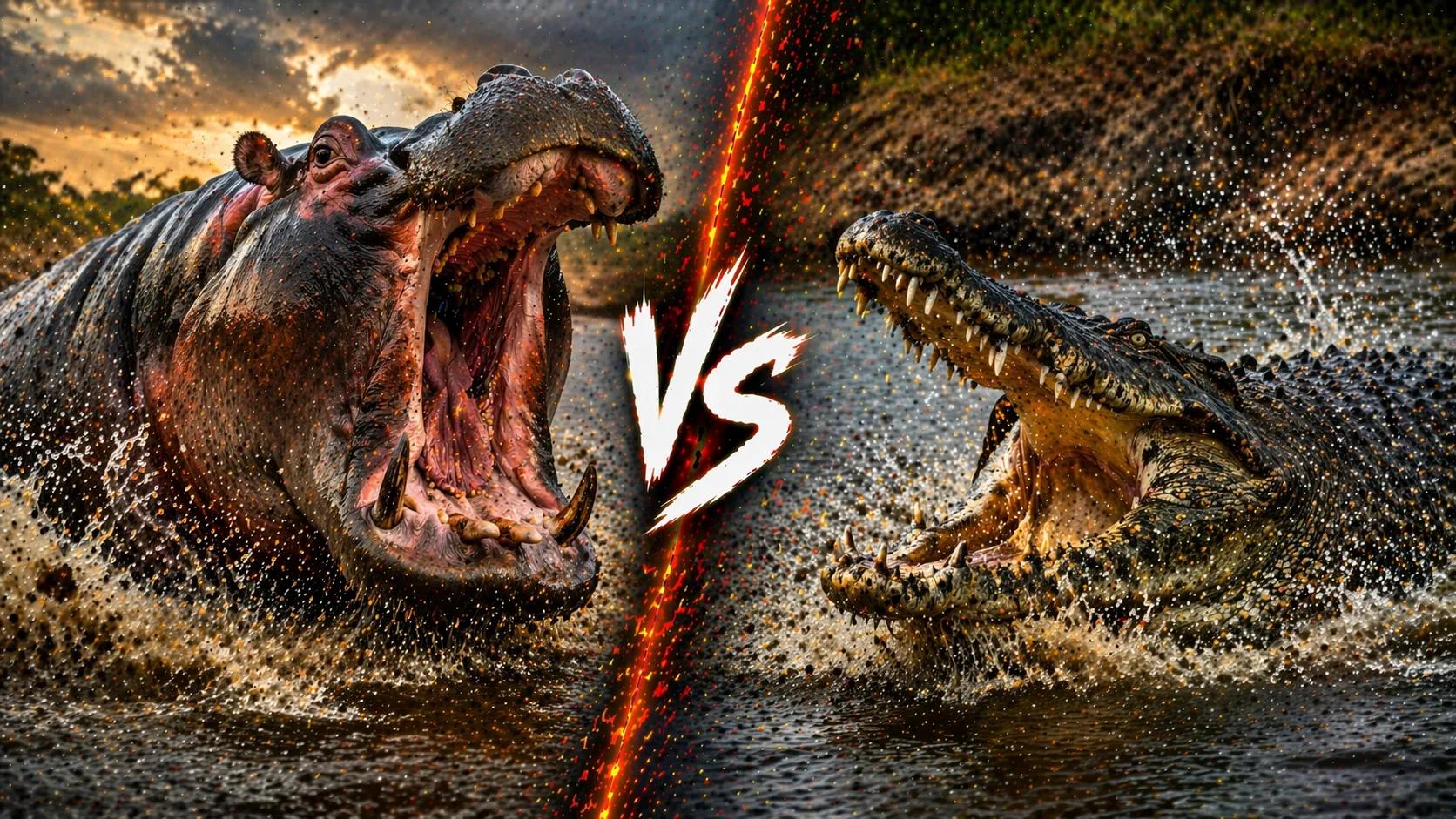
Hippopotamus vs Crocodile: Who Has the Edge at the Waterline?
Adult hippopotamus usually has the edge because it is massively larger and brutally powerful at close range. Crocodile remains dangerous through ambush, water control, and attacks on smaller or less secure targets.
Read comparison
King Cobra vs Black Mamba: Which Snake Has the Edge?
King cobra gets the slight overall edge because it is built to handle other snakes and can fight from a high controlled posture. Black mamba remains terrifying through speed, strike delivery, and lethal venom.
Read comparison
Orca vs Great White Shark: Who Has the Ocean Edge?
Orca usually has the edge. Size, intelligence, social coordination, and attack control make it the more complete apex system against a great white shark.
Read comparisonTier-list FAQ
Short direct answers to the follow-up questions readers usually ask after the headline ranking.
What is the most dangerous animal in the world in this ranking?
Crocodile gets the top spot here because stealth, crushing force, and real encounter danger combine unusually well.
Why is hippopotamus ranked so high if it is not a predator?
Because danger is about lethal encounter risk, not just hunting behavior.
Collect animals like these in AnimalDex
Move from headline lists into species guides, real sightings, and a collection built around the fastest, strongest, and smartest animals you care about.