

snakesfield notessafety
What to Record When You Find a Snake in the Wild
A field checklist for snake finds: distance and safety first, then the photo, the conditions, an honest identification and a location that is true.
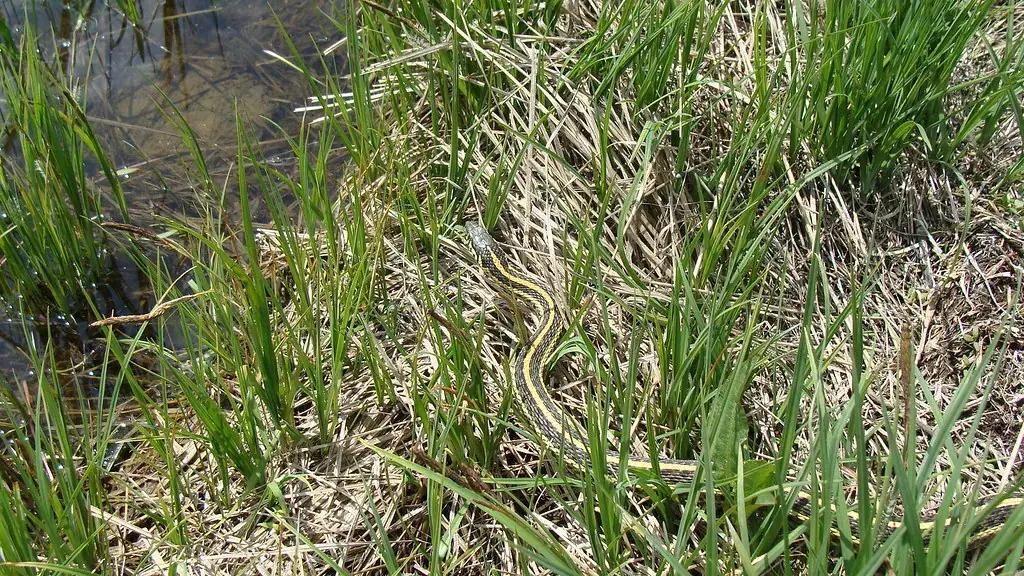
Safety before the notebook
Stop, and stay where you are. Most bites happen to people who approach, handle or try to move a snake, and a snake you have not identified is treated as venomous until a qualified person says otherwise. Two metres is a working minimum for anything under a metre long; more for large vipers, cobras and anything you cannot see the whole of. Leave the animal an escape route and do not stand between it and cover. Do not handle snakes because an app suggested a name; an identification on a phone screen is not a reason to pick anything up.
AnimalDex is educational. It is not a safety authority, and no identification tool replaces a regional guide and local advice on which species are dangerous where you are.
The sixty-second checklist
Everything below can be done from where you stopped, in about a minute, before the snake moves.
1. Photograph first
Several frames from your current distance, then a longer-lens or zoomed frame of the head. Do not approach for a better angle until you know what it is.
2. Time and temperature
Read the clock and the thermometer or forecast. Note sun or shade on the animal. These two numbers are the core of any snake record.
3. Where exactly it was
Substrate (rock, tarmac, leaf litter, under a board), microhabitat (south-facing bank, pond margin), and what it was doing: basking, crossing, hunting, in shed.
4. Length and condition
Estimate length against something in frame. Note cloudy eyes (about to shed), injuries, or a swollen midsection (recent meal).
5. Behaviour on your approach
Froze, fled, flattened its head, hissed, rattled or shook its tail, struck. All of this helps identification and tells the next person what to expect.
6. Leave
Back away the way you came. Do not follow it to cover, and do not lift the cover it went under.
The photo that supports an identification
One frame with the deciding feature beats twenty of the whole animal. For most lookalike pairs that feature is the head: pupil shape (vertical in vipers and many nocturnal snakes, round in most colubrids), a facial pit between eye and nostril on pit vipers, the pattern on the crown and neck, and the colour of the snout on banded species. A side-on head shot at a long focal length, taken from a safe distance, is usually enough. Then a frame of the whole body for pattern and a rough length, and a frame of the tail for a rattle or button.
Shoot with the lens you have, not by getting closer. A phone at 3x from two metres gives a usable head frame on anything over half a metre. If the snake is partly hidden, photograph what is visible and accept a genus-level record; that is better than the photo you would get by moving the vegetation.
Identify honestly, from a distance
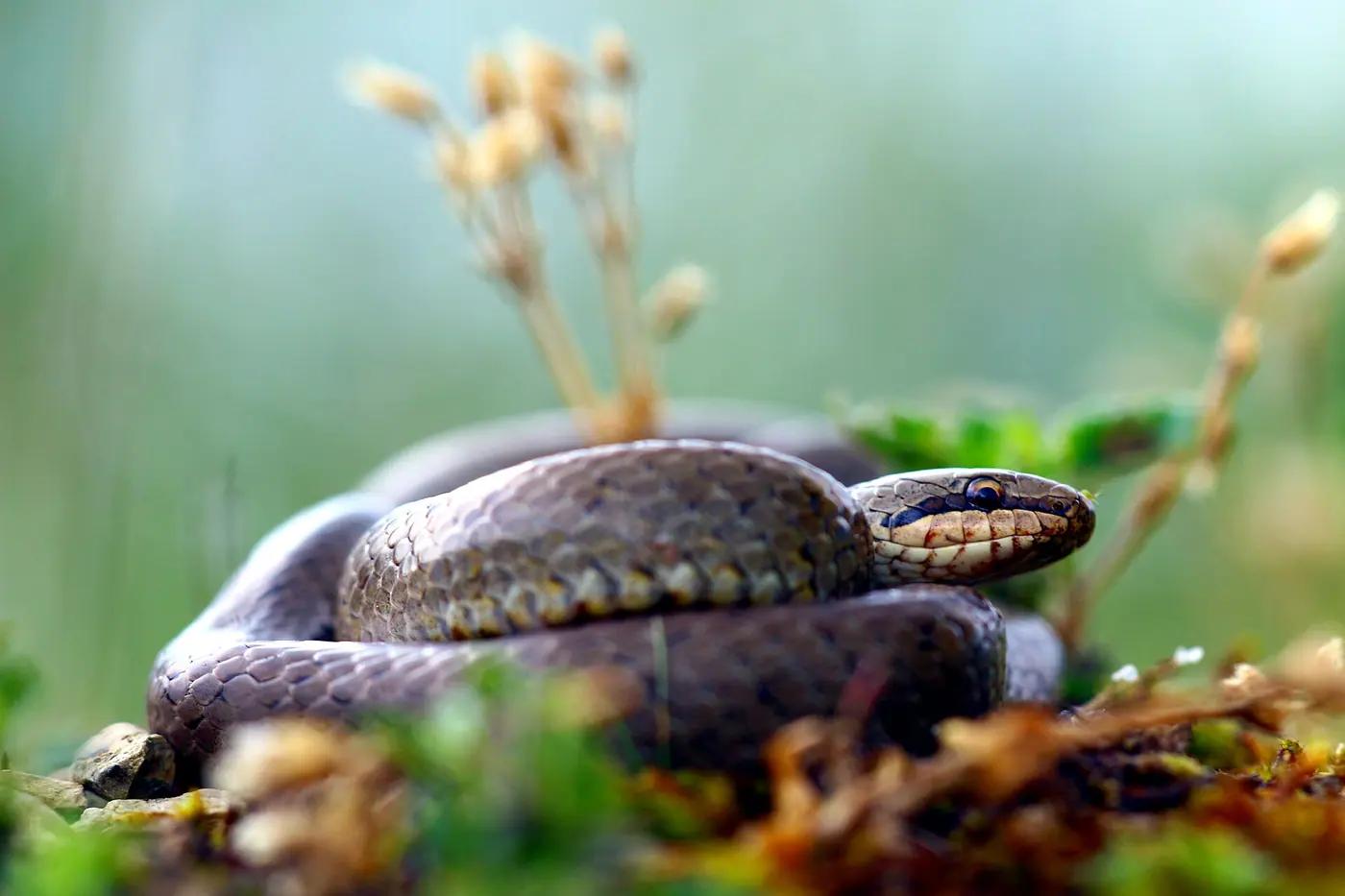
Write down the feature that decided the name, not just the name. “Round pupil, dark eye stripe, plain brown, no collar: smooth snake” is a record someone can check; “smooth snake” is an opinion. If the deciding feature is not in the photo, record the group and the features you did see. A plain brown snake that fled into bracken is “snake, plain brown, about 50 cm, round pupil not confirmed” and that is a complete and honest entry.
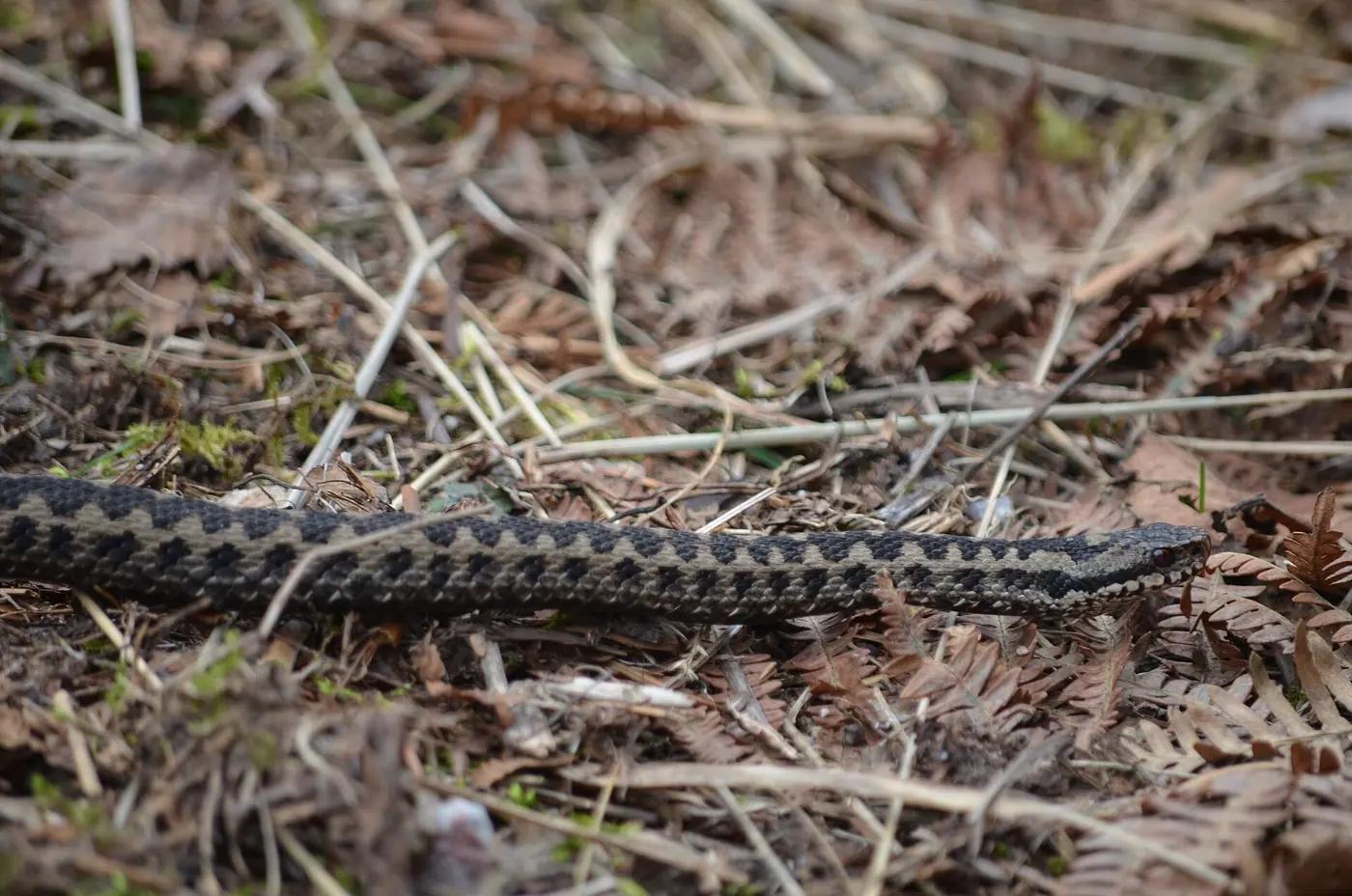
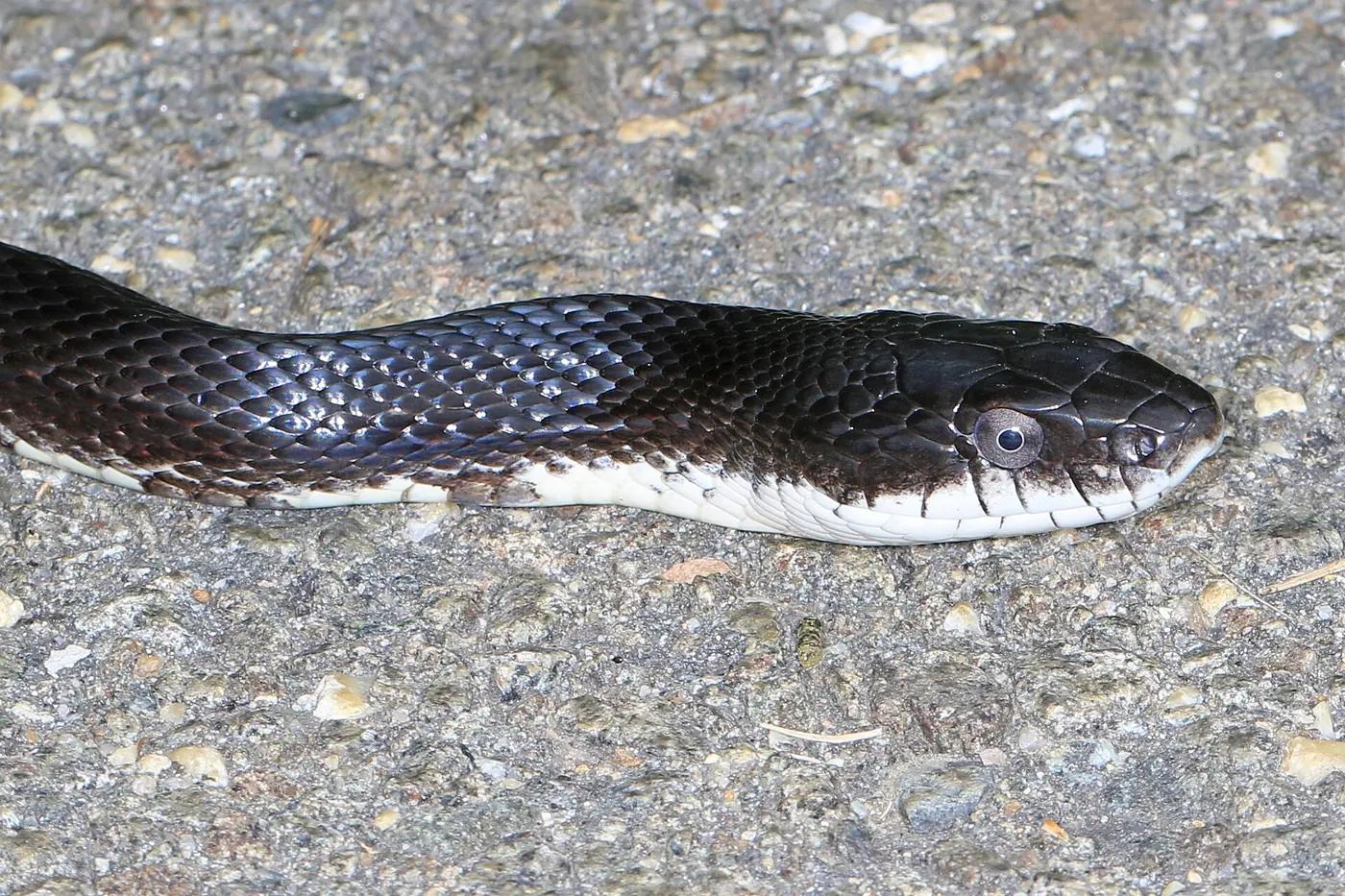
Lookalikes are where the danger is. Harmless snakes flatten their heads into a triangle when threatened, so head shape is unreliable; some vipers are black with no zigzag; juvenile rat snakes carry blotches that read as a different species. Check the regional guide and, where it is available, the community: a snake identification group with regional experts will correct a wrong call within hours. Bring the correction back into your own record.
Minimum useful record
A still or short clip, an honest identity or group, a historical place with a precision, whether the animal was wild, and the time and temperature. That is enough to keep the find in a Dex and enough for a recording scheme to use. Everything else in the checklist makes the record better; nothing else is required.
| Field | Minimum | Better |
|---|---|---|
| Evidence | One photo of the head or pattern | Head side-on, whole body, tail; a short clip of behaviour |
| Identity | Group plus the features seen | Species with the deciding feature written down |
| Place | Reserve or site name, with precision | Point location kept private; coarse place public |
| Setting | Wild | Wild, with how found: visual, road cruising, under cover |
| Conditions | Time and approximate temperature | Measured temperature, weather, recent rain, sun or shade |
| Animal | Rough length | Length, condition, life stage, behaviour on approach |
Location is a historical claim
The place in a snake record is where the animal was when you photographed it, at the precision you are sure of. A live capture made in the app records that at the time. For an older photo, reconstruct the place from the trip and a map and say how precise the reconstruction is; a candidate without a confirmed historical location stays out of an Instagram import rather than being pinned to today's GPS. Keep the precise site in your own journal and publish only the coarse place, because snakes are collected and killed when locations become known. The record is for you and for the scheme that maps the species; it is not a treasure map.
One frame with the deciding feature beats twenty of the whole animal.
Pertanyaan singkat
Jawaban ringkas untuk pertanyaan yang paling sering muncul pada topik ini.
- What should I do if I find a snake in the wild?
- Stop, stay at least two metres away, leave it an escape route and do not try to handle, move or follow it. Photograph it from where you are, note the time, temperature, substrate and behaviour, then back away the way you came. Treat any snake you have not identified as venomous until a qualified person says otherwise.
- How do I photograph a snake safely?
- Use the longest lens or zoom you have from a safe distance, at least two metres and more for large or venomous species, and never move vegetation or cover to get a cleaner frame. Aim for a side-on head shot showing the pupil and any facial pit, a whole-body frame for pattern, and the tail. Accept a genus-level record rather than approaching.
- Can an app identify a snake for me?
- An app can propose candidates and a Dex can keep an honest group-level identity, but no app is a safety authority and an identification on a screen is never a reason to handle a snake. Confirm with a regional guide or a snake identification group with local experts, and record the feature that decided the name.
- What information do snake recording schemes want?
- Species or group with your confidence, date and time, a location with its precision, whether the animal was alive or road-killed, and a photograph. Temperature, weather, substrate and behaviour make the record more valuable. Schemes such as HerpMapper and national recording programmes hide precise sites from the public while sharing them with researchers.
- Should I post where I found a snake?
- Post the coarse place only (region, county, reserve) and keep the exact site in your own journal. Snakes are collected for the pet trade and killed by people who learn where they are, and precise public locations have emptied known sites. Submit the exact record to a recording scheme that protects locations instead.
Hewan yang disebut
Lompat dari artikel ini ke halaman spesies di balik contoh, catatan systems, dan referensi field guide.
Panduan jawaban terkait topik ini
Kalau kamu ingin perbandingan langsung dan rekomendasi yang jelas, lanjutkan ke halaman jawaban berikut.
Best Animal Identification Apps
Compare the best animal identification apps by features like photo/video identification, species coverage, collection capabilities, offline use, and more.
What Is Animal Collecting
Learn what animal collecting means in modern apps and how AnimalDex turns real-world sightings into cards, sets, rarity, and species learning.
Pokemon-Like Animal App
Looking for a Pokemon-like animal app with real species? AnimalDex combines creature-collection energy with AI scanning and wildlife learning.
Panduan terkait
herping
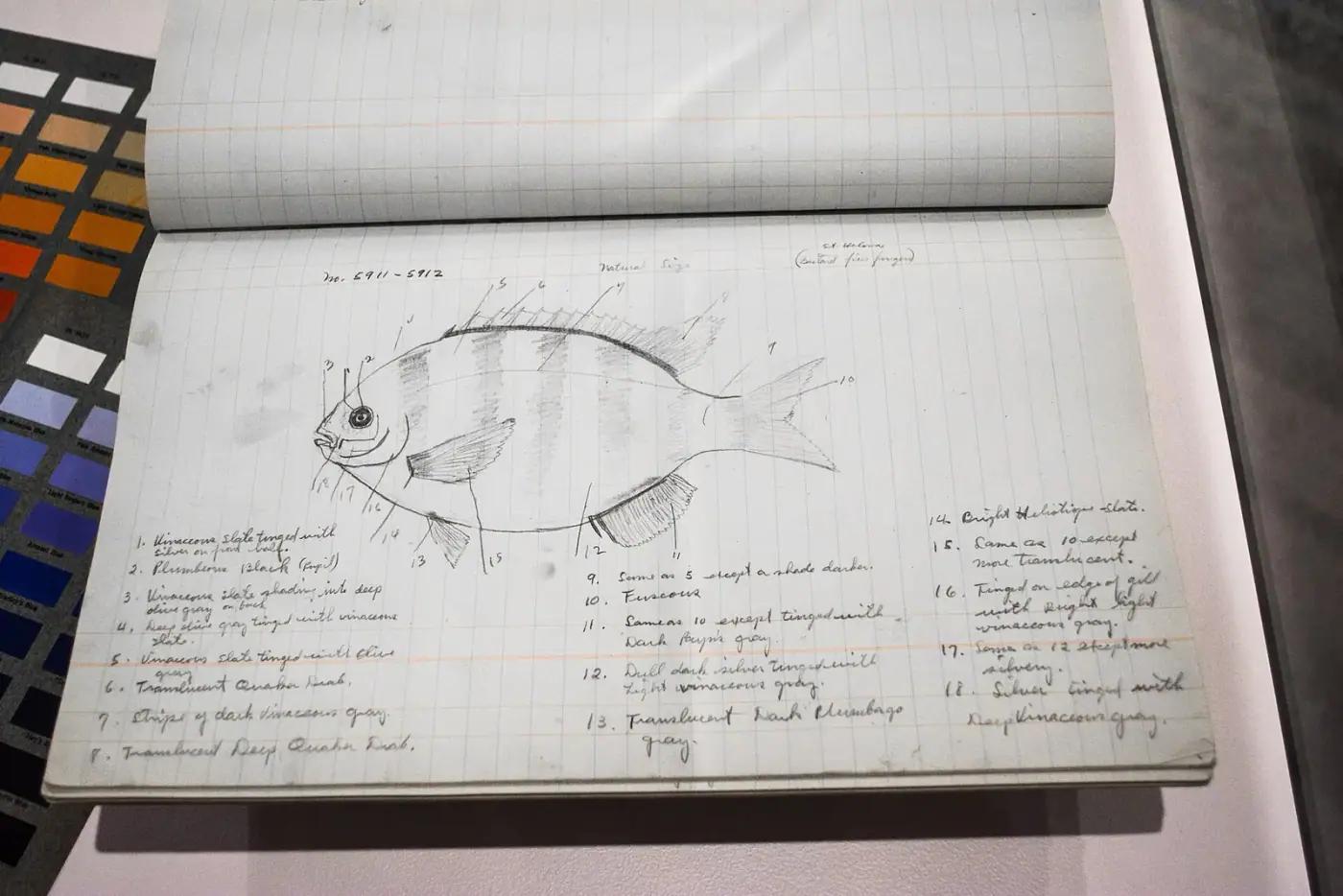
How to Keep a Herping Field Journal
What to record after a snake, lizard or frog find: temperature, time, substrate, behaviour and an honest ID, without handling or disturbing the animal.
5 menit baca

Herping Photography Without Disturbing Wildlife
How to photograph snakes, frogs and lizards without handling, flipping or baiting: working distance, light, venomous-species safety and what to log.
6 menit baca

How to Build a Reptile and Amphibian Life List
A herp life list that allows group-level entries, records historical places and conditions, and brings older Instagram finds in after review.
4 menit baca