

Animals in Cambodia: What You Can Spot, Learn, and Collect
Cambodia wildlife guide: giant ibis in the northern plains, Tonle Sap's stork colonies at Prek Toal, Irrawaddy dolphins at Kratie, Angkor macaques, Mondulkiri elephants.
Jawaban cepat
Mulai dari jawaban langsung, lalu gunakan bagian di bawah untuk melihat kenapa lokasi ini penting dan hewan mana yang benar-benar realistis untuk di-spot di sana.
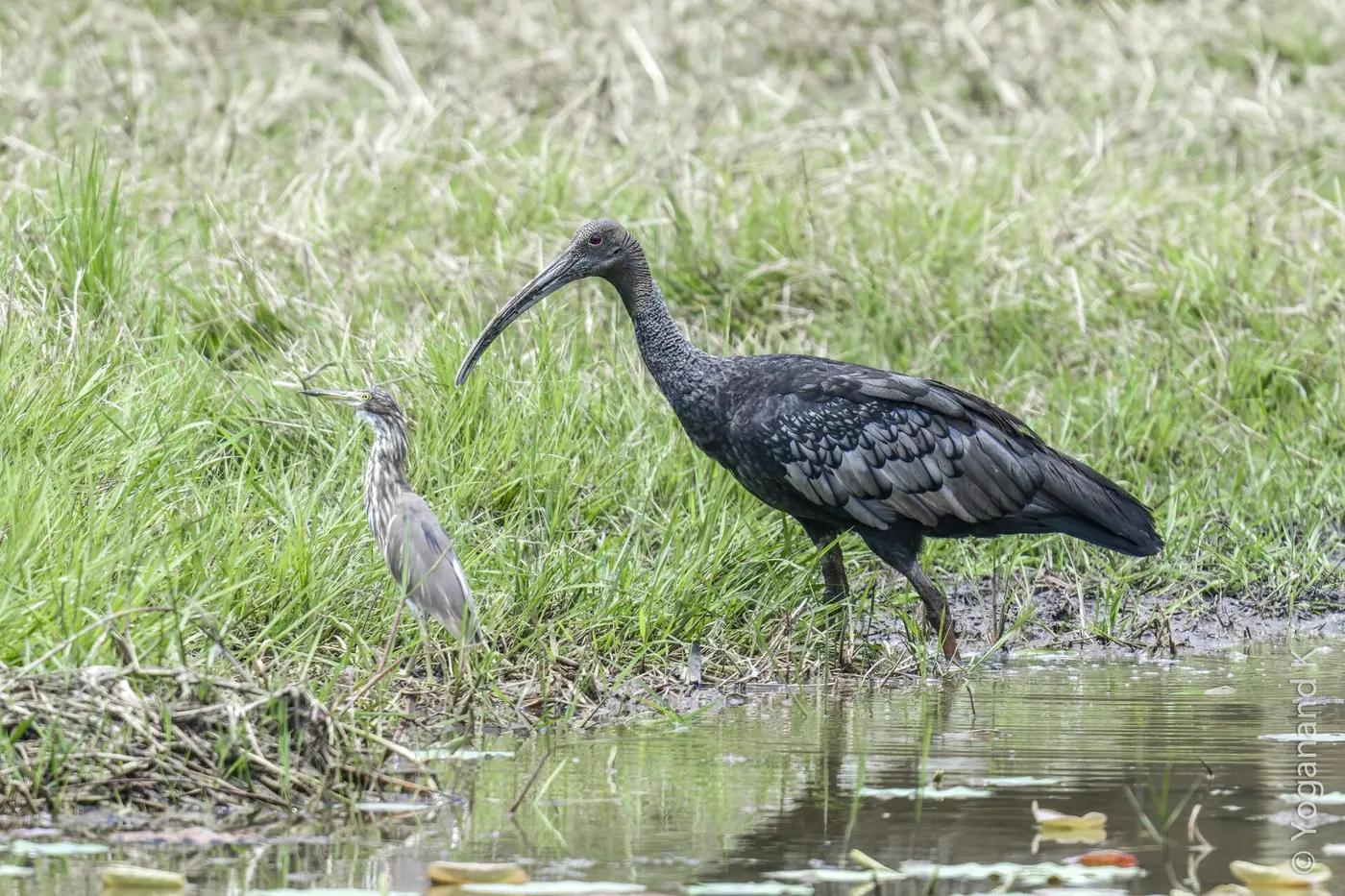
Cambodia is Southeast Asia's great waterbird country and its last refuge for several huge, odd birds: the giant ibis, the greater adjutant and the sarus crane all hang on in the northern plains and the Tonle Sap floodplain. Prek Toal on the lake has Asia's largest stork and pelican colonies, Kratie has the Mekong's Irrawaddy dolphins, Angkor's temples have macaques in the ruins, Mondulkiri has elephant sanctuaries and the Cardamom mountains hold Siamese crocodiles and fishing cats.
The Tonle Sap is the engine of Cambodian wildlife. The lake swells five times each monsoon and shrinks back, and that pulse feeds the fish, the birds and the people. Prek Toal, a flooded forest on its northwest shore, holds the biggest breeding colonies of storks, pelicans and ibises left in Southeast Asia.
North of the lake, the dry deciduous forests of Preah Vihear and the Kulen Promtep sanctuary are where the giant ibis survives, found by the village guides of Tmatboey. Add the Mekong's dolphins at Kratie, the macaques and bats of Angkor and the Cardamoms' rediscovered fishing cats, and Cambodia is a far better wildlife destination than most visitors realise.
Kenapa lokasi ini penting
Halaman lokasi yang baik menjelaskan kenapa tempat ini layak dikunjungi, bukan hanya nama-nama yang cocok dimasukkan ke checklist destinasi.
The giant ibis is Cambodia's national bird and has perhaps 200 individuals left, nearly all here. The Tmatboey ecotourism model, where village guides are paid when visitors see the bird, is one of the clearest success stories in Asian conservation.
Cambodia's Irrawaddy dolphins number fewer than 100 in the Mekong, and Phnom Tamao outside Phnom Penh holds thousands of animals seized from the wildlife trade. Seeing both shows what the country is fighting for and against.
Tempat mencari
Peta satwa liar Cambodia
Panduan ini mencakup wilayah di bawah ini. Perbesar peta untuk mengenali areanya sebelum merencanakan perjalanan.
Posisi diambil dari OpenStreetMap. Akses habitat dan jam buka bisa berubah — periksa dulu sebelum berangkat.
Hewan untuk di-spot
Pilihan spesies di sini sengaja dibuat praktis, menyeimbangkan aksesibilitas, excitement, dan apa yang realistis untuk diperhatikan traveler di lokasi tersebut.
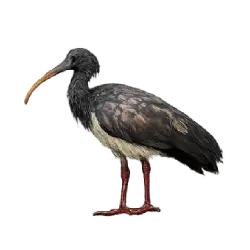
Giant IbisB
Cambodia's national bird, with most of the world's remaining 200 birds in the dry forests of Kulen Promtep, found with Tmatboey's village guides at forest pools before dawn.
Catatan spotting: Reliable at Tmatboey with guides between December and April; the only other birds are a handful in southern Laos.
Baca panduan spesies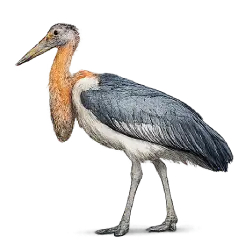
Greater AdjutantB
The huge bald-headed stork breeds at Prek Toal on the Tonle Sap, one of only a handful of breeding populations left in the world.
Catatan spotting: Regular at Prek Toal from December to March.
Baca panduan spesies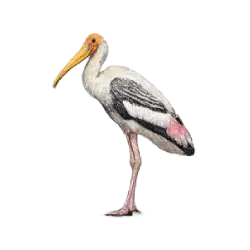
Painted StorkC
Thousands nest in the flooded forest at Prek Toal, pink-and-white against the drowned trees, the colony's most numerous large bird.
Catatan spotting: Abundant at Prek Toal in the dry season.
Baca panduan spesies
Lesser Adjutant StorkB
Breeds at Prek Toal alongside the greater adjutant and feeds across the Tonle Sap's receding floodplain.
Catatan spotting: Common on the lake in the dry season.
Baca panduan spesies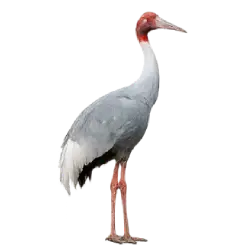
Sarus CraneB
Southeast Asia's largest crane population winters at Ang Trapeang Thmor reservoir near Siem Reap and in the Mekong delta's Boeung Prek Lapouv.
Catatan spotting: Reliable at Ang Trapeang Thmor from January to April.
Baca panduan spesies
DolphinB
Irrawaddy dolphins live in the deep Mekong pools at Kampi near Kratie, where boats go out morning and evening, with fewer than 100 left in the river.
Catatan spotting: Regular at Kampi; sightings are of rolling backs and blows, not leaps.
Baca panduan spesies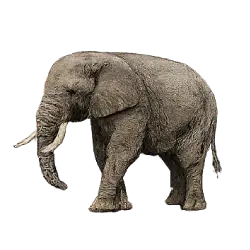
Asian ElephantA
Mondulkiri's Elephant Valley Project and Mondulkiri Project let retired working elephants roam forest while visitors walk with them, and wild herds persist in Keo Seima and the Cardamoms.
Catatan spotting: Guaranteed at the Mondulkiri sanctuaries; wild sightings are rare.
Baca panduan spesies
BantengA
Cambodia's eastern plains hold the world's largest remaining banteng population, grazing the dry forest of Srepok and Phnom Prich wildlife sanctuaries.
Catatan spotting: Regular on dawn drives at Srepok's safari camp in the dry season.
Baca panduan spesies
Long-tailed MacaqueC
Troops roam the Angkor Thom causeway and Bayon ruins, picking through offerings and tourists' bags.
Catatan spotting: Guaranteed at Angkor.
Baca panduan spesies
Northern Pig-tailed MacaqueC
Stockier macaques forage in the forest around Ta Prohm and Angkor's less-visited temples, alongside the long-tails.
Catatan spotting: Regular in Angkor's forest at the quieter temples.
Baca panduan spesies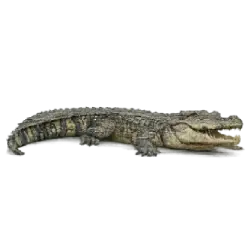
Siamese CrocodileA
The Cardamom mountains hold the largest wild population of this critically endangered crocodile, and Fauna & Flora's breeding programme releases young into the Areng valley.
Catatan spotting: Rare in the wild; Phnom Tamao's rescue centre has them for certain.
Baca panduan spesies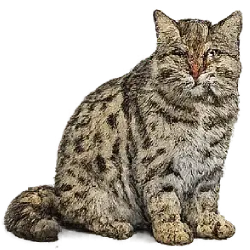
Fishing CatB
Rediscovered in the Peam Krasop mangroves near Koh Kong in 2015, where camera traps now record a small population hunting the tidal creeks.
Catatan spotting: Very rare; mangrove night boat trips from Koh Kong give a slim chance.
Baca panduan spesies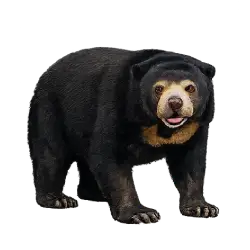
Sun BearB
The Free the Bears sanctuary at Phnom Tamao Wildlife Rescue Centre outside Phnom Penh holds the world's largest group of rescued sun bears.
Catatan spotting: Guaranteed at Phnom Tamao.
Baca panduan spesies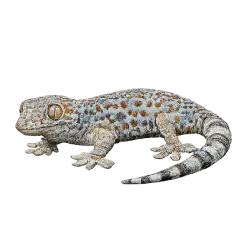
Tokay GeckoD
The tokay barks from Angkor's temple walls and every guesthouse roof in Siem Reap after dark.
Catatan spotting: Heard nightly; found with a torch.
Baca panduan spesiesPaling cocok untuk
Gunakan bagian ini untuk menilai apakah lokasi tersebut cocok dengan gaya perjalanan, level pengalaman, dan target AnimalDex kamu.
- Birders: giant ibis, adjutants, cranes and the Prek Toal colonies in one trip
- Angkor visitors adding macaques, bats and the Tonle Sap's birds to the temples
- Ethical elephant walking at the Mondulkiri sanctuaries
- Mekong travelers seeing Irrawaddy dolphins at Kratie
Tips spotting
Tips ini dibuat agar halaman ini benar-benar berguna di lapangan, bukan hanya enak dibaca di layar.
- 01Book Tmatboey through the Sam Veasna Conservation Tours office in Siem Reap; the village guides stake out the ibis roost pools and you leave before 5 am.
- 02Prek Toal is a half-day boat trip from Siem Reap in the dry season (December to March); go with a Sam Veasna or Osmose guide who can enter the core colony area.
- 03At Kratie, take the Kampi dolphin boat in the last two hours of light when the river is calm and the dolphins surface close to the boats.
- 04Visit Angkor's quieter temples (Ta Nei, Preah Khan) at dawn for pig-tailed macaques, hornbills and the fruit bats leaving the big trees.
Wildlife Guides virtual
Panduan satwa liar ke Cambodia
AnimalDex membuat panduan virtual dari penampakan satwa liar milik para penjelajah sendiri: satwa apa yang mereka temukan, seberapa langka, dan kapan. Panduan adalah saran dari orang yang pernah ke sana, bukan tur. Membelinya membuka catatan penulis untuk setiap satwa, obrolan dengan penulis, dan perkenalan dengan warga lokal yang mereka temui. Penampakan satwa tidak pernah dijamin.
Memeriksa panduan virtual ke Cambodia...
Cara memilih pemandu satwa liar lokal di Cambodia
- Tanyakan apa yang biasanya mereka temukan pada musim kunjunganmu. Pemandu yang baik memberi jawaban jujur, bukan janji pasti melihat satwa tertentu.
- Perhatikan cara mereka memperlakukan satwa: tanpa umpan, tanpa memanggil satwa, tanpa memegang, dan tanpa flash dari jarak dekat demi foto.
- Pastikan titik temu, durasi, ukuran grup, total harga, dan cara pembayaran sebelum hari kegiatan, termasuk izin atau biaya taman yang diperlukan.
Lacak hewan yang kamu temukan di Cambodia
Bangun koleksimu sambil menjelajahi Cambodia, dari spesies yang mudah ditemukan sampai target yang layak direncanakan khusus.
Tier list terkait
Tier list ini memberi konteks yang lebih luas untuk spesies yang membuat lokasi ini menarik.
Rarest Animals in the World
A structured ranking of the rarest animals in the world, blending scarcity, vulnerability, and conservation pressure to answer the overlap between rarest and most endangered wildlife.
Baca tier listBiggest Animals in the World
A structured ranking of the biggest animals in the world, using the AnimalDex size stat to compare body scale across sea, land, and air.
Baca tier listLokasi terkait
Lanjutkan eksplorasi dengan destinasi yang mirip atau berdekatan dan mendukung gaya discovery AnimalDex yang sama.
Animals in Vietnam: What You Can Spot, Learn, and Collect
Vietnam wildlife guide: red-shanked doucs at Son Tra, langurs and lorises at Cuc Phuong, gaur and crocodiles in Cat Tien, sarus cranes at Tram Chim, geckos everywhere.
Baca panduan lokasiAnimals in Laos: What You Can Spot, Learn, and Collect
Laos wildlife guide: elephants at Sayaboury, Irrawaddy dolphins at Si Phan Don, rescued bears at Kuang Si, gibbons in Bokeo, doucs in the Annamites, Mekong giant fish.
Baca panduan lokasiAnimals in Thailand: What You Can Spot, Learn, and Collect
A practical Thailand wildlife guide built around forests, coasts, reptiles, and the travel-friendly species that make the country feel biologically rewarding without extreme logistics.
Baca panduan lokasiFAQ lokasi
Jawaban singkat dan langsung untuk pertanyaan yang biasanya ditanyakan traveler sebelum memilih destinasi satwa liar atau hari kebun binatang.
What wildlife is there in Cambodia?
Giant ibis, greater and lesser adjutants, painted storks, pelicans and sarus cranes in the northern plains and on the Tonle Sap; Irrawaddy dolphins at Kratie; elephants and banteng in the eastern plains; Siamese crocodiles and fishing cats in the Cardamoms and coastal mangroves; and macaques, bats and tokays at Angkor.
What animals can be found in Cambodia?
Around 130 mammals including elephant, banteng, gaur, leopard, dhole, sun bear, gibbons and silvered langurs, over 500 birds including some of the world's rarest waterbirds, and reptiles from Siamese crocodiles to pythons. Everyday species are macaques, geckos, mynas, egrets and paddy insects.
Where is the best birdwatching in Cambodia?
Prek Toal on the Tonle Sap for the stork and pelican colonies, Tmatboey for giant and white-shouldered ibis, and Ang Trapeang Thmor for sarus cranes, all within a few hours of Siem Reap and best from December to March.
Can you see dolphins in Cambodia?
Yes, at Kampi near Kratie on the Mekong, where small boats visit the deep pool the Irrawaddy dolphins use. Fewer than 100 remain in the river, so the trip is a privilege; morning and late afternoon are best.
Bagaimana cara menemukan panduan satwa liar ke Cambodia?
Lihat bagian Wildlife Guides di halaman ini atau jelajahi Wildlife Guides di AnimalDex. Setiap panduan adalah panduan virtual yang dibuat dari penampakan satwa liar milik seorang penjelajah di sekitar Cambodia: satwa yang mereka temukan, seberapa langka, dan kapan. Ini saran dari orang yang pernah ke sana, bukan tur. Jika kamu ingin ditemani seseorang di lokasi, bandingkan pemandu lokal dari pengetahuan satwanya, cara mereka memperlakukan satwa, dan kejelasan harganya sebelum berangkat.