

Animals in North Carolina: What You Can Spot, Learn, and Collect
North Carolina wildlife from the Outer Banks to the Smokies: red wolves at Alligator River, black bears, brown pelicans, green anoles and the fireflies and spiders of Charlotte's nature preserves.
Jawaban cepat
Mulai dari jawaban langsung, lalu gunakan bagian di bawah untuk melihat kenapa lokasi ini penting dan hewan mana yang benar-benar realistis untuk di-spot di sana.
North Carolina runs from Atlantic barrier islands to the Great Smoky Mountains, so its animals range from brown pelicans and loggerhead turtles to black bears and elk. The coastal plain around Alligator River holds the world's only wild red wolves plus the densest black bears in the east, while the Charlotte preserves give easy green anoles, rat snakes, fireflies and a long list of insects.
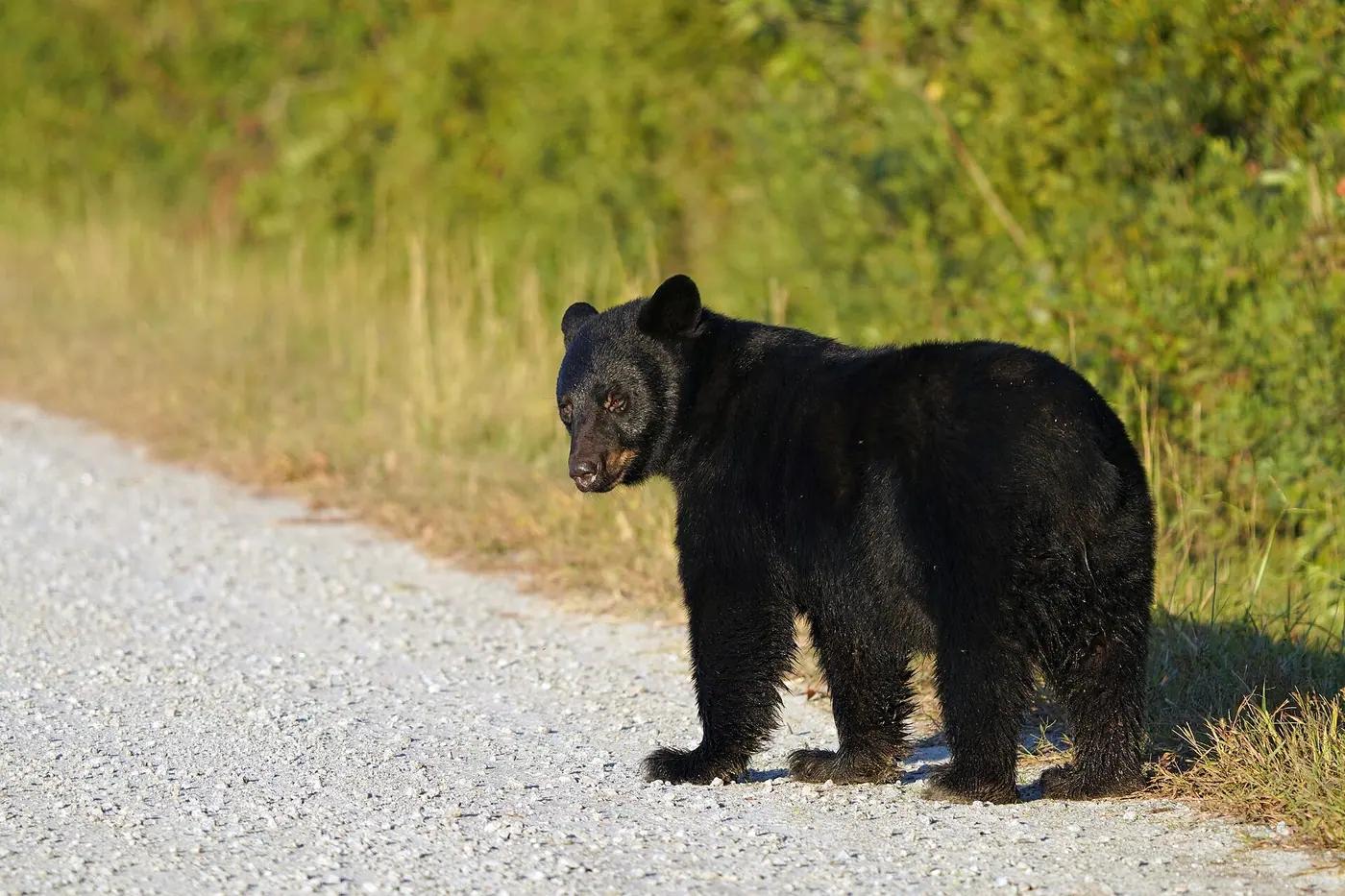
The Albemarle-Pamlico peninsula is the wild heart of the state. Alligator River and Pocosin Lakes national wildlife refuges hold red wolves, bears the size of small cars, and alligators at the northern edge of their range.
Inland, Charlotte's Mecklenburg County preserves are where AnimalDex users log most of their North Carolina captures: Reedy Creek Nature Preserve, the West Branch Nature Preserve and the greenways around Concord deliver anoles, phoebes, mockingbirds, wheel bugs and summer fireflies without a long drive.
Kenapa lokasi ini penting
Halaman lokasi yang baik menjelaskan kenapa tempat ini layak dikunjungi, bukan hanya nama-nama yang cocok dimasukkan ke checklist destinasi.
Red wolves were declared extinct in the wild in 1980 and reintroduced here in 1987. Fewer than 30 roam the Alligator River peninsula, which makes any sighting a genuine conservation moment.
The state is also an easy place to build a wide collection: suburban Piedmont woodland gives reptiles and insects, the Blue Ridge adds salamanders and elk, and the coast adds pelicans, dolphins and nesting sea turtles within a single long weekend.
Tempat mencari
Peta satwa liar North Carolina
Panduan ini mencakup wilayah di bawah ini. Perbesar peta untuk mengenali areanya sebelum merencanakan perjalanan.
Posisi diambil dari OpenStreetMap. Akses habitat dan jam buka bisa berubah — periksa dulu sebelum berangkat. Pin yang lebih kecil adalah capture publik AnimalDex, ditempatkan sampai kilometer terdekat.
Bukti lapangan
Ditemukan di North Carolina oleh pengguna AnimalDex
Capture nyata yang dicatat di aplikasi AnimalDex di dalam area ini dan dibagikan secara publik oleh kolektornya, dengan hewan yang dikonfirmasi oleh identifikasi aplikasi. Lokasi ditampilkan sampai tingkat wilayah, bukan titik persisnya.
- 57
- capture publik
- 47
- spesies tercatat
- 4
- kolektor
- 38
- penampakan liar
Capture terbaru dari lapangan
Spesies yang benar-benar dicatat orang di sini
Setiap nama menuju panduan spesiesnya. Angkanya adalah jumlah capture publik hewan itu di dalam area ini.
- Black Ant3 capture
- Black and Yellow Mud Dauber2 capture
- Carolina Wolf Spider2 capture
- Cobweb Spider2 capture
- Crane Fly2 capture
- Harvestman2 capture
- Mosquito2 capture
- Northern Mockingbird2 capture
- Snail2 capture
- Amber Snail1 capture
- American Robin1 capture
- Bald-faced Hornet1 capture
- Bumblebee1 capture
- Canada Goose1 capture
- Click Beetle1 capture
- Cockroach1 capture
- Common Eastern Firefly1 capture
- Common House Spider1 capture
- Common Pill Woodlouse1 capture
- Daddy Long-Legs Spider1 capture
- Eastern Phoebe1 capture
- Eastern Rat Snake1 capture
- Flamed Tigersnail1 capture
- Giant Honey Bee1 capture
- Golden Tortoise Beetle1 capture
- Green Anole1 capture
- Green June Beetle1 capture
- Greenbottle Blow Fly1 capture
- Hackberry Emperor1 capture
- House Finch1 capture
- House Fly1 capture
- House Wren1 capture
- Hoverfly1 capture
- Io Moth1 capture
- Jumping Spider1 capture
- June Beetle1 capture
- Leopard Slug1 capture
- Orb-weaver Spider1 capture
- Owlet Moth1 capture
- Paper Wasp1 capture
Kolektor memilih membagikan capture ini di Discover dan bisa menariknya kapan saja. Koordinat dibulatkan sekitar satu kilometer dan diperbarui setiap build situs.
Hewan untuk di-spot
Pilihan spesies di sini sengaja dibuat praktis, menyeimbangkan aksesibilitas, excitement, dan apa yang realistis untuk diperhatikan traveler di lokasi tersebut.
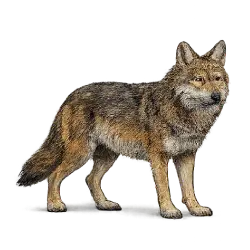
Red WolfA
The only wild population on earth lives in Alligator River National Wildlife Refuge near Manteo, where the refuge runs guided howling evenings in summer.
Catatan spotting: Rare; a dusk drive along Milltail Road gives a slim chance, the howling programmes are more reliable.
Baca panduan spesies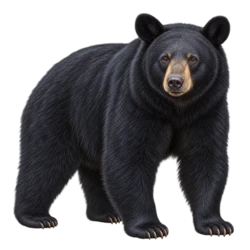
American Black BearB
The coastal pocosins of Alligator River and Pocosin Lakes grow some of the largest black bears in North America, and they feed openly in the refuge farm fields.
Catatan spotting: Very likely at dusk on the Alligator River wildlife drive May to October.
Baca panduan spesies
White-tailed DeerC
Abundant everywhere from Outer Banks dunes to Charlotte golf courses, and the easiest large mammal in the state.
Catatan spotting: Guaranteed at dawn or dusk in any Piedmont greenway.
Baca panduan spesies
American AlligatorB
North Carolina marks the northern limit of alligators, with reliable animals in the canals of Alligator River refuge and the Cape Fear lowlands near Wilmington.
Catatan spotting: Likely on warm days from April to October along the refuge canals.
Baca panduan spesies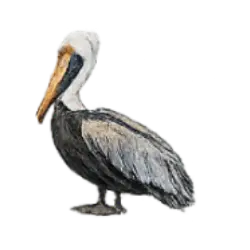
Brown PelicanC
Glides in lines along the Outer Banks surf and nests on dredge islands in Pamlico Sound; Oregon Inlet and the Hatteras ferry give close views.
Catatan spotting: Common along the entire coast, most numerous in summer.
Baca panduan spesies
Green AnoleE
The little colour-changing lizard of porch rails, fences and Charlotte garden shrubs, turning brown in the shade and bright green in the sun.
Catatan spotting: Common in the Piedmont and coastal plain from April to October.
Baca panduan spesies
Eastern Rat SnakeD
A long black snake that climbs trees and barn beams after rodents and birds' eggs across the Piedmont, including the Charlotte preserves.
Catatan spotting: Regular in summer; harmless and worth photographing from a respectful distance.
Baca panduan spesies Eastern Gray SquirrelD
The state mammal, and the most-logged North Carolina animal in AnimalDex, from Reedy Creek to university campuses in Raleigh.
Catatan spotting: Guaranteed in any park with oaks.
Baca panduan spesies
Northern MockingbirdD
Sings from Charlotte rooftops and fence posts, stringing together stolen phrases from cardinals, car alarms and phoebes.
Catatan spotting: Abundant in towns and farmland year-round.
Baca panduan spesies
Eastern PhoebeD
A tail-pumping flycatcher that nests under bridges and porch eaves at Reedy Creek and other Mecklenburg preserves.
Catatan spotting: Common near water and buildings from March to October.
Baca panduan spesies
Common Eastern FireflyE
Lights up Piedmont lawns and woodland edges in June, and a different species, the synchronous firefly, draws a ticket-lottery crowd to Grandfather Mountain each June.
Catatan spotting: Near-guaranteed on warm June evenings away from streetlights.
Baca panduan spesies
Io MothE
A yellow moth with huge eyespots that turns up at Charlotte porch lights; its spiny green caterpillar stings, so look but do not touch.
Catatan spotting: Uncommon; check lights in May and June.
Baca panduan spesies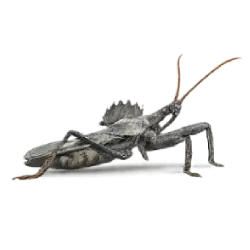
Wheel BugE
A large assassin bug with a cogwheel crest, stalking caterpillars on Piedmont shrubs; one of the more surprising captures logged around Charlotte.
Catatan spotting: Uncommon in late summer; its bite is painful, so photograph it on the plant.
Baca panduan spesies
Bald-faced HornetE
Builds grey paper footballs in Piedmont trees and visits garden flowers; a frequent North Carolina capture in late summer.
Catatan spotting: Common from July to October; give the nest space.
Baca panduan spesiesPaling cocok untuk
Gunakan bagian ini untuk menilai apakah lokasi tersebut cocok dengan gaya perjalanan, level pengalaman, dan target AnimalDex kamu.
- Red wolf and black bear evenings at Alligator River
- Outer Banks seabirds, pelicans and summer sea turtles
- Easy suburban reptiles and insects in Charlotte's nature preserves
- Synchronous fireflies at Grandfather Mountain and salamanders in the Smokies
Tips spotting
Tips ini dibuat agar halaman ini benar-benar berguna di lapangan, bukan hanya enak dibaca di layar.
- 01Drive the Alligator River refuge roads (Milltail and Buffalo City) in the last hour before sunset from May to October for bears, and book the summer red wolf howling evening in advance.
- 02At Reedy Creek and West Branch, walk the creek edges on a hot afternoon for anoles and rat snakes, then come back at dusk in June for fireflies.
- 03On the Outer Banks, Pea Island refuge's north pond and the Oregon Inlet catwalk give the closest pelicans, terns and wading birds.
- 04Summer insects are the easiest way to fill a North Carolina collection: leave a porch light on and photograph what arrives, but do not handle io moth caterpillars or wheel bugs.
Wildlife Guides virtual
Panduan satwa liar ke North Carolina
AnimalDex membuat panduan virtual dari penampakan satwa liar milik para penjelajah sendiri: satwa apa yang mereka temukan, seberapa langka, dan kapan. Panduan adalah saran dari orang yang pernah ke sana, bukan tur. Membelinya membuka catatan penulis untuk setiap satwa, obrolan dengan penulis, dan perkenalan dengan warga lokal yang mereka temui. Penampakan satwa tidak pernah dijamin.
Memeriksa panduan virtual ke North Carolina...
Cara memilih pemandu satwa liar lokal di North Carolina
- Tanyakan apa yang biasanya mereka temukan pada musim kunjunganmu. Pemandu yang baik memberi jawaban jujur, bukan janji pasti melihat satwa tertentu.
- Perhatikan cara mereka memperlakukan satwa: tanpa umpan, tanpa memanggil satwa, tanpa memegang, dan tanpa flash dari jarak dekat demi foto.
- Pastikan titik temu, durasi, ukuran grup, total harga, dan cara pembayaran sebelum hari kegiatan, termasuk izin atau biaya taman yang diperlukan.
Lacak hewan yang kamu temukan di North Carolina
Bangun koleksimu sambil menjelajahi North Carolina, dari spesies yang mudah ditemukan sampai target yang layak direncanakan khusus.
Tier list terkait
Tier list ini memberi konteks yang lebih luas untuk spesies yang membuat lokasi ini menarik.
Rarest Animals in the World
A structured ranking of the rarest animals in the world, blending scarcity, vulnerability, and conservation pressure to answer the overlap between rarest and most endangered wildlife.
Baca tier listLokasi terkait
Lanjutkan eksplorasi dengan destinasi yang mirip atau berdekatan dan mendukung gaya discovery AnimalDex yang sama.
Animals in the United States: What You Can Spot, Learn, and Collect
A practical United States wildlife guide built around habitat variety, from wetlands and coastlines to migration corridors and iconic American species.
Baca panduan lokasiAnimals in Georgia (USA): What You Can Spot, Learn, and Collect
Georgia wildlife guide: Okefenokee alligators and sandhill cranes, Cumberland Island's loggerhead turtles and wild horses, gopher tortoises, Atlanta's backyard birds and the Georgia Aquarium's whale sharks.
Baca panduan lokasiAnimals in Florida: What You Can Spot, Learn, and Collect
Florida wildlife guide: Everglades alligators and crocodiles, manatees at Crystal River and Blue Spring, roseate spoonbills, Kissimmee eagles, nesting sea turtles and the anoles on every fence.
Baca panduan lokasiFAQ lokasi
Jawaban singkat dan langsung untuk pertanyaan yang biasanya ditanyakan traveler sebelum memilih destinasi satwa liar atau hari kebun binatang.
What wildlife is there in North Carolina?
Black bears, white-tailed deer, the reintroduced red wolf, elk in the Cataloochee valley of the Smokies, alligators in the coastal plain, brown pelicans and loggerhead turtles on the Outer Banks, and a huge list of reptiles, salamanders and insects in the Piedmont.
What animals can be found in North Carolina's Charlotte area?
Reedy Creek, West Branch and the Mecklenburg greenways give white-tailed deer, gray squirrels, green anoles, eastern rat snakes, phoebes, mockingbirds, and summer fireflies, wheel bugs and hornets. Coyotes and barred owls are present but need dusk.
Can you see red wolves in North Carolina?
Yes, but only in and around Alligator River National Wildlife Refuge near Manteo, and only with luck. Fewer than 30 wild red wolves survive; summer howling programmes run by the refuge are the most dependable way to experience them.
Are there alligators in North Carolina?
Yes. The state is the northern edge of the species' range. Alligator River refuge, Lake Waccamaw and the Wilmington area have resident animals, active mainly from April to October.
Apakah pengguna AnimalDex pernah menemukan hewan di North Carolina?
Ya. Pengguna AnimalDex telah mencatat 57 capture publik dari 47 spesies berbeda di North Carolina, termasuk black ant, black and yellow mud dauber, carolina wolf spider, cobweb spider. Semuanya difoto di aplikasi pada saat penampakan.
Bagaimana cara menemukan panduan satwa liar ke North Carolina?
Lihat bagian Wildlife Guides di halaman ini atau jelajahi Wildlife Guides di AnimalDex. Setiap panduan adalah panduan virtual yang dibuat dari penampakan satwa liar milik seorang penjelajah di sekitar North Carolina: satwa yang mereka temukan, seberapa langka, dan kapan. Ini saran dari orang yang pernah ke sana, bukan tur. Jika kamu ingin ditemani seseorang di lokasi, bandingkan pemandu lokal dari pengetahuan satwanya, cara mereka memperlakukan satwa, dan kejelasan harganya sebelum berangkat.