

Animals in North Carolina: What You Can Spot, Learn, and Collect
North Carolina wildlife from the Outer Banks to the Smokies: red wolves at Alligator River, black bears, brown pelicans, green anoles and the fireflies and spiders of Charlotte's nature preserves.
Quick answer
Start with the direct answer, then use the sections below to see why the location matters and which animals are actually realistic to spot there.
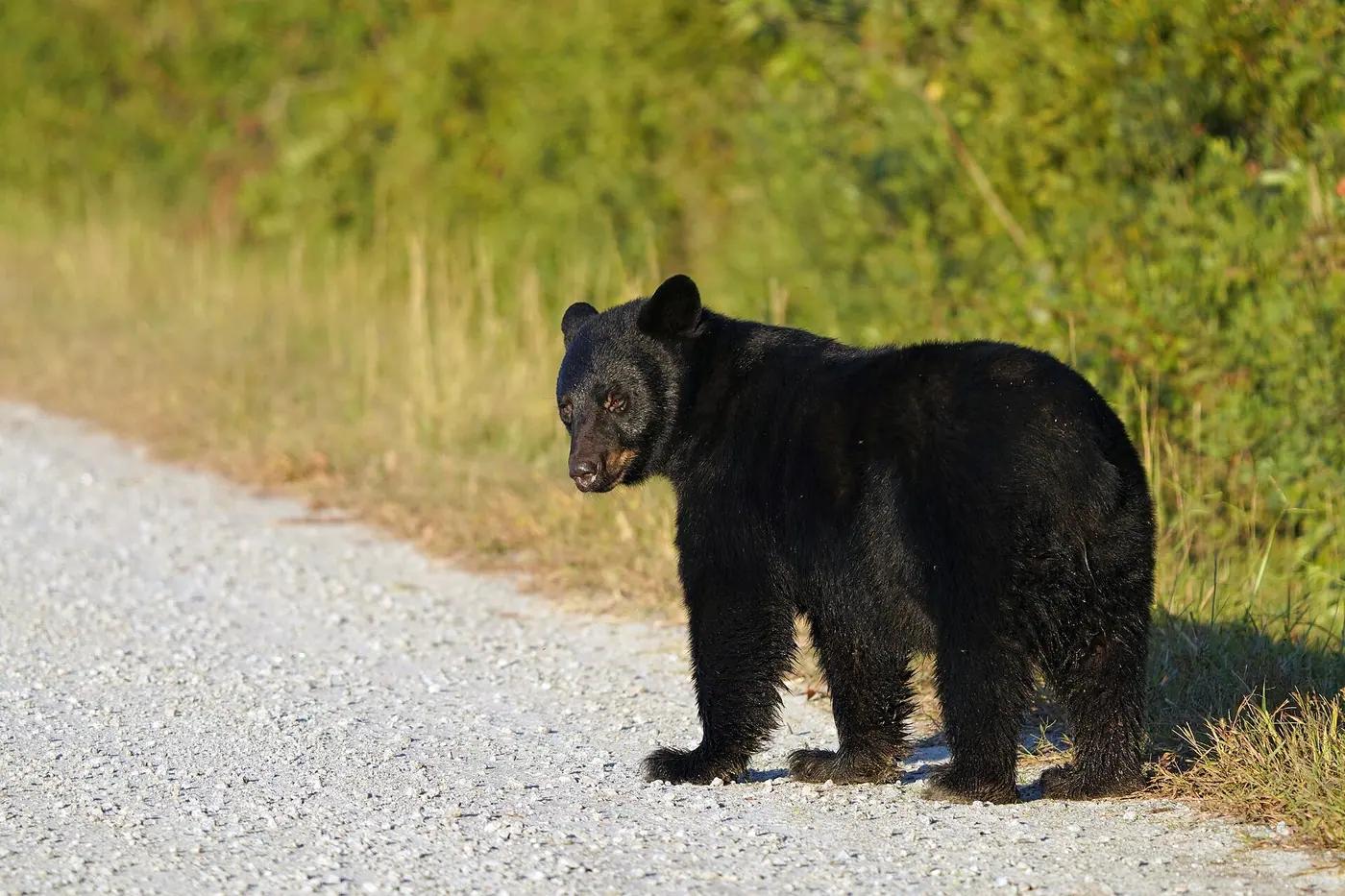
North Carolina runs from Atlantic barrier islands to the Great Smoky Mountains, so its animals range from brown pelicans and loggerhead turtles to black bears and elk. The coastal plain around Alligator River holds the world's only wild red wolves plus the densest black bears in the east, while the Charlotte preserves give easy green anoles, rat snakes, fireflies and a long list of insects.
The Albemarle-Pamlico peninsula is the wild heart of the state. Alligator River and Pocosin Lakes national wildlife refuges hold red wolves, bears the size of small cars, and alligators at the northern edge of their range.
Inland, Charlotte's Mecklenburg County preserves are where AnimalDex users log most of their North Carolina captures: Reedy Creek Nature Preserve, the West Branch Nature Preserve and the greenways around Concord deliver anoles, phoebes, mockingbirds, wheel bugs and summer fireflies without a long drive.
Start with these animals
Why this location matters
Good location pages explain why the place is worth your time, not just which names belong on a destination checklist.
Red wolves were declared extinct in the wild in 1980 and reintroduced here in 1987. Fewer than 30 roam the Alligator River peninsula, which makes any sighting a genuine conservation moment.
The state is also an easy place to build a wide collection: suburban Piedmont woodland gives reptiles and insects, the Blue Ridge adds salamanders and elk, and the coast adds pelicans, dolphins and nesting sea turtles within a single long weekend.
Where to look
Wildlife map of North Carolina
This guide covers the region shown below. Zoom in to get your bearings before planning a trip.
Positions are geocoded from OpenStreetMap. Habitat access and opening times change — check locally before travelling. Smaller pins are public AnimalDex captures, placed to the nearest kilometre.
Field proof
Found in North Carolina by AnimalDex users
Real captures logged in the AnimalDex app inside this area and shared publicly by their collectors, with the animal confirmed by the app's identification. Places are shown to the nearest region, never the exact spot.
- 57
- public captures
- 47
- species recorded
- 4
- collectors
- 38
- wild sightings
Recent captures from the field
Species people have actually logged here
Every name links to its species guide. The count is how many public captures of that animal sit inside this area.
- Black Ant3 captures
- Black and Yellow Mud Dauber2 captures
- Carolina Wolf Spider2 captures
- Cobweb Spider2 captures
- Crane Fly2 captures
- Harvestman2 captures
- Mosquito2 captures
- Northern Mockingbird2 captures
- Snail2 captures
- Amber Snail1 capture
- American Robin1 capture
- Bald-faced Hornet1 capture
- Bumblebee1 capture
- Canada Goose1 capture
- Click Beetle1 capture
- Cockroach1 capture
- Common Eastern Firefly1 capture
- Common House Spider1 capture
- Common Pill Woodlouse1 capture
- Daddy Long-Legs Spider1 capture
- Eastern Phoebe1 capture
- Eastern Rat Snake1 capture
- Flamed Tigersnail1 capture
- Giant Honey Bee1 capture
- Golden Tortoise Beetle1 capture
- Green Anole1 capture
- Green June Beetle1 capture
- Greenbottle Blow Fly1 capture
- Hackberry Emperor1 capture
- House Finch1 capture
- House Fly1 capture
- House Wren1 capture
- Hoverfly1 capture
- Io Moth1 capture
- Jumping Spider1 capture
- June Beetle1 capture
- Leopard Slug1 capture
- Orb-weaver Spider1 capture
- Owlet Moth1 capture
- Paper Wasp1 capture
Collectors choose to share these captures on Discover and can withdraw them at any time. Coordinates are rounded to about a kilometre and refreshed with each site build.
Animals to spot
These are intentionally practical species picks, balancing accessibility, excitement, and what travelers can realistically notice in the location.
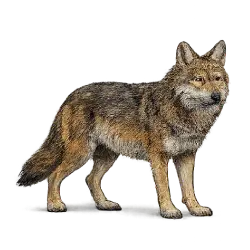
Red WolfA
The only wild population on earth lives in Alligator River National Wildlife Refuge near Manteo, where the refuge runs guided howling evenings in summer.
Spotting note: Rare; a dusk drive along Milltail Road gives a slim chance, the howling programmes are more reliable.
Read species guide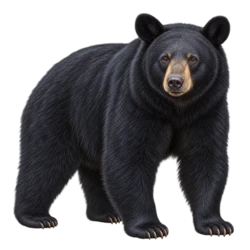
American Black BearB
The coastal pocosins of Alligator River and Pocosin Lakes grow some of the largest black bears in North America, and they feed openly in the refuge farm fields.
Spotting note: Very likely at dusk on the Alligator River wildlife drive May to October.
Read species guide
White-tailed DeerC
Abundant everywhere from Outer Banks dunes to Charlotte golf courses, and the easiest large mammal in the state.
Spotting note: Guaranteed at dawn or dusk in any Piedmont greenway.
Read species guide
American AlligatorB
North Carolina marks the northern limit of alligators, with reliable animals in the canals of Alligator River refuge and the Cape Fear lowlands near Wilmington.
Spotting note: Likely on warm days from April to October along the refuge canals.
Read species guide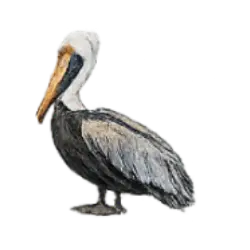
Brown PelicanC
Glides in lines along the Outer Banks surf and nests on dredge islands in Pamlico Sound; Oregon Inlet and the Hatteras ferry give close views.
Spotting note: Common along the entire coast, most numerous in summer.
Read species guide
Green AnoleE
The little colour-changing lizard of porch rails, fences and Charlotte garden shrubs, turning brown in the shade and bright green in the sun.
Spotting note: Common in the Piedmont and coastal plain from April to October.
Read species guide
Eastern Rat SnakeD
A long black snake that climbs trees and barn beams after rodents and birds' eggs across the Piedmont, including the Charlotte preserves.
Spotting note: Regular in summer; harmless and worth photographing from a respectful distance.
Read species guide Eastern Gray SquirrelD
The state mammal, and the most-logged North Carolina animal in AnimalDex, from Reedy Creek to university campuses in Raleigh.
Spotting note: Guaranteed in any park with oaks.
Read species guide
Northern MockingbirdD
Sings from Charlotte rooftops and fence posts, stringing together stolen phrases from cardinals, car alarms and phoebes.
Spotting note: Abundant in towns and farmland year-round.
Read species guide
Eastern PhoebeD
A tail-pumping flycatcher that nests under bridges and porch eaves at Reedy Creek and other Mecklenburg preserves.
Spotting note: Common near water and buildings from March to October.
Read species guide
Common Eastern FireflyE
Lights up Piedmont lawns and woodland edges in June, and a different species, the synchronous firefly, draws a ticket-lottery crowd to Grandfather Mountain each June.
Spotting note: Near-guaranteed on warm June evenings away from streetlights.
Read species guide
Io MothE
A yellow moth with huge eyespots that turns up at Charlotte porch lights; its spiny green caterpillar stings, so look but do not touch.
Spotting note: Uncommon; check lights in May and June.
Read species guide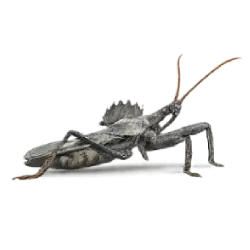
Wheel BugE
A large assassin bug with a cogwheel crest, stalking caterpillars on Piedmont shrubs; one of the more surprising captures logged around Charlotte.
Spotting note: Uncommon in late summer; its bite is painful, so photograph it on the plant.
Read species guide
Bald-faced HornetE
Builds grey paper footballs in Piedmont trees and visits garden flowers; a frequent North Carolina capture in late summer.
Spotting note: Common from July to October; give the nest space.
Read species guideBest for
Use this section to decide whether the location fits your travel style, skill level, and AnimalDex goals.
- Red wolf and black bear evenings at Alligator River
- Outer Banks seabirds, pelicans and summer sea turtles
- Easy suburban reptiles and insects in Charlotte's nature preserves
- Synchronous fireflies at Grandfather Mountain and salamanders in the Smokies
Spotting tips
These tips are meant to make the page useful in the field, not just readable on the page.
- 01Drive the Alligator River refuge roads (Milltail and Buffalo City) in the last hour before sunset from May to October for bears, and book the summer red wolf howling evening in advance.
- 02At Reedy Creek and West Branch, walk the creek edges on a hot afternoon for anoles and rat snakes, then come back at dusk in June for fireflies.
- 03On the Outer Banks, Pea Island refuge's north pond and the Oregon Inlet catwalk give the closest pelicans, terns and wading birds.
- 04Summer insects are the easiest way to fill a North Carolina collection: leave a porch light on and photograph what arrives, but do not handle io moth caterpillars or wheel bugs.
Virtual Wildlife Guides
Wildlife guides to North Carolina
AnimalDex builds virtual guides from explorers' own wild sightings: which animals they found, how rare they are, and when. A guide is advice from someone who has been there, not a tour. Buying one unlocks the author's notes for every animal, a chat with the author, and introductions to local people they met. Wildlife is never guaranteed.
Checking for virtual guides to North Carolina...
How to choose a local wildlife guide in North Carolina
- Ask what they usually find in the season you are visiting. A good guide gives an honest answer, not a promised sighting.
- Check how they treat animals: no baiting, calling in, handling, or close flash photography for a better shot.
- Confirm the meeting area, duration, group size, total price, and how you pay before the day, plus any permits or park fees the place requires.
Track the animals you find in North Carolina
Build your collection while you travel through North Carolina, from easy wins to the species worth planning around.
Related tier lists
These tier lists add broader context around the species that make this location interesting.
Rarest Animals in the World
A structured ranking of the rarest animals in the world, blending scarcity, vulnerability, and conservation pressure to answer the overlap between rarest and most endangered wildlife.
Read tier listRelated locations
Keep exploring with nearby or similar destinations that support the same kind of AnimalDex discovery.
Animals in the United States: What You Can Spot, Learn, and Collect
A practical United States wildlife guide built around habitat variety, from wetlands and coastlines to migration corridors and iconic American species.
Read location guideAnimals in Georgia (USA): What You Can Spot, Learn, and Collect
Georgia wildlife guide: Okefenokee alligators and sandhill cranes, Cumberland Island's loggerhead turtles and wild horses, gopher tortoises, Atlanta's backyard birds and the Georgia Aquarium's whale sharks.
Read location guideAnimals in Florida: What You Can Spot, Learn, and Collect
Florida wildlife guide: Everglades alligators and crocodiles, manatees at Crystal River and Blue Spring, roseate spoonbills, Kissimmee eagles, nesting sea turtles and the anoles on every fence.
Read location guideLocation FAQ
Short direct answers to the questions travelers usually ask before choosing a wildlife destination or zoo day.
What wildlife is there in North Carolina?
Black bears, white-tailed deer, the reintroduced red wolf, elk in the Cataloochee valley of the Smokies, alligators in the coastal plain, brown pelicans and loggerhead turtles on the Outer Banks, and a huge list of reptiles, salamanders and insects in the Piedmont.
What animals can be found in North Carolina's Charlotte area?
Reedy Creek, West Branch and the Mecklenburg greenways give white-tailed deer, gray squirrels, green anoles, eastern rat snakes, phoebes, mockingbirds, and summer fireflies, wheel bugs and hornets. Coyotes and barred owls are present but need dusk.
Can you see red wolves in North Carolina?
Yes, but only in and around Alligator River National Wildlife Refuge near Manteo, and only with luck. Fewer than 30 wild red wolves survive; summer howling programmes run by the refuge are the most dependable way to experience them.
Are there alligators in North Carolina?
Yes. The state is the northern edge of the species' range. Alligator River refuge, Lake Waccamaw and the Wilmington area have resident animals, active mainly from April to October.
Have AnimalDex users found animals in North Carolina?
Yes. AnimalDex users have publicly logged 57 captures of 47 different species in North Carolina, including black ant, black and yellow mud dauber, carolina wolf spider, cobweb spider. Each one was photographed in the app at the moment of the sighting.
How do I find a wildlife guide to North Carolina?
Check the Wildlife Guides section on this page or browse Wildlife Guides on AnimalDex. Each one is a virtual guide built from an explorer's own wild sightings around North Carolina: the animals they found, how rare they are, and when. It is advice from someone who has been there, not a tour. If you want someone with you on the day, compare local guides on wildlife knowledge, how they treat animals, and clear pricing before you go.