

Animals in Tanjung Puting National Park: What You Can Spot, Learn, and Collect
Tanjung Puting guide: Camp Leakey's orangutans, proboscis monkeys on the Sekonyer at dusk, hornbills from the klotok deck, crocodiles and fireflies.
Jawaban cepat
Mulai dari jawaban langsung, lalu gunakan bagian di bawah untuk melihat kenapa lokasi ini penting dan hewan mana yang benar-benar realistis untuk di-spot di sana.
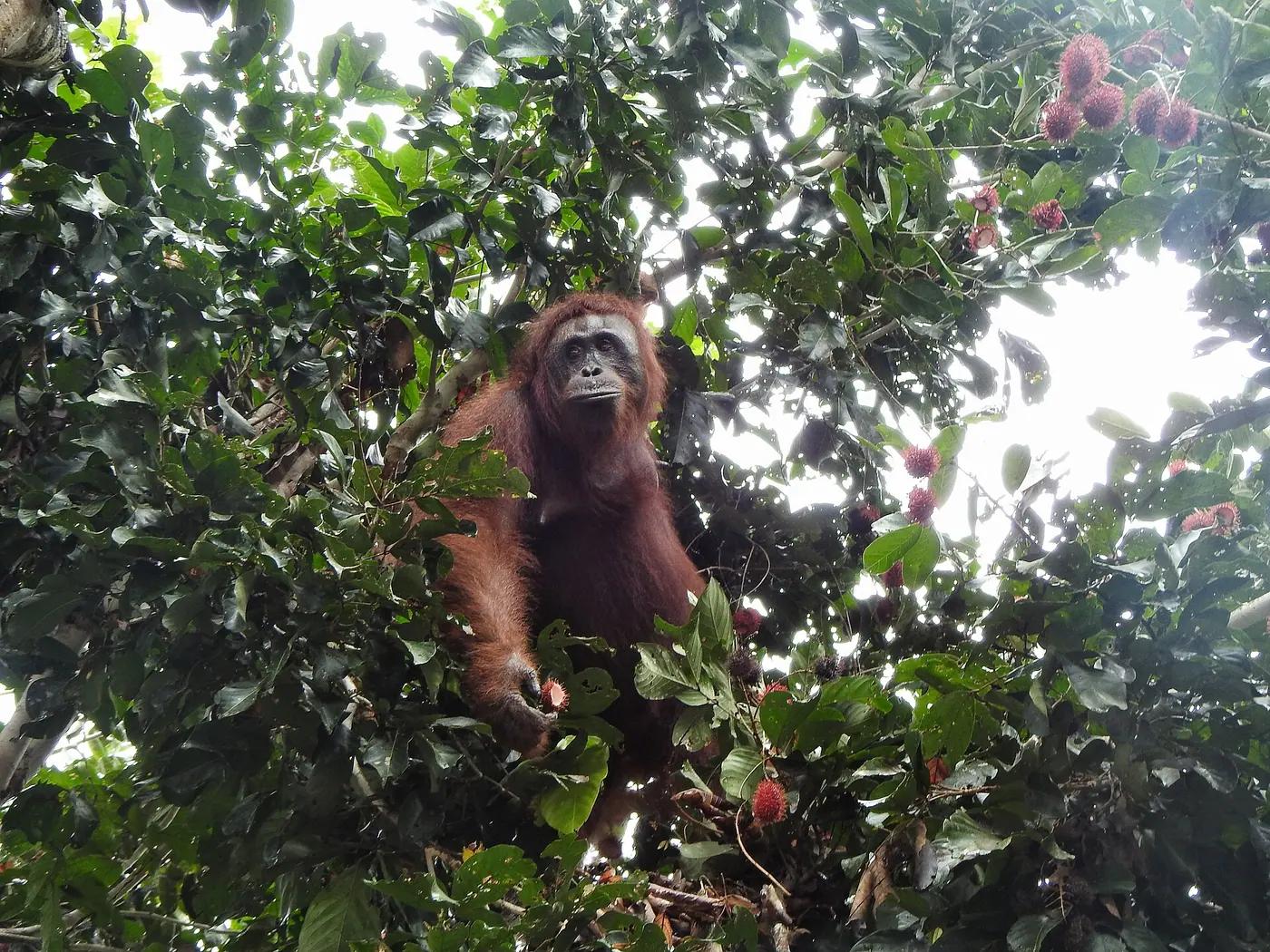
Tanjung Puting is the classic Bornean orangutan trip. From a slow klotok boat on the Sekonyer river you reach the feeding platforms at Tanjung Harapan, Pondok Tanggui and Camp Leakey, where rehabilitated and wild orangutans come in most afternoons. The river itself delivers proboscis monkeys in the trees at dusk, macaques, hornbills, kites, monitors, crocodiles and, after dark, trees full of fireflies.
Everything about Tanjung Puting happens from the water. You board a two-storey wooden klotok at Kumai, turn into the tea-coloured Sekonyer river and spend two or three days drifting between orangutan camps, eating and sleeping on the roof deck. The forest comes to the riverbank, which makes this the easiest serious wildlife trip in Kalimantan.
Camp Leakey, founded in 1971, is the oldest orangutan research station in the world and still the best place to see big flanged males at close range. The feeding platforms are a managed experience; the proboscis monkeys, crocodiles and birds along the river are entirely wild.
Kenapa lokasi ini penting
Halaman lokasi yang baik menjelaskan kenapa tempat ini layak dikunjungi, bukan hanya nama-nama yang cocok dimasukkan ke checklist destinasi.
The park protects over 4,000 km2 of peat swamp and heath forest and one of the largest wild orangutan populations anywhere, with released rehabilitants mixing into it over fifty years.
The Sekonyer is also one of the best rivers in Borneo for proboscis monkeys, which are endemic to the island and gather in riverside trees every evening to sleep.
Tempat mencari
Peta satwa liar Tanjung Puting National Park
Panduan ini mencakup wilayah di bawah ini. Perbesar peta untuk mengenali areanya sebelum merencanakan perjalanan.
Posisi diambil dari OpenStreetMap. Akses habitat dan jam buka bisa berubah — periksa dulu sebelum berangkat.
Hewan untuk di-spot
Pilihan spesies di sini sengaja dibuat praktis, menyeimbangkan aksesibilitas, excitement, dan apa yang realistis untuk diperhatikan traveler di lokasi tersebut.

Bornean OrangutanA
Camp Leakey, Pondok Tanggui and Tanjung Harapan feeding platforms draw rehabilitated and wild orangutans most afternoons, including flanged males.
Catatan spotting: Near-guaranteed over a two-day trip; fruiting seasons reduce platform visits.
Baca panduan spesies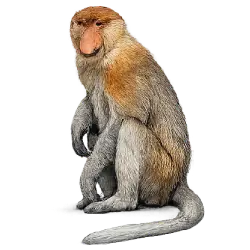
Proboscis MonkeyB
Harems settle into the riverside trees of the Sekonyer every evening and sit out in the open at dawn.
Catatan spotting: Guaranteed at dusk from the klotok deck.
Baca panduan spesies
Long-tailed MacaqueC
Troops forage on the riverbanks and raid the camp docks, swimming between trees when disturbed.
Catatan spotting: Guaranteed.
Baca panduan spesies
Bornean Bearded PigC
Wanders under the feeding platforms at Camp Leakey cleaning up dropped fruit.
Catatan spotting: Likely at Camp Leakey.
Baca panduan spesies Saltwater CrocodileA
The lower Sekonyer and Kumai river are crocodile water, and big animals bask on the mud at low water.
Catatan spotting: Occasional from the boat; never swim in the river.
Baca panduan spesies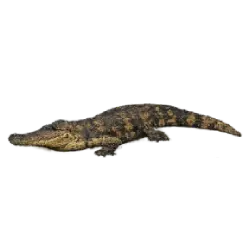
False GharialA
The slender-snouted peat-swamp crocodilian lives in the upper Sekonyer and its black-water tributaries.
Catatan spotting: Rare; spotlighting from the boat at night is the method.
Baca panduan spesies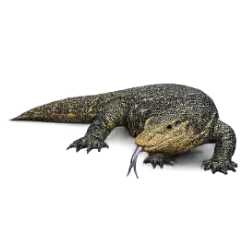
Water MonitorC
Swims the river edges and climbs onto fallen logs beside the klotok.
Catatan spotting: Regular.
Baca panduan spesies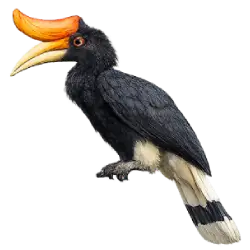
Rhinoceros HornbillB
Pairs cross the river with loud wingbeats and feed in figs along the Sekonyer Kanan branch.
Catatan spotting: Regular, especially early morning.
Baca panduan spesies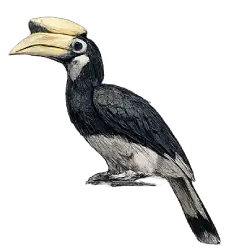
Oriental Pied HornbillC
The small, noisy hornbill of the river edge and the camp clearings.
Catatan spotting: Common.
Baca panduan spesies
Brahminy KiteD
Patrols the Kumai estuary and the lower river beside the klotok.
Catatan spotting: Common.
Baca panduan spesies
FireflyE
Riverside trees along the Sekonyer light up with synchronised fireflies after dark, best seen with the boat engine off.
Catatan spotting: Near-nightly in the dry season.
Baca panduan spesies
Large Flying FoxD
Streams over the river at dusk toward fruiting trees in the swamp forest.
Catatan spotting: Regular at dusk.
Baca panduan spesies
Sun BearB
Claw marks on trees around the camps are common and the bears occasionally raid the platforms.
Catatan spotting: Rare to see; sign is easy.
Baca panduan spesies
Sunda Clouded LeopardA
Present in the park's forest and photographed by camera traps near Camp Leakey.
Catatan spotting: Almost never seen.
Baca panduan spesiesPaling cocok untuk
Gunakan bagian ini untuk menilai apakah lokasi tersebut cocok dengan gaya perjalanan, level pengalaman, dan target AnimalDex kamu.
- Big male orangutans at Camp Leakey
- Proboscis monkeys from a boat deck at dusk
- River birds, monitors and crocodiles without walking
- Firefly trees after dark
Tips spotting
Tips ini dibuat agar halaman ini benar-benar berguna di lapangan, bukan hanya enak dibaca di layar.
- 01Book a three-day klotok so you reach all three feeding platforms and have a full dusk and dawn on the upper river.
- 02Sit on the roof deck with binoculars from 16:30; proboscis monkeys settle in the riverside trees before sunset.
- 03Ask the crew to cut the engine and drift at night for fireflies and to spotlight the banks for crocodiles.
- 04Dry season (June to September) has more orangutans at the platforms and clearer skies; wet season can flood the trails.
Wildlife Guides virtual
Panduan satwa liar ke Tanjung Puting National Park
AnimalDex membuat panduan virtual dari penampakan satwa liar milik para penjelajah sendiri: satwa apa yang mereka temukan, seberapa langka, dan kapan. Panduan adalah saran dari orang yang pernah ke sana, bukan tur. Membelinya membuka catatan penulis untuk setiap satwa, obrolan dengan penulis, dan perkenalan dengan warga lokal yang mereka temui. Penampakan satwa tidak pernah dijamin.
Memeriksa panduan virtual ke Tanjung Puting National Park...
Cara memilih pemandu satwa liar lokal di Tanjung Puting National Park
- Tanyakan apa yang biasanya mereka temukan pada musim kunjunganmu. Pemandu yang baik memberi jawaban jujur, bukan janji pasti melihat satwa tertentu.
- Perhatikan cara mereka memperlakukan satwa: tanpa umpan, tanpa memanggil satwa, tanpa memegang, dan tanpa flash dari jarak dekat demi foto.
- Pastikan titik temu, durasi, ukuran grup, total harga, dan cara pembayaran sebelum hari kegiatan, termasuk izin atau biaya taman yang diperlukan.
Lacak hewan yang kamu temukan di Tanjung Puting National Park
Bangun koleksimu sambil menjelajahi Tanjung Puting National Park, dari spesies yang mudah ditemukan sampai target yang layak direncanakan khusus.
Tier list terkait
Tier list ini memberi konteks yang lebih luas untuk spesies yang membuat lokasi ini menarik.
100 Smartest Animals Ranked
Animal intelligence ranking of 100 smartest animals, using AnimalDex intelligence profiles and a clear note that social skill, tool use, and solitary problem solving are different jobs.
Baca tier listLokasi terkait
Lanjutkan eksplorasi dengan destinasi yang mirip atau berdekatan dan mendukung gaya discovery AnimalDex yang sama.
Animals in Kalimantan: What You Can Spot, Learn, and Collect
Kalimantan wildlife guide: Tanjung Puting orangutans by klotok, proboscis monkeys on the Sekonyer, Derawan turtles and mantas, and Kakaban's jellyfish lake.
Baca panduan lokasiAnimals in Borneo: What You Can Spot and Why the Region Matters
A structured Borneo wildlife guide focused on realistic rainforest, river, and sanctuary-linked spotting with strong links into species pages and broader AnimalDex discovery.
Baca panduan lokasiAnimals in Indonesia: What You Can Spot, Learn, and Collect
A practical guide to animals in Indonesia, from accessible birds and coastal wildlife to headline species that make the country one of the world's strongest wildlife-travel destinations.
Baca panduan lokasiFAQ lokasi
Jawaban singkat dan langsung untuk pertanyaan yang biasanya ditanyakan traveler sebelum memilih destinasi satwa liar atau hari kebun binatang.
What wildlife is there in Tanjung Puting National Park?
Bornean orangutans at three feeding platforms, proboscis monkeys and macaques along the Sekonyer river, bearded pigs, water monitors, saltwater crocodiles and false gharials, rhinoceros and pied hornbills, kites, flying foxes and fireflies. Sun bears and clouded leopards are present but rarely seen.
What animals can be found in Tanjung Puting?
Orangutans and proboscis monkeys are near-certain on a two-day trip. Macaques, monitors, hornbills and kites are daily, crocodiles are occasional, and fireflies light the riverbank trees most dry-season nights.
How do I visit Tanjung Puting?
Fly to Pangkalan Bun, transfer to Kumai and board a klotok houseboat with crew, cook and guide. Two nights is the minimum to reach Camp Leakey; three is better.
Are the orangutans wild?
Both. The feeding platforms attract released rehabilitants and their descendants, and wild orangutans also visit, especially when wild fruit is scarce. Flanged males at Camp Leakey are often fully wild.
Bagaimana cara menemukan panduan satwa liar ke Tanjung Puting National Park?
Lihat bagian Wildlife Guides di halaman ini atau jelajahi Wildlife Guides di AnimalDex. Setiap panduan adalah panduan virtual yang dibuat dari penampakan satwa liar milik seorang penjelajah di sekitar Tanjung Puting National Park: satwa yang mereka temukan, seberapa langka, dan kapan. Ini saran dari orang yang pernah ke sana, bukan tur. Jika kamu ingin ditemani seseorang di lokasi, bandingkan pemandu lokal dari pengetahuan satwanya, cara mereka memperlakukan satwa, dan kejelasan harganya sebelum berangkat.