
Back to Powers

Animal Powers

Adaptability

Let skill stay plain.

Animals grouped here express a similar power through their behavior in nature. Each species still has its own principle, lesson, meaning, and field-guide page.

92 species

Garden Warbler animal lesson image on AnimalDex

Garden Warbler

Species principle: Plainskill

Let skill stay plain.

Plain appearance can hide a flexible, effective feeding strategy.

Garden Warblers are understated songbirds that feed on insects and berries in shrubs, relying on cover, song, and migration rather than bright markings.
Giant Pacific Octopus (Enteroctopus dofleini) thumbnail image on AnimalDex

Giant Pacific Octopus

Species principle: Fluid Intelligence

Think in arms.

Flexibility turns tight places into open ones.

Giant Pacific Octopuses are intelligent cephalopods with flexible arms, suckers, camouflage, den use, and problem-solving ability.

Goose Barnacle animal lesson image on AnimalDex

Goose Barnacle

Species principle: Drifting Attachment

Hold to the drift.

Stability can come from attachment, even on a moving surface.

Goose Barnacles attach to floating objects, driftwood, hulls, and debris, filtering food from moving seawater.

Great Mormon animal lesson image on AnimalDex

Great Mormon

Species principle: Many Faces

Different form. Same butterfly.

Variation does not require losing the underlying identity.

Papilio memnon is famous for extreme female polymorphism. Females occur in numerous visually distinct forms, including mimetic forms resembling other swallowtails, while all belong to the same species. The biology demonstrates that one stable identity can support remarkably different outward expressions.

Great Tit animal lesson image on AnimalDex

Great Tit

Species principle: Boldness

Learn the feeder.

Curiosity becomes useful when it is paired with repeatable field sense.

Great Tits are adaptable cavity-nesting birds that learn quickly, explore feeding sites, and adjust well to gardens, woods, and parks.

Greenbottle Blow Fly animal lesson image on AnimalDex

Greenbottle Blow Fly

Species principle: Turn Waste Into Signal

Find value others miss

Opportunity often starts where others refuse to look.

Greenbottle blow flies locate decay fast, recycle organic material, and play an important role in decomposition ecosystems.

House Mouse animal lesson image on AnimalDex

House Mouse

Species principle: Wall-Edge Caution

Read the edges.

Small safety comes from knowing where exposure begins.

House Mice live close to human structures, using cover, quick movement, and cautious exploration.

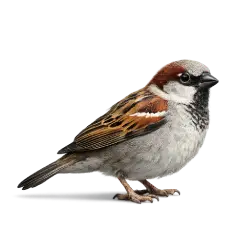
House Sparrow animal lesson image on AnimalDex

House Sparrow

Species principle: Adaptability

Use what is near.

Everyday success often comes from noticing small opportunities quickly.

House sparrows are highly adaptable birds that live closely alongside human settlements.

Huntsman Spider animal lesson image on AnimalDex

Huntsman Spider

Species principle: Webless Pursuit

Move instead of waiting.

You do not always need a trap when you have mobility.

Huntsman spiders are active predators, using rapid movement and flattened bodies to pursue prey and hide in tight spaces.

Indo-Pacific Tarpon animal lesson image on AnimalDex

Indo-Pacific Tarpon

Species principle: Silver Ascent

Rise for air.

Adaptability includes knowing when to use a different element.

Megalops cyprinoides, the Indo-Pacific tarpon, can tolerate varied waters and gulp air in low-oxygen conditions.

Indus River Dolphin (Platanista gangetica minor) thumbnail image on AnimalDex

Indus River Dolphin

Species principle: Sound Navigation

Hear the river path.

There is more than one way to see the path.

Indus River Dolphins have very poor vision and rely heavily on echolocation to navigate and hunt in turbid river water.

Jackdaw (Coloeus monedula) thumbnail image on AnimalDex

Jackdaw

Species principle: Adaptation

Use the opening.

New doors open for the one willing to make a home where others see only gaps.

Jackdaws are social corvids that nest in cavities such as cliffs, tree holes, chimneys, ruins, and buildings. Their flexible nesting habits help them live close to human structures as well as wild places.

Japanese Macaque (Macaca fuscata) thumbnail image on AnimalDex

Japanese Macaque

Species principle: Social Compass

Read before you leap.

Good timing begins with noticing where everyone else stands.

Japanese macaques live in complex troops, use social rank, and adapt to seasonal forests and cold climates.

Japanese Marten animal lesson image on AnimalDex

Japanese Marten

Species principle: Marten Edgecraft

Work the edge.

Adaptability grows when curiosity stays quick but not careless.

Japanese Martens are agile mustelids that climb, forage widely, and use forested habitats with flexible omnivorous diets.

Javan myna animal lesson image on AnimalDex

Javan myna

Species principle: Urban Cleverness

Use the city.

Adaptability sharpens when intelligence notices ordinary openings quickly.

Javan Mynas are adaptable, vocal birds that thrive in urban and human-modified habitats.

Korean Rat Snake (Elaphe anomala) thumbnail image on AnimalDex

Korean Rat Snake

Species principle: Route Flex

Bend into the route.

When the terrain is uneven, flexibility becomes a kind of intelligence.

Korean rat snakes are non-venomous constrictors that move through grassland, scrub, rocky areas, and waterside habitats.

Leatherback Sea Turtle (Dermochelys coriacea) thumbnail image on AnimalDex

Leatherback Sea Turtle

Species principle: Soft Might

Dive in leather.

A flexible body can cross depths that rigid armor never reaches.

Leatherback Sea Turtles have flexible leathery shells, large flippers, and adaptations for deep, long-distance ocean travel while feeding largely on jellyfish.

Long-tailed Macaque animal lesson image on AnimalDex

Long-tailed Macaque

Species principle: Adaptive Mischief

Test the edge.

Intelligence grows by exploring what the group, place, and moment allow.

Long-tailed Macaques are adaptable social primates known for learning, opportunism, and flexible behavior around water, forests, and people.

Explore related indexes