AnimalDex
en
Back to Qualities

Animal Qualities

Deep Listening

Echo with mind.

Animals grouped here express a similar quality through their behavior in nature. Each species still has its own principle, lesson, meaning, and field-guide page.

26 species

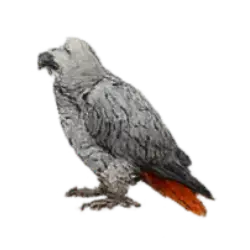
African Grey Parrot (Psittacus erithacus) thumbnail image on AnimalDex

African Grey Parrot

Species principle: Mimic Intelligence

Echo with mind.

A mind grows by listening so closely that the world enters its voice.

African Grey Parrots are highly intelligent birds known for vocal mimicry, social learning, problem-solving, and strong cognitive abilities.
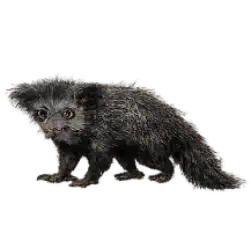
Aye-aye (Daubentonia madagascariensis) thumbnail image on AnimalDex

Aye-aye

Species principle: Finger Percussion

Tap the hidden wood.

The hidden treasure answers the one who knows how to knock.

Aye-ayes use percussive foraging, tapping wood with an elongated finger, listening with large ears, then gnawing and extracting larvae with the same specialized finger.

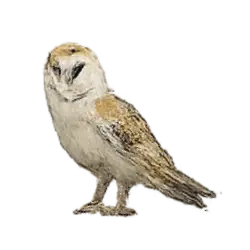
Barn Owl (Tyto alba) thumbnail image on AnimalDex

Barn Owl

Species principle: Acoustic Precision

Hear the hidden.

The unseen becomes visible to the one shaped to hear it.

Barn Owls have silent flight and a heart-shaped facial disc that helps funnel sound to asymmetrical ears, allowing precise location of hidden prey in darkness.

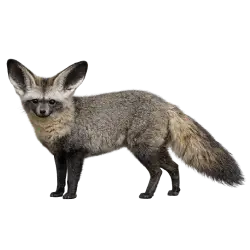
Bat-eared Fox (Otocyon megalotis) thumbnail image on AnimalDex

Bat-eared Fox

Species principle: Acute Listening

Hear the insects.

A whole life can be fed by hearing what others walk over.

Bat-eared Foxes have oversized ears used for detecting insects such as termites and beetles, and also for heat regulation in open African habitats.

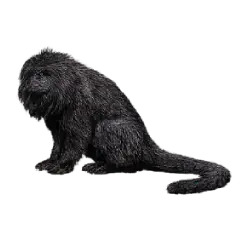
Black Howler Monkey (Alouatta caraya) thumbnail image on AnimalDex

Black Howler Monkey

Species principle: Canopy Resonance

Boom through leaves.

A voice can hold territory without rushing the body.

Black Howler Monkeys use enlarged hyoid bones to produce loud calls that carry through forest canopy, helping maintain spacing and social communication.

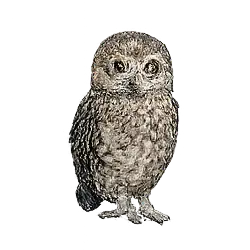
Boobook Owl (Ninox boobook) thumbnail image on AnimalDex

Boobook Owl

Species principle: Compact Wisdom

Watch small, see deep.

Wisdom does not need a large body when the eyes are awake in the dark.

Boobook Owls are small nocturnal owls that hunt insects, small birds, and mammals using sharp vision, hearing, and quiet flight after dark.

Budgerigar animal lesson image on AnimalDex

Budgerigar

Species principle: Social Mimicry

Echo the flock.

Connection grows when listening turns into shared language.

Budgerigars are highly social parrots capable of vocal learning, flock bonding, and responsive communication.

Buffy Fish Owl animal lesson image on AnimalDex

Buffy Fish Owl

Species principle: Waterside Listening

Listen by water.

Precision improves when attention is tuned to the environment, not just the obvious signal.

Buffy Fish Owls hunt around water and wetlands, using night vision, hearing, and patient perching to detect aquatic prey.

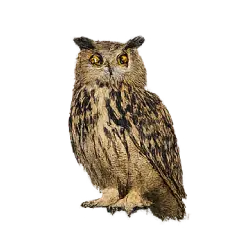
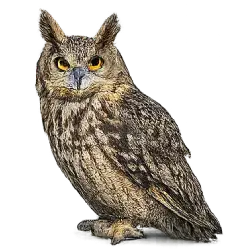
Eurasian Eagle-Owl (Bubo bubo) thumbnail image on AnimalDex

Eurasian Eagle-Owl

Species principle: Sovereignty

Rule quietly.

Some power is felt before it ever has to move.

Eurasian Eagle-Owls are large apex nocturnal predators with powerful talons, silent flight, strong territorial calls, and nesting sites often associated with cliffs, rocky ledges, or secluded elevated places.

Fennec Fox (Vulpes zerda) thumbnail image on AnimalDex

Fennec Fox

Species principle: Listening

Hear the sand.

Survival begins by hearing what the heat tries to hide.

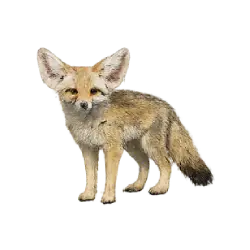
Fennec Foxes have very large ears that help detect prey sounds underground and dissipate heat, supporting survival in desert environments.

Great Gray Owl (Strix nebulosa) thumbnail image on AnimalDex

Great Gray Owl

Species principle: Deep Listening

Hear through snow.

The strongest strike may begin by hearing what no one can see.

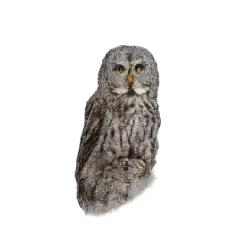
Great Gray Owls have large facial discs and excellent hearing that allow them to locate prey under snow before plunging through the surface.

Great Horned Owl (Bubo virginianus) thumbnail image on AnimalDex

Great Horned Owl

Species principle: Dominion

Perch like a crown.

A crown is strongest when it can wait in the dark without fear.

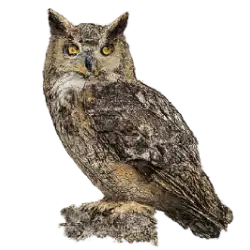
Great Horned Owls are powerful nocturnal predators with prominent ear tufts, strong talons, broad diets, and high-perch hunting behavior across many habitats.

Greater Bulldog Bat (Noctilio leporinus) thumbnail image on AnimalDex

Greater Bulldog Bat

Species principle: Night Listening

Hear the ripple.

The right moment is caught first by the one who hears it forming.

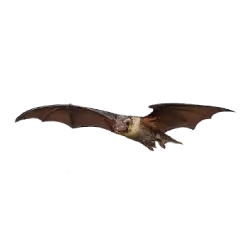
Greater Bulldog Bats use echolocation, large feet, and curved claws to detect and snatch small fish from the water surface at night.

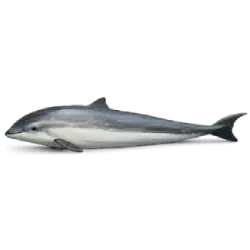
Harbor Porpoise (Phocoena phocoena) thumbnail image on AnimalDex

Harbor Porpoise

Species principle: Echolocation

Read without noise.

Read the field clearly and you waste less force.

Harbor Porpoises are small coastal cetaceans that use echolocation clicks to navigate and hunt fish in cold coastal waters while remaining relatively shy and quiet.

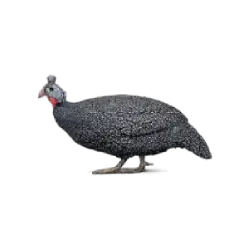
Helmeted Guineafowl (Numida meleagris) thumbnail image on AnimalDex

Helmeted Guineafowl

Species principle: Ground Flock

Run noisy.

A hard place grows safer when many feet and voices move together.

Helmeted Guineafowl are social ground birds that move in flocks, run quickly, and use loud calls to maintain contact and warn of danger.

Indus River Dolphin (Platanista gangetica minor) thumbnail image on AnimalDex

Indus River Dolphin

Species principle: Sound Navigation

Hear the river path.

There is more than one way to see the path.

Indus River Dolphins have very poor vision and rely heavily on echolocation to navigate and hunt in turbid river water.

Long-eared Owl (Asio otus) thumbnail image on AnimalDex

Long-eared Owl

Species principle: Attentive Silence

Listen without noise.

Quiet attention hears what noise would lose.

Long-eared Owls hunt mainly at night with silent flight, acute hearing, and camouflage, often roosting quietly in dense cover.

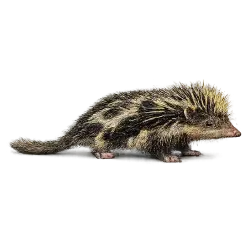
Lowland Streaked Tenrec animal lesson image on AnimalDex

Lowland Streaked Tenrec

Species principle: Stridulation

Buzz the warning.

Small defenders can protect more by making the warning travel.

Lowland Streaked Tenrecs have spines and can communicate by rubbing specialized quills together, producing sounds used in social signaling.

Explore related indexes