AnimalDex
en
Back to Qualities

Animal Qualities

Defense

Show blue first.

Animals grouped here express a similar quality through their behavior in nature. Each species still has its own principle, lesson, meaning, and field-guide page.

36 species

Indonesian blue-tongued skink animal lesson image on AnimalDex

Indonesian blue-tongued skink

Species principle: Tongue Display

Show blue first.

A clear signal can defend space without escalation.

Indonesian Blue-tongued Skinks use a vivid blue tongue display as a defensive warning, along with sturdy bodies and calm movement.

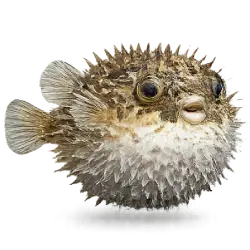
Long-spined porcupinefish animal lesson image on AnimalDex

Long-spined porcupinefish

Species principle: Inflated Defense

Expand the boundary.

A small body can win space by changing the terms of attack.

Long-spined Porcupinefish inflate and use spines as defenses against predators.

Long-spined sea urchin animal lesson image on AnimalDex

Long-spined sea urchin

Species principle: Spine Radius

Guard all around.

Boundaries can be quiet, constant, and built into the body.

Long-spined Sea Urchins use long spines for defense and shelter while grazing and moving slowly over reef surfaces.

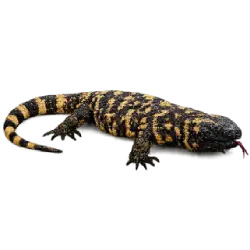
Mexican Beaded Lizard (Heloderma horridum) thumbnail image on AnimalDex

Mexican Beaded Lizard

Species principle: Beaded Slow Venom

Do not rush the bite.

Slow steps can still carry consequences no one should ignore.

Mexican Beaded Lizards are venomous lizards with bead-like scales, slow movement, and powerful bites used defensively and in feeding.

Oriental Fire-bellied Toad (Bombina orientalis) thumbnail image on AnimalDex

Oriental Fire-bellied Toad

Species principle: Warning Flash

Flash the fire.

A clear warning can stop danger before contact.

Oriental Fire-bellied Toads display bright orange-red undersides in a defensive posture called the unken reflex, warning predators of toxins.

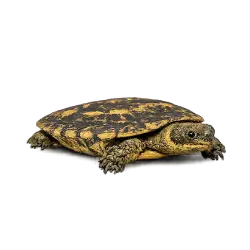
Pancake Tortoise (Malacochersus tornieri) thumbnail image on AnimalDex

Pancake Tortoise

Species principle: Flexible Shelter

Wedge into stone.

Protection is strongest when it can bend into the only opening available.

Pancake Tortoises have unusually flat, flexible shells and can wedge into narrow rock crevices to escape predators instead of relying on a high domed shell.

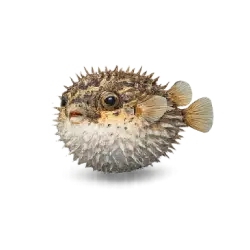
Porcupinefish (Diodon hystrix) thumbnail image on AnimalDex

Porcupinefish

Species principle: Spiked Expansion

Raise the spines.

Make the warning too large and too sharp to ignore.

Porcupinefish inflate their bodies when threatened, raising spines and increasing size to deter predators and reduce the chance of being swallowed.

Pufferfish (Tetraodon nigroviridis) thumbnail image on AnimalDex

Pufferfish

Species principle: Inflation

Become too large.

Expand the boundary until danger cannot swallow you.

Pufferfish inflate their bodies by taking in water or air when threatened, increasing apparent size and making themselves harder for predators to eat; many species also carry toxins.

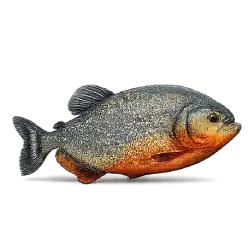
Red-bellied Piranha (Pygocentrus nattereri) thumbnail image on AnimalDex

Red-bellied Piranha

Species principle: Bite Force

Trust the bite.

A specialized edge becomes power when the whole body is built around it.

Red-bellied Piranhas have sharp interlocking teeth and strong jaws, often schooling in rivers where group presence and quick bites help with feeding and defense.

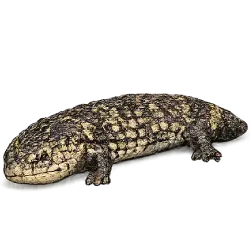
Shingleback Skink (Tiliqua rugosa) thumbnail image on AnimalDex

Shingleback Skink

Species principle: Gentle Armor

Guard the gentle.

A sturdy outside can protect a gentle pace.

Shingleback Skinks have heavy armored bodies, short tails that resemble the head, and blue-tongue threat displays used to deter predators.

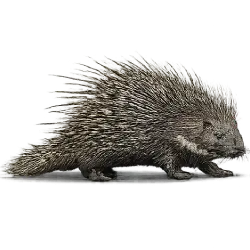
Southern African Porcupine animal lesson image on AnimalDex

Southern African Porcupine

Species principle: Defense

Raise the quills.

When protection is built into you, you can move without asking permission.

Southern African Porcupines are nocturnal rodents with long defensive quills. When threatened, they raise and rattle quills, back toward danger, and make themselves difficult to attack.

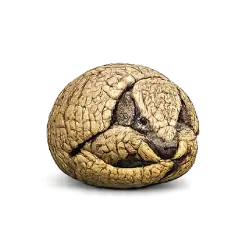
Southern Three-banded Armadillo animal lesson image on AnimalDex

Southern Three-banded Armadillo

Species principle: Closure

Close the shell.

Some problems are solved by becoming impossible to open.

Southern Three-banded Armadillos are among the armadillos able to roll completely into a tight armored ball when threatened, protecting soft parts inside.

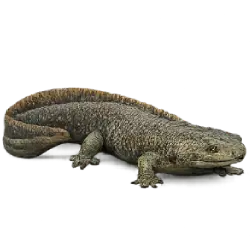
Spanish Ribbed Newt (Pleurodeles waltl) thumbnail image on AnimalDex

Spanish Ribbed Newt

Species principle: Internal Defense

Raise the ribs.

A flexible defender can turn its own frame into a warning.

Spanish Ribbed Newts can push rib tips through the skin as a defensive mechanism, aided by toxin-bearing skin secretions when threatened.

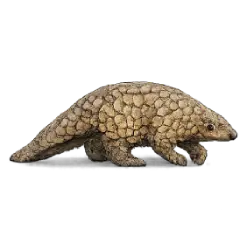
Sunda Pangolin (Manis javanica) thumbnail image on AnimalDex

Sunda Pangolin

Species principle: Wrapped Protection

Wrap the delicate work.

Great protection can wrap around delicate, patient work.

Sunda Pangolins have overlapping keratin scales for defense and long sticky tongues for feeding on ants and termites at night.

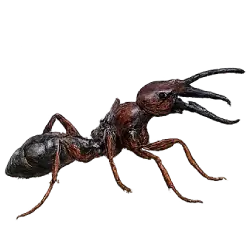
Trap-jaw Ant (Odontomachus bauri) thumbnail image on AnimalDex

Trap-jaw Ant

Species principle: Explosive Release

Snap and launch.

A single sharp tool can become both weapon and escape.

Trap-jaw Ants close their mandibles at extreme speeds to capture prey, defend themselves, and even launch their bodies away from threats.

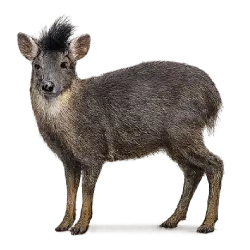
Tufted Deer (Elaphodus cephalophus) thumbnail image on AnimalDex

Tufted Deer

Species principle: Alternative Weapon

Grow the other weapon.

When the usual crown is absent, another weapon can speak.

Tufted Deer have small or hidden antlers and elongated canine tusks, especially in males, used in display or conflict in forested mountain habitats.

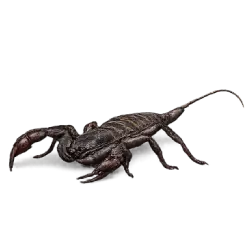
Vinegaroon (Mastigoproctus giganteus) thumbnail image on AnimalDex

Vinegaroon

Species principle: Repulsion

Leave the warning.

A boundary can be remembered by the scent it leaves behind.

Vinegaroons are whip scorpions that defend themselves by spraying acetic acid-like fluid, producing a vinegar smell that deters predators.

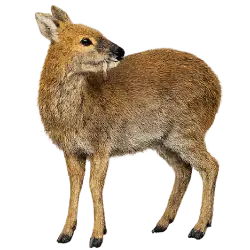
Water Deer (Hydropotes inermis) thumbnail image on AnimalDex

Water Deer

Species principle: Unusual Answer

Use the other weapon.

The expected tool is not the only way to solve the field.

Water Deer lack antlers but males have elongated canine tusks used in display and combat, especially in wet meadows and reed habitats.

Explore related indexes