
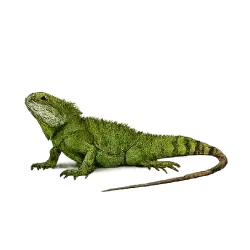
Chinese Water Dragon
Species principle: Escape Timing
Leap to water.
Endurance can begin with one clean leap away from danger.
Chinese Water Dragons are arboreal and riverbank lizards that can leap into water and swim to escape threats.
Animal Qualities
Leap to water.
Animals grouped here express a similar quality through their behavior in nature. Each species still has its own principle, lesson, meaning, and field-guide page.
13 species
Species principle: Escape Timing
Leap to water.
Endurance can begin with one clean leap away from danger.
Chinese Water Dragons are arboreal and riverbank lizards that can leap into water and swim to escape threats.
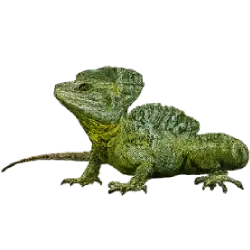
Species principle: Impossible Timing
Run the water.
The impossible lasts just long enough for the one whose timing is perfect.
Common Basilisks can run short distances across water using rapid hind-leg motion, long toes, and forceful slapping of the water surface.
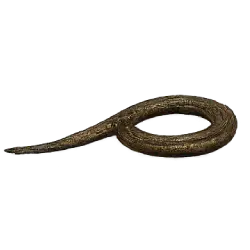
Species principle: Category Escape
Slip the category.
Not fitting the box can be the feature that lets you pass through.
Eastern Glass Lizards are legless lizards with eyelids and ear openings, moving through grass and sandy habitats while resembling snakes.

Species principle: Startle Display
Flare, then run.
A sudden shape can create the space needed to survive.
Frilled Lizards extend a large neck frill, open the mouth, and may rear up when threatened before fleeing, often to a tree.
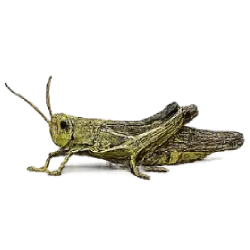
Species principle: Readiness
Load the leap.
The leap works because the body was prepared before danger arrived.
Grasshoppers use enlarged hind legs to jump away from danger. This spring-like escape movement is one of their most recognizable survival behaviors.
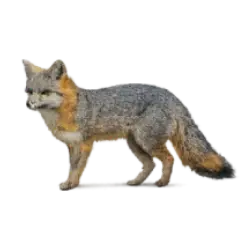
Species principle: Rule-Breaking
Climb the rule.
A new path appears when the usual category stops limiting the body.
Gray Foxes are unusual among canids for climbing trees using strong claws and rotating forearms, gaining access to fruit, refuge, and escape routes above ground.
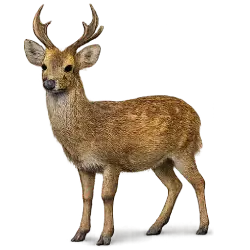
Species principle: Low Cover
Duck through grass.
The safest path may be the one that stays below the grass line.
Hog Deer often flee with low, head-down movement through tall grass and dense cover rather than bounding high like many deer.
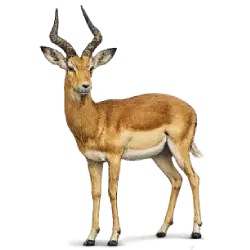
Species principle: Elastic Escape
Leap with the herd.
A sudden leap feels safer when it belongs to the rhythm of the herd.
Impalas use powerful leaps, quick directional changes, alert hearing, and herd movement to evade predators across savanna and woodland edges.
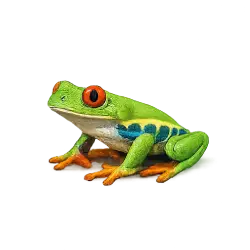
Species principle: Startle
Flash and flee.
One bright second can break the spell of danger.
Red-eyed Tree Frogs use bright red eyes, vivid side colors, and sudden movement as startle coloration when disturbed, helping them escape predators.
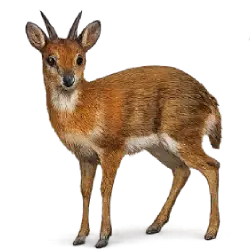
Species principle: Miniature Alertness
Vanish small.
Small bodies survive by noticing danger before the forest closes in.
Royal Antelopes are among the smallest antelopes, living secretively in dense West African forest understory and relying on quick escape and concealment.
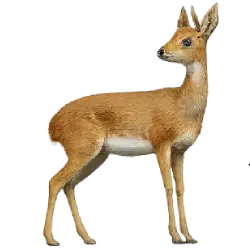
Species principle: Vanish
Dart into thorn.
The quickest escape is sometimes the body that already knows where cover begins.
Steenboks are small antelopes with large ears, solitary behavior, and quick darting movement into dry bush or grass when threatened.
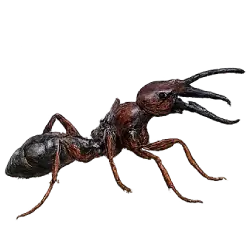
Species principle: Explosive Release
Snap and launch.
A single sharp tool can become both weapon and escape.
Trap-jaw Ants close their mandibles at extreme speeds to capture prey, defend themselves, and even launch their bodies away from threats.
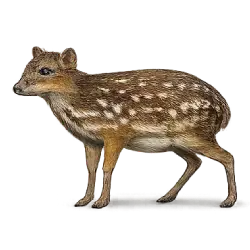
Species principle: Hidden Escape
Slip to water.
The small shadow survives by knowing the nearest way out.
Water Chevrotains are small, secretive forest ungulates associated with streams and dense cover, and they can retreat into water when threatened.