
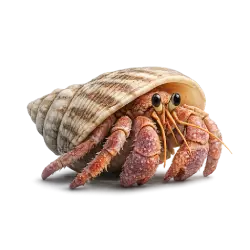
Hermit Crab
Species principle: Fit
Change shells.
Protection is useful only while it still fits the life you are building.
Hermit crabs occupy empty shells and must trade up as their bodies grow.
Animal Qualities
Change shells.
Animals grouped here express a similar quality through their behavior in nature. Each species still has its own principle, lesson, meaning, and field-guide page.
6 species
Species principle: Fit
Change shells.
Protection is useful only while it still fits the life you are building.
Hermit crabs occupy empty shells and must trade up as their bodies grow.
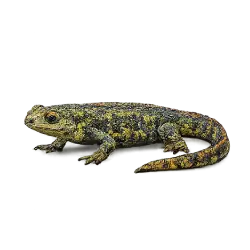
Species principle: Seasonal Passage
Follow the season.
Growth continues when the path changes with the season.
Marbled Newts move between terrestrial woodland habitats and aquatic breeding ponds, developing crests and aquatic behaviors during the breeding season.
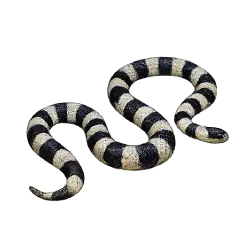
Species principle: Amphibious Passage
Cross the reef border.
The right body crosses the border between worlds.
Sea Kraits have paddle-like tails for swimming and still return to land for digestion, egg-laying, and rest, moving between marine and terrestrial environments.
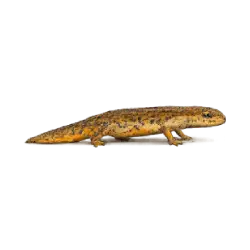
Species principle: Transition
Change the path.
Growth sometimes means learning which world needs you now.
Smooth Newts move between aquatic breeding habitats and terrestrial habitats across seasons, changing behavior and appearance during breeding periods.
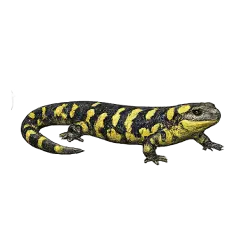
Species principle: Two-World Belonging
Belong in both.
Flexibility lets one life belong underground and in water.
Tiger Salamanders live much of the year underground or under cover and migrate to ponds or wetlands to breed, with aquatic larval stages.
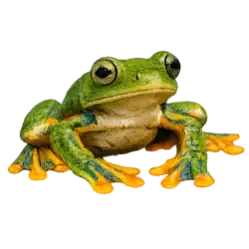
Species principle: Parachute
Open the fall.
The fall becomes a path when the body learns to open.
Wallace’s Flying Frogs have large webbed feet and skin flaps that help them glide or parachute between trees in rainforest canopies.