
Timed Emergence principle
What Can We Learn from the May Beetle?
The May Beetle teaches timed emergence: Good timing turns a short active window into enough movement to feed, find mates, and continue the cycle.
Rise when the season opens.
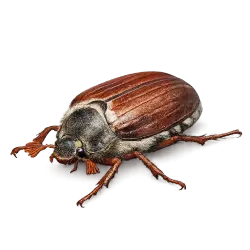
AnimalDex lesson
Timed Emergence principle
Quick answer
The May Beetle teaches timed emergence. Good timing turns a short active window into enough movement to feed, find mates, and continue the cycle. This interpretation is grounded in real behavior: May beetles spend long periods as soil-dwelling larvae feeding on roots, then emerge as adults in late spring to fly, feed on leaves, and reproduce during a brief seasonal window.
A lesson from the May Beetle
The core lesson
Move with the season.
Good timing turns a short active window into enough movement to feed, find mates, and continue the cycle.
This lesson from nature invites us to notice the strategy behind the animal's behavior, then use that pattern thoughtfully in our own lives.
Real-life example
How to use this lesson
The situation
Use May beetle energy when progress depends on waiting through a hidden preparation phase, then acting decisively when the right window finally opens.
The animal lesson
Good timing turns a short active window into enough movement to feed, find mates, and continue the cycle.
A simple action
Move with the season.
The behavior behind the lesson
May beetles spend long periods as soil-dwelling larvae feeding on roots, then emerge as adults in late spring to fly, feed on leaves, and reproduce during a brief seasonal window.
The behavior is real. The life lesson is a human interpretation inspired by it, not a scientific claim about human life.
Best for
Use this lesson as a prompt when you are working through these kinds of moments.
Frequently asked questions
What can we learn from the May Beetle?
The May Beetle teaches Timed Emergence. Good timing turns a short active window into enough movement to feed, find mates, and continue the cycle.
What is the main lesson of the May Beetle?
The main lesson is: Move with the season. Good timing turns a short active window into enough movement to feed, find mates, and continue the cycle.
How can I apply the May Beetle lesson in real life?
Use the lesson when it fits your situation: Use May beetle energy when progress depends on waiting through a hidden preparation phase, then acting decisively when the right window finally opens.
Why is the May Beetle linked with Timed Emergence?
The link comes from observable behavior. May beetles spend long periods as soil-dwelling larvae feeding on roots, then emerge as adults in late spring to fly, feed on leaves, and reproduce during a brief seasonal window.
Is this animal lesson scientific?
The biological behavior is real, while the life lesson is an interpretation inspired by that behavior.
Keep exploring the May Beetle
Discover animal lessons in the real world
AnimalDex helps you scan animals, collect species, and learn what real animal behavior can teach about survival, emotion, instinct, and intelligence.
Browse Animal EncyclopediaContinue exploring

Foam-Spring Power
What can we learn from the Meadow Froghopper?
Leap from foam.