
Animal field guide
Razorfish
Identification, habitat, rarity, behavior, symbolism, facts, and practical lessons from nature.
Animal field guide
Razorfish
Vertical Movement
Think Vertical.
The shrimpfish swims vertically to blend with seagrass, showing that unconventional approaches can offer effective solutions in complex environments.
You’re #1 of 1
RECORD ID
BBBCFD37-9CAE-4D40-828D-9416E27D92CA
Native range
Natural range, not this capture location
Native range keys: indian_ocean, south_pacific, coral_triangle. Seagrass beds, urchin aggregations and sheltered reef edges suit Razorfish because Vertical Movement only disguises the fish where the background is itself vertical.
Wild reward hint
First-time wild species earn bonus rewards, including 1 free credit.
0/1 XP toward Level 2
AnimalDex stats
Dominance
18
Speed
46
Size
11
Intelligence
27
Rarity
41%
Total
143
Size scale
Zoo animal · comparisons disabled
Zoo animals stay in your collection, but they can't enter scenario comparisons or the Arena.
✦ Available actions
Compare this public animal when your deck meets the current rules.
Scientific name
Aeoliscus strigatus
Category
Animal
Habitat
Native range keys: indian_ocean, south_pacific, coral_triangle. Seagrass beds, urchin aggregations and sheltered reef edges suit Razorfish because Vertical Movement only disguises the fish where the background is itself vertical.
Rarity
Uncommon · 63/100
Native range
Native range keys: indian_ocean, south_pacific, coral_triangle. Seagrass beds, urchin aggregations and sheltered reef edges suit Razorfish because Vertical Movement only disguises the fish where the background is itself vertical.
Why Vertical Movement?
The creator's reasoning behind this Animal Principle and the biology that supports it.
Razorfish teaches Vertical Movement by swimming head-down in tight synchronised groups, so a school of fish reads as a patch of seagrass or a cluster of urchin spines.
How to identify a Razorfish
- Swims head-down in a vertical position
- Thin, transparent, blade-like body with a dark stripe along the flank
- Sharp-edged belly, which is what names it
- Moves in tightly synchronised groups
Why Razorfish are interesting
- It swims and feeds head-down, which is its normal orientation, not a stress posture.
- Groups shelter among the spines of long-spined sea urchins and match their angle.
- Its body is encased in thin transparent bony plates.
- It feeds on tiny crustaceans drawn in through a long tubular snout.
- It is also called the shrimpfish or jointed razorfish.
Habitat: Native range keys: indian_ocean, south_pacific, coral_triangle. Seagrass beds, urchin aggregations and sheltered reef edges suit Razorfish because Vertical Movement only disguises the fish where the background is itself vertical.
Native range: Native range keys: indian_ocean, south_pacific, coral_triangle. Seagrass beds, urchin aggregations and sheltered reef edges suit Razorfish because Vertical Movement only disguises the fish where the background is itself vertical.
Native range
Natural range, not this specific capture location.
Some regional overlays are unavailable in this web build.
Native range keys: indian_ocean, south_pacific, coral_triangle. Seagrass beds, urchin aggregations and sheltered reef edges suit Razorfish because Vertical Movement only disguises the fish where the background is itself vertical.
To find Razorfish in the wild, focus on the exact habitat patches that match its body design and daily behavior, not just the broad country where it exists. You usually do better by working one good piece of habitat inside native range keys: indian_ocean, south_pacific, coral_triangle. Seagrass beds, urchin aggregations and sheltered reef edges suit Razorfish because Vertical Movement only disguises the fish where the background is itself vertical. than by covering too much ground.
- Headlands, reef edges, island colonies, tidal channels, or productive coastal water
- Protected habitat blocks within native range keys: indian_ocean, south_pacific, coral_triangle. Seagrass beds, urchin aggregations and sheltered reef edges suit Razorfish because Vertical Movement only disguises the fish where the background is itself vertical.
- Start early, pick one strong patch of habitat, and stay long enough for movement to return after you arrive.
- Time your search around tide, wind, and visibility, then focus on feeding lines, reef edges, and known haul-out or nesting spots.
- Move quietly, stop often, and give the habitat time to settle; many mammals and insects show themselves only after the first pause.
Tiny crustaceans and zooplankton drawn in through a long tubular snout. This diet supports Vertical Movement because feeding is a series of small precise sips that do not disturb the fish's posture.
Lizardfish, scorpionfish and other reef ambushers. Its answer is orientation: matched to seagrass or urchin spines, the school is genuinely hard to resolve.
Razorfish stay in their vertical groups day and night, drifting close to the shelter they mimic after dark.
They are short-lived by reef standards, and Vertical Movement is a group behaviour that persists across generations rather than being learned slowly by one fish.
They spawn in open water and the larvae are planktonic before joining groups on the bottom. Offspring fit the principle because young fish adopt the head-down posture and the group's synchrony almost immediately.
Males and females look alike. The absence of difference is essential — a school only disappears if every fish in it looks the same.
- Swims head-down in a vertical position
- Thin, transparent, blade-like body with a dark stripe along the flank
- Sharp-edged belly, which is what names it
- Moves in tightly synchronised groups
Razorfish most often symbolizes vertical movement in AnimalDex because its real survival behavior repeatedly shows this pattern.
The shrimpfish swims vertically to blend with seagrass, showing that unconventional approaches can offer effective solutions in complex environments.
Shrimpfish swim in a vertical position to camouflage with seagrass, reducing predation risk.
- Observe from a respectful distance and avoid changing the animal's behavior.
- Do not block feeding, shelter, nesting, or travel routes.
- Use a live camera capture without handling or staging wildlife.
More animals with Strategic Camouflage
Browse all Strategic Camouflage animals
American Badger
American Badger turns Burrow Strategy into muscular problem-solving, using claws,…
Read species guide
Band-eyed Drone Fly
The Striped Hoverer. Eristalinus taeniops, known for its strikingly striped eyes, is a…
Read species guide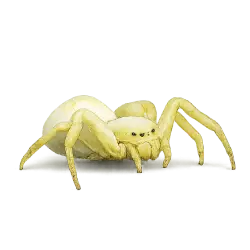
Goldenrod Crab Spider
Goldenrod Crab Spider expresses Flower-Edge Ambush through real survival details, not a…
Read species guideTake the encyclopedia outside
AnimalDex helps you scan real animals, identify species, collect cards, and learn from nature wherever you are.