Animal field guide
Common Bluetail
Ischnura senegalensis
A slender damselfly barely 3 centimetres long, and one of the commonest across Africa and warm parts of Asia. It thrives where many damselflies cannot, breeding in rice paddies, drainage ditches, garden ponds and even slightly brackish water.
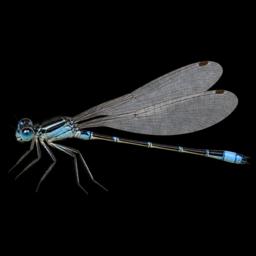
Common Bluetail at a glance
Animal · Sub-Saharan Africa · Still or slow water with plenty of · Relatively common
Known for: Slender body roughly 3 centimetres long, Male thorax black above with green to blue-green, Male has a bright blue band near the abdomen tip, Clear wings held closed above the back at rest
Its Power
Reed Patrol
Low Reed-Margin Circuit
Steady low passes through familiar cover turn up more small opportunities than one high sweep over open ground.
“Work the reeds, low and often.”
Capture a Common Bluetail, and it's yours when you finish one step it gives you.
Biological basis
Ischnura senegalensis is a small damselfly that flies low and slowly through grasses, reeds and emergent plants at pond margins, perching often and picking tiny insects such as midges and aphids from stems and leaves.
Put it into practice
A shop manager walks the same short route through the aisles every hour, catching empty shelves and stuck customers that a single morning inspection would miss.
What does the common bluetail symbolize?
The common bluetail symbolizes reed patrol: low Reed-Margin Circuit. It represents healthy routine, discipline and seizing opportunity. Its AnimalDex motto: "Work the reeds, low and often."
The common bluetail as a spirit animal
If the common bluetail is your spirit animal, the AnimalDex reading is Reed Patrol: steady low passes through familiar cover turn up more small opportunities than one high sweep over open ground. It suggests a strength in healthy routine and discipline, and a reminder to use it on purpose.
What can the common bluetail help you with in life?
The common bluetail is a guide for healthy routine, discipline and seizing opportunity. Its lesson applies wherever healthy routine matters: steady low passes through familiar cover turn up more small opportunities than one high sweep over open ground.
- Healthy Routine
- Discipline
- Seizing Opportunity
In practice: A shop manager walks the same short route through the aisles every hour, catching empty shelves and stuck customers that a single morning inspection would miss.
What can we learn from the Common Bluetail?What does it mean to dream about or encounter a wild common bluetail?
A wild common bluetail, whether in a dream or in front of you, tends to show up when healthy routine or discipline is on your mind. In AnimalDex, the common bluetail's principle is Reed Patrol: low Reed-Margin Circuit. Read the moment through its core lesson: Steady low passes through familiar cover turn up more small opportunities than one high sweep over open ground.
Neither good nor bad on its own. How the common bluetail acts matters: at ease, it reflects healthy routine; hostile, it flags healthy routine out of balance.
Spotting a common bluetail in the wild
If a common bluetail crosses your path, take it as a cue to look at where healthy routine fits your day. Its AnimalDex motto: "Work the reeds, low and often."
A common bluetail that keeps appearing
Seeing the common bluetail again and again, in dreams or outside, suggests healthy routine is a theme you have not settled yet.
Dreaming of being chased by a common bluetail
Being chased suggests you are avoiding the Reed Patrol the common bluetail stands for: steady low passes through familiar cover turn up more small opportunities than one high sweep over open ground. Ask what you keep postponing that needs healthy routine.
Dreaming that a common bluetail attacks you
An attack points to healthy routine turned against you: someone using it on you, or your own healthy routine overused until it costs you.
A calm or friendly common bluetail
A calm common bluetail suggests you have made peace with healthy routine and can use it without force.
A dead or injured common bluetail
An injured common bluetail often reflects healthy routine under strain; rest and repair come before pushing again.
These readings are reflective prompts drawn from how the common bluetail really lives, not predictions. If you meet one in the wild, watch from a distance and leave it undisturbed.
Capture your own Common Bluetail
Photograph or film one in the wild, at a zoo or at home with the app. It becomes yours: it remembers you, gives you steps, and can debate your problems with your other animals.
Animal field guide
Common Bluetail
Sign in to hear this read by a natural AI voice instead of your browser's.
A slender damselfly barely 3 centimetres long, and one of the commonest across Africa and warm parts of Asia. It thrives where many damselflies cannot, breeding in rice paddies, drainage ditches, garden ponds and even slightly brackish water.
Native range
Natural range, not this capture location
Still or slow water with plenty of emergent grasses and reeds: ponds, marsh edges, ditches, rice fields, reservoirs and garden pools, mainly in the lowlands.
Search near meAnimalDex stats
Dominance
8
Speed
41
Size
2
Intelligence
9
Rarity
15%
Total
75
Size scale
Understand the animal
Understand the Common Bluetail
Factual biology first: what this animal is like, where it lives, how it survives, and why those traits exist.
01
Introduction to Common Bluetail
A slender damselfly barely 3 centimetres long, and one of the commonest across Africa and warm parts of Asia. It thrives where many damselflies cannot, breeding in rice paddies, drainage ditches, garden ponds and even slightly brackish water.
How to identify a Common Bluetail
- Slender body roughly 3 centimetres long
- Male thorax black above with green to blue-green sides
- Male has a bright blue band near the abdomen tip
- Clear wings held closed above the back at rest
- Weak, fluttering flight low among plants
Why Common Bluetail are interesting
- Females come in more than one inherited colour form, and those that resemble males are thought to receive fewer unwanted mating attempts.
- Mating pairs form a wheel shape, and in this genus copulation can last an hour or more.
- It is one of the most widespread damselflies of the Old World, ranging from Africa to southern Japan.
- Its name senegalensis refers to Senegal in West Africa, the region from which the species was first described.
02
Adaptations and biological abilities
03
Why does Common Bluetail behave this way?
- Slender body roughly 3 centimetres long
- Male thorax black above with green to blue-green sides
- Male has a bright blue band near the abdomen tip
- Clear wings held closed above the back at rest
- Weak, fluttering flight low among plants
Active by day, mostly from mid-morning to afternoon in sunshine. At night and in dull weather adults roost clinging to grass stems and reeds near the water, while larvae stay among submerged plants.
04
Why Still or slow water with plenty of emergent grasses and reeds?
Habitat: Still or slow water with plenty of emergent grasses and reeds: ponds, marsh edges, ditches, rice fields, reservoirs and garden pools, mainly in the lowlands.
Native range: Sub-Saharan Africa, North Africa & Middle East, South Asia, Southeast Asia, East Asia
Native range
Natural range, not this specific capture location.
Still or slow water with plenty of emergent grasses and reeds: ponds, marsh edges, ditches, rice fields, reservoirs and garden pools, mainly in the lowlands.
05
Why this diet?
Adults snatch small flying insects such as midges, gnats, mosquitoes and aphids from the air or pick them off leaves. The aquatic larvae ambush water fleas, mosquito larvae and other tiny animals with an extendable lower jaw.
06
Activity, rest, and lifespan
Active by day, mostly from mid-morning to afternoon in sunshine. At night and in dull weather adults roost clinging to grass stems and reeds near the water, while larvae stay among submerged plants.
Adults typically live roughly two to four weeks. In warm climates the larval stage may last only one to two months, allowing several generations a year.
07
Common Bluetail reproduction
Females lay eggs alone, without the male attached, inserting them into the stems and leaves of floating or submerged plants. Larvae hatch within days, moult many times underwater, then climb a stem to emerge as adults.
Males have a black thorax with green stripes and a bright blue band near the tail tip. Females come in several colour forms, some patterned like males and others greenish, olive or brownish.
08
Predators, threats, and defense
Birds, frogs, spiders and larger dragonflies take adults; fish, water bugs and dragonfly larvae eat the larvae. Adults escape with short, low flights into dense vegetation, and larvae hide among submerged stems.
09
Conservation and rarity
Rarity: Relatively common · 15/100. AnimalDex canonical rarity score: 15/100, maintained by the live indexed species profile.
- Observe from a respectful distance and avoid changing the animal's behavior.
- Do not block feeding, shelter, nesting, or travel routes.
- Use a live camera capture without handling or staging wildlife.
Talk to it
Talk to the Common Bluetail
It answers as itself: ask about how it lives, or bring it something of yours and hear what it would do, from its own Power.
Anonymous: 3/day. Signed-in: 10/day. Pro: 100/day.
Side by side
The Common Bluetail, side by side
Nothing written side by side for the Common Bluetail yet. Pick any animal to compare it with. Compare with any animal →
Where to find them
Where to find Common Bluetail
To find Common Bluetail in the wild, focus on the exact habitat patches that match its body design and daily behavior, not just the broad country where it exists. You usually do better by working one good piece of habitat inside sub-Saharan Africa, North Africa & Middle East, South Asia, Southeast Asia, East Asia than by covering too much ground.
- Quiet marsh edges, reedbeds, river bends, or shallow wetland margins
- Protected habitat blocks within sub-Saharan Africa, North Africa & Middle East, South Asia, Southeast Asia, East Asia
Scientific name
Ischnura senegalensis
Category
Animal
Habitat
Still or slow water with plenty of emergent grasses and reeds: ponds, marsh edges, ditches, rice fields, reservoirs and garden pools, mainly in the lowlands.
Rarity
Relatively common · 15/100
Native range
Sub-Saharan Africa, North Africa & Middle East, South Asia, Southeast Asia, East Asia
Take the encyclopedia outside
AnimalDex helps you scan real animals, identify species, collect cards, and learn from nature wherever you are.