
Animal field guide
Pink-spotted Hawkmoth
Identification, habitat, rarity, behavior, symbolism, facts, and practical lessons from nature.
Pink-spotted Hawkmoth is an indexed AnimalDex species with a field profile connected to live captures, canonical stats, and collection progress.
Scientific name
Agrius cingulata
Category
Animal
Habitat
Pink-spotted Hawkmoth habitat data is maintained in the live AnimalDex field guide.
Rarity
Relatively common · 5/100
Native range
Pink-spotted Hawkmoth habitat data is maintained in the live AnimalDex field guide.
Night Navigation
Find clarity in darkness.
Embrace the night to find your path with clarity.
What it teaches
The Pink-spotted Hawkmoth uses its keen nocturnal navigation skills to migrate over long distances, demonstrating the power of finding direction in the dark.
Try it
For us, the message is simple: consistency can carry us through places where motivation alone cannot.
Nature proof
This moth is known for its remarkable ability to navigate during night-time migrations, often traveling vast distances under the cover of darkness.
Use it for
Ranked Pink-spotted Hawkmoth captures
1 ranked captures in this group from AnimalDex collectors.
poki
@pokiimaeWild · A Sanctuary Therapeutic Massage and Bodywork · Craven, Jacksonville, Duval County, FL, United States
Score 0
Why Night Navigation?
The creator's reasoning behind this Animal Principle and the biology that supports it.
Pink-spotted Hawkmoth is an indexed AnimalDex species with a field profile connected to live captures, canonical stats, and collection progress.
How to identify a Pink-spotted Hawkmoth
- Recognized in AnimalDex as Pink-spotted Hawkmoth
- Indexed profile #1919
Habitat: Pink-spotted Hawkmoth habitat data is maintained in the live AnimalDex field guide.
Native range: Pink-spotted Hawkmoth habitat data is maintained in the live AnimalDex field guide.
To find Pink-spotted Hawkmoth in the wild, focus on the exact habitat patches that match its body design and daily behavior, not just the broad country where it exists. You usually do better by working one good piece of habitat inside pink-spotted Hawkmoth habitat data is maintained in the live AnimalDex field guide. than by covering too much ground.
- Pink-spotted Hawkmoth habitat data is maintained in the live AnimalDex field guide.
- Protected habitat blocks within pink-spotted Hawkmoth habitat data is maintained in the live AnimalDex field guide.
- Start early, pick one strong patch of habitat, and stay long enough for movement to return after you arrive.
- Look for food, cover, and movement routes in the same place, because the best sightings usually happen where those overlap.
- Move quietly, stop often, and give the habitat time to settle; many mammals and insects show themselves only after the first pause.
Pink-spotted Hawkmoth is a carnivorous bird of prey that feeds on animal food captured or scavenged in its hunting range.
- Small mammals and birds
- Reptiles, amphibians, or insects depending on size
- Carrion when the opportunity is efficient
Prey choice changes with season, hunting habitat, and how much energy the bird spends to secure each meal.
- Embrace the night to find your path with clarity.
Pink-spotted Hawkmoth most often symbolizes night navigation in AnimalDex because its real survival behavior repeatedly shows this pattern.
The Pink-spotted Hawkmoth uses its keen nocturnal navigation skills to migrate over long distances, demonstrating the power of finding direction in the dark.
This moth is known for its remarkable ability to navigate during night-time migrations, often traveling vast distances under the cover of darkness.
- Observe from a respectful distance and avoid changing the animal's behavior.
- Do not block feeding, shelter, nesting, or travel routes.
- Use a live camera capture without handling or staging wildlife.
0/1 XP toward Level 2
Pink-spotted Hawkmoth stat profile
Canonical species stats are shown when available. Public analysis records are only used as fallback while species profiles are backfilled.
Stats source: Canonical species profile
Dominance
2
Speed
15
Size
1
Intelligence
2
Rarity
5%
Total
25
Size scale
Microscopic edge
Uses the canonical size stat for consistent placement







$9 – $19
Estimated value range
Confidence 69%
Estimated AnimalDex value generated from canonical species stats.
Not a marketplace listing.
Estimated value based on the identified animal and available pricing context. Not a marketplace listing.
How rare are Pink-spotted Hawkmoth?
Rarity: Relatively common (5/100)
AnimalDex canonical rarity score: 5/100, maintained by the live indexed species profile.
Public Animal Power
Explore this Animal Power
This is a public capture, so you can explore its Animal Power here. Personal Apex matches and challenges use your Wild Profile and animals you own.
Own an animal with this power to use it in Growth challenges.
Comparison hearts ready
3 of 3 hearts remaining. Each loss removes 1 heart.
✦ Available actions
Compare this public animal when your deck meets the current rules.
⚡CompareUnavailable›Related animals
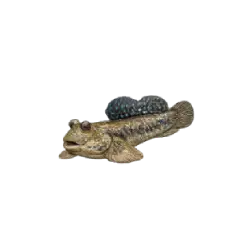
Blue-spotted Mudskipper
Blue-spotted Mudskipper explains Mudline through a body and routine shaped for its…
Read species guide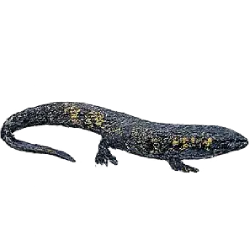
Blue-spotted Salamander
Blue-spotted Salamander is a amphibian known for blue-flecked dark body, secretive log…
Read species guide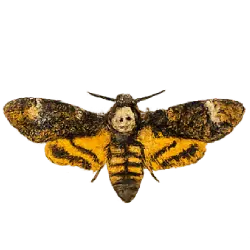
Death's-head Hawkmoth
Death's-head Hawkmoth is a insect known for skull-like thorax marking, powerful night…
Read species guideMore animals with Right Timing
Browse all Right Timing animals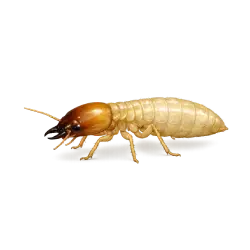
Asian subterranean termite
The Winged Architect. The Asian subterranean termite alate, Macrotermes gilvus, is a…
Read species guide
Australian Green Tree Frog
Australian Green Tree Frog is a amphibian known for plump wet-season body,…
Read species guide
Komodo Dragon
The Komodo dragon is the largest living lizard, native to a small island range in…
Read species guideTake the encyclopedia outside
AnimalDex helps you scan real animals, identify species, collect cards, and learn from nature wherever you are.