
Animal field guide
Asian Tramp Snail
Bradybaena similaris
Eggs and young of this small land snail travel unnoticed in the soil of potted plants and in shipments of produce. New colonies start wherever the plants are unloaded, often in nurseries and greenhouses first.
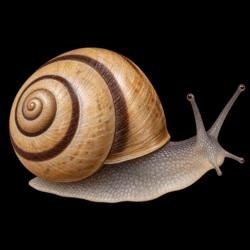
Asian Tramp Snail at a glance
Marine invertebrate · East Asia · Asian Tramp Snails are native to · Relatively common
Known for: Low-domed shell about 12 to 16 millimetres across, Thin, Often one narrow chestnut band around the outer, Rim of the shell opening thin and turned outwards
Its Power
Slow Progress Strategy
Embrace steady, incremental steps to reach your goals.
The Asian Tramp Snail moves slowly but steadily, demonstrating that consistent effort over time can lead to significant progress.
“Slow and Steady Wins.”
Capture a Asian Tramp Snail, and it's yours when you finish one step it gives you.
Biological basis
Asian Tramp Snails are known for their slow movement, yet they effectively navigate their environments and spread across regions.
Put it into practice
A learner adds ten new words a day and reads a whole foreign novel by the end of the year.
What does the Asian tramp snail symbolize?
The Asian tramp snail symbolizes slow progress strategy: embrace steady, incremental steps to reach your goals. It represents patient progress, discipline and commitment. Its AnimalDex motto: "Slow and Steady Wins."
The Asian tramp snail as a spirit animal
If the Asian tramp snail is your spirit animal, the AnimalDex reading is Slow Progress Strategy: the Asian Tramp Snail moves slowly but steadily, demonstrating that consistent effort over time can lead to significant progress. It suggests a strength in patient progress and discipline, and a reminder to use it on purpose.
What can the Asian tramp snail help you with in life?
The Asian tramp snail is a guide for patient progress, discipline and commitment. Its lesson applies wherever patient progress matters: the Asian Tramp Snail moves slowly but steadily, demonstrating that consistent effort over time can lead to significant progress.
- Patient Progress
- Discipline
- Commitment
In practice: A learner adds ten new words a day and reads a whole foreign novel by the end of the year.
What can we learn from the Asian Tramp Snail?What does it mean to dream about or encounter a wild Asian tramp snail?
A wild Asian tramp snail, whether in a dream or in front of you, tends to show up when patient progress or discipline is on your mind. In AnimalDex, the Asian tramp snail's principle is Slow Progress Strategy: embrace steady, incremental steps to reach your goals. Read the moment through its core lesson: The Asian Tramp Snail moves slowly but steadily, demonstrating that consistent effort over time can lead to significant progress.
Neither good nor bad on its own. How the Asian tramp snail acts matters: at ease, it reflects patient progress; hostile, it flags patient progress out of balance.
Spotting an Asian tramp snail in the wild
A real encounter is the plainest version of the sign: notice what the Asian tramp snail was doing. Embrace steady, incremental steps to reach your goals. That is the patient progress worth borrowing today.
An Asian tramp snail that keeps appearing
Seeing the Asian tramp snail again and again, in dreams or outside, suggests patient progress is a theme you have not settled yet.
Dreaming of being chased by an Asian tramp snail
If the Asian tramp snail pursues you, look at where discipline is being asked of you and you are stepping away instead of meeting it.
Dreaming that an Asian tramp snail attacks you
An aggressive Asian tramp snail can mirror a conflict where patient progress has become a weapon rather than a strength.
A calm or friendly Asian tramp snail
Meeting a peaceful Asian tramp snail is usually encouraging: discipline and commitment are within reach.
A dead or injured Asian tramp snail
A dead or injured Asian tramp snail, dreamed or found, can mark patient progress you have let lapse, or a phase built on Slow Progress Strategy coming to an end.
These readings are reflective prompts drawn from how the Asian tramp snail really lives, not predictions. If you meet one in the wild, watch from a distance and leave it undisturbed.
Capture your own Asian Tramp Snail
Photograph or film one in the wild, at a zoo or at home with the app. It becomes yours: it remembers you, gives you steps, and can debate your problems with your other animals.
Animal field guide
Asian Tramp Snail
Sign in to hear this read by a natural AI voice instead of your browser's.
Eggs and young of this small land snail travel unnoticed in the soil of potted plants and in shipments of produce. New colonies start wherever the plants are unloaded, often in nurseries and greenhouses first.
Native range
Natural range, not this capture location
Asian Tramp Snails are native to parts of East and Southeast Asia but have been introduced throughout many tropical and subtropical regions. They inhabit gardens, agricultural land, forest edges, leaf litter and other humid vegetation, sheltering beneath debris and becoming particularly active during wet conditions.
Search near meAnimalDex stats
Size scale
Understand the animal
Understand the Asian Tramp Snail
Factual biology first: what this animal is like, where it lives, how it survives, and why those traits exist.
01
Introduction to Asian Tramp Snail
Eggs and young of this small land snail travel unnoticed in the soil of potted plants and in shipments of produce. New colonies start wherever the plants are unloaded, often in nurseries and greenhouses first.
How to identify a Asian Tramp Snail
- Low-domed shell about 12 to 16 millimetres across
- Thin, glossy, slightly translucent shell, yellowish to pale brown
- Often one narrow chestnut band around the outer whorl
- Rim of the shell opening thin and turned outwards
- Small open hollow in the centre of the underside
Why Asian Tramp Snail are interesting
- It can carry the rat lungworm, a parasite that can infect people who eat raw snails or unwashed produce.
- Breeding experiments have shown that the banding and the ground colour of the shell are inherited.
- Like its close relatives it has a dart sac, an organ that produces a chalky dart used during mating.
- It is recorded as a first host of a pancreatic fluke of cattle, whose larvae develop inside the snail.
02
Adaptations and biological abilities
03
Why does Asian Tramp Snail behave this way?
- Low-domed shell about 12 to 16 millimetres across
- Thin, glossy, slightly translucent shell, yellowish to pale brown
- Often one narrow chestnut band around the outer whorl
- Rim of the shell opening thin and turned outwards
- Small open hollow in the centre of the underside
Mostly nocturnal, coming out after dusk and on wet days. In long dry spells it fixes itself to a stem, wall or the underside of a leaf and stays dormant until rain returns.
04
Why Asian Tramp Snails are native to parts of East and Southeast Asia but have been introduced throughout many tropical and subtropical regions?
Habitat: Asian Tramp Snails are native to parts of East and Southeast Asia but have been introduced throughout many tropical and subtropical regions. They inhabit gardens, agricultural land, forest edges, leaf litter and other humid vegetation, sheltering beneath debris and becoming particularly active during wet conditions.
Native range: East Asia, Southeast Asia
Native range
Natural range, not this specific capture location.
Asian Tramp Snails are native to parts of East and Southeast Asia but have been introduced throughout many tropical and subtropical regions. They inhabit gardens, agricultural land, forest edges, leaf litter and other humid vegetation, sheltering beneath debris and becoming particularly active during wet conditions.
05
Why this diet?
Living and decaying leaves, seedlings, flowers, soft fruit and algae, scraped up with a ribbon of tiny teeth. It feeds on a very wide range of garden plants and crops, including citrus, grapevines and leafy vegetables.
06
Activity, rest, and lifespan
Mostly nocturnal, coming out after dusk and on wet days. In long dry spells it fixes itself to a stem, wall or the underside of a leaf and stays dormant until rain returns.
Probably about one to two years. Laboratory-reared snails are reported to start laying within a few months of hatching; lifespan in wild populations is poorly documented.
07
Asian Tramp Snail reproduction
Small, round, whitish eggs are laid in clusters in damp soil or under litter, commonly from about ten to a few dozen at a time and several times in a season. The young hatch as miniature snails after roughly two to three weeks.
There are no separate sexes: every adult is a hermaphrodite with both male and female organs, so all look alike, and mating snails exchange sperm.
08
Predators, threats, and defense
Its enemies are those of small land snails in general, among them ground beetles, rats and ground-feeding birds. It pulls back into the shell when touched.
09
Conservation and rarity
Rarity: Relatively common · 8/100. AnimalDex canonical rarity score: 8/100, maintained by the live indexed species profile.
- Observe from a respectful distance and avoid changing the animal's behavior.
- Do not block feeding, shelter, nesting, or travel routes.
- Use a live camera capture without handling or staging wildlife.
Talk to it
Talk to the Asian Tramp Snail
It answers as itself: ask about how it lives, or bring it something of yours and hear what it would do, from its own Power.
Anonymous: 6/day. Signed-in: 10/day. Pro: 100/day.
Side by side
The Asian Tramp Snail, side by side
Nothing written side by side for the Asian Tramp Snail yet. Pick any animal to compare it with. Compare with any animal →
Where to find them
Where to find Asian Tramp Snail
To find Asian Tramp Snail in the wild, focus on the exact habitat patches that match its body design and daily behavior, not just the broad country where it exists. You usually do better by working one good piece of habitat inside east Asia, Southeast Asia than by covering too much ground.
- Forest edge, canopy gaps, fruiting trees, or shaded trails where cover and food meet
- Headlands, reef edges, island colonies, tidal channels, or productive coastal water
- Protected habitat blocks within east Asia, Southeast Asia
In the Ark
7 Asian Tramp Snails are aboard right now.
Since November 17: 1 died of old age.
The Ark is a live, shared animal world. Animals come aboard when people capture them, and live there by rules based on their field guides.
Scientific name
Bradybaena similaris
Category
Marine invertebrate
Habitat
Asian Tramp Snails are native to parts of East and Southeast Asia but have been introduced throughout many tropical and subtropical regions. They inhabit gardens, agricultural land, forest edges, leaf litter and other humid vegetation, sheltering beneath debris and becoming particularly active during wet conditions.
Rarity
Relatively common · 8/100
Native range
East Asia, Southeast Asia
Take the encyclopedia outside
AnimalDex helps you scan real animals, identify species, collect cards, and learn from nature wherever you are.