Animal field guide
Asian Woolly-necked Stork
Ciconia episcopus
A tall black-and-white stork of South and Southeast Asia's lowland wetlands and farmland. Pairs and small parties rarely stay on one pool for long: they move between marsh edges, flooded fields, river bars and ploughed land as each patch floods or dries.
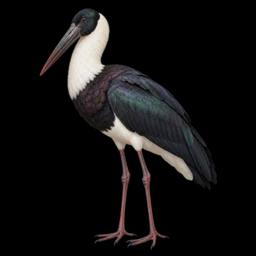
Asian Woolly-necked Stork at a glance
Bird · South Asia · Freshwater marshes · Relatively common
Known for: Woolly white neck contrasting with a black body, Glossy black breast and wings above a white belly, Long white undertail feathers extending beyond the, Dark bill
Its Power
Wetland Circuit
Connect scattered feeding places rather than exhausting one patch.
“Walk the circuit of pools.”
Capture a Asian Woolly-necked Stork, and it's yours when you finish one step it gives you.
Biological basis
Ciconia episcopus moves between marsh edges, flooded fields, river bars and ploughed land as each patch floods or dries, walking slowly through shallow water and short grass to jab fish, frogs, crabs and large insects.
Put it into practice
A market gardener sells at three weekly farmers' markets in different towns, rotating stock toward whichever market is busiest that season rather than depending on one.
What does the Asian woolly-necked stork symbolize?
The Asian woolly-necked stork symbolizes wetland circuit: connect scattered feeding places rather than exhausting one patch. It represents pacing, versatility and energy management. Its AnimalDex motto: "Walk the circuit of pools."
The Asian woolly-necked stork as a spirit animal
If the Asian woolly-necked stork is your spirit animal, the AnimalDex reading is Wetland Circuit: connect scattered feeding places rather than exhausting one patch. It suggests a strength in pacing and versatility, and a reminder to use it on purpose.
What can the Asian woolly-necked stork help you with in life?
The Asian woolly-necked stork is a guide for pacing, versatility and energy management. Its lesson applies wherever pacing matters: connect scattered feeding places rather than exhausting one patch.
- Pacing
- Versatility
- Energy Management
In practice: A market gardener sells at three weekly farmers' markets in different towns, rotating stock toward whichever market is busiest that season rather than depending on one.
What can we learn from the Asian Woolly-necked Stork?What does it mean to dream about or encounter a wild Asian woolly-necked stork?
Meeting a wild Asian woolly-necked stork, asleep or awake, is often a nudge toward pacing, the quality the Asian woolly-necked stork is built around. In AnimalDex, the Asian woolly-necked stork's principle is Wetland Circuit: connect scattered feeding places rather than exhausting one patch. Read the moment through its core lesson: Connect scattered feeding places rather than exhausting one patch.
It depends on how the Asian woolly-necked stork behaved. Calm or close by, it reads as versatility within reach; aggressive or fleeing, it points to pacing you are resisting.
Spotting an Asian woolly-necked stork in the wild
If an Asian woolly-necked stork crosses your path, take it as a cue to look at where pacing fits your day. Its AnimalDex motto: "Walk the circuit of pools."
An Asian woolly-necked stork that keeps appearing
An Asian woolly-necked stork that keeps turning up points to versatility you keep circling back to. The repetition is the message.
Dreaming of being chased by an Asian woolly-necked stork
Being chased suggests you are avoiding the Wetland Circuit the Asian woolly-necked stork stands for: connect scattered feeding places rather than exhausting one patch. Ask what you keep postponing that needs pacing.
Dreaming that an Asian woolly-necked stork attacks you
An aggressive Asian woolly-necked stork can mirror a conflict where pacing has become a weapon rather than a strength.
A calm or friendly Asian woolly-necked stork
A calm Asian woolly-necked stork suggests you have made peace with pacing and can use it without force.
A dead or injured Asian woolly-necked stork
A dead or injured Asian woolly-necked stork, dreamed or found, can mark pacing you have let lapse, or a phase built on Wetland Circuit coming to an end.
These readings are reflective prompts drawn from how the Asian woolly-necked stork really lives, not predictions. If you meet one in the wild, watch from a distance and leave it undisturbed.
Capture your own Asian Woolly-necked Stork
Photograph or film one in the wild, at a zoo or at home with the app. It becomes yours: it remembers you, gives you steps, and can debate your problems with your other animals.
Animal field guide
Asian Woolly-necked Stork
Sign in to hear this read by a natural AI voice instead of your browser's.
A tall black-and-white stork of South and Southeast Asia's lowland wetlands and farmland. Pairs and small parties rarely stay on one pool for long: they move between marsh edges, flooded fields, river bars and ploughed land as each patch floods or dries.
Native range
Natural range, not this capture location
Freshwater marshes, the margins of lakes and rivers, flooded rice fields, wet grassland and ploughed farmland. It also uses clearings and pools inside open forest, mainly in the lowlands.
Search near meAnimalDex stats
Size scale
Understand the animal
Understand the Asian Woolly-necked Stork
Factual biology first: what this animal is like, where it lives, how it survives, and why those traits exist.
01
Introduction to Asian Woolly-necked Stork
A tall black-and-white stork of South and Southeast Asia's lowland wetlands and farmland. Pairs and small parties rarely stay on one pool for long: they move between marsh edges, flooded fields, river bars and ploughed land as each patch floods or dries.
How to identify a Asian Woolly-necked Stork
- Woolly white neck contrasting with a black body
- Glossy black breast and wings above a white belly
- Long white undertail feathers extending beyond the tail
- Dark bill, often tinged red towards the tip
- Long dull-red legs
Why Asian Woolly-necked Stork are interesting
- The species name episcopus means bishop, a reference to the black cap sitting on the white head like a skullcap.
- Woolly-necked storks in Africa are now usually treated as a separate species, the African woolly-necked stork.
- Like other storks it is largely silent, and pairs greet each other at the nest with bill clattering.
- It often rises on thermals on warm days, soaring with the neck outstretched and legs trailing behind.
02
Adaptations and biological abilities
03
Why does Asian Woolly-necked Stork behave this way?
- Woolly white neck contrasting with a black body
- Glossy black breast and wings above a white belly
- Long white undertail feathers extending beyond the tail
- Dark bill, often tinged red towards the tip
- Long dull-red legs
Active by day. At night it roosts high in tall trees, often in small groups, and it may rest on a perch or loaf on a sandbank through the heat of midday.
04
Why Freshwater marshes?
Habitat: Freshwater marshes, the margins of lakes and rivers, flooded rice fields, wet grassland and ploughed farmland. It also uses clearings and pools inside open forest, mainly in the lowlands.
Native range: South Asia, Southeast Asia
Native range
Natural range, not this specific capture location.
Freshwater marshes, the margins of lakes and rivers, flooded rice fields, wet grassland and ploughed farmland. It also uses clearings and pools inside open forest, mainly in the lowlands.
05
Why this diet?
06
Activity, rest, and lifespan
Active by day. At night it roosts high in tall trees, often in small groups, and it may rest on a perch or loaf on a sandbank through the heat of midday.
Lifespan in the wild has not been documented for this species.
07
Asian Woolly-necked Stork reproduction
Pairs usually nest on their own rather than in colonies, building a large stick platform high in a tree. The clutch is about 2 to 4 eggs, incubated by both parents for roughly a month; chicks stay in the nest for about two months.
Males and females share the same plumage. Males are slightly larger on average, but the sexes cannot be told apart reliably in the field.
08
Predators, threats, and defense
Adults have few natural enemies, and the predators of its eggs and chicks are poorly documented. Hunting and the draining of wetlands are the main threats. Adults flush to high perches or soar away when approached.
09
Conservation and rarity
Rarity: Relatively common · 48/100. AnimalDex canonical rarity score: 48/100, maintained by the live indexed species profile.
- Observe from a respectful distance and avoid changing the animal's behavior.
- Do not block feeding, shelter, nesting, or travel routes.
- Use a live camera capture without handling or staging wildlife.
Talk to it
Talk to the Asian Woolly-necked Stork
It answers as itself: ask about how it lives, or bring it something of yours and hear what it would do, from its own Power.
Anonymous: 6/day. Signed-in: 10/day. Pro: 100/day.
Side by side
The Asian Woolly-necked Stork, side by side
Nothing written side by side for the Asian Woolly-necked Stork yet. Pick any animal to compare it with. Compare with any animal →
Where to find them
Where to find Asian Woolly-necked Stork
To find Asian Woolly-necked Stork in the wild, focus on the exact habitat patches that match its body design and daily behavior, not just the broad country where it exists. You usually do better by working one good piece of habitat inside south Asia, Southeast Asia than by covering too much ground.
- Quiet marsh edges, reedbeds, river bends, or shallow wetland margins
- Forest edge, canopy gaps, fruiting trees, or shaded trails where cover and food meet
- Open grassland edges, lightly wooded plains, or raised ground where you can scan long distances
In the Ark
No Asian Woolly-necked Stork is aboard yet.
The Ark is a live, shared animal world. Animals come aboard when people capture them, and live there by rules based on their field guides.
See the ArkScientific name
Ciconia episcopus
Category
Bird
Habitat
Freshwater marshes, the margins of lakes and rivers, flooded rice fields, wet grassland and ploughed farmland. It also uses clearings and pools inside open forest, mainly in the lowlands.
Rarity
Relatively common · 48/100
Native range
South Asia, Southeast Asia
Take the encyclopedia outside
AnimalDex helps you scan real animals, identify species, collect cards, and learn from nature wherever you are.